


The renal system is a complex network responsible for filtering waste, maintaining electrolyte balance, and regulating blood pressure. When this system is compromised by neoplastic growths (tumours) or functional decline (renal failure), the consequences can range from localized discomfort to life-threatening systemic imbalances. Understanding the distinction between benign and malignant growths, as well as the progressive stages of renal dysfunction, is essential for clinical practice.
Renal Tumours: Benign and Malignant
Tumours within the urinary tract can originate in the kidney parenchyma, the renal pelvis, the ureters, or the bladder. These are broadly categorized into benign (non-cancerous) and malignant (cancerous) growths.
Benign Growths
Benign renal adenomas are non-cancerous growths that arise from the renal tissue. While they do not spread to distant organs, they are identified through histological examination of the cellular structures.
Malignant Growths (Renal Carcinomas)
Malignant tumours are more aggressive and can invade surrounding tissues or metastasize.
Renal Cell Carcinoma (RCC) is the most common type of kidney cancer. Within the spectrum of renal carcinomas, different histological subtypes exist:
- Clear cell carcinoma: A common subtype characterized by specific cellular appearances under a microscope.
- Granular cell carcinoma: Another histological variation of renal malignancy.
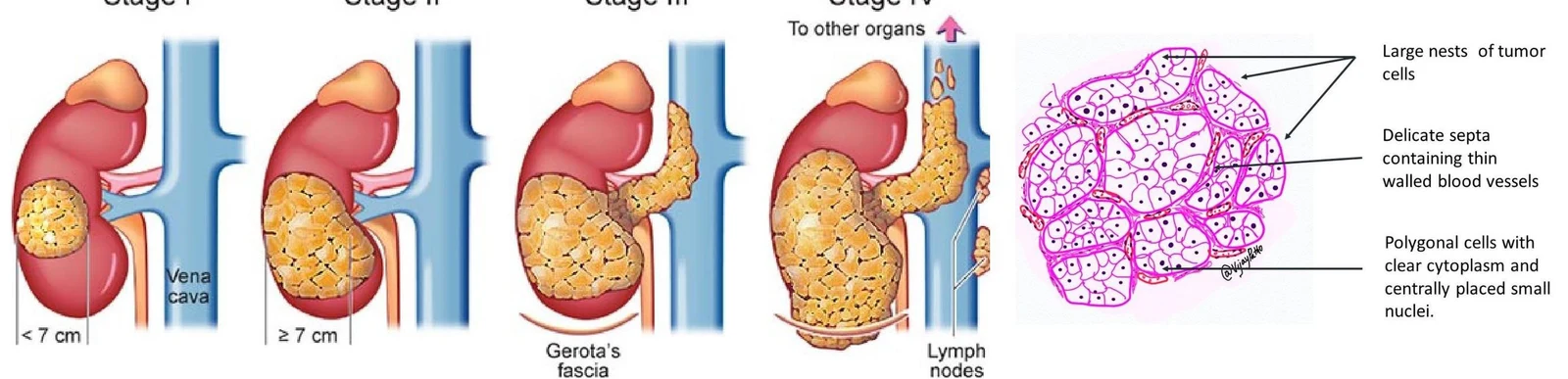
Adenocarcinomas also represent a category of malignant epithelial tumours that can occur within the renal system.
Keep reading for free.
Create an account to finish this reading and make it part of your study routine.
Continue reading freeAlready have an account? Log in
Updated