


The kidneys are sophisticated biological filtration systems essential for maintaining homeostasis—the stable internal environment of the body. By regulating the chemical composition and volume of bodily fluids, the kidneys ensure that electrolytes, water, and metabolic waste products remain within physiological limits. Understanding how the kidneys function and how their output (urine) can signal disease is a cornerstone of clinical diagnostics.
The Functional Unit: The Nephron
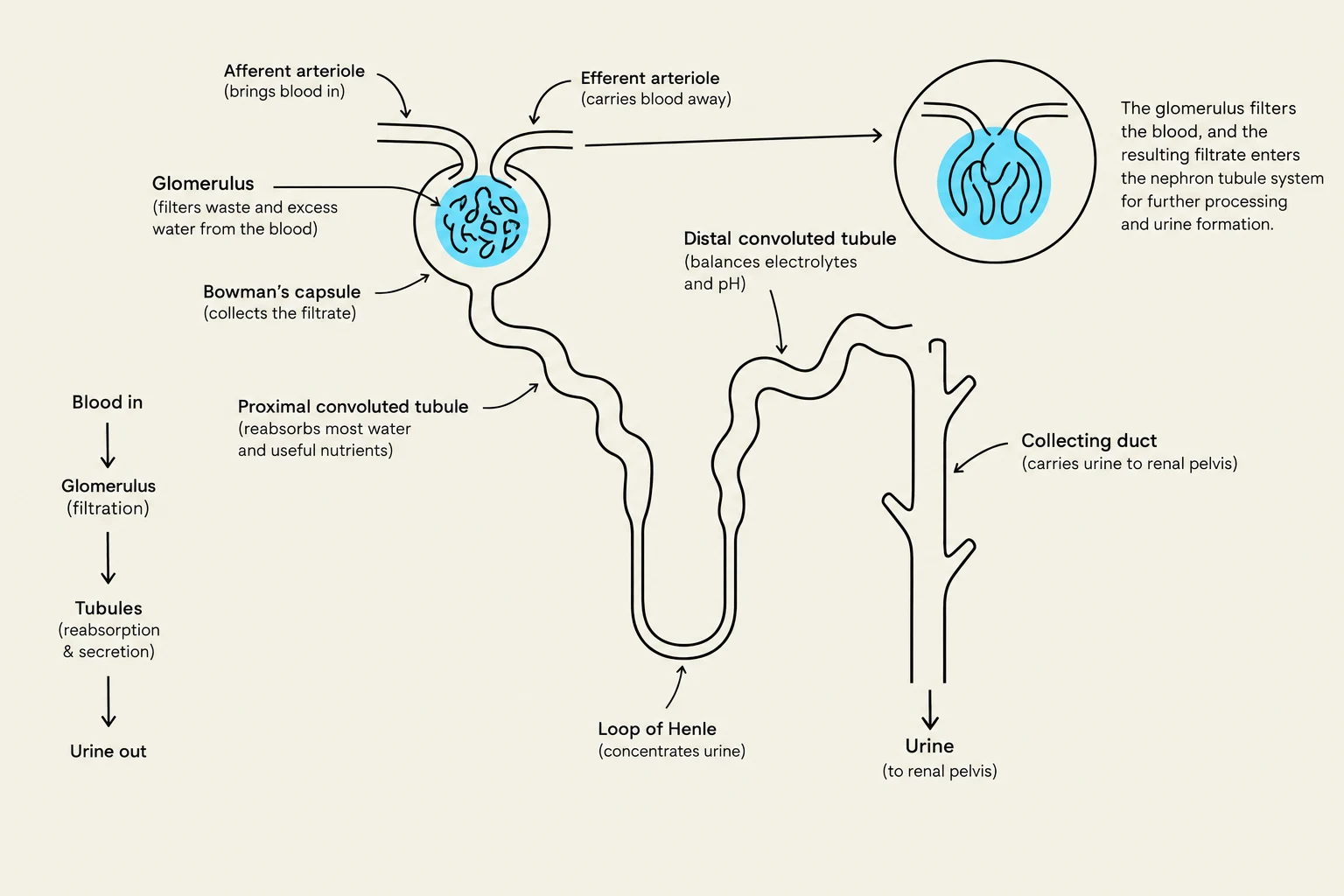
The core of renal function lies within the nephron, the fundamental functional unit of the kidney. Each nephron consists of two primary components: the glomerulus and the renal tubules.
The process begins at the glomerulus, a small network of capillaries that acts as a high-pressure filter. The glomerulus allows small molecules, such as water and electrolytes, to pass through while retaining large molecules like proteins and blood cells within the bloodstream. Following filtration, the fluid enters the renal tubules. Here, renal tubular cells perform two critical tasks: they reabsorb desired substances (such as glucose, amino acids, and most of the water) back into the peritubular capillaries, and they secrete unwanted substances into the lumen to be excreted as urine.
Endocrine Functions of the Kidney
Beyond filtration, the kidneys are vital endocrine organs that manufacture several essential hormones to regulate systemic physiology:
- Renin: An enzyme that acts on the angiotensin pathway to increase vascular tone and stimulate aldosterone release, which in turn increases sodium retention.
- Erythropoietin: A hormone that stimulates the production of red blood cells in the bone marrow.
- Prostaglandins: These influence vascular tone and assist in salt and water regulation.
- 1,25-dihydroxycholecalciferol: This active form of Vitamin D enhances calcium absorption from the gut and phosphate re-absorption by the renal tubules.
Keep reading for free.
Create an account to finish this reading and make it part of your study routine.
Continue reading freeAlready have an account? Log in
Updated