Regulation of the Pyruvate Dehydrogenase Complex and TCA Cycle
This content explains the allosteric and covalent regulation of the Pyruvate Dehydrogenase Complex (PDHC) and the key regulatory enzymes within the Tricarboxylic Acid (TCA) cycle. It details how these mechanisms ensure metabolic efficiency by controlling the flux of carbon into the cycle based on the cell's energy stat
The primary goal of cellular respiration is to extract energy from nutrients to power biological processes. The Pyruvate Dehydrogenase Complex (PDHC) and the Tricarboxylic Acid (TCA) cycle serve as the central engine for this process, ensuring the complete oxidation of glucose and Acetyl-CoA derived from fatty acids. To prevent the wasteful oxidation of fuels when energy is abundant, or to ramp up production when energy is low, these pathways are tightly controlled through sophisticated allosteric and covalent regulatory mechanisms.
Allosteric Regulation of PDHC
Allosteric regulation allows the cell to respond almost instantaneously to changes in the concentration of metabolites. The PDHC is sensitive to the "energy status" of the cell.
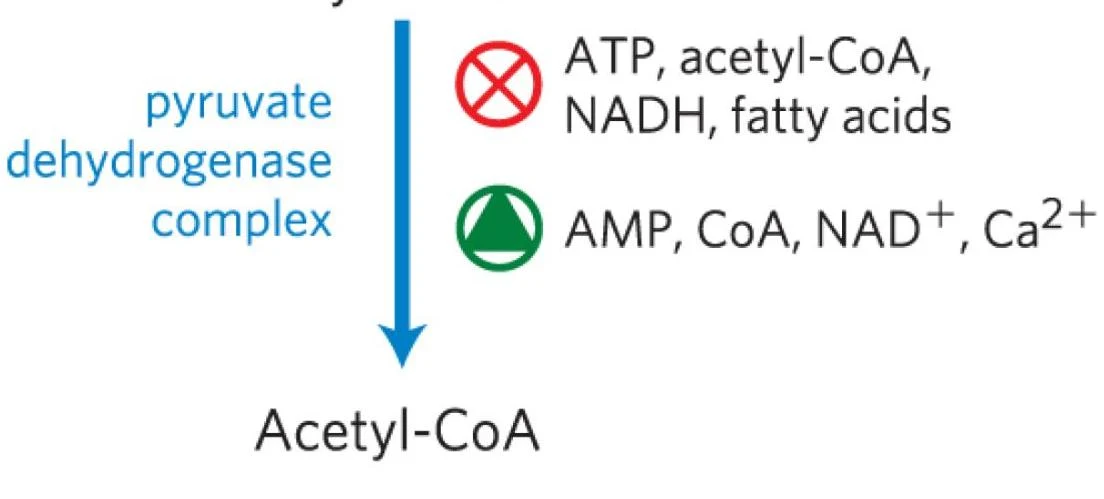
When the cell is in a "low energy" state (high levels of ADP and NAD$^+$), the PDHC is activated to increase the flux of carbon into the TCA cycle. Conversely, when the cell is in a "high energy" state (high levels of ATP, NADH, and Acetyl-CoA), the complex is inhibited.
This diagram illustrates the regulation of the pyruvate dehydrogenase complex, showing activators and inhibitors that influence the conversion of pyruvate to acetyl-CoA.
This feedback inhibition ensures that the cell does not produce excess electron carriers (NADH and FADH2) if the Electron Transport Chain (ETC) is already saturated or if ATP levels are sufficient.
Covalent Regulation: The Phosphorylation Cycle
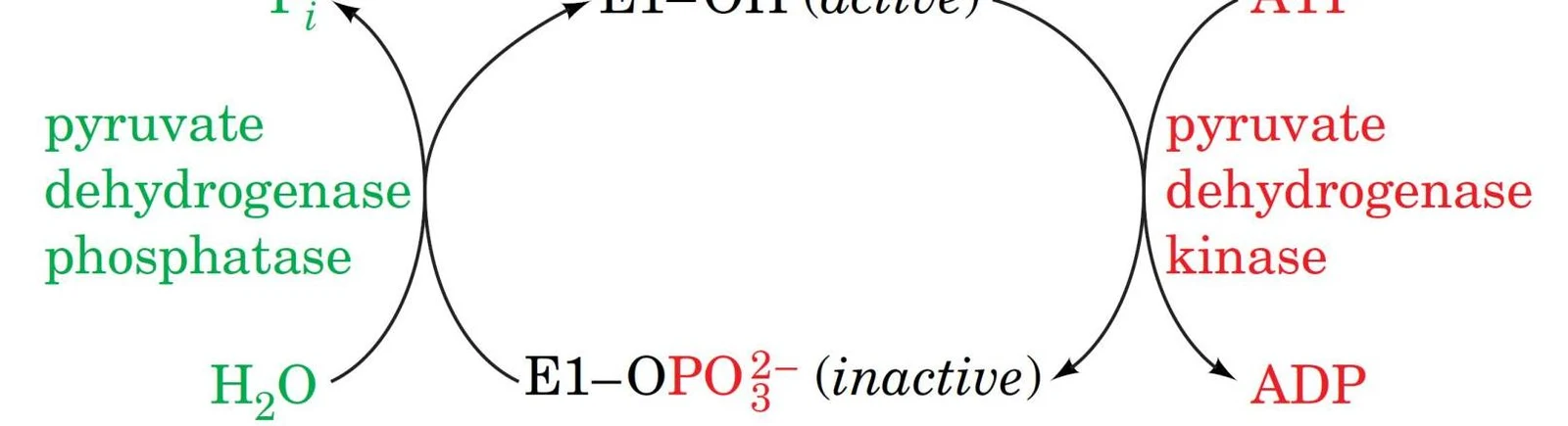
Beyond immediate allosteric shifts, the PDHC is regulated by a more sustained mechanism: reversible covalent modification via phosphorylation and dephosphorylation. This process specifically targets a Serinyl residue on the E1 subunit of the complex.
A diagram illustrating the regulation of enzyme E1, showing its activation by pyruvate dehydrogenase phosphatase and inactivation by pyruvate dehydrogenase kinase, involving inorganic phosphate (Pi), water (H2O), ATP, and ADP.
PDH Kinase and PDH Phosphatase
Two dedicated enzymes control this switch:
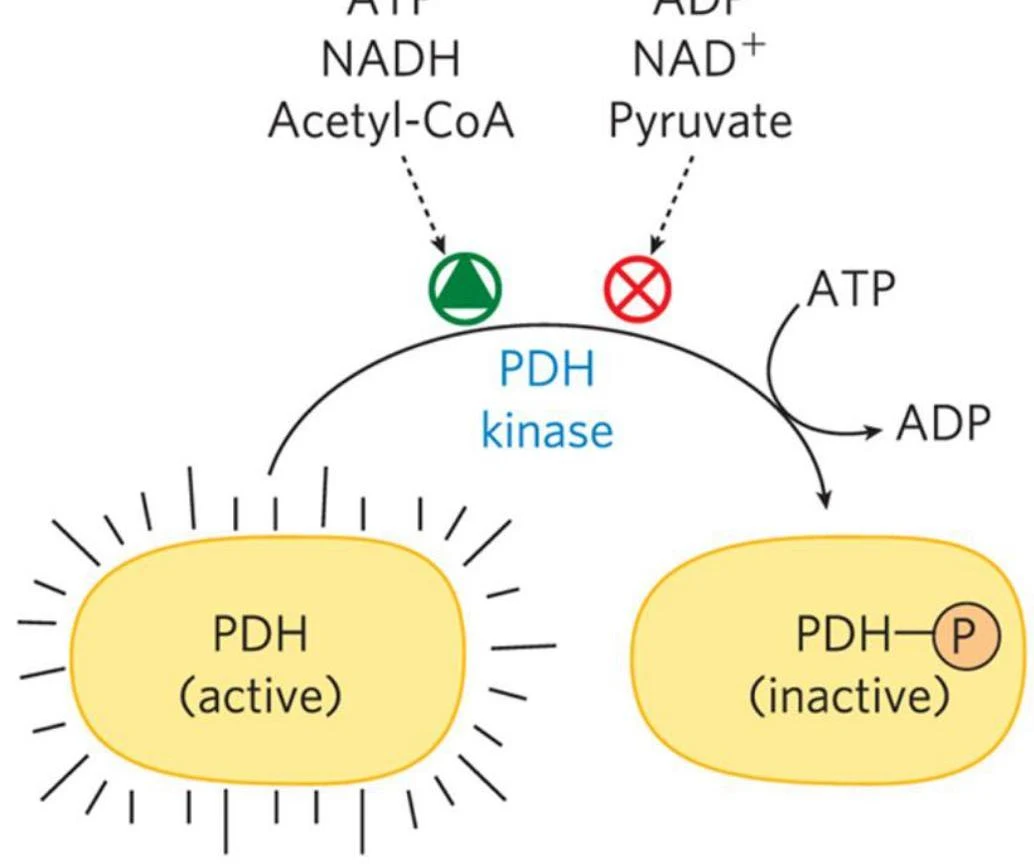
PDH Kinase: This enzyme catalyzes the phosphorylation of PDHC. When PDH kinase is active, it adds a phosphate group to the complex, which inactivates it by blocking decarboxylation and the subsequent formation of Acetyl-CoA.
PDH Phosphatase: This enzyme catalyzes the removal of the phosphate group (dephosphorylation), which activates the PDHC.
This diagram illustrates the regulation of Pyruvate Dehydrogenase (PDH) kinase. PDH kinase is activated by NADH and Acetyl-CoA, leading to the phosphorylation and inactivation of PDH. Conversely, it is inhibited by NAD+ and Pyruvate, which promotes the activation of PDH.
Regulation of the Regulators
The activity of these two enzymes is itself subject to metabolic control:
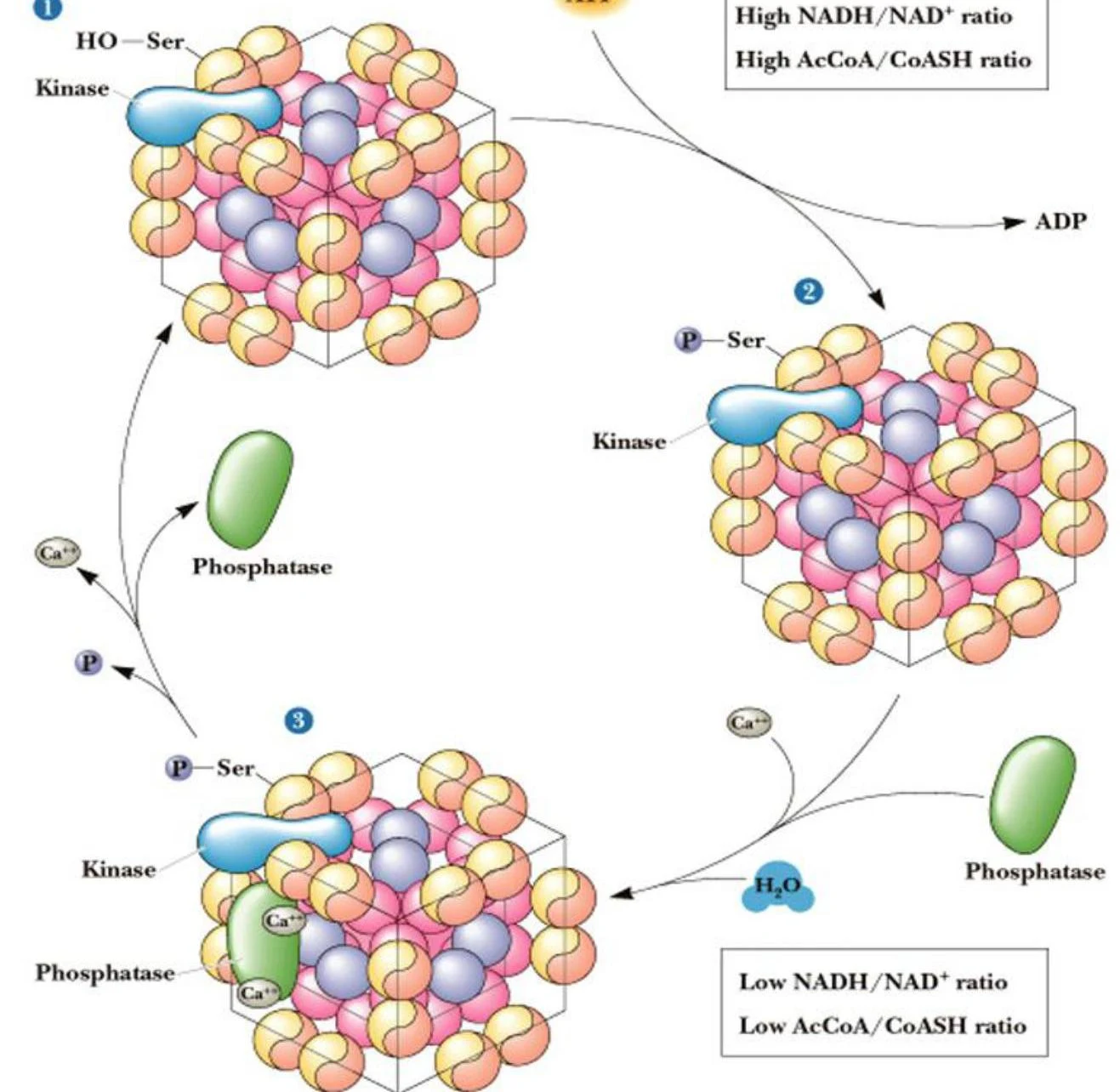
PDH Kinase Regulation: The kinase is activated by a "high energy" status (high ATP/NADH) and inactivated by a "low energy" status. This creates a logical loop: if energy is high, the kinase turns on, phosphorylates PDHC, and shuts down the pathway.
PDH Phosphatase Regulation: This enzyme is influenced by hormonal signals and ion concentrations.
Insulin: In response to high blood glucose, insulin activates PDH phosphatase, promoting the dephosphorylation and activation of PDHC to utilize available glucose.
Calcium (Ca2+): An increase in intracellular calcium levels activates PDH phosphatase. This is particularly important in muscle cells, where Ca2+ release signals muscle contraction and a subsequent need for increased ATP production.
This diagram illustrates a biochemical pathway involving kinases and phosphatases, with calcium ions (Ca++) and water (H2O) acting as cofactors or reactants. The pathway's regulation is influenced by the ratios of NADH/NAD+ and AcCoA/CoASH.
Exam Tip: Remember the relationship between energy status and the enzymes.
High Energy→↑ PDH Kinase →↑ Phosphorylation →PDHC OFF
Low Energy→↑ PDH Phosphatase →↑ Dephosphorylation →PDHC ON
Regulation of the TCA Cycle
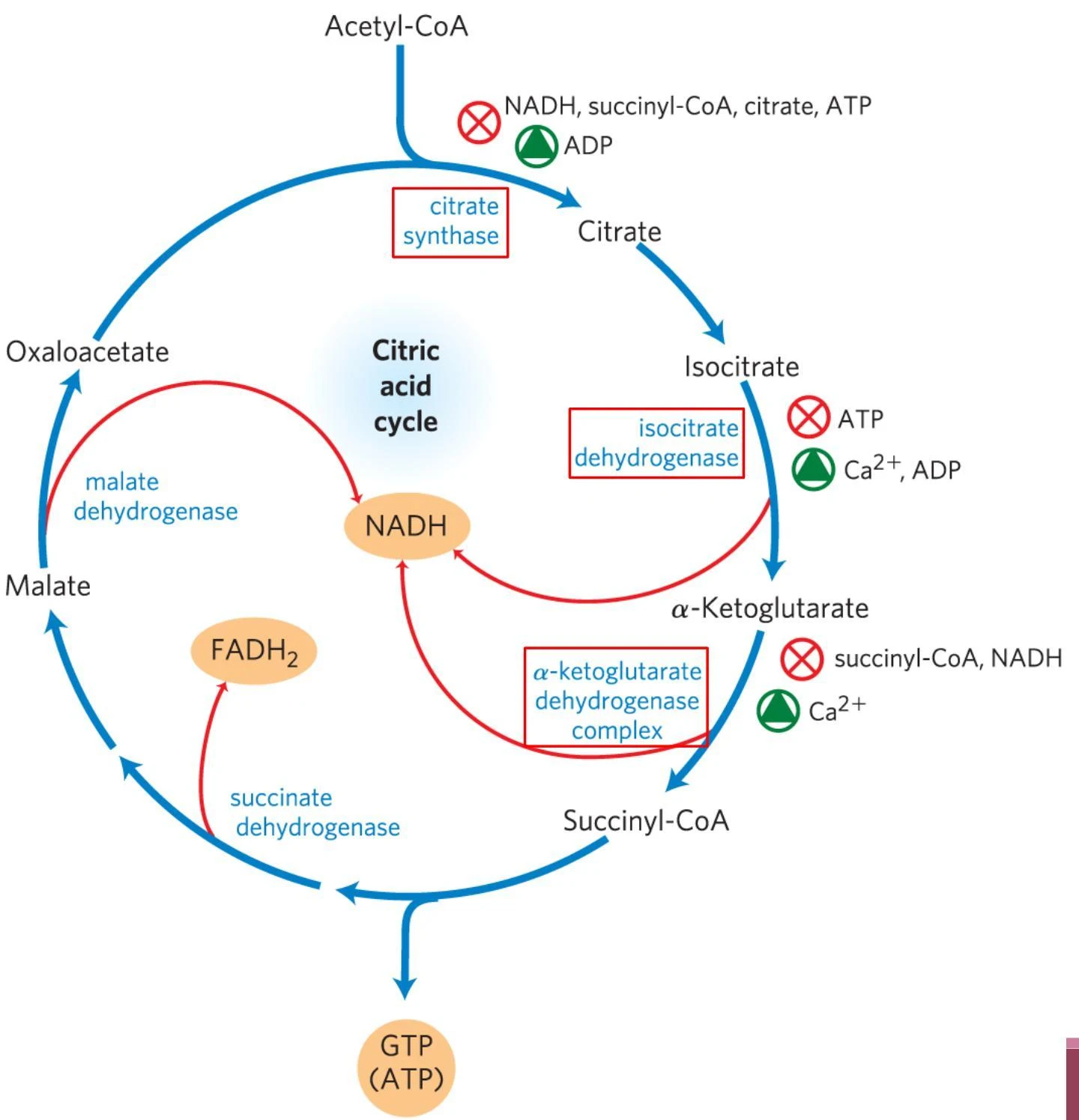
While PDHC acts as the gatekeeper, the TCA cycle itself contains several key regulatory steps. Regulation occurs primarily at the irreversible reactions that have a large negative Gibbs free energy (ΔG).
Key Regulatory Enzymes
Three specific enzymes serve as the primary control points within the cycle:
Citrate Synthase: This enzyme initiates the cycle. It is activated by "low energy" signals and inhibited by "high energy" signals, as well as by its own downstream metabolites, Citrate and Succinyl-CoA, via feedback inhibition.
Isocitrate Dehydrogenase: A major rate-limiting step. It is activated by ADP (low energy) and Ca2+, and inhibited by ATP (high energy).
α-Ketoglutarate Dehydrogenase: This complex is inhibited by its products (NADH and Succinyl-CoA) and high energy signals (ATP), but is activated by Ca2+.
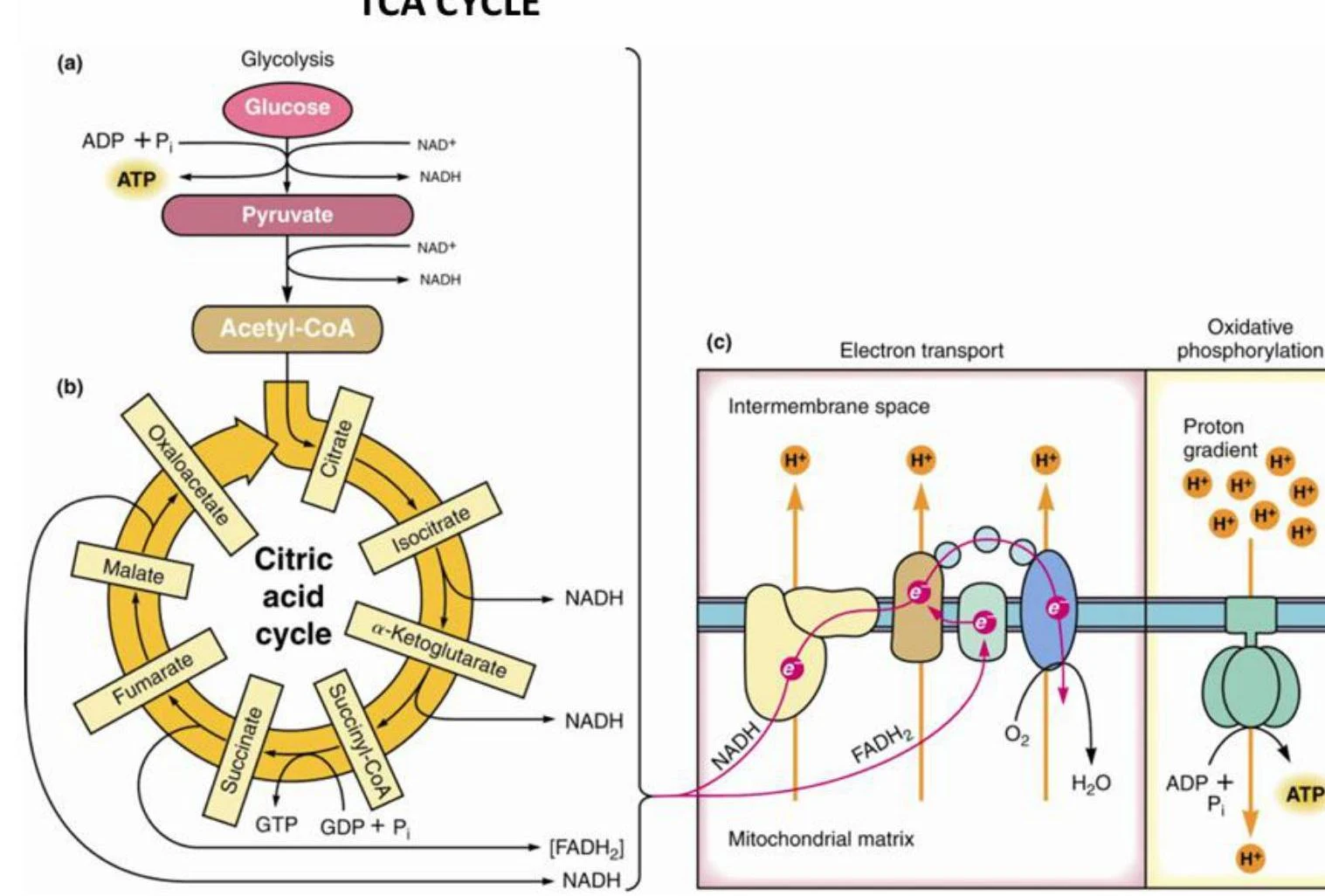
The citric acid cycle, also known as the Krebs cycle or TCA cycle, is a series of chemical reactions used to release stored energy through the oxidation of acetyl-CoA derived from carbohydrates, fats, and proteins into adenosine triphosphate (ATP) and carbon dioxide.
Summary of Feedback Regulation
The TCA cycle relies heavily on feedback inhibition, where the accumulation of products signals the enzymes to slow down. The primary inhibitors include:
NADH: The major product of the cycle; high levels signal that the electron transport chain is saturated.
ATP: Signals that the cell's energy currency is abundant.
Metabolites: Succinyl-CoA and Citrate act as signals to slow the cycle when downstream intermediates are plentiful.
Diagram illustrating the TCA cycle, electron transport chain, and oxidative phosphorylation.
In conclusion, the flux through the PDHC and TCA cycle is a finely tuned balance of allosteric feedback and covalent modification, ensuring that the production of NADH and FADH2 perfectly matches the cell's demand for ATP.
Keep reading for free.
Create an account to finish this reading and make it part of your study routine.