


In the world of microbiology, efficiency is survival. Bacteria must constantly adapt to shifting environments, deciding which proteins to produce and which to withhold to conserve energy. Unlike eukaryotes, which use complex mechanisms like chromatin remodeling and alternative splicing, prokaryotes utilize a streamlined system to control gene activity. This article explores the fundamental mechanisms of prokaryotic gene regulation, focusing on the elegant logic of the operon and the classic model of the lactose (lac) operon.
The Operon Concept
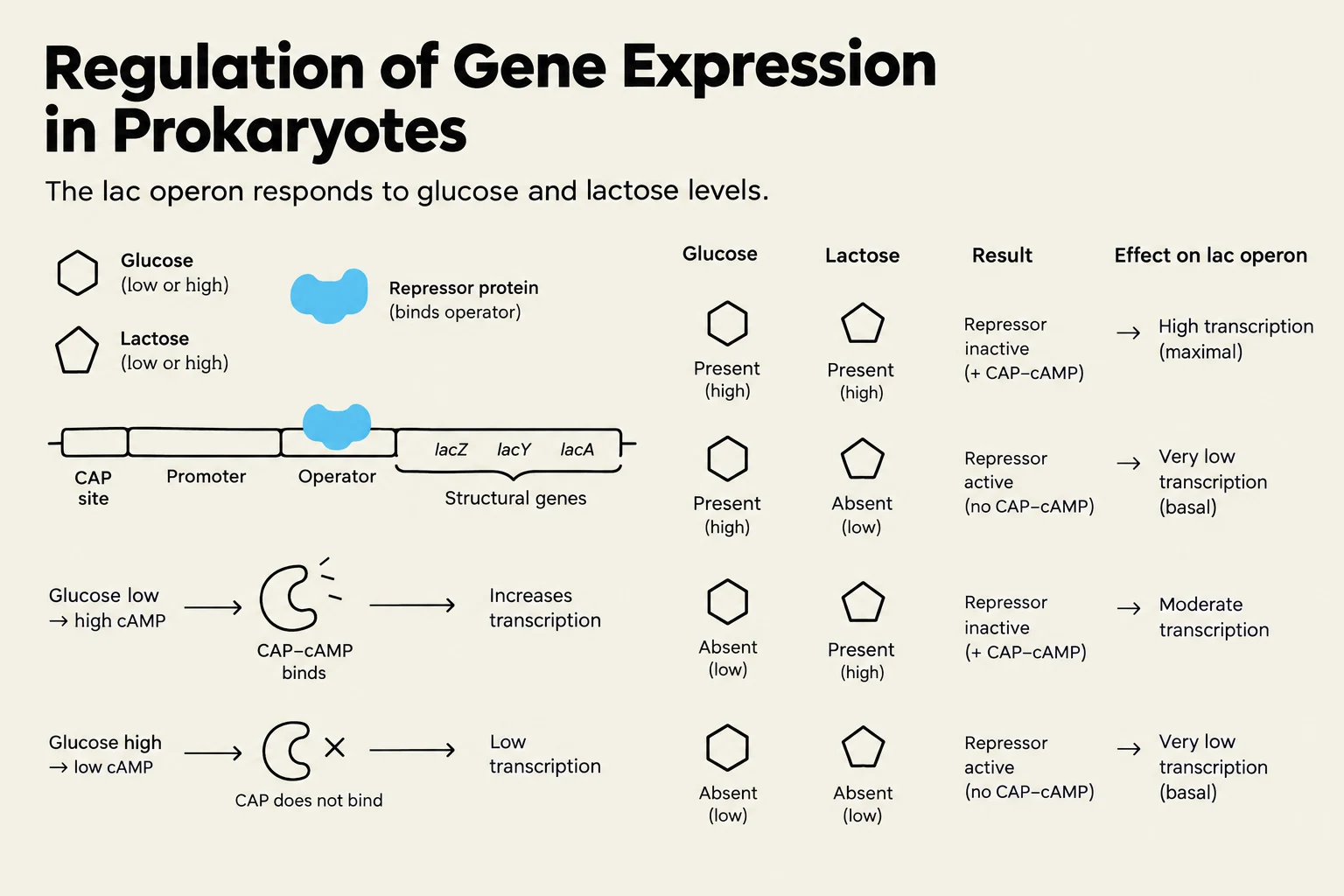
In bacteria, genes that function together in a single metabolic pathway are often grouped together on the chromosome. This grouping is known as an operon. Instead of having a separate "on/off" switch for every single gene, the bacterium can control an entire cluster of related genes with a single regulatory mechanism.
An operon consists of several key components:
- Structural Genes: The actual sequences that encode functional proteins.
- Cis-acting regulatory elements: DNA sequences located on the same chromosome that serve as binding sites for regulatory proteins. These include promoters (where RNA polymerase binds) and operators (where repressors bind).
- Trans-acting molecules: Proteins (such as transcription factors) that are synthesized elsewhere in the cell and diffuse to the operon to influence its activity.
One unique feature of the operon is that it produces polycistronic mRNA. While eukaryotic mRNA usually carries the code for just one protein, a single polycistronic mRNA molecule contains the instructions for multiple different proteins, allowing them to be synthesized simultaneously.

Keep reading for free.
Create an account to finish this reading and make it part of your study routine.
Continue reading freeAlready have an account? Log in
Updated