An overview of real property law, focusing on the contractual agreement of leases, landlord and tenant obligations, security deposits, lease termination, and the legal process of eviction (Forcible Entry and Detainer).
Real property law governs the complex relationship between those who own land and those who temporarily occupy it. At the heart of this relationship is the lease—a contractual agreement that balances the rights of the landlord (lessor) and the tenant (lessee). When these relationships break down, the legal system provides specific mechanisms for termination and the recovery of property through judicial proceedings known as detainer actions.
Leasing of Real Property
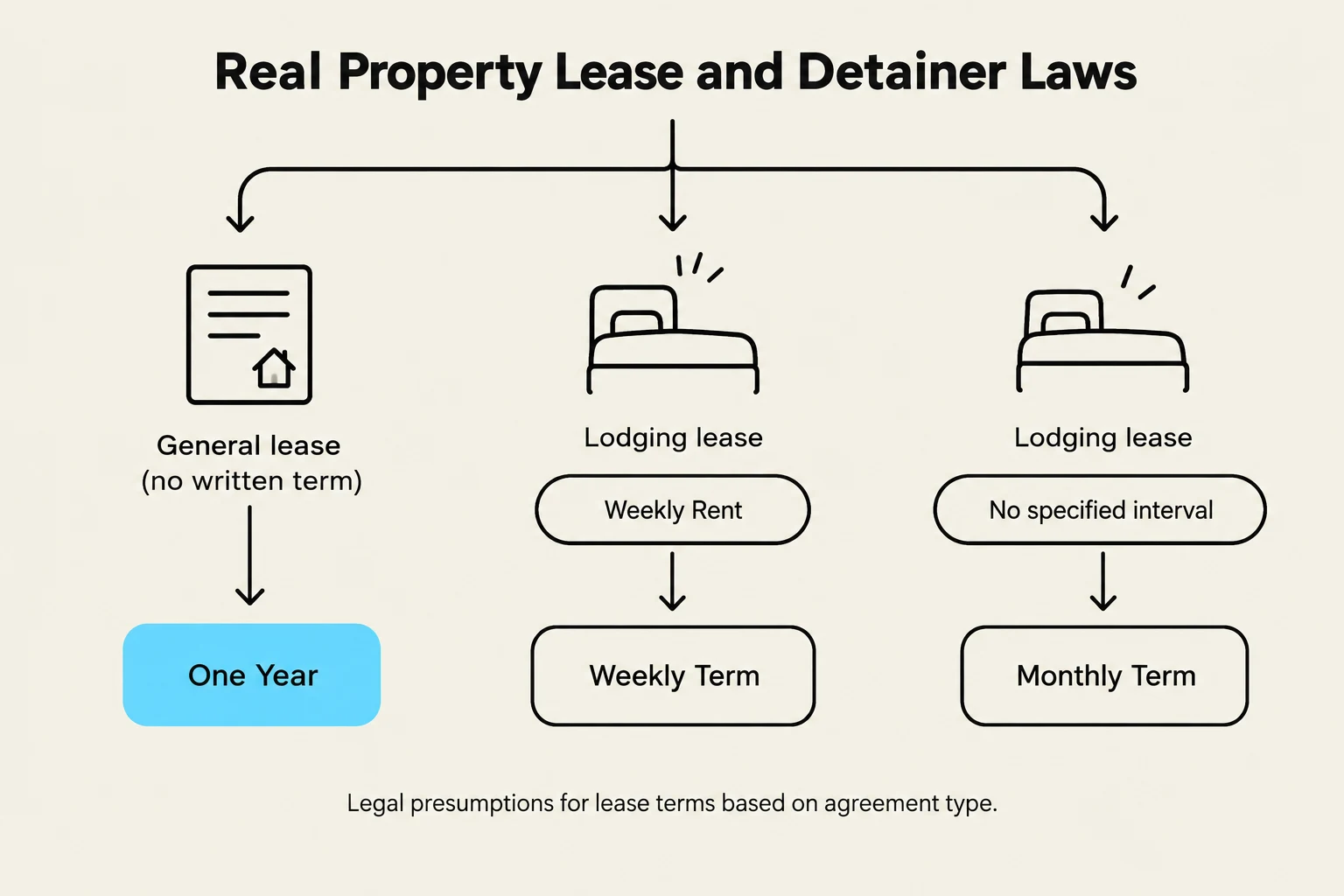
This diagram illustrates legal presumptions for lease terms based on agreement type, distinguishing between general leases and lodging leases with different rental intervals.
A lease is a contract where a lessor grants a lessee temporary possession and use of real property in exchange for a reward, typically rent. Understanding the legal presumptions of a lease is vital for both parties to avoid unintended legal obligations.
Key Legal Presumptions
Term Length: In the absence of a specific written agreement, a hiring of real property is legally presumed to be for a duration of one year. However, for lodgings, the term is presumed to match the rent payment interval. For example, if rent is paid weekly, the lease is presumed to be weekly; if no interval is specified, it is presumed to be monthly.
Written Requirements: To ensure enforceability, any lease intended for a term exceeding one year must be in writing and signed by the lessor or their authorized agent.
Renewals: If a tenant remains in possession after the original term expires and the landlord continues to accept rent, the law presumes the lease has been renewed under the same terms for a period not exceeding one year.
Assignment of Lease
While not always explicitly detailed in every basic contract, the transfer of interest in a lease—known as assignment—allows a tenant to transfer their rights and obligations to a third party. This is often subject to specific clauses within the original lease agreement regarding landlord consent.
Lessor and Lessee Obligations
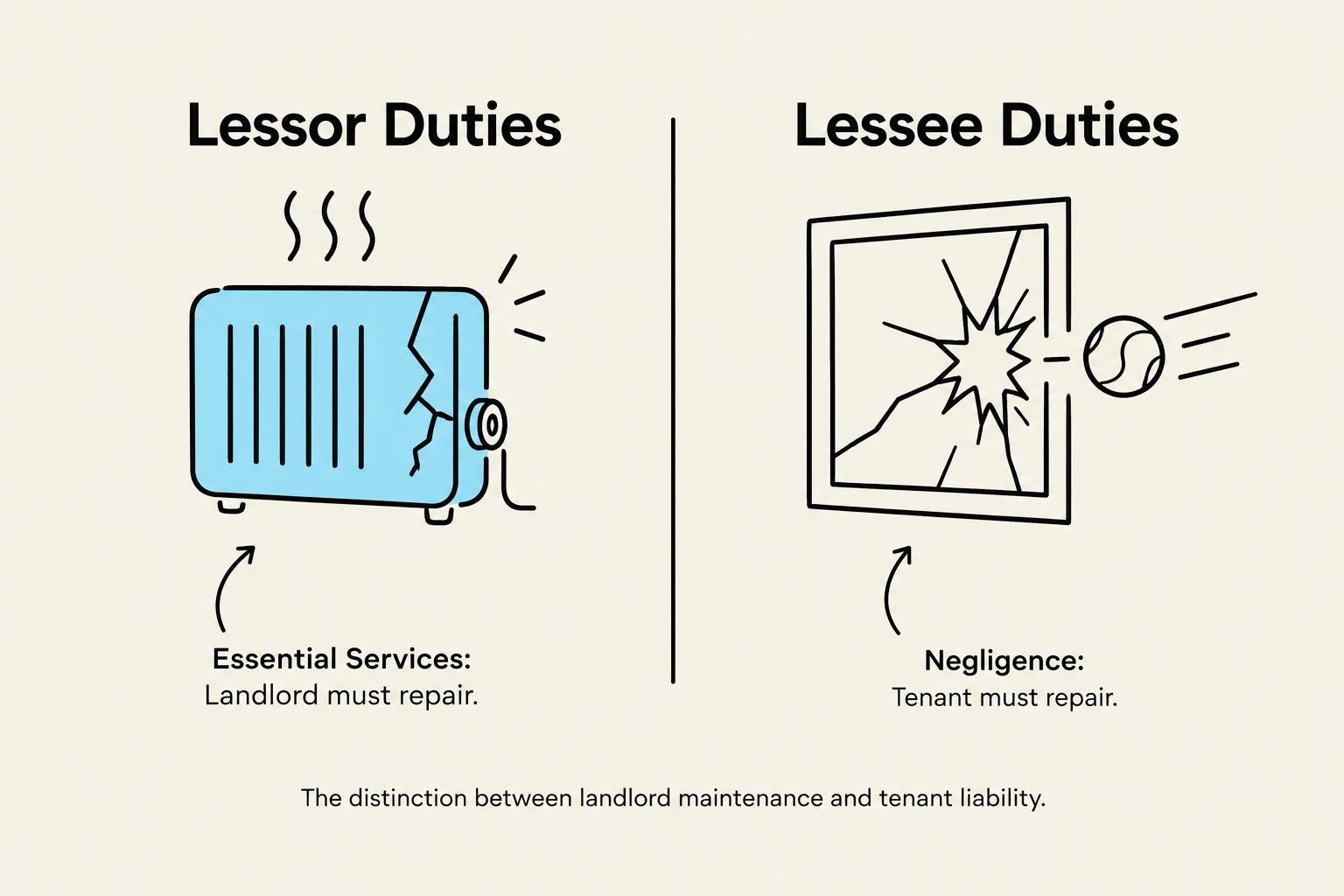
This illustration differentiates between landlord and tenant responsibilities, showing that landlords are responsible for essential services like repairs, while tenants are liable for damages caused by negligence.
The stability of a rental arrangement depends on both parties fulfilling their statutory and contractual duties.
Lessor (Landlord) Duties
The lessor is primarily responsible for the habitability and peaceful use of the property. Key duties include:
Reasonable Repair: Delivering the premises in a state of reasonable repair.
Quiet Enjoyment: Ensuring the tenant can use the property without unlawful interference. In residential settings, this includes maintaining essential systems such as electrical, plumbing, and heating.
Protection Against Unlawful Exclusion: If a lessor unlawfully excludes a tenant or interrupts essential services, the tenant may seek injunctive relief or terminate the lease and recover damages equivalent to two months' rent.
Lessee (Tenant) Duties
The tenant's primary responsibility is the stewardship of the property. Tenants must:
Preserve the Premises: Maintain the property and any provided appliances in good condition.
Liability for Damage: Repair any damage caused by their own negligence or willful misconduct.
Exam Tip: Remember that while a landlord must maintain "essential services," a tenant is still liable for damage caused by their own actions. The two duties are distinct and do not cancel each other out.
Residential Security Deposits
Security deposits serve as a financial safeguard for lessors against potential damages or unpaid rent. However, strict rules govern their use in residential settings.
Limits on Amount: A security deposit for residential premises generally cannot exceed one month's rent, unless special circumstances justify a higher amount.
Return of Funds: Upon the termination of a lease, the lessor is legally obligated to either return the deposit to the tenant or provide an itemized accounting of any withholdings within two weeks.
Termination of Lease
A lease does not necessarily last until the end of its term; several legal avenues allow for early termination.
Standard Causes
A lease may be terminated through the natural expiration of the term, by mutual consent of both parties, or if the tenant acquires a superior legal title to the property.
Special Protections for Tenants
Modern statutes provide specific protections for tenants in vulnerable situations. A tenant may be permitted to terminate a lease early in cases involving:
Domestic abuse
Stalking
Unlawful sexual behavior by another occupant
To exercise these rights, the tenant must provide specific documentation, such as official police reports, to justify the early departure.
Eviction and Forcible Entry and Detainer
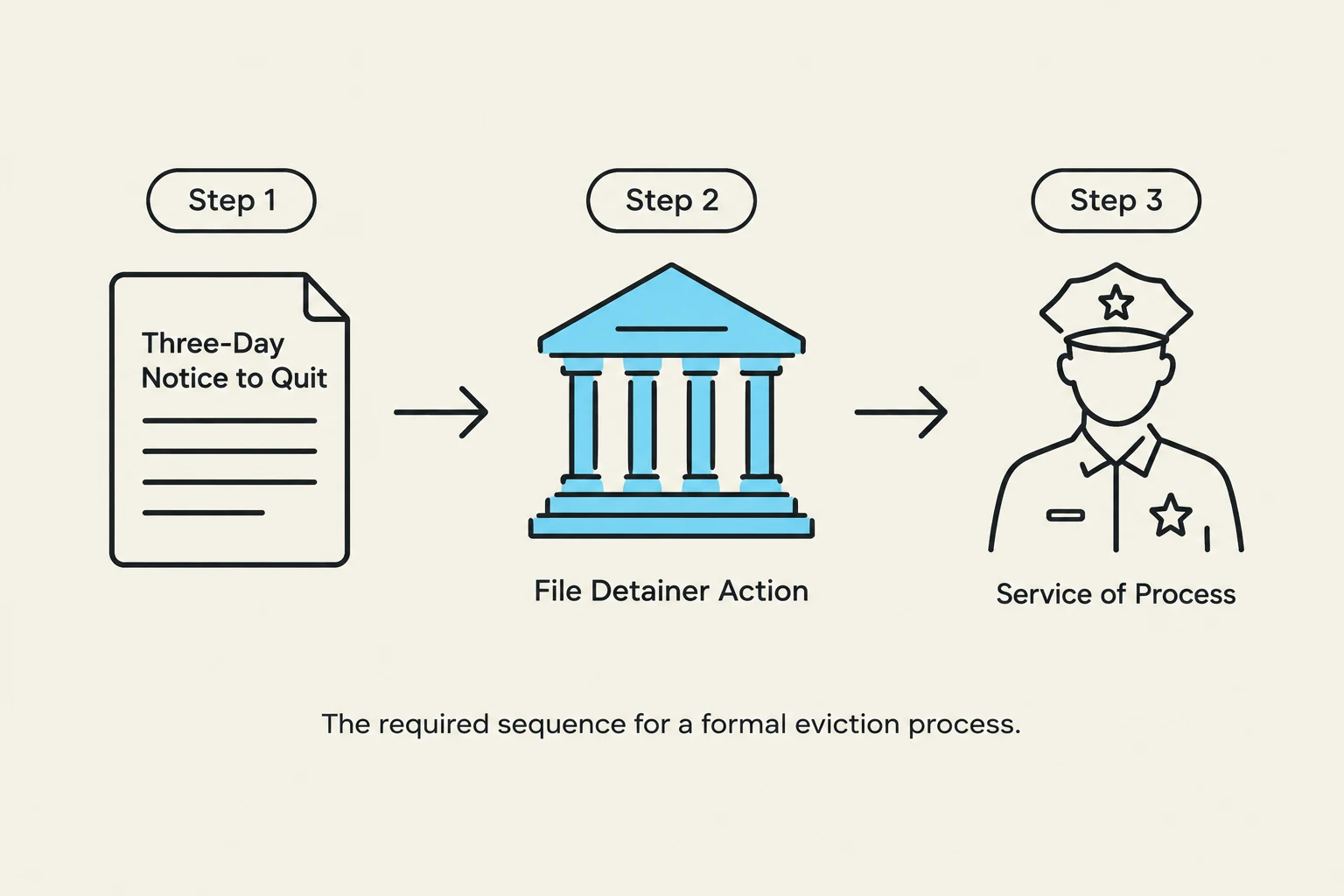
The image illustrates the three steps of a formal eviction process: a three-day notice to quit, filing a detainer action, and service of process.
When a tenant refuses to leave or violates the terms of the lease, the landlord cannot simply change the locks or remove the tenant's belongings. Instead, they must utilize the judicial process known as Forcible Entry and Detainer.
Grounds for Action
A party may maintain a legal action for forcible entry and detainer if:
A person enters property through the use of force or fraud.
A tenant "holds over" (remains in possession) after the lease term has expired.
A tenant fails to pay rent for a period of three days after it becomes due.
Procedural Requirements and Notice to Quit
Before a landlord can commence formal legal proceedings for non-payment or holding over, they must follow strict notice requirements.
The Three-Day Notice: A written three-day notice to quit must be served to the tenant before the lawsuit is filed.
Service of Process: The complaint must be verified, and attempts to serve the notice must be conducted by a sheriff or another authorized person.
Warning: Failure to strictly adhere to the notice requirements or the service of process can result in the dismissal of an eviction case, forcing the landlord to restart the entire legal process.
Retaliatory Conduct and Disability Protections
The law also protects tenants from unfair treatment by landlords following the exercise of legal rights.
Retaliatory Conduct Remedies
If a landlord attempts to evict a tenant or increase rent as a direct response to the tenant complaining about habitability or participating in legal proceedings, this may be classified as retaliatory conduct. Tenants may seek legal remedies to prevent such actions.
Service Animals and Disability Documentation
In the context of residential leasing, landlords must comply with regulations regarding tenants with disabilities. This includes making reasonable accommodations for service animals. Tenants may be required to provide appropriate documentation regarding their disability and the necessity of the service animal to ensure compliance with fair housing standards.
Keep reading for free.
Create an account to finish this reading and make it part of your study routine.