


The lungs are complex organs that must balance two seemingly contradictory requirements: the need to facilitate massive amounts of gas exchange for the entire body and the need to provide metabolic nourishment to the lung tissue itself. To achieve this, the body utilizes two distinct circulatory pathways: the pulmonary circulation and the bronchial circulation. While they coexist within the same anatomical space, they differ fundamentally in pressure, flow, and physiological purpose.
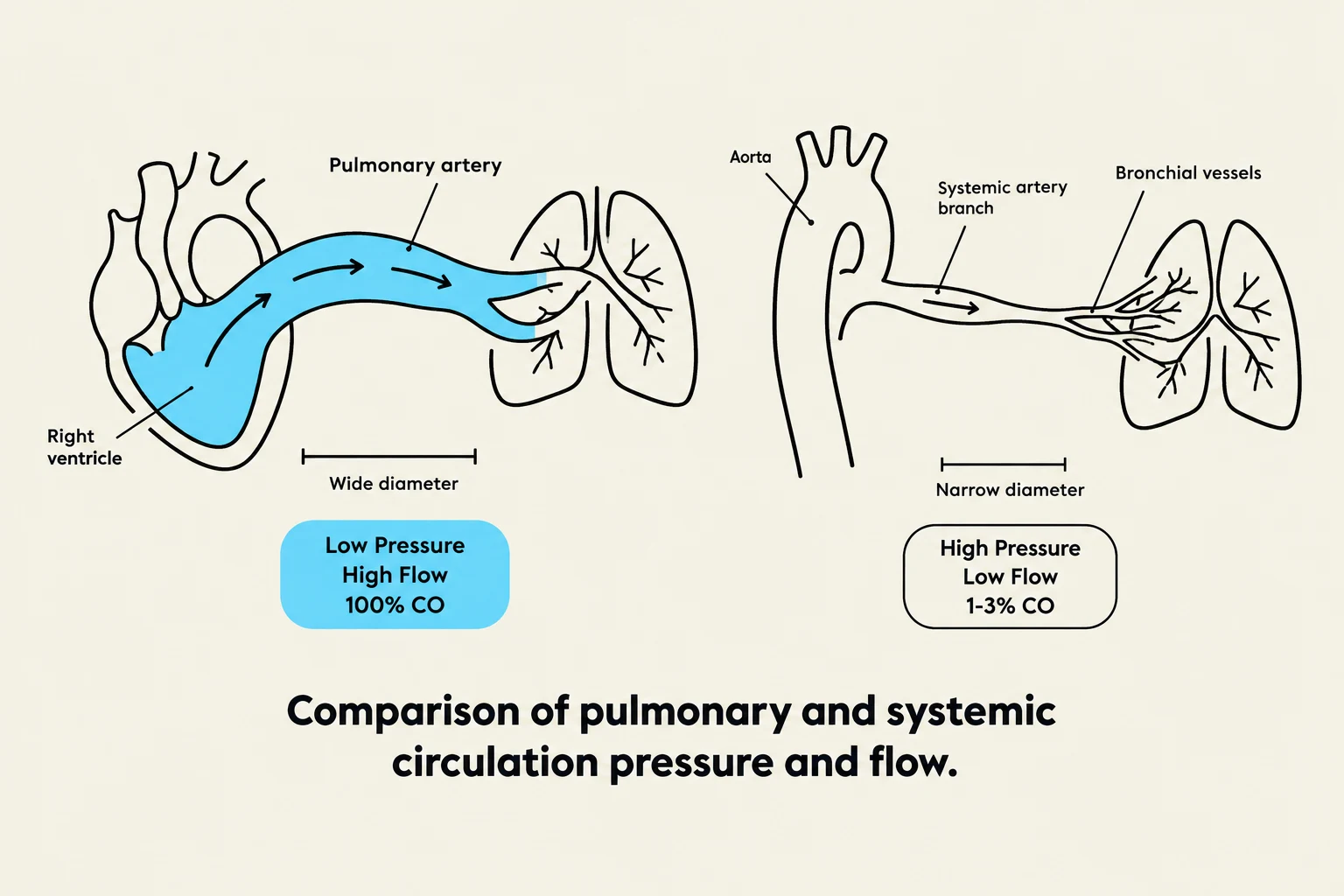
The Pulmonary Circulation: A Low-Pressure, High-Flow System
The pulmonary circulation is the primary circuit responsible for gas exchange. Its main task is to receive deoxygenated venous blood from the systemic circulation and deliver it to the lungs to be re-oxygenated.
Pressure and Cardiac Output Distribution
One of the most striking differences between the pulmonary and systemic circuits is the operating pressure. The pulmonary circulation is a low-pressure system, operating at approximately , whereas the systemic circulation operates at much higher pressures, around .
Despite this lower pressure, the pulmonary circuit handles the entire cardiac output (CO). This means every drop of blood pumped by the right ventricle must pass through the pulmonary capillaries to be oxygenated before returning to the left side of the heart.
Compliance and Reservoir Functions
To accommodate the full stroke volume of the right ventricle without causing massive spikes in pressure, the pulmonary arteries and arterioles possess large diameters. This structural characteristic provides large compliance, meaning the vessels can stretch easily to hold blood.

Keep reading for free.
Create an account to finish this reading and make it part of your study routine.
Continue reading freeAlready have an account? Log in
Updated