


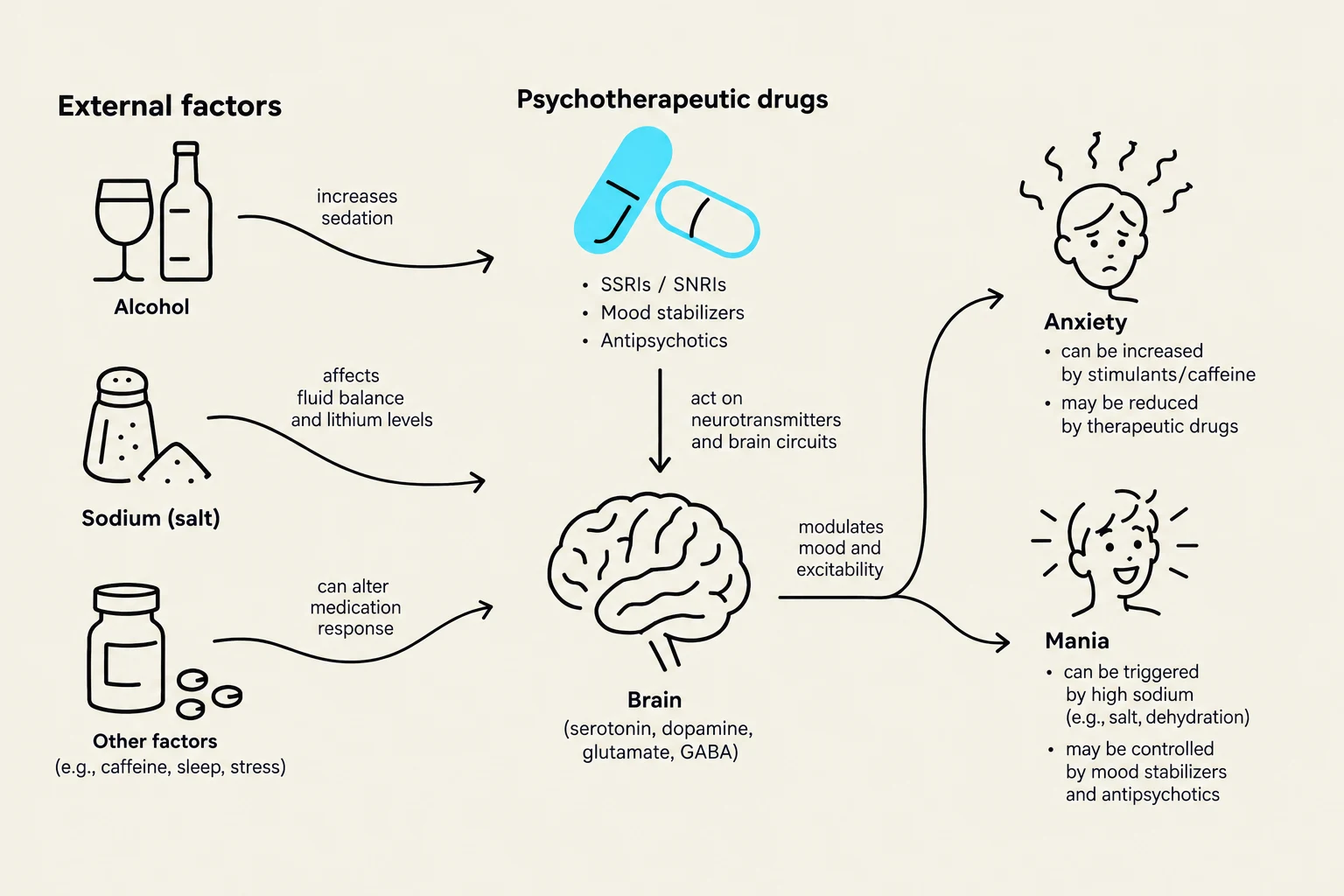
Psychotherapeutic drugs are essential tools in the management of emotional and mental disorders. When an individual's ability to cope with emotions—ranging from occasional anxiety to constant emotional distress—significantly impairs their ability to carry out normal daily functions, pharmacological intervention becomes a vital option. This article focuses on two major categories of treatment: anxiolytics (used to treat anxiety) and mood stabilizers (used to treat mania).
Anxiolytic Medications
Anxiety is characterized by an unpleasant state of mind involving dread, fear, or exaggerated responses to imaginary negative situations. To manage these symptoms, clinicians utilize anxiolytics, which are drugs specifically designed to reduce anxiety.
Benzodiazepines
Benzodiazepines are a widely used class of anxiolytics. While they are highly effective, they require careful monitoring due to their potential for adverse effects and interactions.
- Alprazolam (Xanax®): This is one of the most common anxiolytics used for Generalized Anxiety Disorder (GAD), panic disorder, and short-term relief of anxiety associated with depression.
- Diazepam (Valium®): Beyond anxiety relief, diazepam is used for managing alcohol withdrawal, reversing status epilepticus, and providing preoperative sedation. It can also act as an adjunct for skeletal muscle spasms. Note that it should be avoided in patients with hepatic dysfunction.
- Lorazepam (Ativan®): An intermediate-acting benzodiazepine, lorazepam is particularly useful for acutely agitated patients because it can be administered intravenously (IV) or intramuscularly (IM). It is also used to treat or prevent alcohol withdrawal.

Keep reading for free.
Create an account to finish this reading and make it part of your study routine.
Continue reading freeAlready have an account? Log in
Updated