


Preparing for the Psychiatric-Mental Health Nurse Practitioner Board Certification (PMHNP-BC) exam requires a synthesis of vast clinical knowledge, ranging from the molecular level of neurotransmitters to the complex legalities of patient rights. This review serves as a high-yield "crash course," organizing critical concepts into digestible sections to help you navigate the most common board-tested topics.
Pharmacology and Medication Management
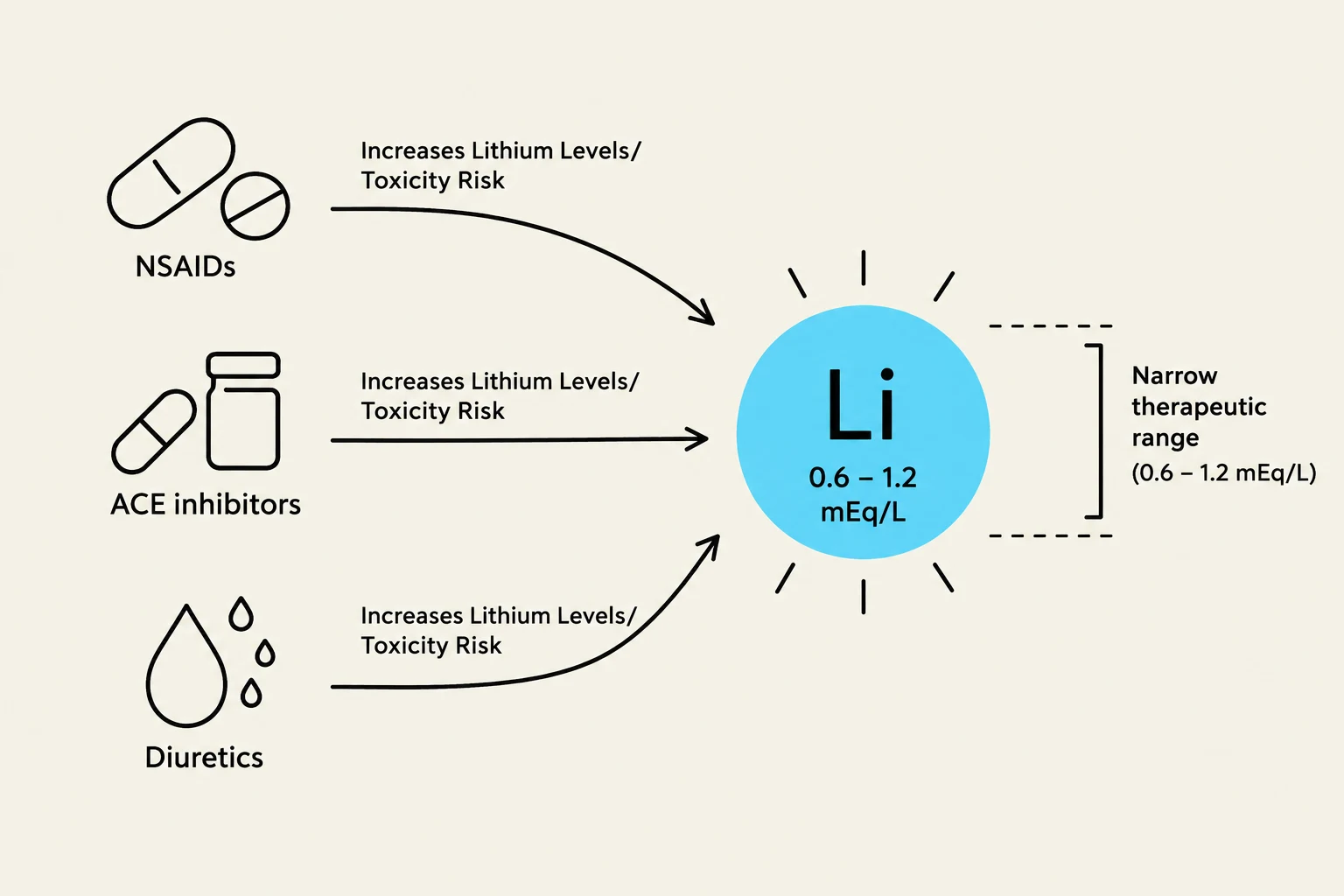
High-Yield Psychotropics
- Mood Stabilizers: Lithium remains the gold standard for suicide prevention in bipolar disorder. However, it has a narrow therapeutic index (0.6–1.2 mEq/L). Watch for toxicity (coarse tremor, ataxia, confusion) and remember that NSAIDs, ACE inhibitors, and diuretics can increase lithium levels (mnemonic: LAnD). Lamotrigine is weight-neutral but carries a risk of Stevens-Johnson Syndrome (SJS); you must monitor for fever, malaise, or a rash. Depakote requires monitoring for hepatotoxicity, pancreatitis, and hyperammonemic encephalopathy.
- Antipsychotics: Clozapine is uniquely indicated for reducing suicidality in schizophrenia, but requires strict ANC (Absolute Neutrophil Count) monitoring due to the risk of neutropenia. Risperidone is associated with hyperprolactinemia via the tuberoinfundibular pathway. For acute agitation in the ER, IM ziprasidone (Geodon) is a preferred option. Note that combining ziprasidone with citalopram increases the risk of QT prolongation.
- Antidepressants: SSRIs are first-line, but be aware of the 5-week washout period required when switching from an MAOI to an SSRI to prevent Serotonin Syndrome. Serotonin syndrome presents with hyperreflexia, clonus, and fever. Bupropion can cause a false-positive urine screen for amphetamines.

Keep reading for free.
Create an account to finish this reading and make it part of your study routine.
Continue reading freeAlready have an account? Log in
Updated