Psychiatric Disorders and Substance Use Interventions
An overview of psychiatric disorders and substance use, covering signs, symptoms, and management strategies for common clinical presentations, including trauma, suicide risk, substance use disorders, eating disorders, neurocognitive disorders, and personality disorders.
Understanding psychiatric disorders and substance use requires a dual focus on recognizing acute physiological symptoms and implementing long-term behavioral or pharmacological interventions. Whether managing a patient in the throes of an opioid overdose or supporting someone through the recovery of a personality disorder, clinicians must balance immediate safety with long-term stabilization. This article explores the critical signs, symptoms, and management strategies for the most common psychiatric and substance-related presentations encountered in clinical practice.
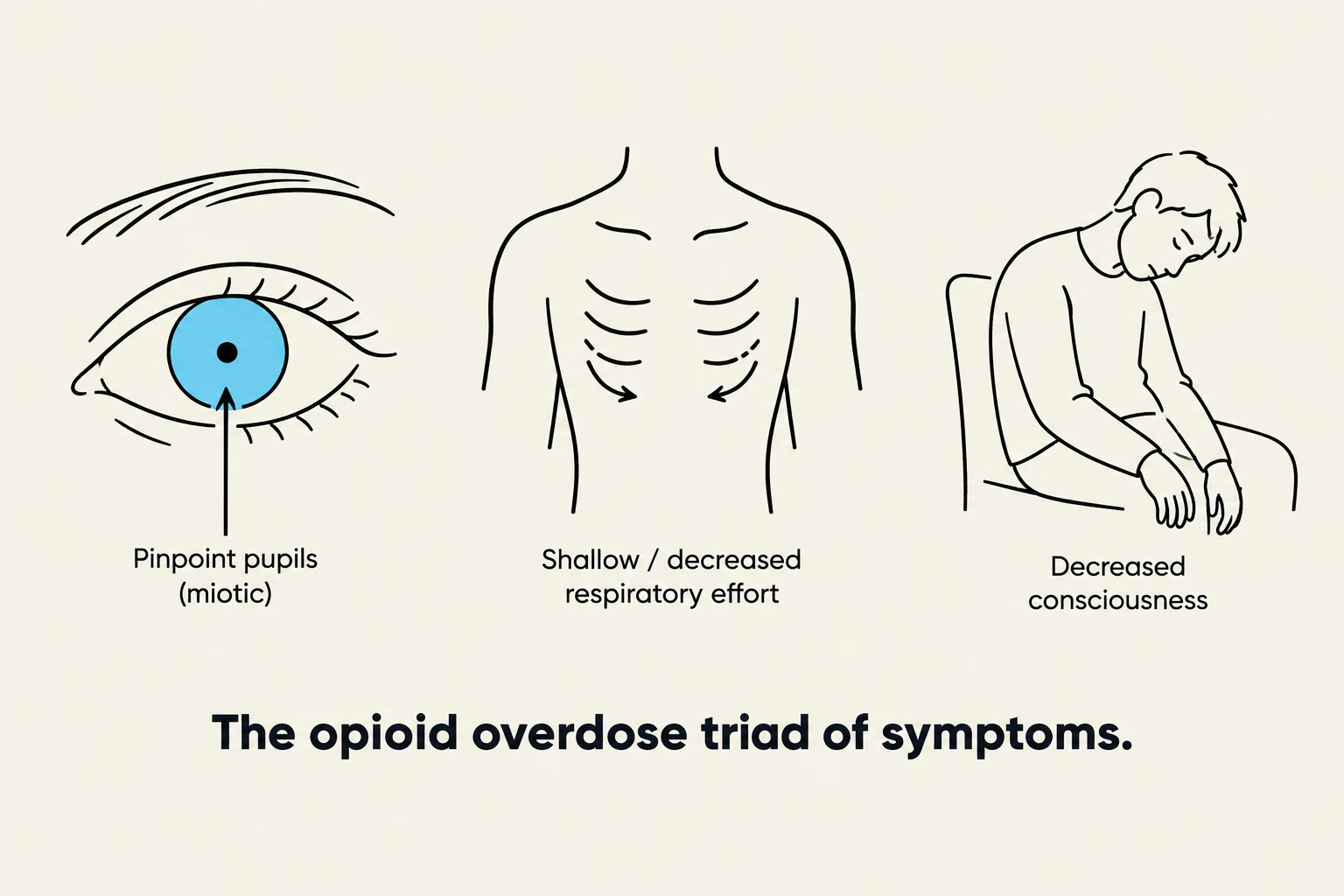
The opioid overdose triad of symptoms includes pinpoint pupils, shallow or decreased respiratory effort, and decreased consciousness.
Trauma and Suicide Risk Assessment
Trauma-related disorders often present with overlapping symptoms, making the distinction between them a matter of timing and duration. Post-Traumatic Stress Disorder (PTSD) is characterized by a constellation of symptoms including nightmares, flashbacks, hypervigilance, avoidance of triggers, and emotional numbing. While Acute Stress Disorder shares these exact symptoms, it is distinguished from PTSD by the duration of the symptoms; PTSD is diagnosed when these symptoms persist over a longer period.
When assessing for suicide risk, clinicians must differentiate between overt and covert signs:
Overt Signs: Obvious verbalizations of intent (e.g., "I can't live this life anymore") or behavioral changes such as giving away private possessions.
Covert Signs: More subtle, hidden indicators, such as an increase in substance use or frequent talk about death.
Effective assessment involves weighing risk factors (such as age, isolation, or recent loss) against protective factors (such as strong family ties or community involvement) to determine the level of intervention required.
Clinical Tip: An overt statement of suicidal intent is a psychiatric emergency. The priority is to ensure the patient's safety by transporting them to a hospital for immediate help.
Substance Use Disorders
Substance use disorders require distinct management strategies depending on whether the patient is experiencing intoxication, withdrawal, or requires maintenance therapy.
Alcohol and Benzodiazepines
Alcohol and benzodiazepines are both GABAergic CNS depressants. Because they act on the same neurotransmitter system, they should never be used together, as the combination significantly increases the risk of respiratory depression and decreased consciousness.
Alcohol Withdrawal:
Withdrawal can be potentially fatal. Early signs appearing within a few hours include tremors, nausea, vomiting, and sweating. If left unmanaged, late-stage signs can include life-threatening seizures.
Interventions:
Substitution Therapy: During acute withdrawal, benzodiazepines are used as a substitution therapy because they work on the same GABA receptors as alcohol, providing a safer way to taper the CNS.
Aversion Therapy:Disulfiram (Antabuse) is often a last-resort treatment. It causes a severe physical reaction if alcohol is consumed. Patient education is critical: they must avoid not just beverages, but any product containing alcohol, such as mouthwash or aftershave.
Maintenance: For long-term sobriety, Acamprosate or Naltrexone (an opioid antagonist) are effective options.
Opioids
Opioid intoxication is often identified by a specific "triad" of symptoms: pinpoint pupils, respiratory depression, and a decreased level of consciousness. In the event of an overdose, Naloxone (Narcan) is the primary emergency intervention used to reverse the effects.
For long-term management of opioid use disorder, three main medications are approved for both withdrawal and maintenance:
Methadone
Naltrexone
Suboxone (a combination of buprenorphine and naloxone).
Note: When administering Suboxone, it is vital to ensure all other opioids have cleared the patient's system to avoid an unpleasant reaction.
Stimulants
While less common in some curricula, stimulant overdose presents differently than depressants. Signs include dilated pupils, respiratory rates below 10, and oxygen saturation levels dropping below 80%.
Eating Disorders
Eating disorders carry significant physiological risks that require close monitoring of vital signs and electrolytes.
Anorexia Nervosa: Patients are typically grossly underweight. Physical consequences include lanugo (fine, downy hair), bradycardia (slow heart rate), hypotension (low blood pressure), and amenorrhea (loss of menstruation).
Bulimia Nervosa: This disorder involves binge eating followed by compensatory behaviors such as vomiting, laxative abuse, fasting, or excessive exercise. These behaviors frequently lead to dangerous electrolyte imbalances, which can be fatal.
Neurocognitive Disorders
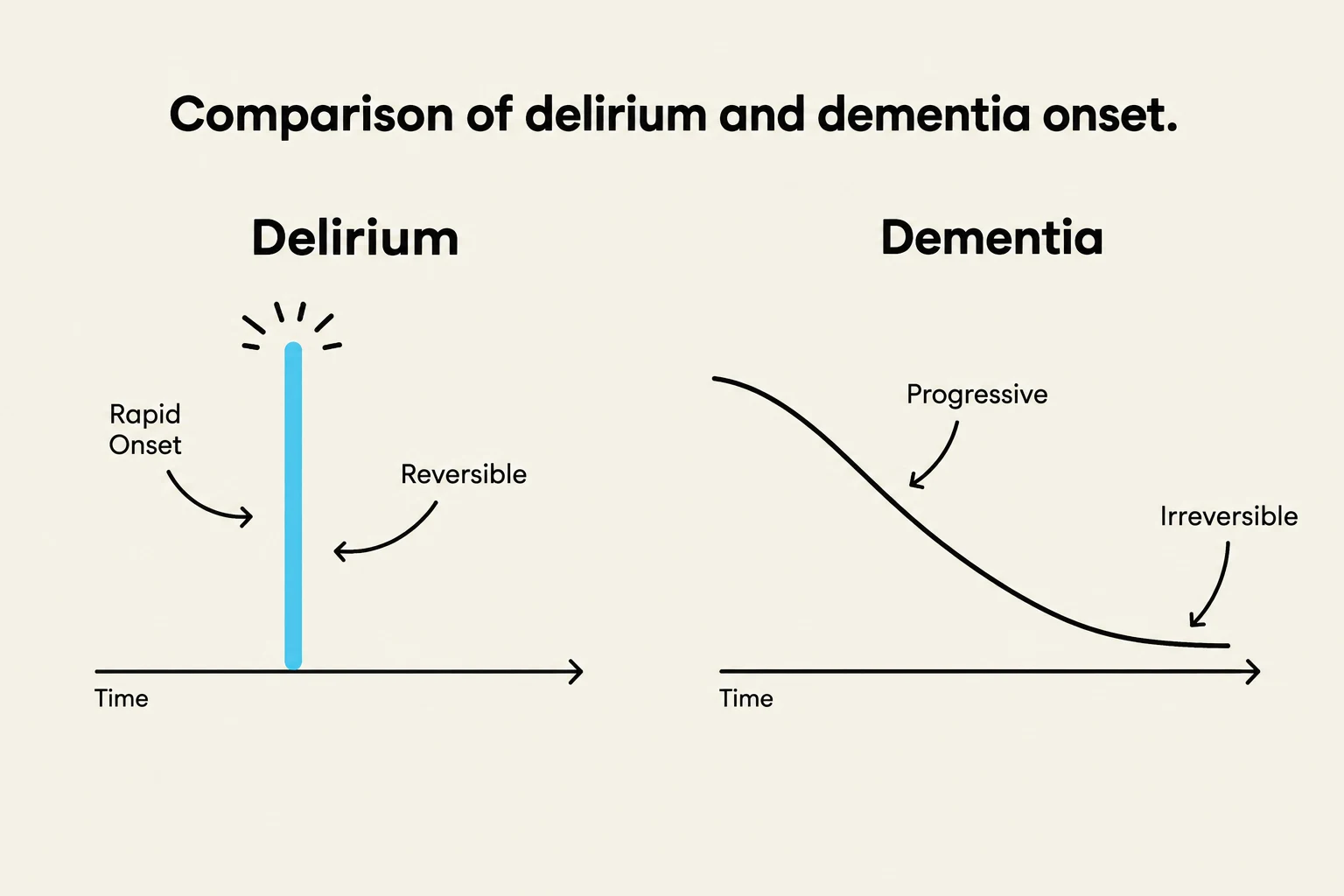
This graphic compares the onset of delirium and dementia, illustrating delirium as having a rapid and reversible onset, while dementia is depicted as progressive and irreversible.
Clinicians must distinguish between acute, reversible states and progressive, irreversible declines.
Delirium: Characterized by a rapid onset of confusion. It is often reversible if the underlying systemic cause (such as toxins or infection) is treated.
Dementia (e.g., Alzheimer’s): A progressive, irreversible decline in cognition, particularly short-term memory.
Pathophysiology of Alzheimer's:
The disease is driven by two primary mechanisms:
Beta-amyloid plaques: Fatty deposits that attach to neurons and interfere with neurotransmission.
Tau tangles: Stringy protein tangles that disrupt the internal structure of the neuron.
Pharmacologic Management:
Treatment focuses on slowing progression rather than cure. Cholinesterase inhibitors (such as Aricept/donepezil) are commonly used to manage symptoms.
Crisis Intervention and Personality Disorders
De-escalation and Crisis Care
When a patient is escalating or displaying anger, de-escalation techniques are essential for safety. Effective methods include:
Maintaining an open stance (non-threatening body language).
Using a soft, calm voice.
Using direct communication (e.g., "I want to understand what you are feeling right now").
In cases of Rape Trauma Syndrome, the nurse's role is to provide a safe, private environment and avoid "careless measures" (such as frequent, unnecessary interruptions) that might cause re-traumatization.
Personality Disorders
Cluster B personality disorders (including Borderline and Antisocial personality disorders) are characterized by high levels of impulsivity and issues with abandonment. Antisocial personality disorder often has an antecedent history of conduct disorder.
Principles of Recovery
Recovery is a process that must be self-directed and empowering for the individual. While clinical support is necessary, the impetus for change must come from the patient themselves.
Keep reading for free.
Create an account to finish this reading and make it part of your study routine.