


In the complex environment of a eukaryotic cell, proteins must be precisely delivered to their functional destinations to ensure survival and proper metabolism. While some proteins remain in the cytosol, many are destined for the endoplasmic reticulum (ER), the Golgi apparatus, lysosomes, or secretion outside the cell. The process of moving these proteins across or into the ER membrane is known as translocation.
The Role of the Endoplasmic Reticulum
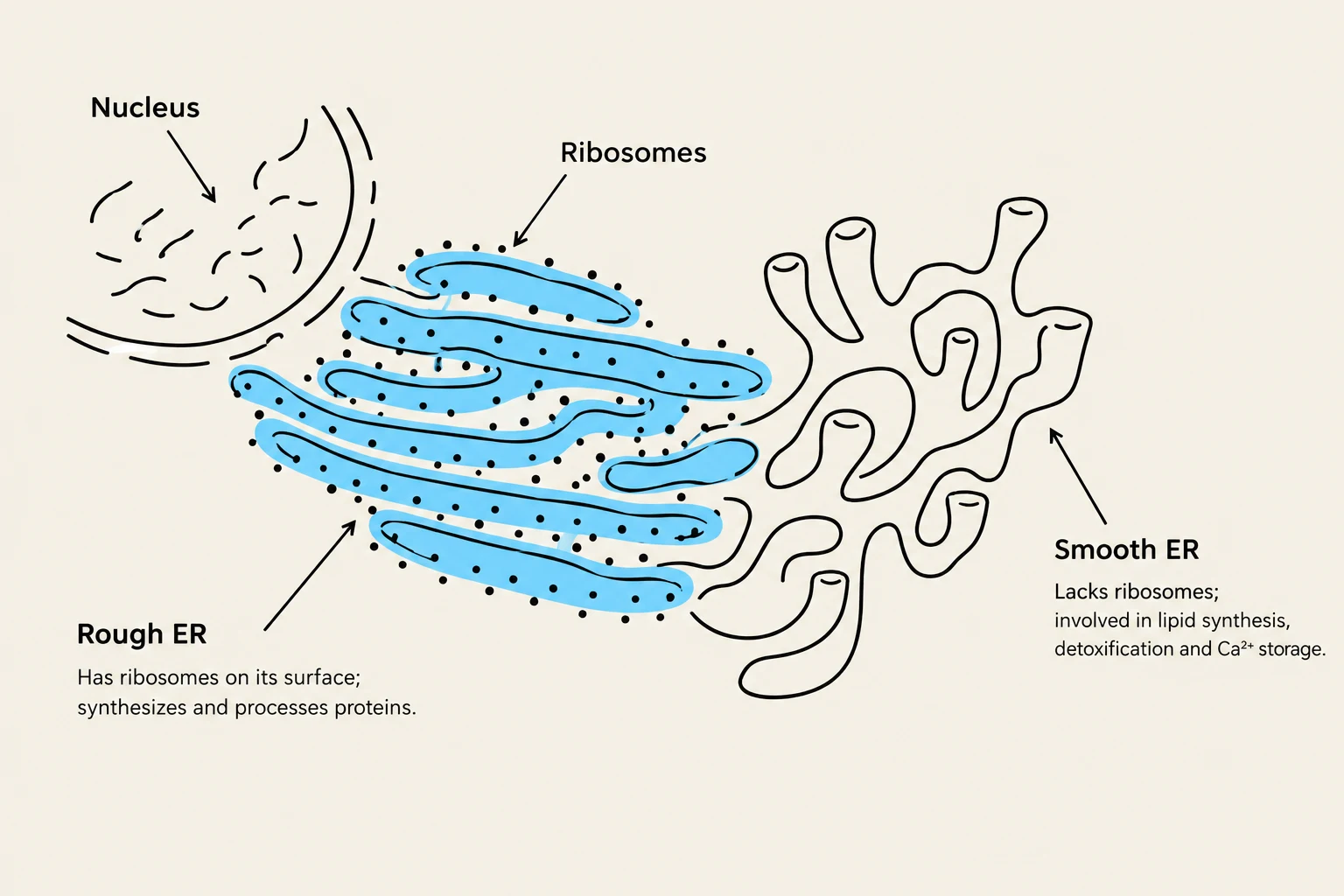
The endoplasmic reticulum is a vast system of interconnected membranous sacs and tubes that extends throughout most of the cell. It serves as a major site for the synthesis of new membranes and the production of proteins intended for distribution to various organelles or the plasma membrane.
The ER is divided into two distinct regions:
- Rough Endoplasmic Reticulum (Rough ER): Characterized by the presence of ribosomes attached to its cytosolic surface. These ribosomes are actively synthesizing proteins that are either inserted into the ER membrane or delivered into the interior space, known as the ER lumen.
- Smooth Endoplasmic Reticulum (Smooth ER): Lacks ribosomes and is specialized for functions such as lipid synthesis and detoxification.
Targeting via the ER Signal Sequence
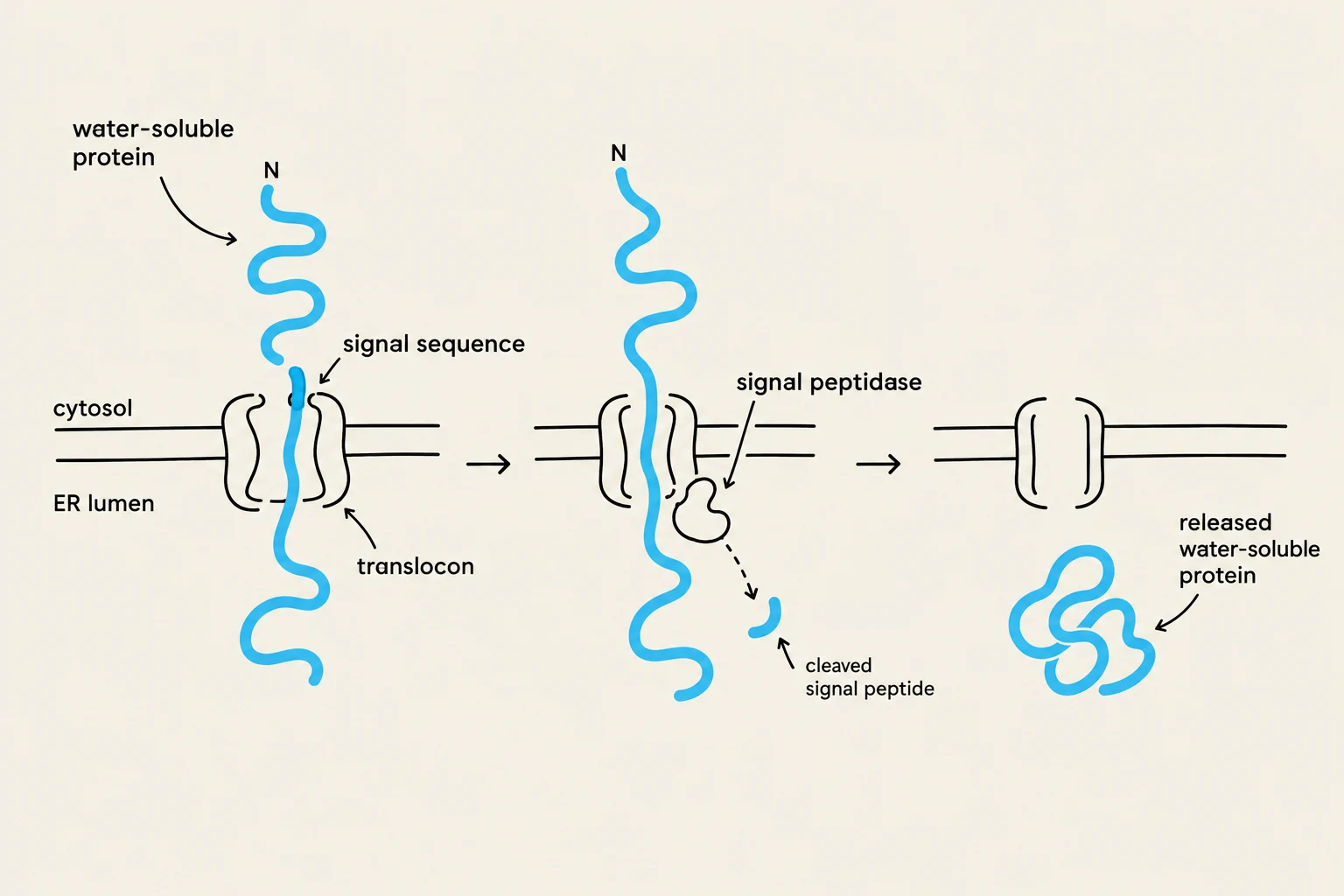
Not every protein synthesized by a ribosome is destined for the ER. The "address label" that directs a protein to the ER is a specific segment of amino acids called the ER signal sequence. This sequence is typically located at the N-terminus of the growing polypeptide and consists of a stretch of hydrophobic amino acids.
Keep reading for free.
Create an account to finish this reading and make it part of your study routine.
Continue reading freeAlready have an account? Log in
Updated