


Proteins are the functional workhorses of the cell, and their ability to perform specific biological tasks—from catalyzing reactions to providing structural support—is entirely dependent on their complex, three-dimensional shapes. This shape is not random; it is the result of a highly organized hierarchical folding process driven by the chemical properties of amino acids and the physical laws of thermodynamics.
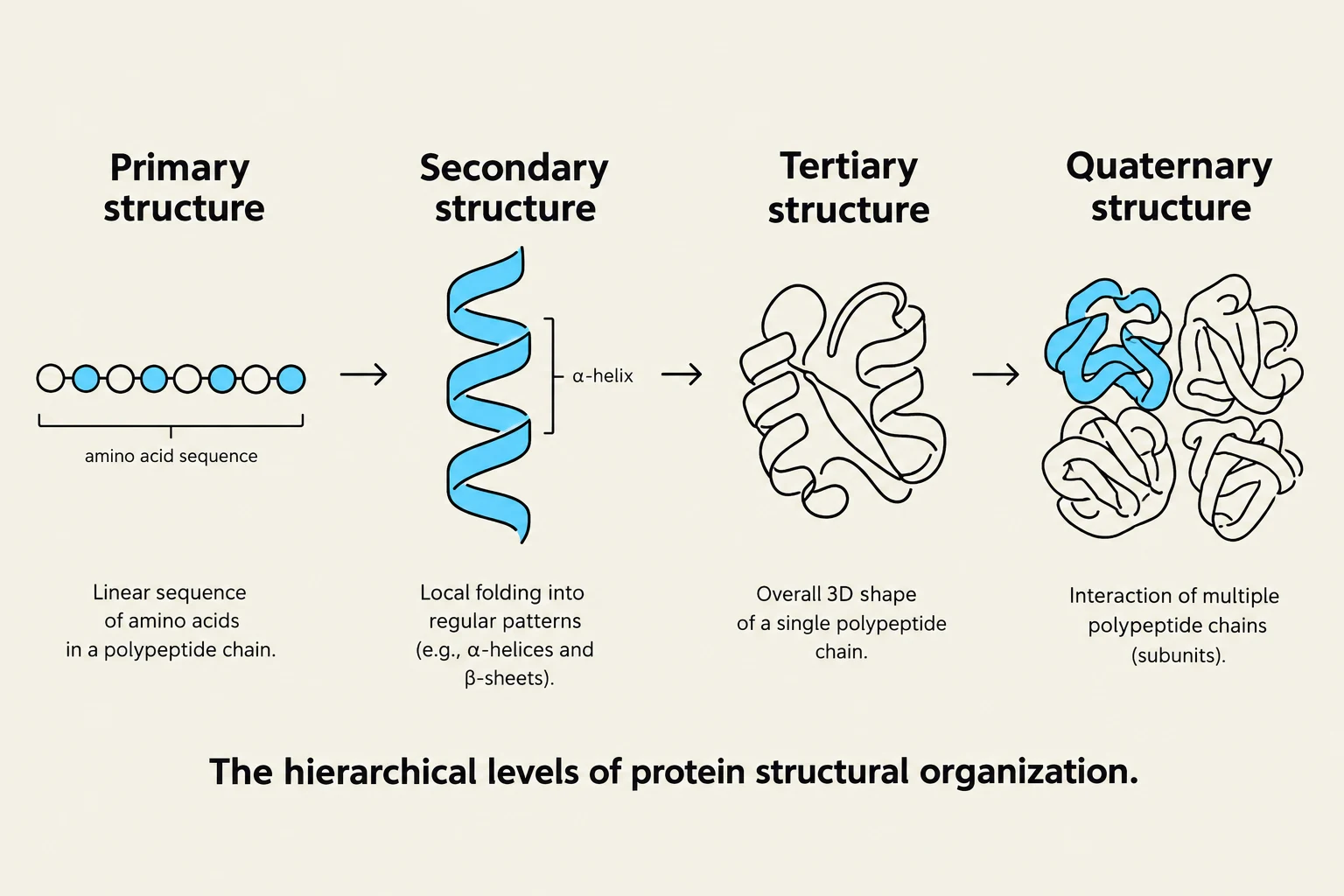
The Hierarchical Levels of Protein Structure
To understand how a protein functions, we must view it through several levels of organization, moving from a simple string of molecules to a complex, multi-subunit machine.
- Primary Structure: This is the linear sequence of amino acids in a polypeptide chain. It is the fundamental blueprint that dictates all subsequent folding levels.
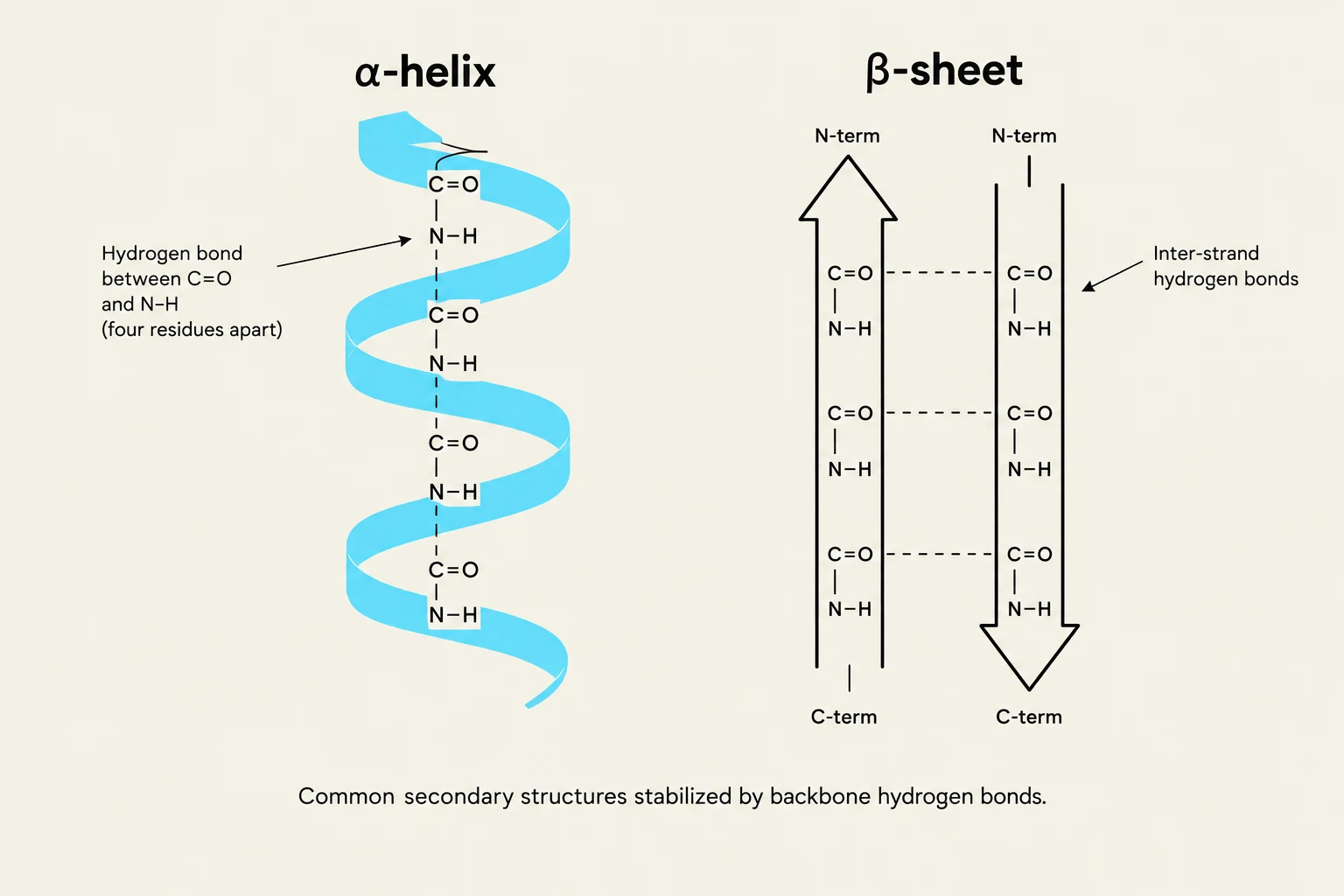
- Secondary Structure: This refers to local spatial alignments of the polypeptide backbone. These patterns, such as -helices and -strands, occur without regard to the specific side chains and are primarily stabilized by hydrogen bonds.
- Supersecondary Structural Motifs: These are specific combinations of secondary structural elements that appear frequently in proteins.
- Protein Domains: A domain is a distinct, stable unit of a protein that can often fold and function independently.
- Tertiary Structure: This is the full three-dimensional fold of an entire polypeptide chain. This level of structure is critical for the protein's biological function and catalytic mechanism.
- Quaternary Structure: Many functional proteins consist of two or more polypeptide chains (subunits) interacting in a specific spatial arrangement.
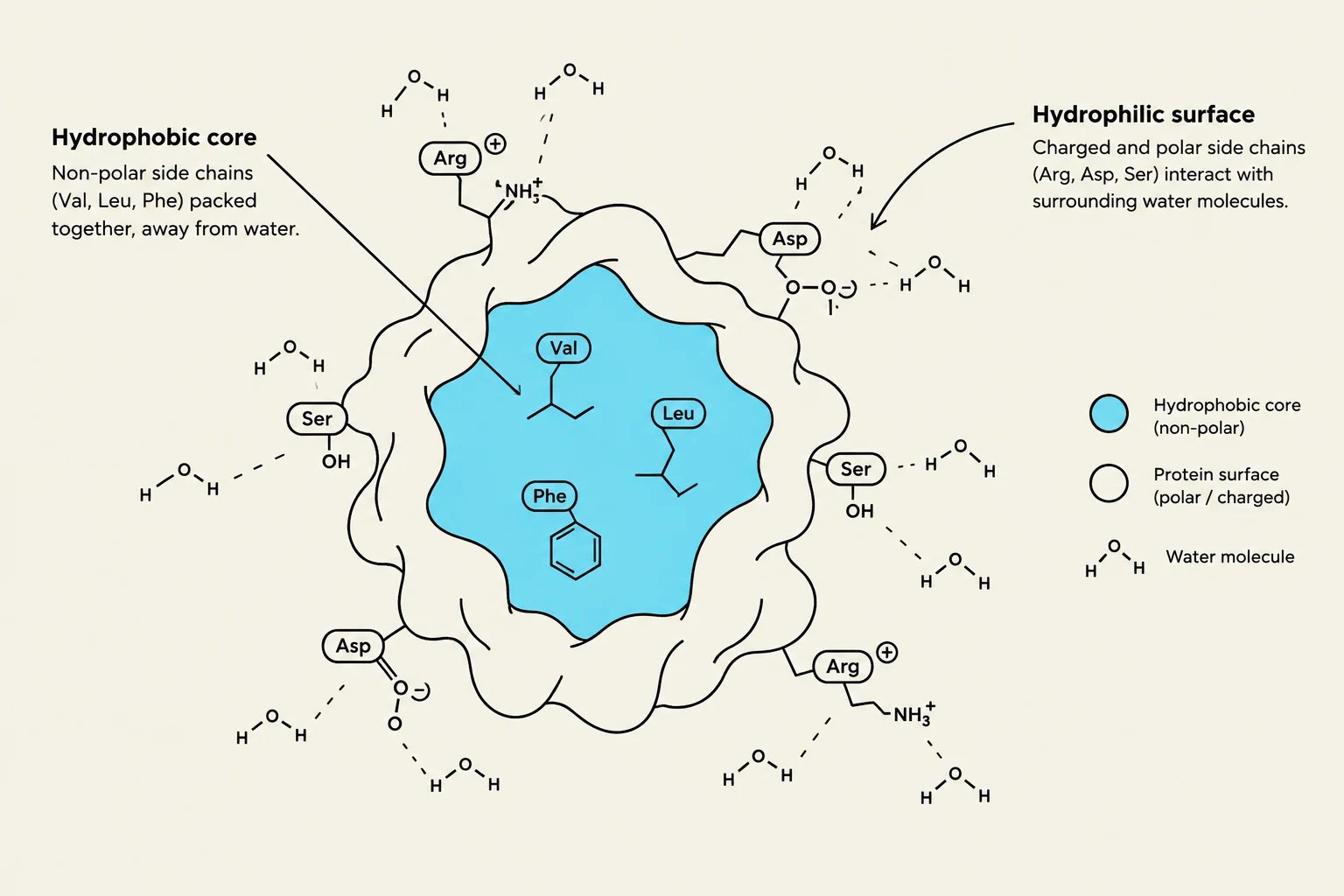
Exam Tip: Remember that the "driving factor" in protein folding is often the hydrophobic effect, which forces the global conformation as non-polar residues seek to avoid water.
Keep reading for free.
Create an account to finish this reading and make it part of your study routine.
Continue reading freeAlready have an account? Log in
Updated