Explores the fundamental processes of life, including the central dogma of molecular biology (DNA to RNA to protein), the cell cycle's role in growth and division, and cell differentiation. It also touches upon cell signaling and the consequences of system failures like cancer and apoptosis.
At the most fundamental level, life is a highly orchestrated series of chemical reactions and information transfers. To understand how a single fertilized egg becomes a complex human being, we must look at the interplay between the genetic blueprint (DNA), the functional machinery (proteins), and the regulated process of cell division (the cell cycle). When these systems work in harmony, the body grows and repairs itself; when they fail, the consequences can lead to diseases such as cancer.
The Blueprint: The Human Genome and DNA
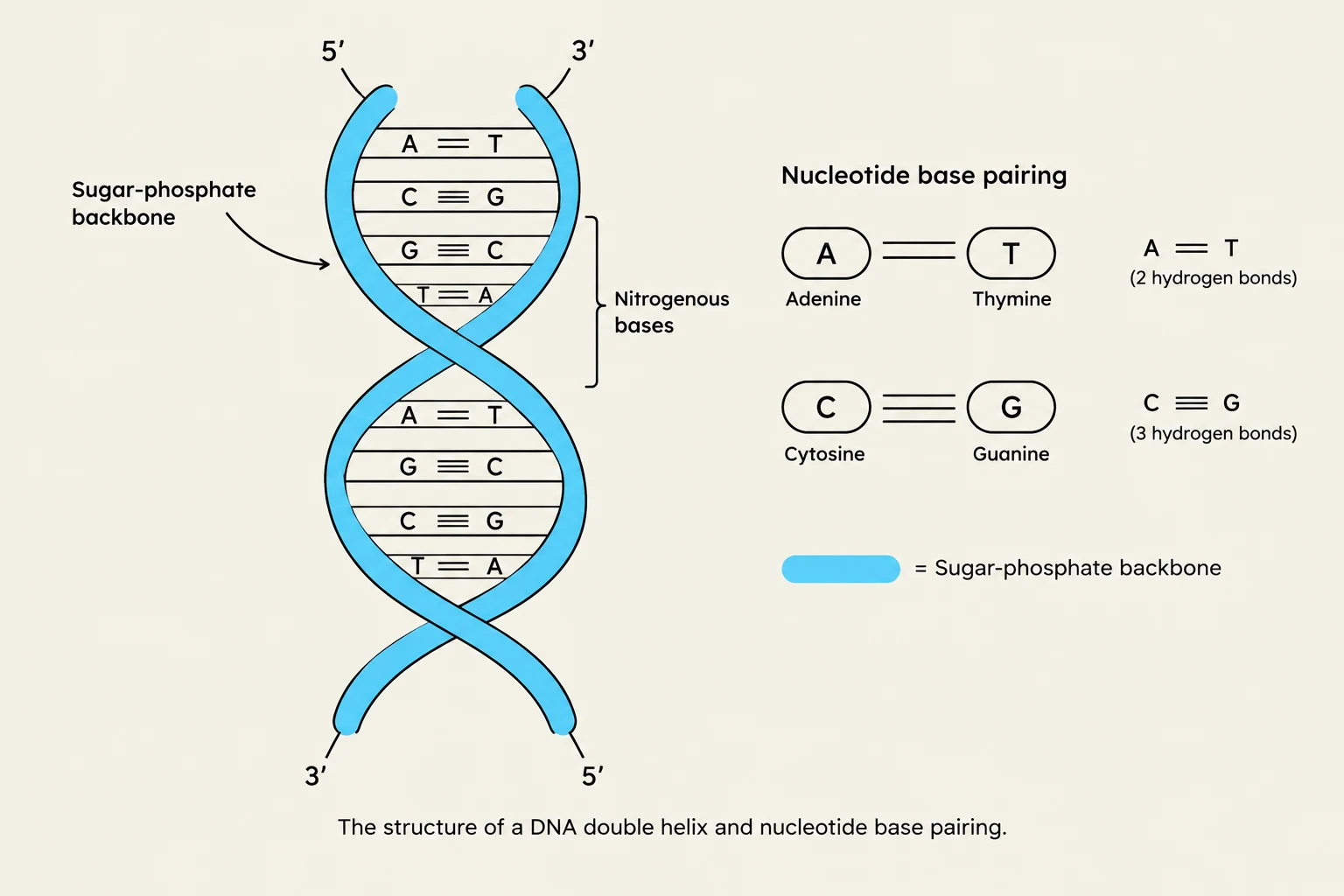
The structure of a DNA double helix and nucleotide base pairing.
The instructions for building and operating a cell are stored in the human genome. This information is housed in DNA (deoxyribonucleic acid), a double-stranded molecule characterized by a sugar-phosphate backbone. The two strands run antiparallel to one another, meaning they run in opposite directions (one 5′→3′ and the other 3′→5′).
DNA is composed of four nucleotide bases: Adenine (A), Guanine (G), Cytosine (C), and Thymine (T). These bases pair specifically: A pairs with T (via two bonding sites), and C pairs with G (via three bonding sites).
In humans, the genome is organized into 46 chromosomes, arranged in 23 pairs. These include:
Autosomes: 22 pairs of chromosomes found in all non-reproductive (somatic) cells.
Sex Chromosomes: 1 pair (XX or XY) that determines the biological sex of an individual.
A gene is a specific section of DNA that codes for a particular trait. While the gene itself provides the code, different versions of that gene are known as alleles (for example, an allele for brown eyes versus an allele for green eyes).
From Code to Action: Protein Structure and Function
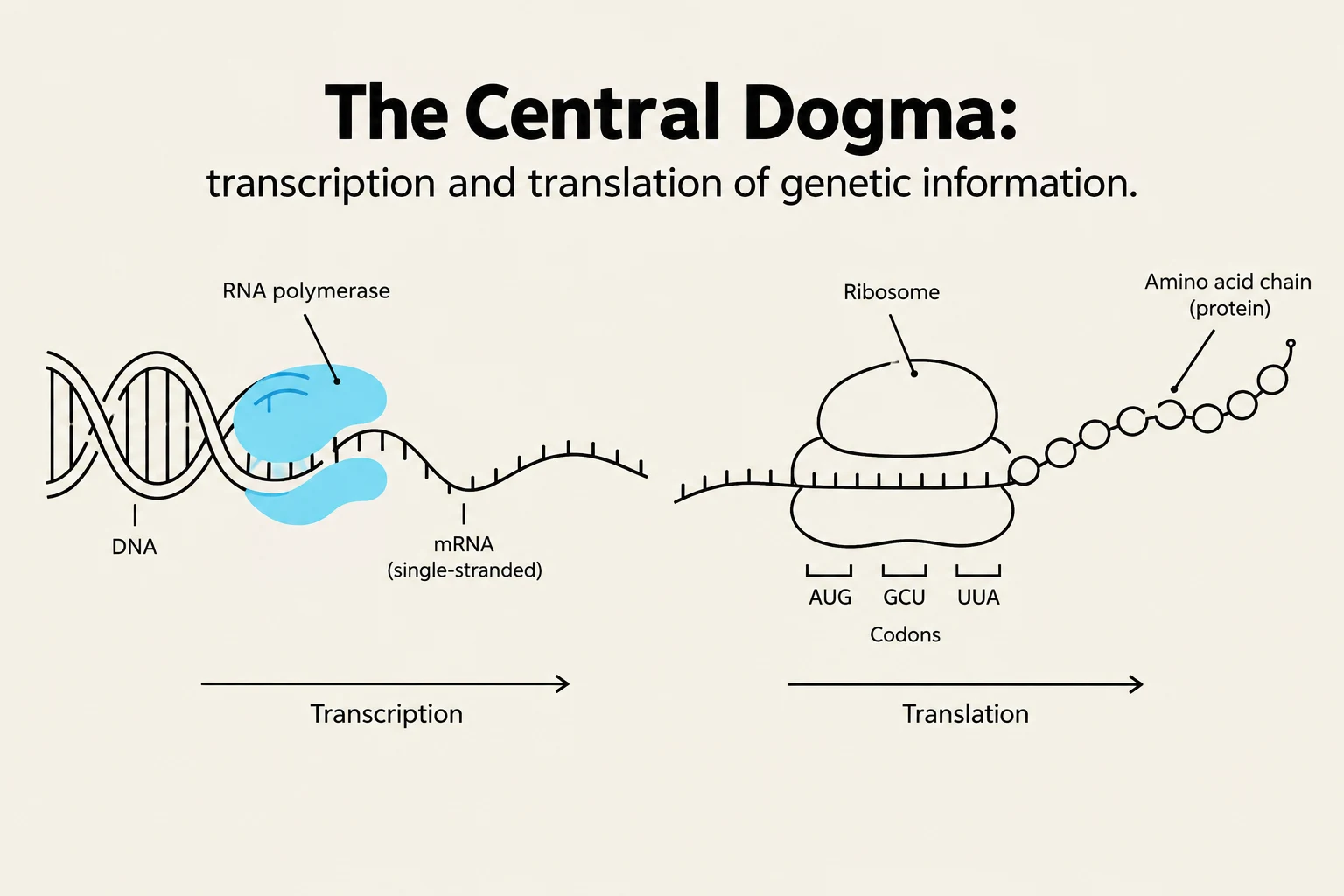
The Central Dogma illustrates the process of transcription and translation of genetic information, showing DNA being transcribed into mRNA, which is then translated by a ribosome into an amino acid chain (protein).
While DNA holds the information, proteins perform the actual work. The flow of biological information follows the "Central Dogma": DNA is transcribed into RNA, which is then translated into protein.
Transcription: RNA polymerase uses a DNA template to create a matching RNA molecule.
Translation: The cell uses the mRNA instructions to build proteins, where groups of three bases (called a codon) correspond to specific amino acids.
Proteins are the functional units of the cell, and their ability to do work is entirely dependent on their shape. This is often described as a "lock and key" mechanism, where only proteins with complementary shapes can fit together.
Key Protein Functions
Catalysis: Speeding up chemical reactions.
Defense: Antibodies attacking pathogens.
Signaling: Conveying messages between cells.
Structure & Movement: Shaping cells and moving molecules within them.
Transport: Allowing molecules to enter and exit cells.
Exam Tip: If a question asks how a change in the amino acid sequence affects a protein, remember that structure defines function. Changing the sequence can change the shape, which can render the protein non-functional.
The Cell Cycle: Growth and Division
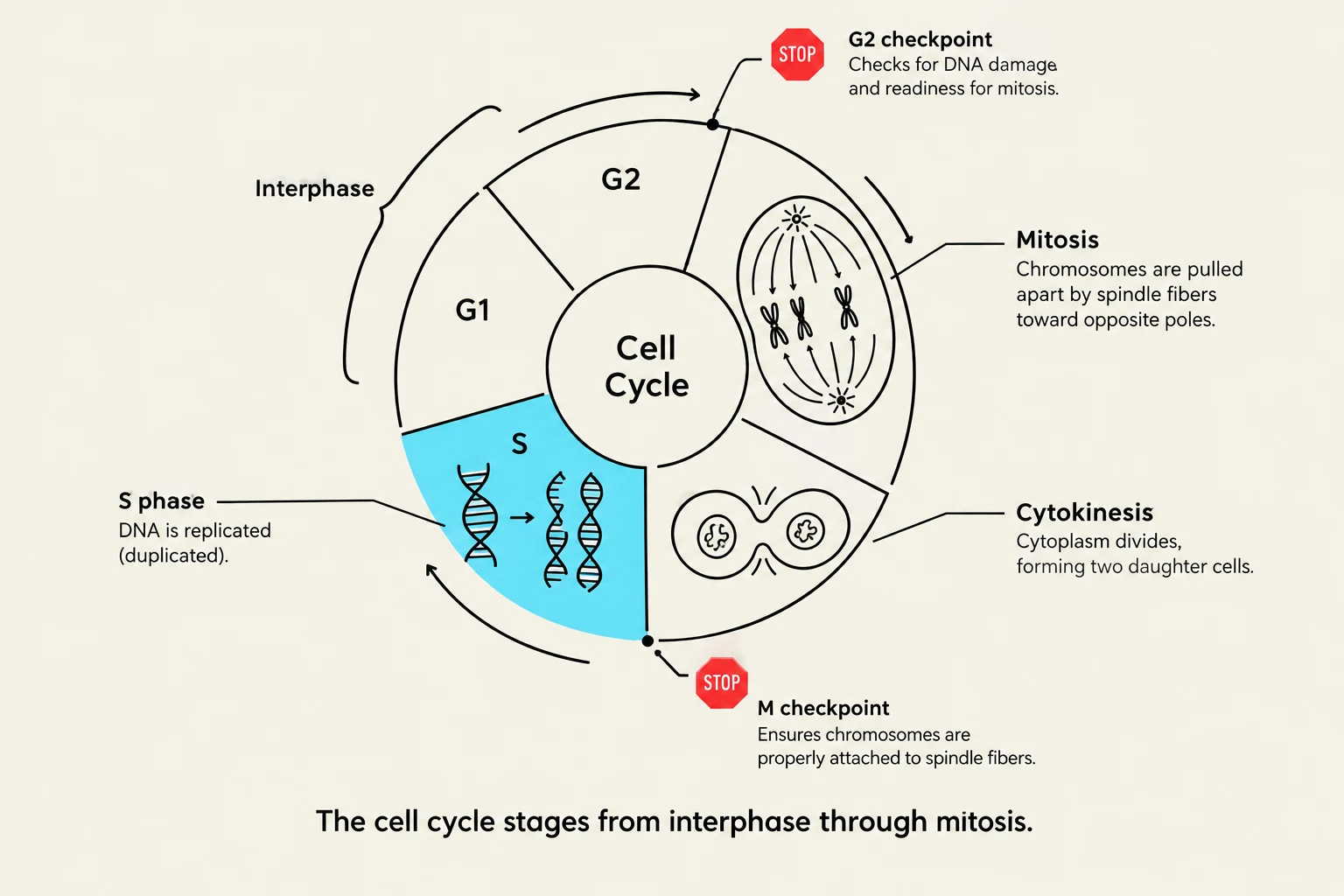
The cell cycle stages from interphase through mitosis, including G1, S phase, G2, mitosis, and cytokinesis, with checkpoints.
The cell cycle is the process by which a cell divides into two genetically equivalent daughter cells. This process is divided into two main stages: Interphase and Mitosis.
Interphase: Preparation and DNA Synthesis
Most of a cell's life is spent in Interphase, where it prepares for division.
G1 Phase: The cell grows and interacts with its environment. During this phase, cells also make critical decisions about whether to divide or differentiate.
S Phase (DNA Synthesis): The cell replicates its DNA. The existing strand serves as a template to create new copies, ensuring each daughter cell receives a full set of genetic information.
G2 Phase: The cell undergoes final preparations and a final check before division.
Mitosis and Cytokinesis
Mitosis is the process of actual cell division used for growth and repair. During this stage, organelles like the centrosome produce microtubules (mitotic spindles) to separate chromosomes. The cycle concludes with cytokinesis, where the cell physically divides into two.
Quality Control: Checkpoints
To prevent errors, the cell utilizes checkpoints. These act as quality control mechanisms to ensure that DNA integrity is maintained and that all necessary steps have been completed before the cell advances to the next phase.
Differentiation and Stem Cells
Not all cells are intended to divide indefinitely. Cell differentiation is the process where a cell expresses a specific set of genes and proteins to perform a specialized task.
This process is driven by stem cells. When a stem cell divides, it can produce:
One new stem cell (to maintain the pool).
One designated differentiated cell (to perform a specific function).
For example, cells in the intestine have a high turnover rate and are replaced every 4–7 days through this cycle of stem cell division and subsequent differentiation.
Communication and Signaling Pathways
Cells do not operate in isolation; they must sense and respond to their environment through cell signaling pathways.
Signal Transduction: This is the process of transmitting a molecular signal from the outside of the cell to the interior to trigger a response.
Mitogenic Signaling: This specific type of signaling promotes cell growth and division. It is often triggered by mitogens or growth factors, such as the Epidermal Growth Factor (EGF).
When Systems Fail: Cancer and Apoptosis
When the regulation of the cell cycle, gene expression, or signaling breaks down, disease occurs.
Cancer and Molecular Lesions
Cancer is characterized by uncontrolled cell division. This often begins with cancer stem cells that have accumulated molecular lesions (mutations). These mutations can cause cells to:
Reproduce uncontrollably.
Live too long by failing to undergo apoptosis.
Remain immature and fail to differentiate into the proper cell types.
Apoptosis: Programmed Cell Death
To protect the organism, cells have a built-in "self-destruct" mechanism called apoptosis. This programmed cell death is triggered when a cell becomes too old, accumulates significant DNA damage, or makes serious mistakes during division. In healthy tissue, apoptosis ensures that damaged or potentially cancerous cells are removed before they can cause harm.
Keep reading for free.
Create an account to finish this reading and make it part of your study routine.