


In the study of chemistry, substances are often categorized by how their atoms are held together and how they behave in different environments. One of the most common categories is molecular substances. These substances are defined by their unique bonding patterns, which in turn dictate their physical states, textures, and how they interact with other substances like water.
Physical Properties of Molecular Substances
Molecular substances are incredibly diverse in their physical appearance and texture. At ambient (room) temperatures, they can exist in any of the three primary states of matter: gases, liquids, or solids.
States of Matter and Texture
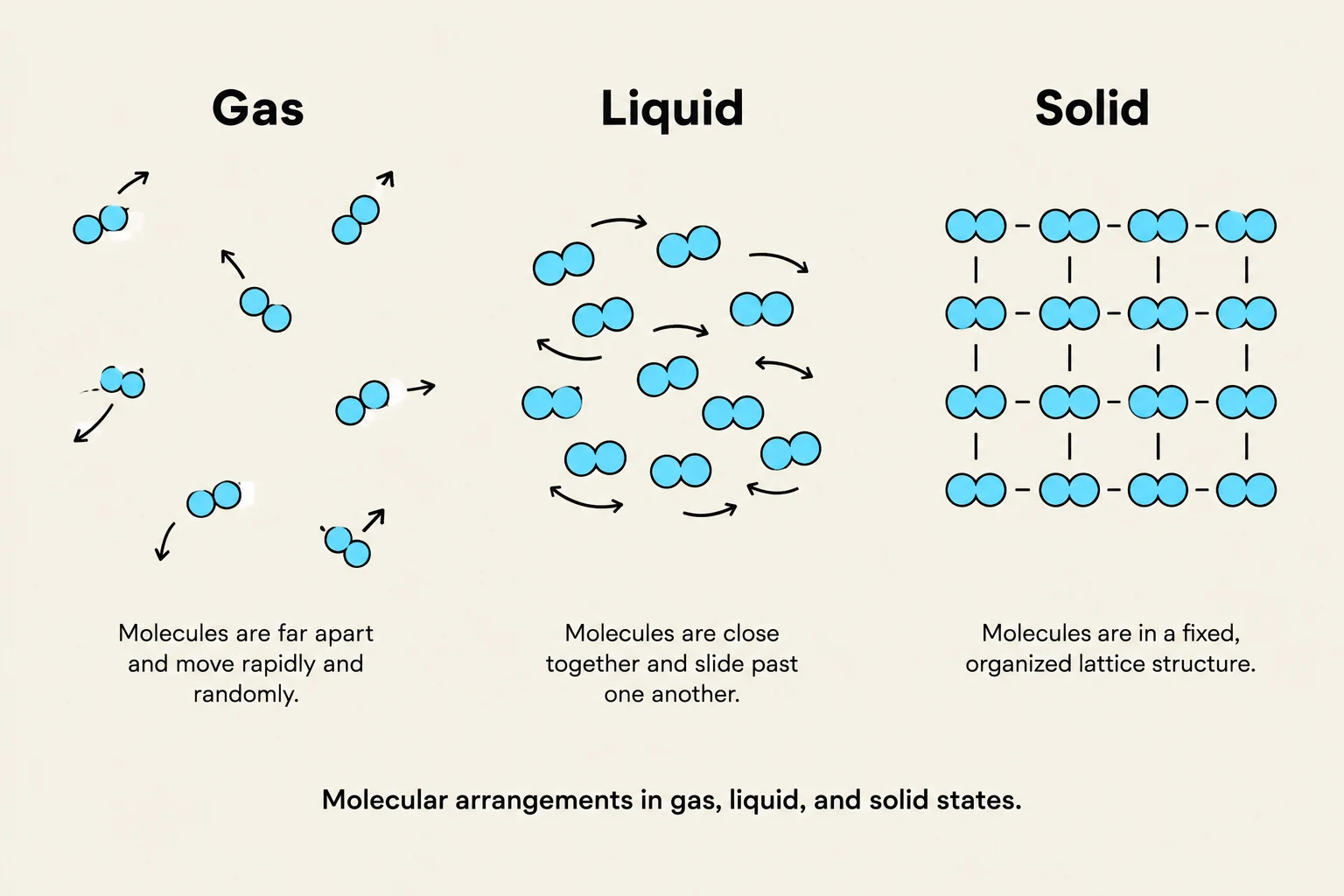
- Gases: Hydrogen () is a common example of a molecular substance that exists as a gas.
- Liquids: Water () and carbon dioxide () are classic examples of molecular liquids.
- Solids: Molecular solids can vary wildly in texture. Sugar is characterized as a hard, crystalline solid, whereas paraffin wax is described as greasy, flexible, and malleable.
Figure 2: Examples of molecular compounds in different states.
Melting and Boiling Points
A defining characteristic of molecular substances is their relatively low melting and boiling points. Because it does not require an immense amount of thermal energy to overcome the attractions between molecules, these substances transition between solid, liquid, and gas states relatively easily.

Keep reading for free.
Create an account to finish this reading and make it part of your study routine.
Continue reading freeAlready have an account? Log in
Updated