This article explores the foundational pillars of nursing professionalism, the ethical frameworks that guide decision-making, and the evolving paradigm of patient-centered care, including the ANA Code of Ethics, patient advocacy, and delegation.
Nursing is far more than a series of technical tasks; it is a complex blend of art and science that requires deep personal involvement, continuous learning, and a steadfast commitment to ethical principles. As the primary providers at the bedside, nurses serve as the "eyes and ears" of the healthcare team, often being the first to recognize when a patient’s condition is deteriorating. This article explores the foundational pillars of nursing professionalism, the ethical frameworks that guide decision-making, and the evolving paradigm of patient-centered care.
Professionalism in Clinical Practice
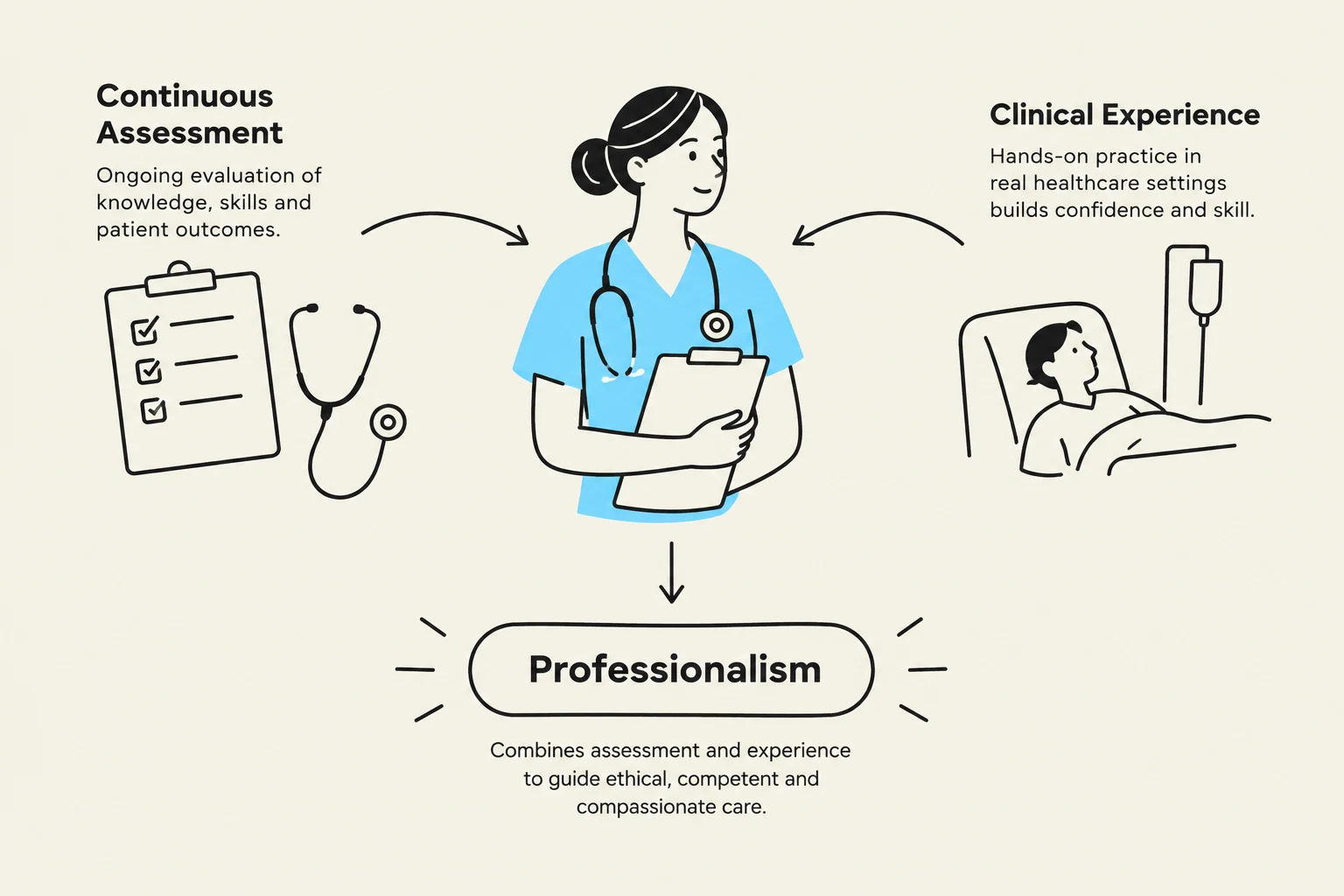
Professionalism in nursing is defined by a nurse's personal involvement in clinical practice, which includes ongoing assessment, reflective practice, and the continuous development of knowledge, skills, and experience. It is not merely about following orders, but about developing professional habits and the ability to recognize subtle health patterns through intuition and clinical judgment.
A critical component of professionalism is thorough bedside monitoring. Research indicates that as clinical experience increases, the quality of monitoring practices also improves. For example, while a physician might focus on specific diagnostic metrics, a professional nurse ensures a complete set of vital signs is captured, including blood pressure, pulse, temperature, and—crucially—respiratory rate.
Clinical Alert: Do not overlook the respiratory rate. While it is often monitored less frequently than other vitals, changes in respiration can be early indicators of life-threatening conditions such as DKA (Diabetic Ketoacidosis), sepsis, pulmonary embolism, or heart failure.
This diagram illustrates the key components of professionalism in healthcare, including continuous assessment and clinical experience, which combine to guide ethical and compassionate care.
The ANA Code of Ethics
The American Nurses Association (ANA) provides a framework for nursing responsibilities through nine propositions. These propositions, supported by interpretive statements, serve as a guide for applying ethical duties to real-world clinical scenarios.
Key ethical obligations include:
Confidentiality and Trust: Nurses must build trusting relationships with patients and families by providing accurate information and protecting privacy.
Professional Boundaries: Maintaining appropriate boundaries in relationships with both patients and colleagues is essential for professional integrity.
Quality of Care and Accountability: Nurses are responsible for all their clinical decisions, judgments, and the appropriate delegation of tasks.
Self-Care: Maintaining personal well-being is an ethical necessity; a nurse cannot effectively care for others if they are not physically or mentally well.
Social Justice: Nurses must view health as a universal right and work to reduce health inequalities.
Patient Advocacy and Safety
One of the most vital roles of the nurse is that of the patient advocate. Advocacy means protecting the patient's rights, health, and safety, even when those interests conflict with the views of the interprofessional team.
For instance, if a patient has a documented DNR (Do Not Resuscitate) status but a provider disregards this wish, the nurse has an ethical obligation to intervene and ensure the patient's wishes are respected. Advocacy also extends to identifying and reporting suspected abuse—whether physical, emotional, neglectful, or sexual—to ensure the patient is protected from harm.
Exam Tip: Remember that advocacy is a proactive role. It involves not just reacting to harm, but actively ensuring the patient's voice is heard during bedside reports and interprofessional discussions.
Delegation and Accountability
In modern healthcare, the Registered Nurse (RN) must manage a team that often includes Licensed Practical Nurses (LPNs) and Unlicensed Assistive Personnel (UAPs). Understanding the distinction between assignment and delegation is critical for safe practice:
Assignment: Performing a fundamental skill that is part of the nurse's job description.
Delegation: Allowing another person to perform a specific nursing activity or procedure that is beyond their traditional role but within their validated competence.
When delegating, the RN must assess the patient's stability and the competence of the person receiving the task. For example, if a patient becomes unstable, the RN must modify their delegation plan—perhaps instructing a UAP to monitor oxygen equipment rather than performing routine hygiene care. Even when tasks are delegated, the RN retains ultimate accountability for the outcome and must provide consistent supervision and feedback.
This diagram illustrates the process of safe and effective delegation in a healthcare setting, involving assessing patient stability, assessing delegate competence, and confirming safe delegation.
Interprofessional Collaboration and the Paradigm Shift
Nursing is moving away from a disease-focused model toward a patient-centered care paradigm. This shift requires a holistic approach that integrates the physical, psychological, intellectual, emotional, and spiritual components of the person and their environment.
To achieve this, nurses must engage in effective interprofessional collaboration. This involves:
Communication: Building effective relationships with physicians, therapists, and families.
Negotiation: Using interpersonal skills to resolve conflicts or encourage patient participation (e.g., negotiating with a patient to ambulate after surgery by coordinating pain medication).
Coordination: Organizing roles and supervising the team to ensure seamless care.
The Nursing Metaparadigm illustrates the interconnectedness of Person, Health, Environment, and Nursing as key concepts in the nursing profession.
Ethical Challenges: Lateral Violence
Professionalism is also challenged by lateral violence—unprofessional behavior between colleagues (e.g., nurse-to-nurse or nurse-to-physician). This behavior can target newly licensed nurses, leading to intimidation, decreased job satisfaction, and ultimately, compromised patient safety. To combat this, nursing leadership must promote a "culture of safety" and implement supportive programs, such as preceptor models, to help new nurses transition into practice safely and effectively.
Keep reading for free.
Create an account to finish this reading and make it part of your study routine.