


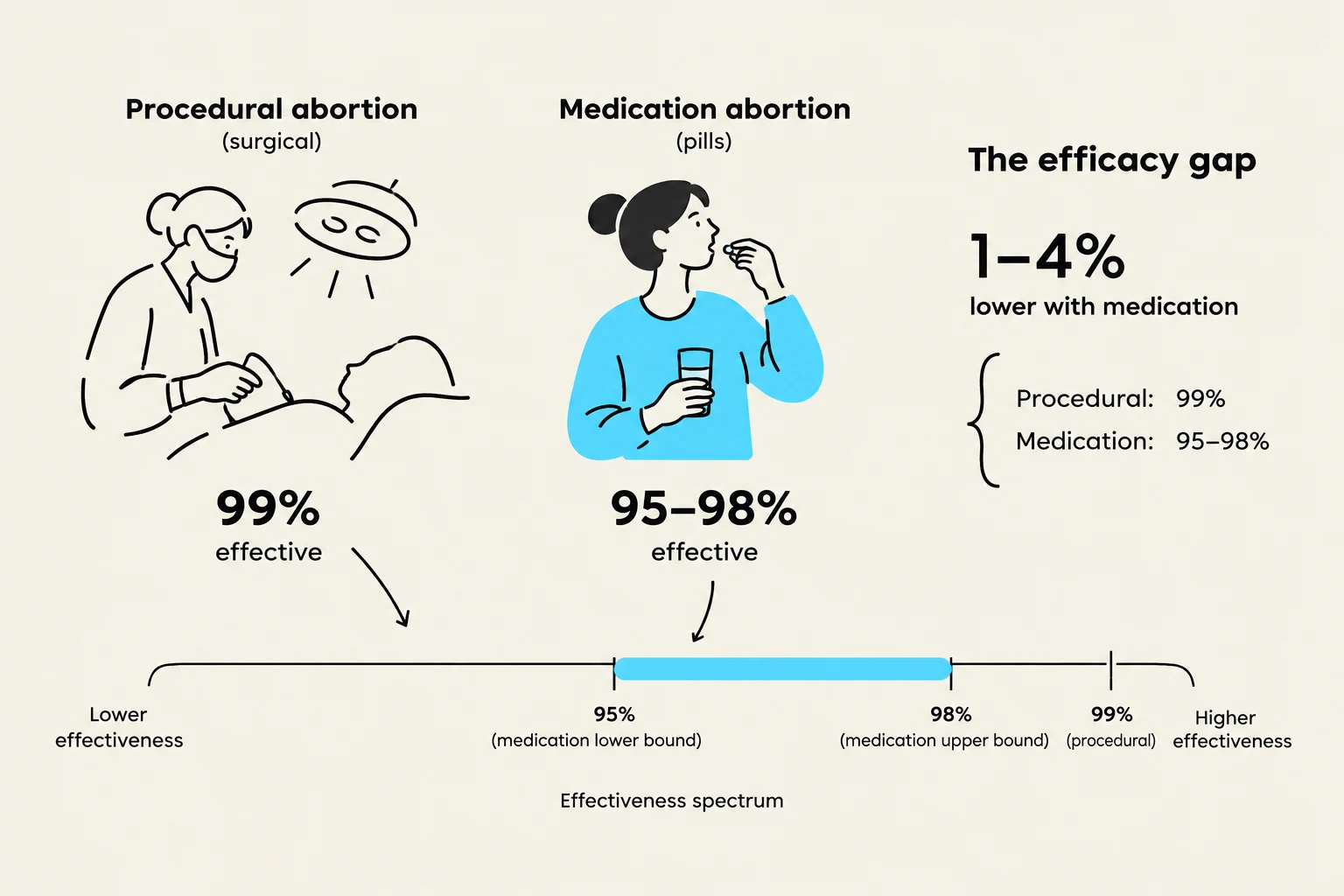
Understanding the different methods of abortion is essential for healthcare students and policymakers alike. Abortion care is primarily categorized into two distinct approaches: procedural abortion and medication abortion. While both aim to terminate a pregnancy, they differ significantly in their clinical execution, the level of provider involvement, the patient's sense of autonomy, and their overall efficacy.
As the legal and political landscape shifts, understanding these differences becomes even more critical for navigating barriers to care and the rising trend of self-managed approaches.
Procedural Abortion
Procedural abortion, often referred to as "in-clinic" or "surgical" abortion, involves a medical professional performing a physical procedure to terminate a pregnancy. This method is frequently utilized for late-term terminations, where the gestational age may require more intensive clinical intervention.
One of the primary characteristics of a procedural abortion is its efficiency in terms of time. It typically requires only a single visit to complete the procedure, and while follow-up appointments are available, they are considered optional. During the procedure itself, the healthcare provider is highly involved, managing the clinical steps directly. Because the procedure is performed by a professional in a controlled clinical setting, self-management is not an option within this category.
Study Tip: When comparing methods, remember that "Procedural" is synonymous with "High Provider Involvement" and "Single Visit."
Medication Abortion
Medication abortion offers a different clinical pathway, utilizing pharmacological agents to induce a pregnancy termination. Unlike the single-visit nature of procedural methods, medication abortion is a process that takes place over several days.
The administration of medication can occur in a clinical office or at home, often allowing for asynchronous administration, meaning the patient may take the doses at different times or locations. While a provider may supervise the initial administration, the patient's experience continues after leaving the clinic; for instance, bleeding may persist for several weeks following the use of the medication.
Keep reading for free.
Create an account to finish this reading and make it part of your study routine.
Continue reading freeAlready have an account? Log in
Updated