


Have you ever ridden a bicycle, typed on a keyboard, or played a musical instrument without having to consciously think about every individual movement? This seamless ability to perform complex tasks is not a result of "remembering" facts, but rather a result of procedural memory. Unlike the memory you use to recall a phone number or a historical date, procedural memory governs the "how" of human behavior, allowing us to master skills through repetition and practice.
Understanding Procedural Memory
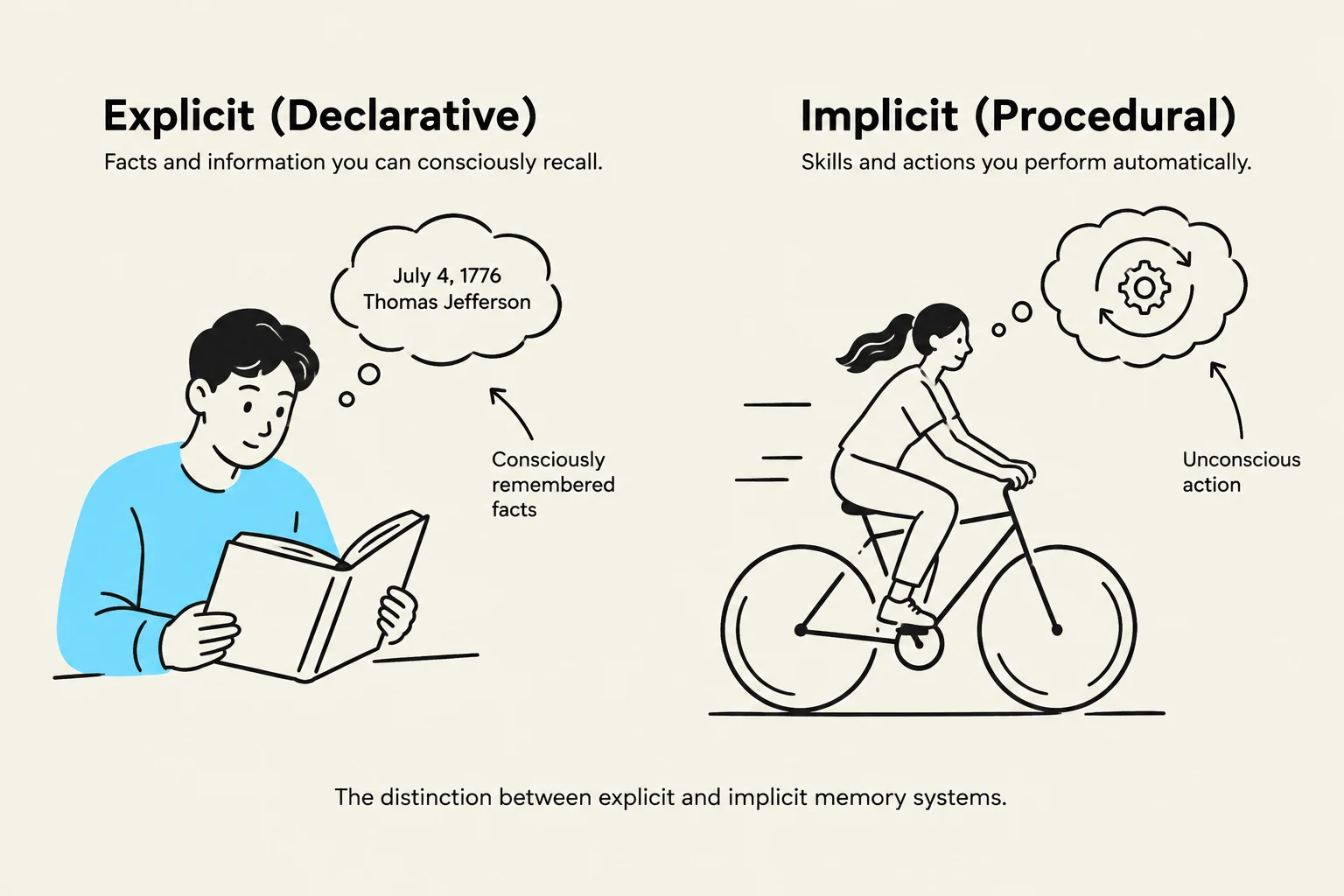
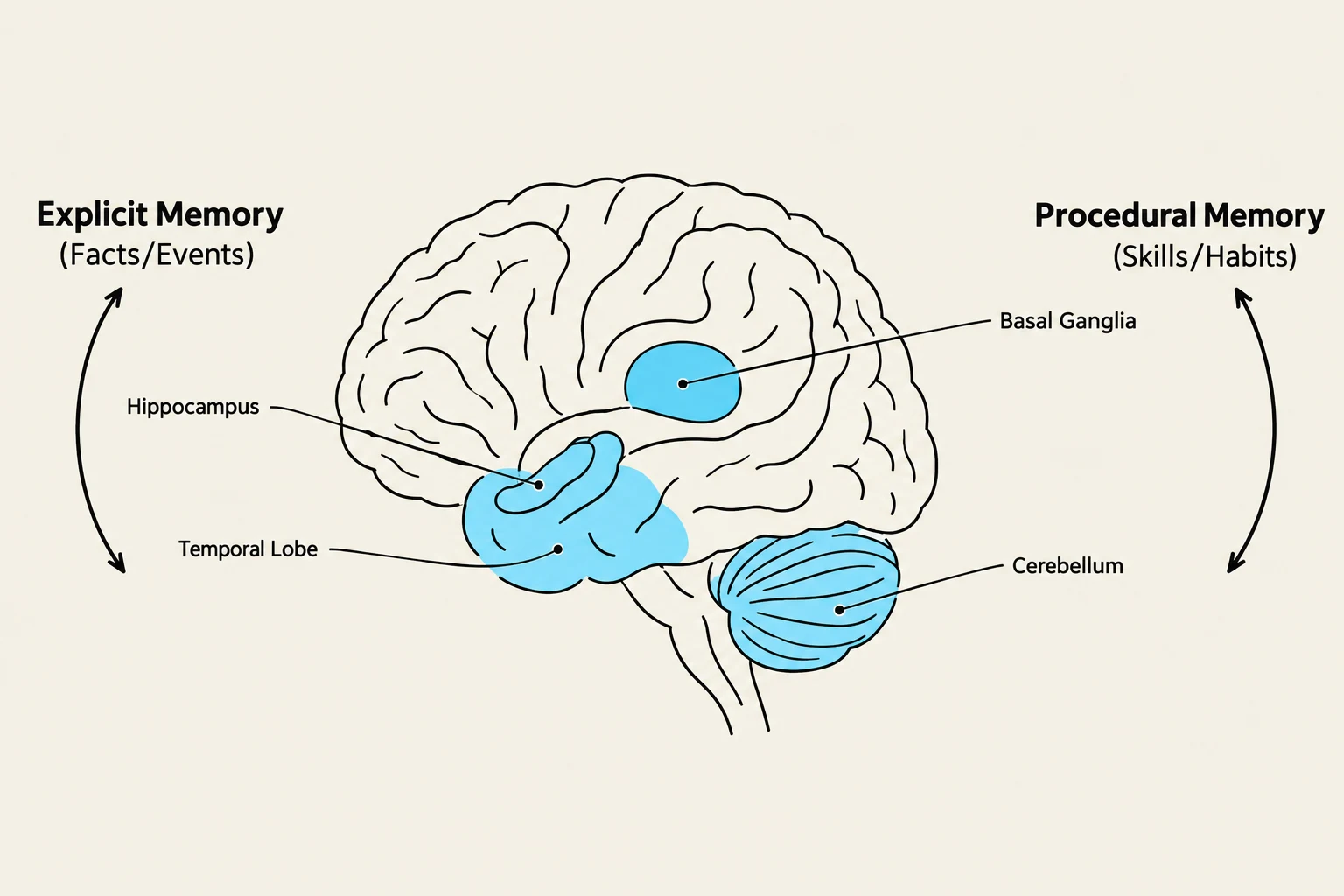
Procedural memory is a subtype of implicit memory, meaning it operates below the level of conscious awareness. While explicit memory (declarative memory) allows us to consciously recall specific facts or events, procedural memory is responsible for the storage and retrieval of information regarding motor skills and cognitive habits.
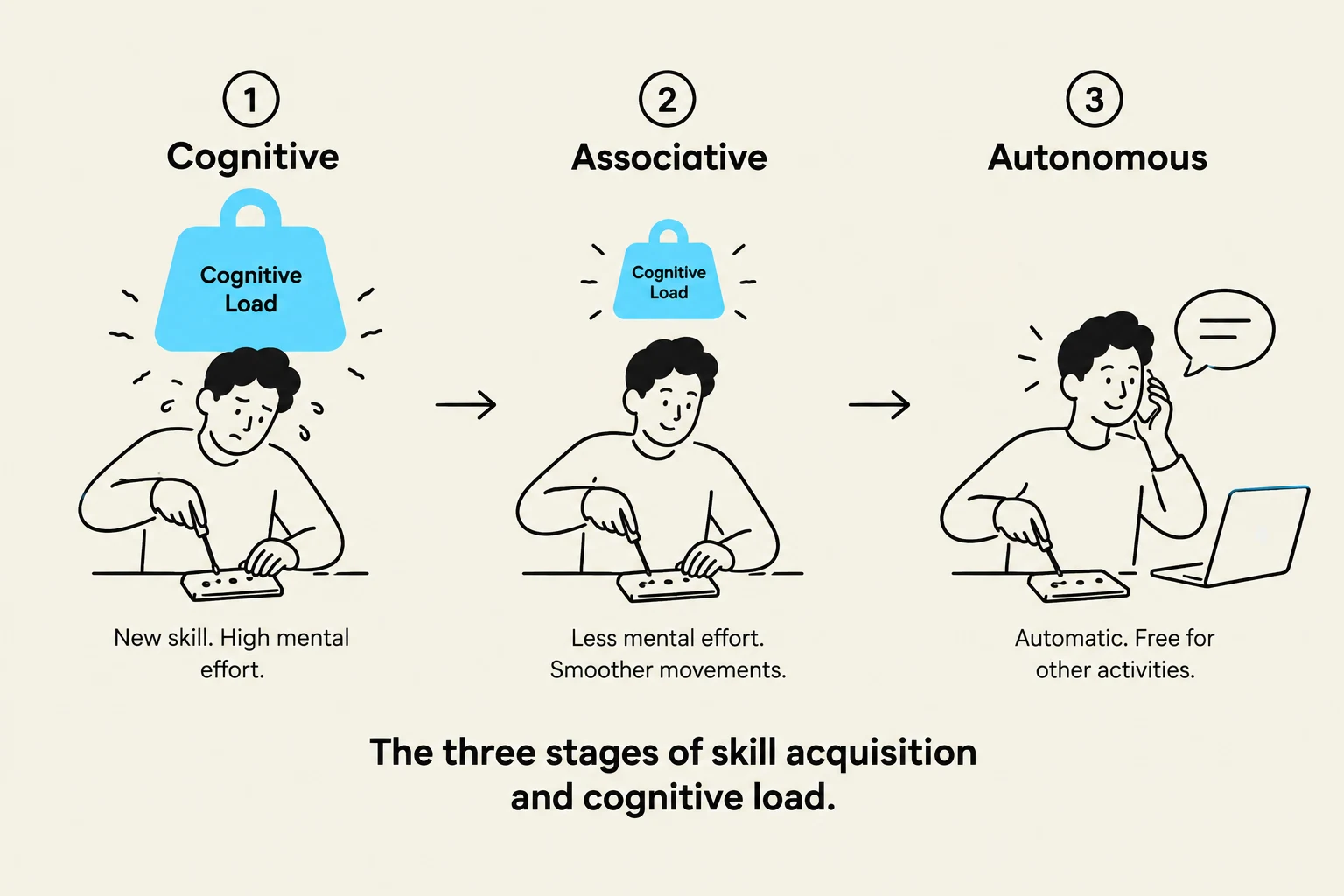
The hallmark of procedural memory is its automaticity. As a skill is practiced, the cognitive load required to perform it decreases. What begins as a slow, deliberate, and error-prone process eventually becomes a fluid, automatic response that can be executed even while the mind is focused on something else.
Exam Tip: Implicit vs. Explicit If a question asks you to distinguish between types of memory, remember:
- Explicit (Declarative): "Knowing that" (e.g., knowing that Paris is the capital of France).
- Implicit (Procedural): "Knowing how" (e.g., knowing how to ride a bike).
The Mechanics of Skill-Based Learning
Keep reading for free.
Create an account to finish this reading and make it part of your study routine.
Continue reading freeAlready have an account? Log in
Updated