An overview of safe medication administration in nursing, covering medication effects, drug interactions, routes of administration, and the nursing process for medication management.
Medication administration is one of the most critical responsibilities in nursing practice. It requires a deep understanding of pharmacology, precise clinical judgment, and a commitment to safety protocols to prevent errors that could harm patients. Because medications can have profound effects on the human body—ranging from therapeutic healing to life-threatening toxicity—nurses must act as the final safeguard in the medication delivery system.
Understanding Medication Effects
When a drug enters the body, it produces various types of responses. Distinguishing between these effects is essential for accurate patient assessment and timely intervention.
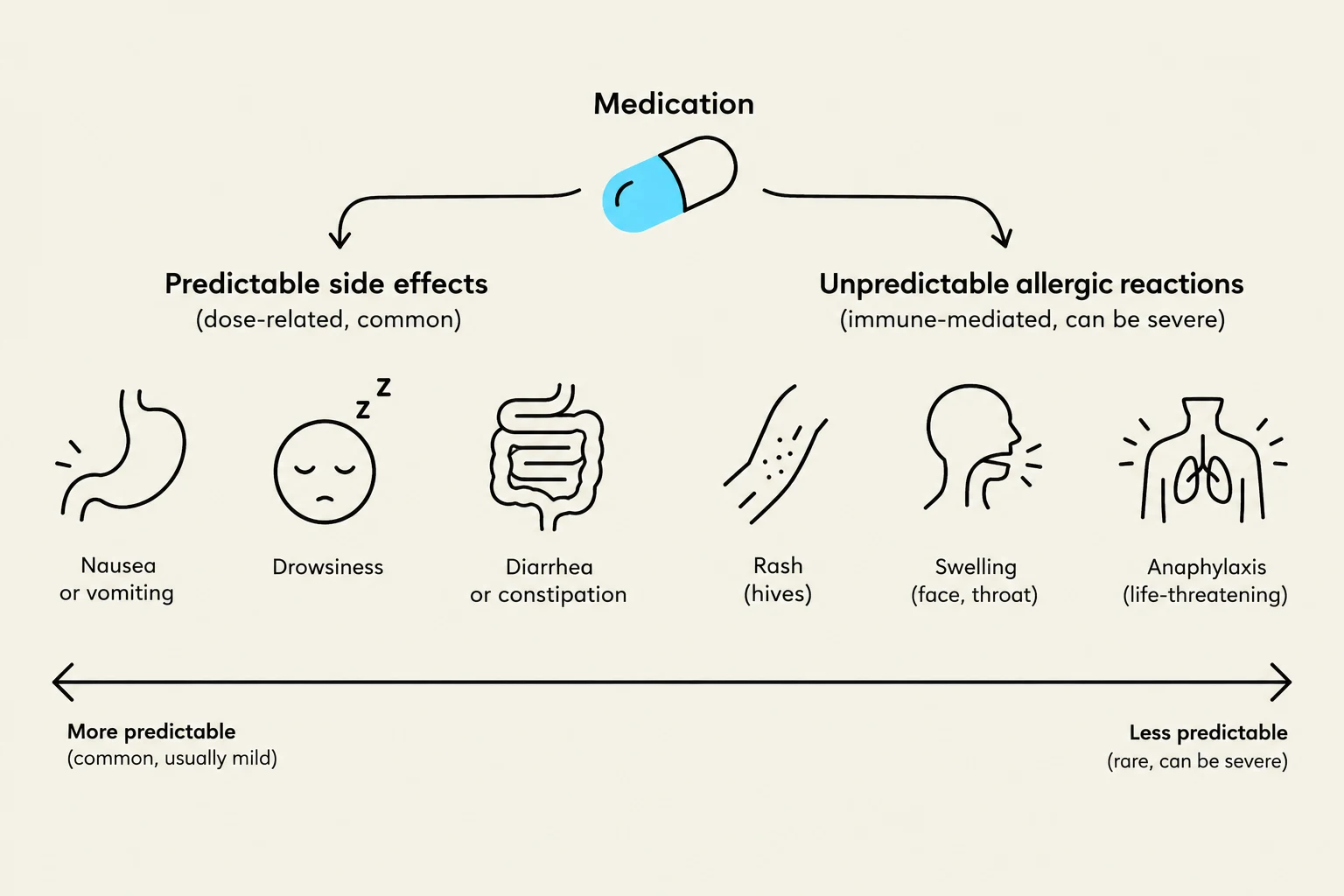
Side Effects: These are predictable, often unavoidable, and unwanted reactions to a medication. For example, a medication intended to treat an infection might also cause mild nausea.
Adverse Effects: These are unintended, unwanted, and often severe drug reactions that are unpredictable.
Toxic Effects: These occur due to an overdose or a buildup of medication in the body, often because the patient's metabolism or excretion processes (such as kidney or liver function) are impaired.
Allergic Reactions: This is an unpredictable immune response to a medication. These can range from mild rashes to life-threatening anaphylactic reactions. An idiosyncratic reaction is also a type of unpredictable response that does not follow expected patterns.
Clinical Alert: Anaphylaxis Management
If a patient exhibits signs of a severe allergic reaction, immediate action is required. Treatment typically includes discontinuing the drug, administering epinephrine, providing IV fluids, using steroids, administering antihistamines, and providing respiratory support.
This diagram illustrates common side effects and unpredictable allergic reactions to medication, categorizing them by predictability and severity.
Drug Interactions: Synergy and Antagonism
Drugs rarely act in isolation. When multiple substances are present in a patient's system, they may interact in ways that change the intended therapeutic outcome.
Synergistic Effect: This occurs when two or more substances work together to produce a greater effect than either could achieve alone.
Antagonism: This occurs when one drug produces the opposite effect of another, effectively canceling out or reducing the intended action.
When administering parenteral (injectable) medications, nurses must also be aware of drug incompatibility, ensuring that medications are compatible before mixing or administering them.
The Foundation of Safety: Orders and the "Rights"
To prevent medication errors, nurses must follow a rigorous verification process. An error is defined as any preventable event that may lead to inappropriate medication use or patient harm.
Components of a Prescription Order
A complete and legal medication order must include specific components to ensure accuracy:
Patient’s name
Date and time of the order
Drug name
Dosage
Route of administration
Frequency of administration
Signature of the prescriber
The Medication Rights and Checks
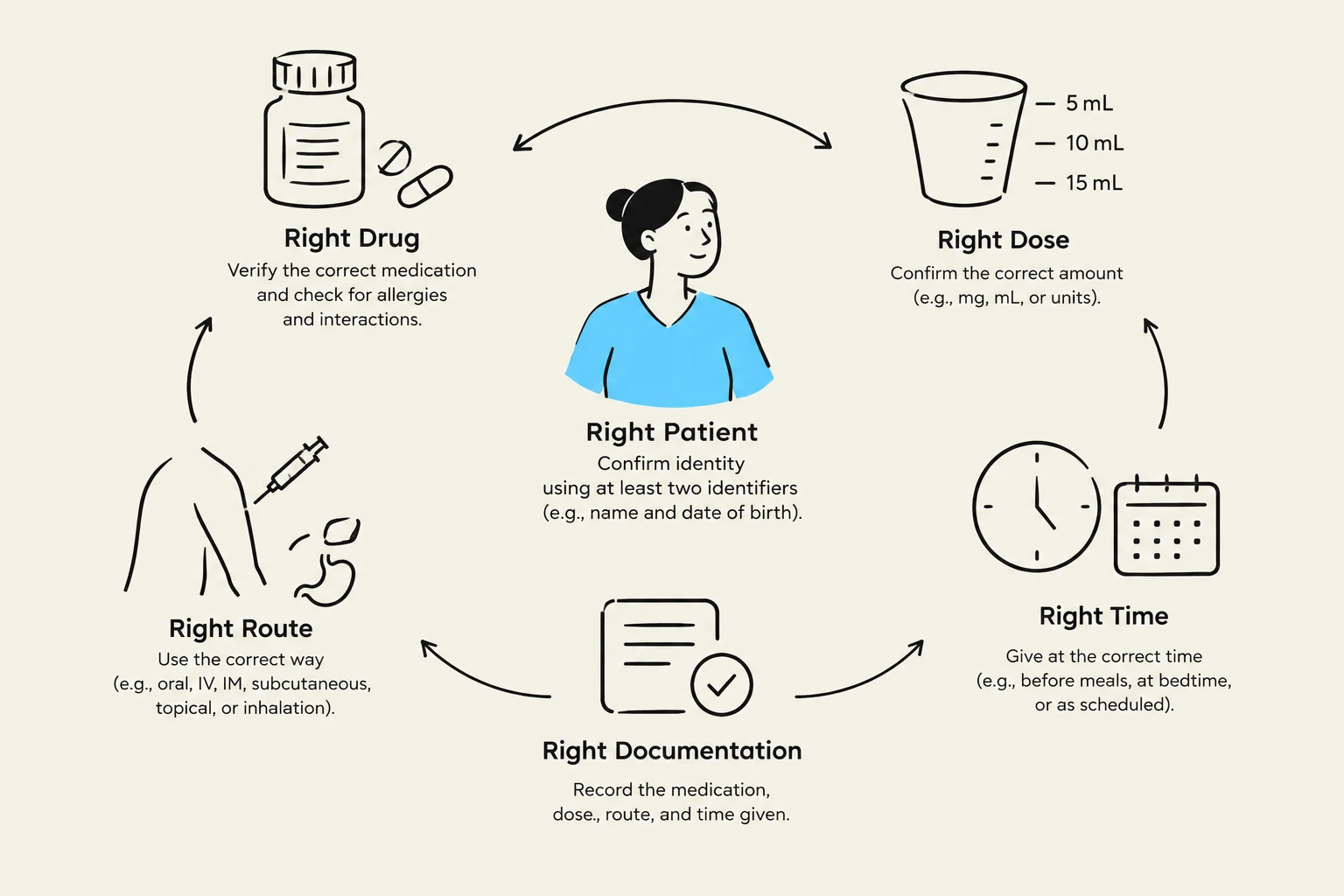
Safety is maintained through the "3 Checks" and the "6 Rights". Before administration, the nurse should perform three separate checks of the medication against the Medication Administration Record (MAR). At the patient's bedside, the nurse must verify the 6 Rights to ensure the right medication is given to the right client at the right dose.
Exam Tip: Medication Reconciliation
Always remember that medication reconciliation is the process of comparing a patient's current medications to newly prescribed ones. The goal is to identify duplications, omissions, or dangerous interactions.
This diagram illustrates the "rights" of medication administration, emphasizing the importance of verifying the drug, dose, patient, route, time, and documentation to ensure safe and effective patient care.
Routes of Medication Administration
Medications can be administered through various routes depending on the desired onset of action and the patient's condition.
Oral and Topical Routes
Oral Administration: This includes medications that are swallowed, as well as those administered sublingually (under the tongue), buccally (against the cheek), or via enteral tubes such as nasogastric (NG) or jejunal tubes.
Topical Medications: These are applied to the skin or mucous membranes.
Transdermal Medications: These are specifically designed to be absorbed through the skin for a systemic effect. When applying these, always remove the old patch, clean the skin, and rotate the application sites.
Inhalation and Mucosal Routes
Inhaled Medications: Delivered through the respiratory tract, nasal passages, or via an endotracheal/tracheostomy tube.
Nasal Medications: Administered via drops or nebulizers; these can sometimes have systemic effects.
Ophthalmic Instillation: Used for eye irritation, infections, or glaucoma. It is vital to avoid cross-contamination during administration.
Otic Instillation: Used for ear infections or to soften wax. For adults, pull the pinna up and back. If the tympanic membrane is damaged, sterile technique is required.
Vaginal Medications: Available as creams, foams, tablets, or suppositories. Note that vaginal suppositories may require refrigeration, and patients should not use tampons after administration.
Rectal Medications: These can have local or systemic effects. Suppositories should be placed above the internal anal sphincter.
Parenteral (Injectable) Administration
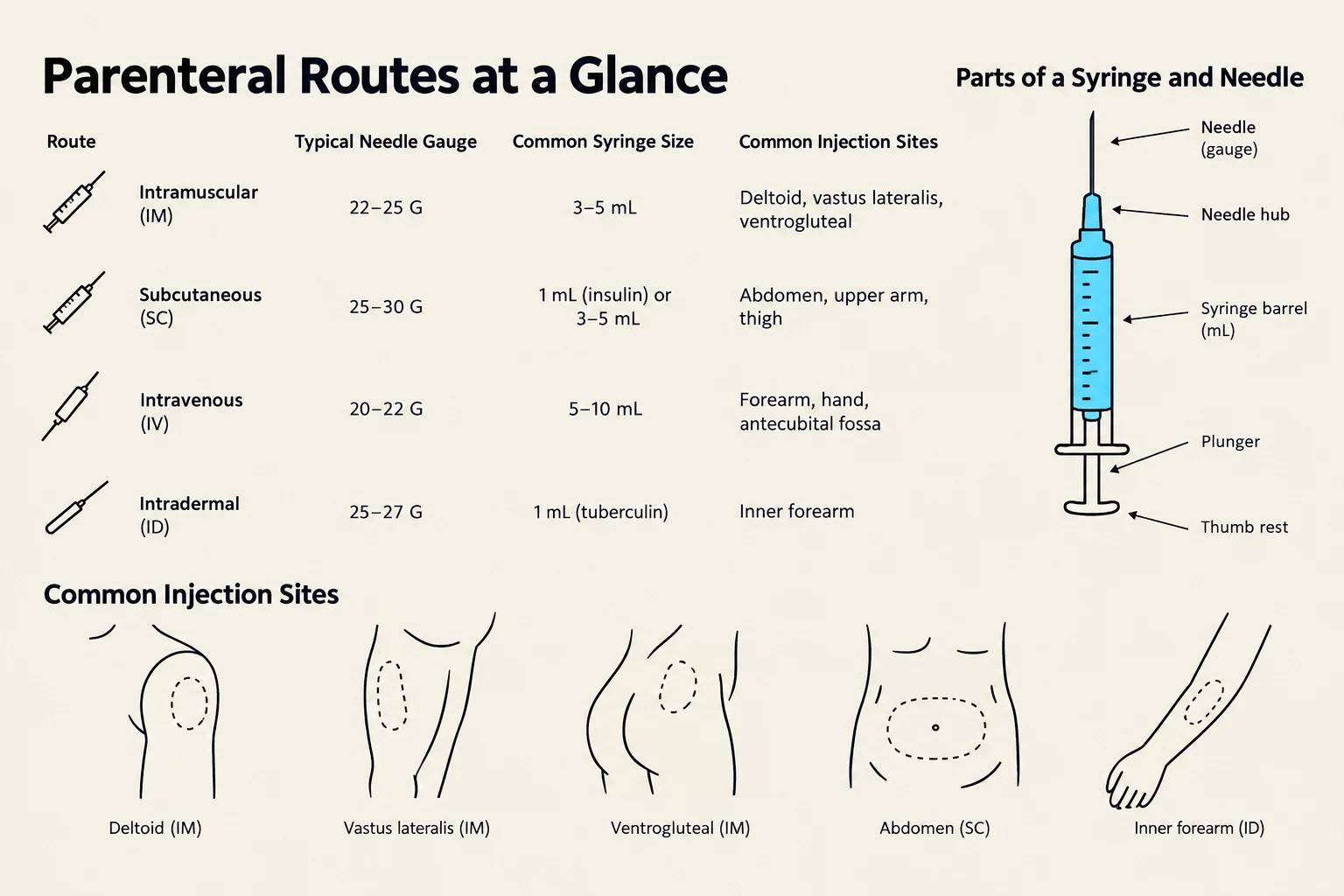
Parenteral administration involves injecting medication directly into body tissues. The choice of site and needle depends on the specific route:
Route
Description
Common Sites
Intradermal (ID)
Shallow injection into the dermis
Inner forearm, upper arm
Subcutaneous (SC)
Injection into tissue below the skin
Abdomen, lateral upper arm, thigh
Intramuscular (IM)
Injection into a muscle
Ventrogluteal, vastus lateralis, deltoid
Intravenous (IV)
Injection/infusion into a vein
Veins (systemic effect)
This chart illustrates different parenteral routes of administration, including intramuscular, subcutaneous, intravenous, and intradermal injections, along with typical needle gauges, syringe sizes, common injection sites, and a diagram of a syringe and needle.
Nursing Process in Medication Management
Safe administration is not just about the act of giving a pill; it is a continuous cycle of assessment, planning, and evaluation.
Assessment: Collect baseline data, including medical history, allergy information, and relevant laboratory results.
Nursing Diagnosis: Identify potential issues, such as "Lack of knowledge" regarding a medication or "Constipation" resulting from opioid use.
Planning: Set patient-centered goals, such as the patient verbalizing understanding of side effects before discharge.
Implementation & Evaluation: Administer the medication using the MAR and follow specific protocols. Finally, evaluate the effectiveness of the medication and monitor for any adverse effects.
If a medication error does occur, the nurse's priority is to assess the patient, notify the healthcare provider, initiate prescribed interventions to offset harm, and complete all necessary documentation.
Keep reading for free.
Create an account to finish this reading and make it part of your study routine.