An overview of physical activity intensity, strength training principles, and the biological importance of sleep hygiene for overall health and performance.
Understanding the relationship between movement and rest is fundamental to optimizing human health, fitness, and performance. This article explores the core principles of physical activity intensity, the mechanics of strength training, and the biological importance of sleep hygiene. By integrating these concepts, individuals can better align their daily behaviors with established health guidelines.
Physical Activity Intensity and Metrics
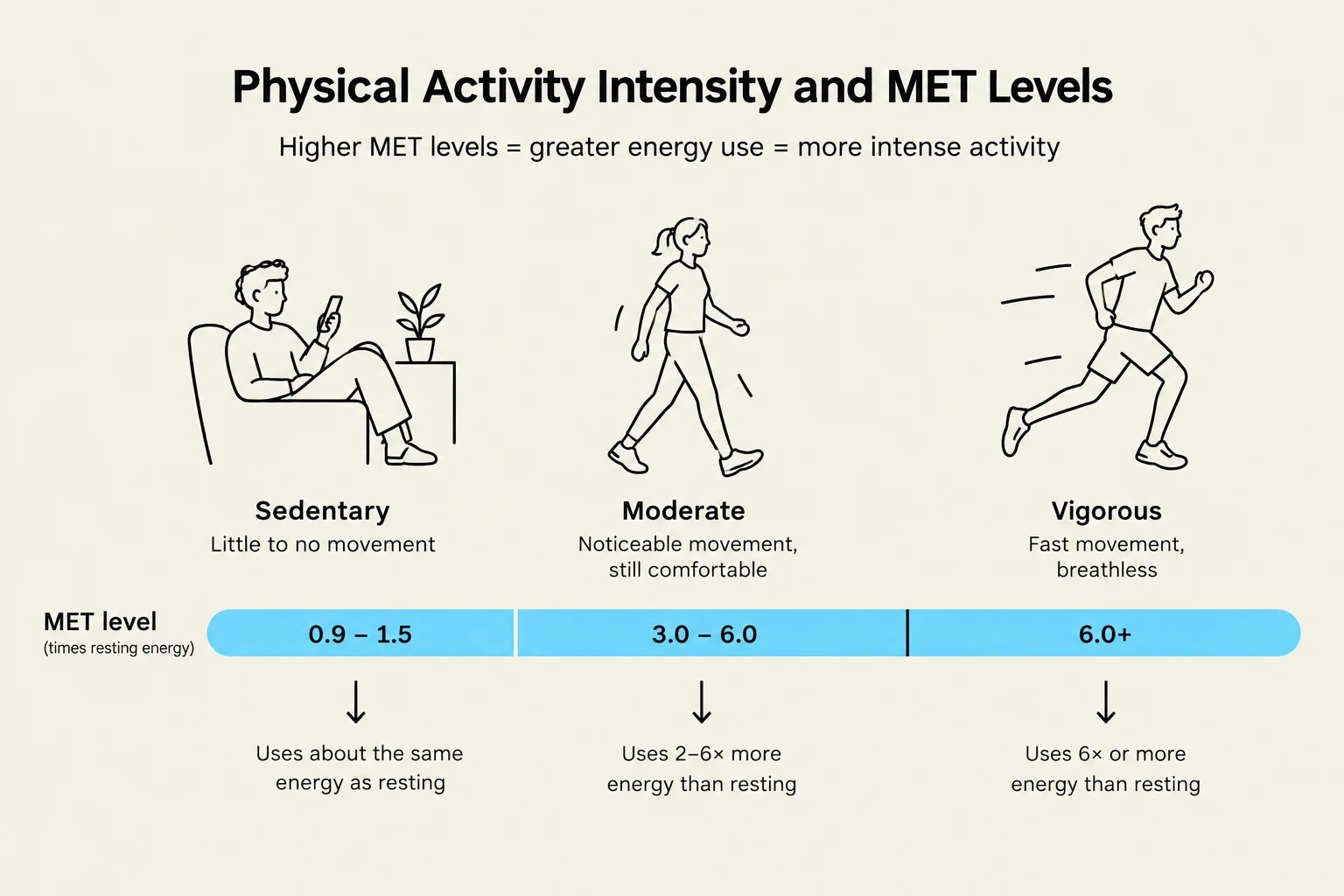
Physical activity is not a monolithic concept; it varies significantly in its physiological demands. To quantify these demands, researchers use Metabolic Equivalents (METs), which represent the energy expenditure of an activity relative to the body at rest.
Activity levels are generally categorized into three tiers:
Sedentary Behavior: Characterized by low energy expenditure, typically ranging from 1 to 3 METs.
Moderate Intensity: This involves an energy expenditure of 3 to 6 METs. A practical "talk test" for this level is being able to carry on a conversation but not being able to sing while performing the activity.
Vigorous Intensity: This requires an energy expenditure greater than 6 METs. At this level, an individual will likely be unable to say more than a few words without pausing for breath.
For those focusing on cardiovascular fitness, it is important to monitor the maximum heart rate to ensure training falls within the optimal $70%to90%$ range.
Worked Example: Calculating Target Heart Rate
To find your target heart rate zone for cardiovascular training, use the following formulas based on your age:
For Males:
Target Heart Rate=(220−age)×(0.70 to 0.90)
For Females:
Target Heart Rate=(226−age)×(0.70 to 0.90)
This diagram illustrates the relationship between physical activity intensity and MET (Metabolic Equivalent of Task) levels. It categorizes activities into Sedentary, Moderate, and Vigorous, associating each with a MET range and its corresponding energy expenditure relative to resting energy.
Strength Training and Fitness Principles
Effective exercise programming is governed by specific physiological principles that ensure progress while preventing injury.
Core Principles of Training
To build muscle and improve performance, one must adhere to the Tension Principle, which involves creating muscular tension through resistance. To ensure continued progress, the Overload Principle must be applied, meaning the tension (such as weight or repetitions) must be continually increased to drive strength gains. Furthermore, the Specificity of Training principle dictates that improvements are specific to the muscle groups and movement patterns being worked.
Finally, Rest and Recovery are non-negotiable. Muscle repair occurs during rest, and guidelines generally recommend at least two days of muscle strengthening per week to allow for adequate recovery.
Strength vs. Endurance and Power
It is vital to distinguish between different types of muscular adaptations:
Muscular Strength: The maximum amount of weight an individual can lift for a single repetition.
Muscular Endurance: The ability of a muscle to perform many repetitions of an exercise (e.g., push-ups) without fatigue.
Plyometrics: Specialized exercises involving rapid muscle contractions designed to increase explosive power, agility, or reaction time.
Flexibility and Injury Management
Flexibility training utilizes two primary methods: Static Stretching, which involves holding a specific position to stretch a muscle, and Dynamic Stretching, which involves continuous movement.
Regardless of the method, beginners should progress slowly to avoid Delayed Onset Muscle Soreness (DOMS). DOMS is the soreness felt up to 48 hours after exercise, resulting from microscopic tissue tears and subsequent inflammation.
Sleep Health and Movement Guidelines
Health is not just about how much we move, but how we balance movement with rest. Canada's 24-hour movement guidelines provide a holistic view of how physical activity, sedentary behavior, and sleep interact.
The 24-Hour Movement Framework
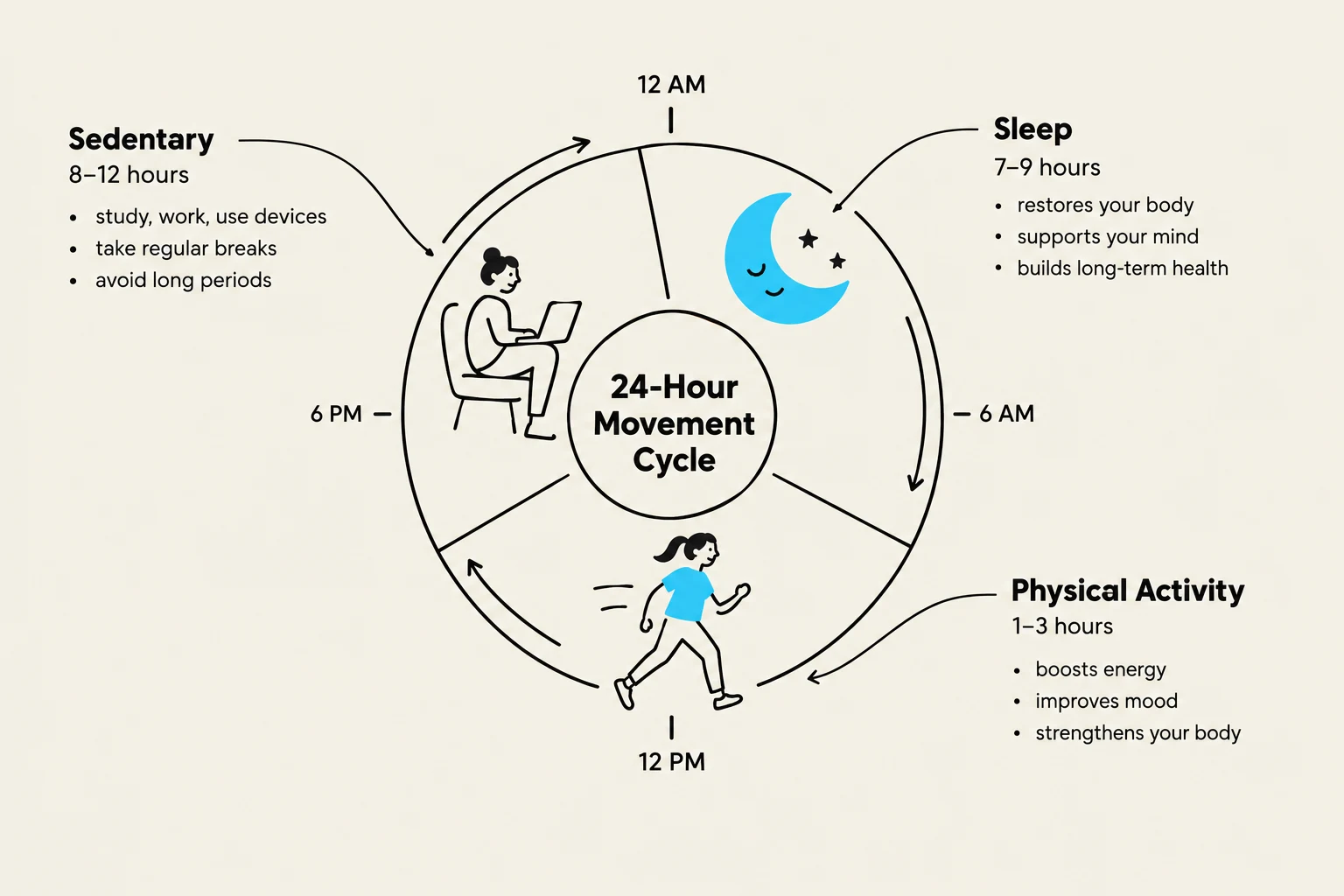
The guidelines suggest three core pillars for a healthy 24-hour cycle:
Physical Activity: Aim for at least 150 minutes of moderate-to-vigorous aerobic activity per week, plus muscle-strengthening activities at least two times per week.
Sedentary Behavior: Limit sedentary time to 8 hours or less per day and restrict recreational screen time to no more than 3 hours.
Sleep: Prioritize 7 to 9 hours of good quality sleep with consistent bed and wake times.
A diagram illustrating a 24-hour movement cycle, detailing periods for sedentary activity, sleep, and physical activity, along with their recommended durations and benefits.
Understanding Sleep Stages and Disorders
Sleep is divided into stages that serve different restorative functions. During the N3 stage of non-REM sleep, the brain generates delta waves, which are associated with deep, restorative sleep. In contrast, the N1 and N2 stages are characterized by the relaxation of muscles and a slowing of heart and breathing rates.
Disruptions to these patterns can lead to significant health issues:
Insomnia: Characterized by difficulty falling asleep and feeling unrefreshed in the morning. This can be exacerbated by conditions such as restless legs syndrome.
Sleep Debt: This refers to the total number of hours of missed sleep relative to the recommended 7–9 hour target. While short naps (approximately 20 minutes) in the early to mid-afternoon can be beneficial, they do not resolve accumulated sleep debt; only extending nighttime sleep can do so.
Exam Tip: Differentiating Sleep Stages
On exams, be careful not to confuse the stages. Remember that delta waves are specific to the N3 stage. The relaxation of muscles and the slowing of heart/breathing rates occur during the earlier N1 and N2 stages.
This diagram illustrates the common causes and symptoms of insomnia, as well as the causes and progression of Restless Legs Syndrome (RLS) leading to persistent insomnia.
By understanding these principles—from the intensity of a workout to the biological necessity of deep sleep—individuals can more effectively navigate their daily movement behaviors to support long-term wellness.
Keep reading for free.
Create an account to finish this reading and make it part of your study routine.