


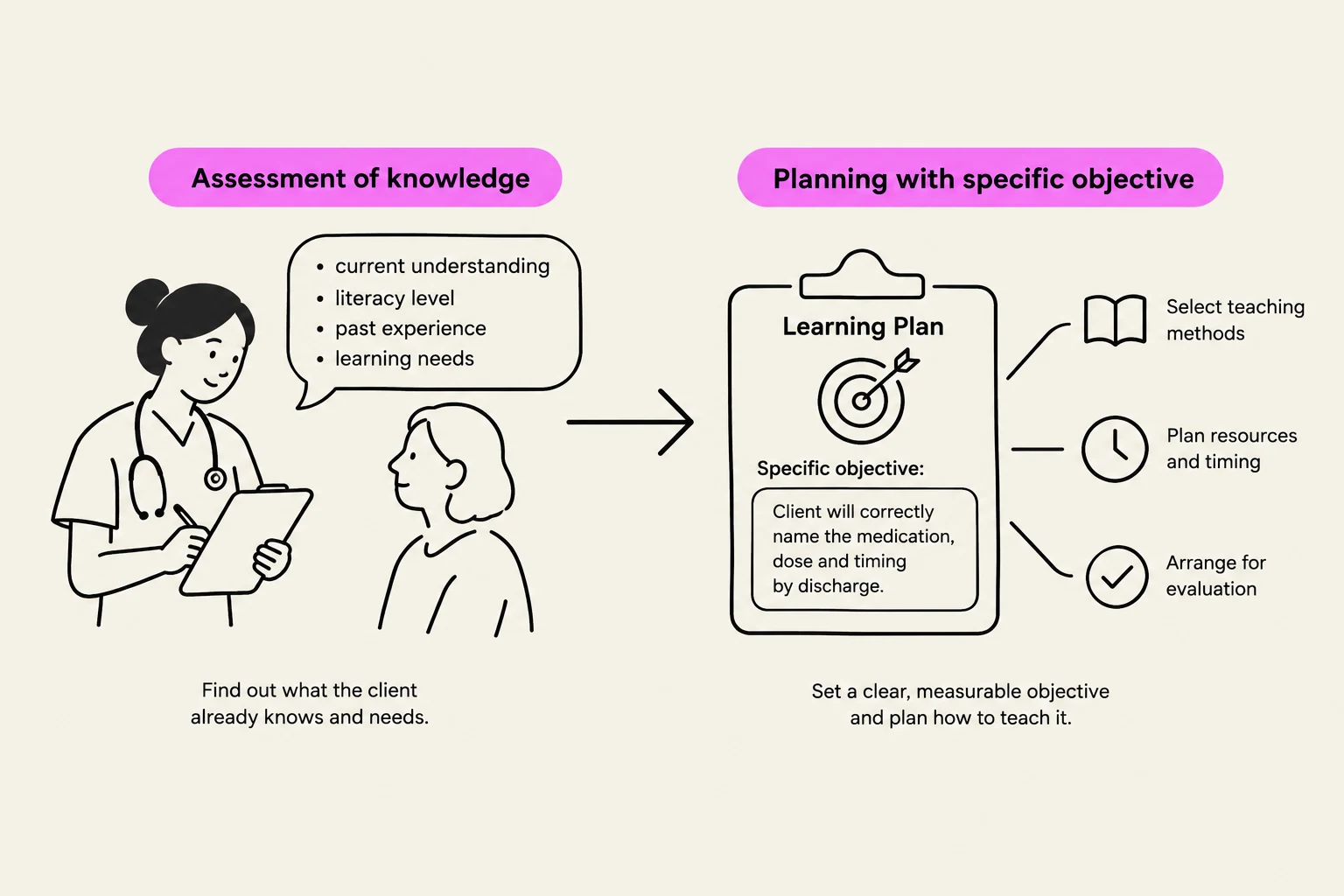
Effective medication management is a cornerstone of patient safety and therapeutic success. For nurses, providing medication education is not merely about handing over a prescription; it is a complex process involving assessment, personalized planning, and the verification of understanding. When clients understand why, how, and when to take their medications, they are more likely to adhere to their regimens, reducing the risk of complications and hospital readmissions.
Assessing Readiness for Learning
Before a nurse can teach effectively, they must first assess the client's current state. This begins with evaluating the client's existing knowledge base to identify gaps or misunderstandings that could impact safety.
Factors Influencing Readiness
Several variables influence whether a client is prepared to receive and retain information:
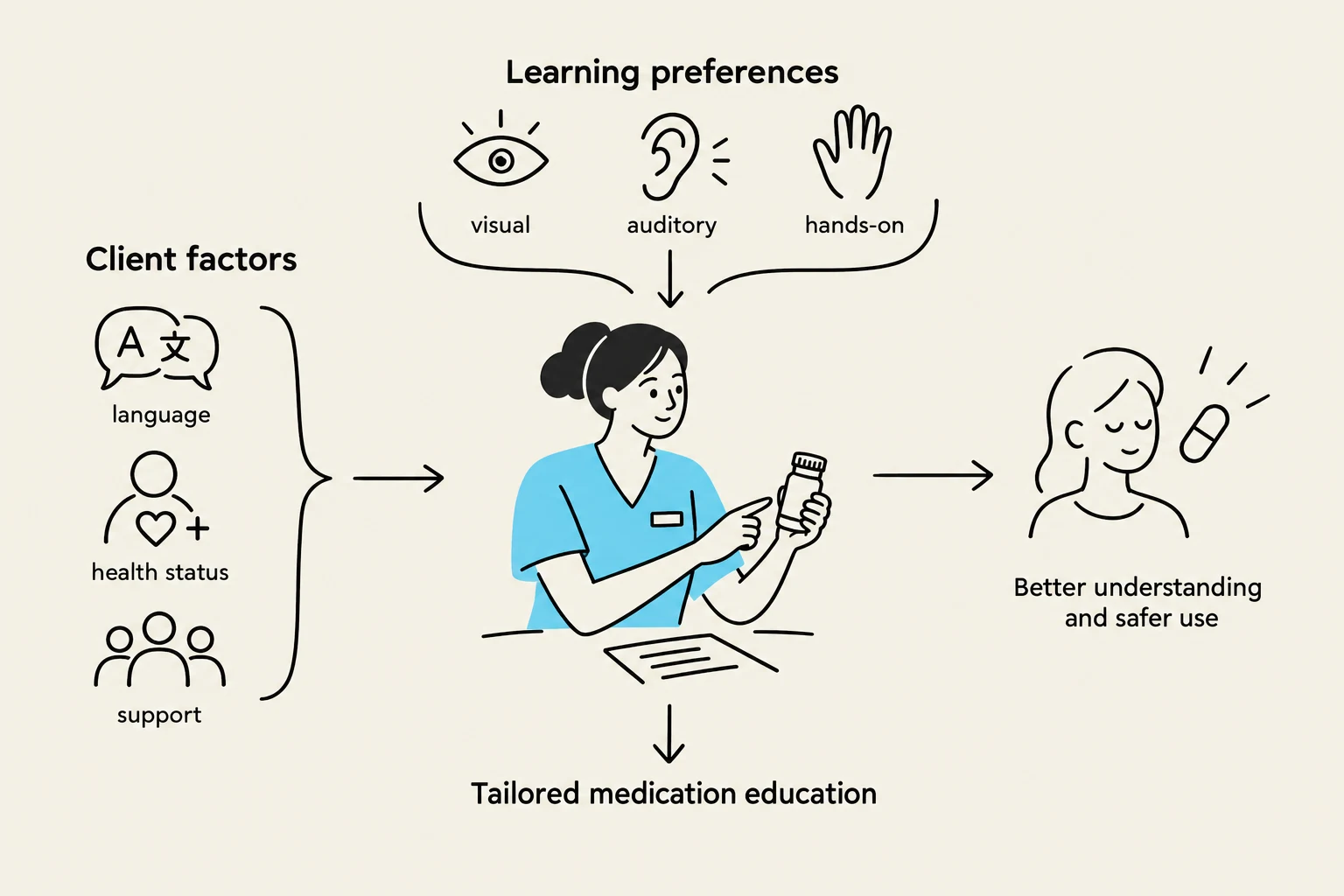
- Language and Comprehension: Does the client understand the terminology? This includes both cognitive comprehension (the ability to process ideas) and reading comprehension (the ability to understand written instructions).
- Health Status: A client in acute pain or respiratory distress is rarely ready to learn.
- Level of Support: The presence of a caregiver or family member can significantly impact the learning environment.
Learning Preferences and Styles
Nurses must identify how a client learns best to maximize the effectiveness of the session.
- Motivation: Is the client driven to learn, or are they resistant to changes in their routine?
- Learning Styles: Clients may be visual learners (preferring diagrams and written guides), auditory learners (preferring verbal explanations), or kinesthetic learners (preferring hands-on practice).
- Active vs. Passive Learning: While passive learning involves listening to a lecture, active learning involves the client participating in the process, which leads to better retention.
Keep reading for free.
Create an account to finish this reading and make it part of your study routine.
Continue reading freeAlready have an account? Log in
Updated