


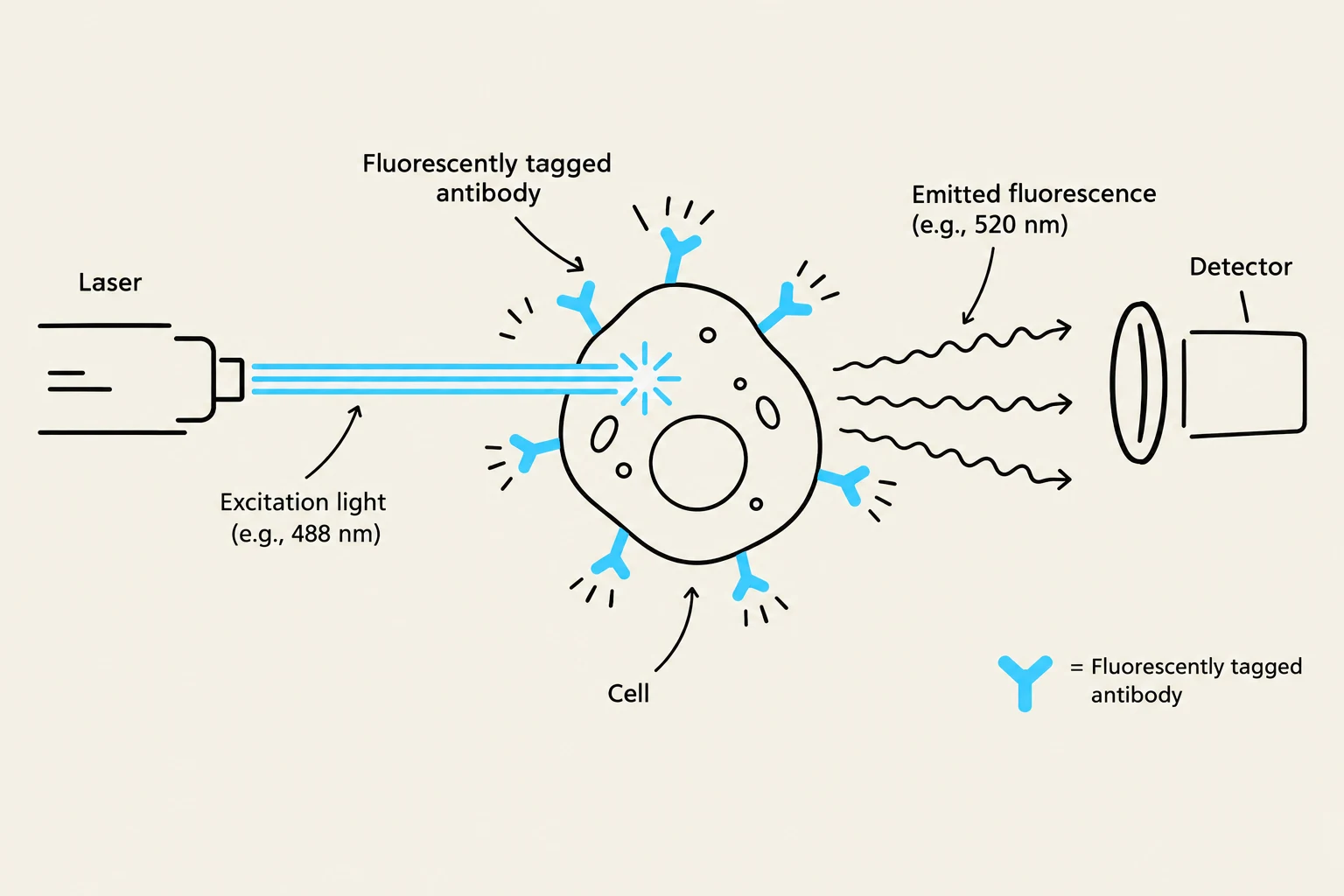
In the field of immunology and cell biology, the ability to characterize individual cells within a complex mixture is essential. Flow cytometry is a powerful biophysical technology used to analyze the physical and chemical characteristics of particles—typically single cells—as they flow in a liquid suspension through a laser beam. By measuring how these cells interact with light, researchers can determine cell size, internal complexity, and the presence of specific proteins or genetic markers.
The Fundamental Mechanism: Hydrodynamic Focusing
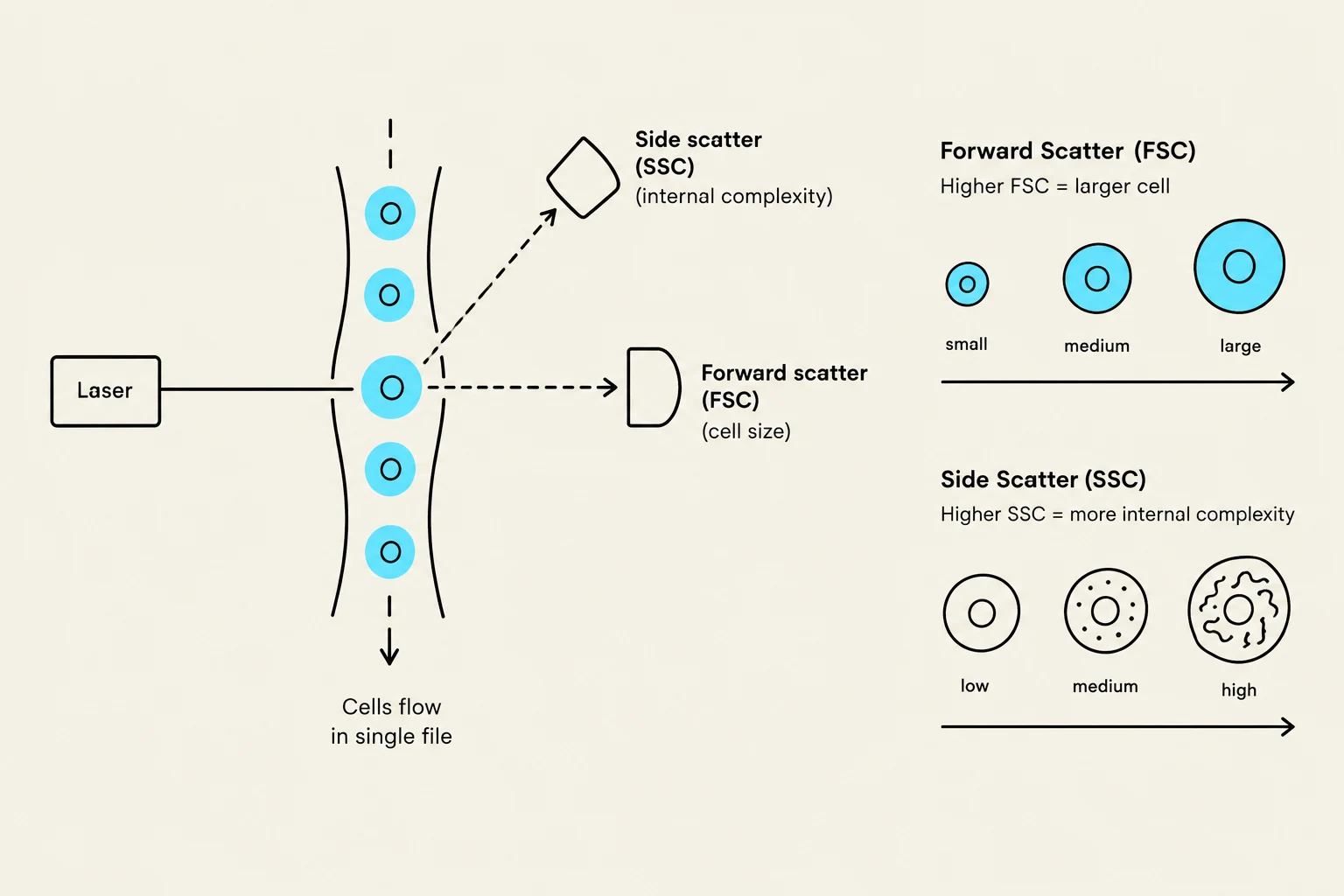
At its core, flow cytometry relies on a process called hydrodynamic focusing. To ensure that the data collected is accurate, cells must pass through the laser beam one at a time. If multiple cells pass through the beam simultaneously, the machine cannot distinguish between them, leading to "coincidence" errors.
To achieve this, the sample containing the cells is injected into a faster-moving stream of "sheath fluid" within the flow cell. The pressure difference between the sample and the sheath fluid creates a narrow central core, forcing the cells into a single-file line.
Light Scattering: Measuring Size and Complexity
As each cell passes through the laser beam, it scatters light in various directions. The detectors in a flow cytometer are positioned to capture specific angles of this scattered light, which provide distinct types of information about the cell's physical properties.
Forward Scatter (FSC)
Forward scatter refers to the light that is deflected at small angles, roughly in the same direction as the laser beam itself. The intensity of the FSC signal is generally proportional to the surface area or the size of the cell. Larger cells (such as monocytes) will produce a higher FSC signal than smaller cells (such as lymphocytes).
Keep reading for free.
Create an account to finish this reading and make it part of your study routine.
Continue reading freeAlready have an account? Log in
Updated