


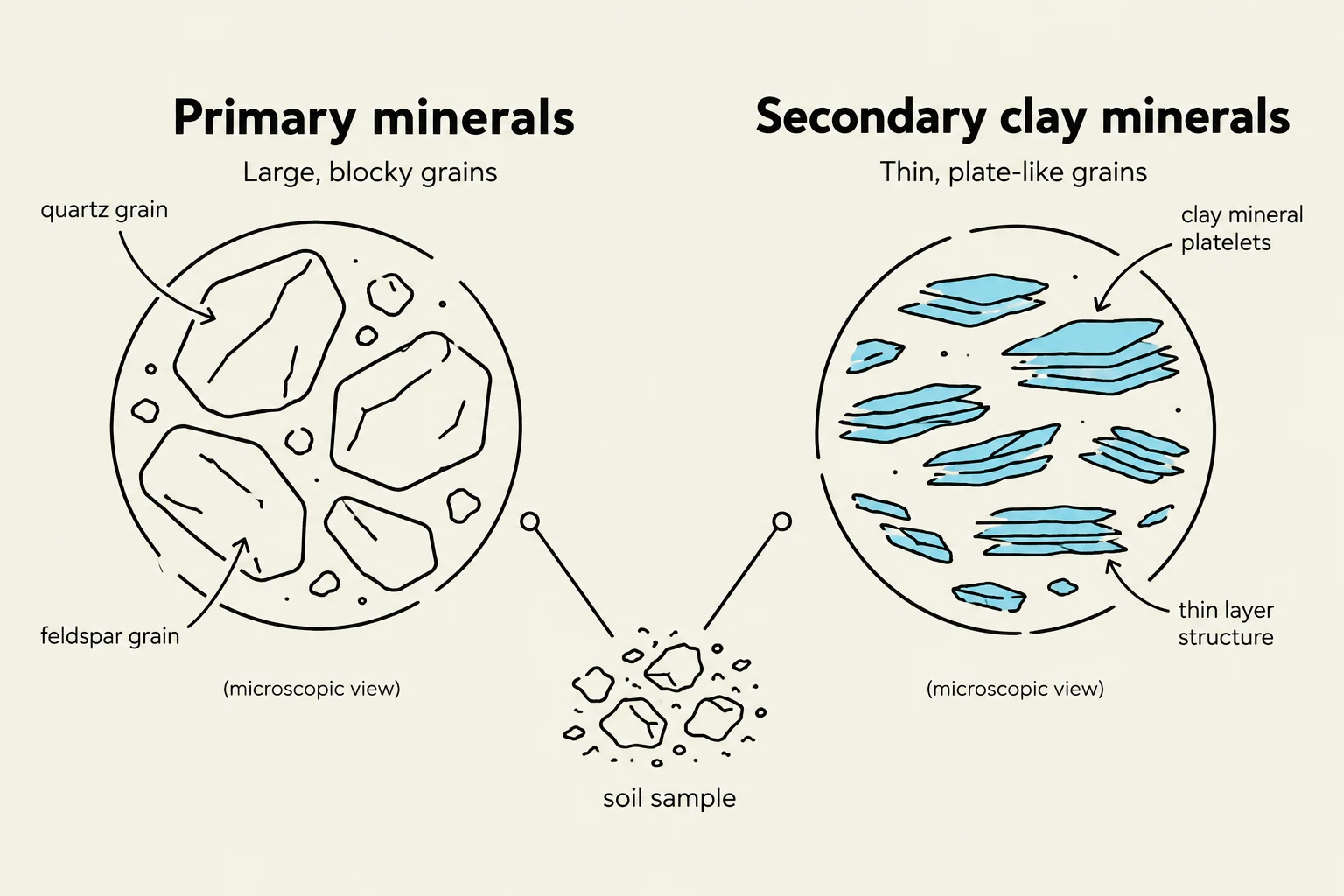
Soil is far more than just "dirt"; it is a complex, living matrix composed of organic matter, water, air, and, most importantly, mineral particles. These mineral particles are the structural foundation of the soil, providing the physical framework and the chemical reservoir necessary for plant growth. To understand how soil forms and how it behaves, we must look at the two distinct categories of minerals that inhabit it: primary minerals and secondary minerals.
The Foundation: Primary Minerals
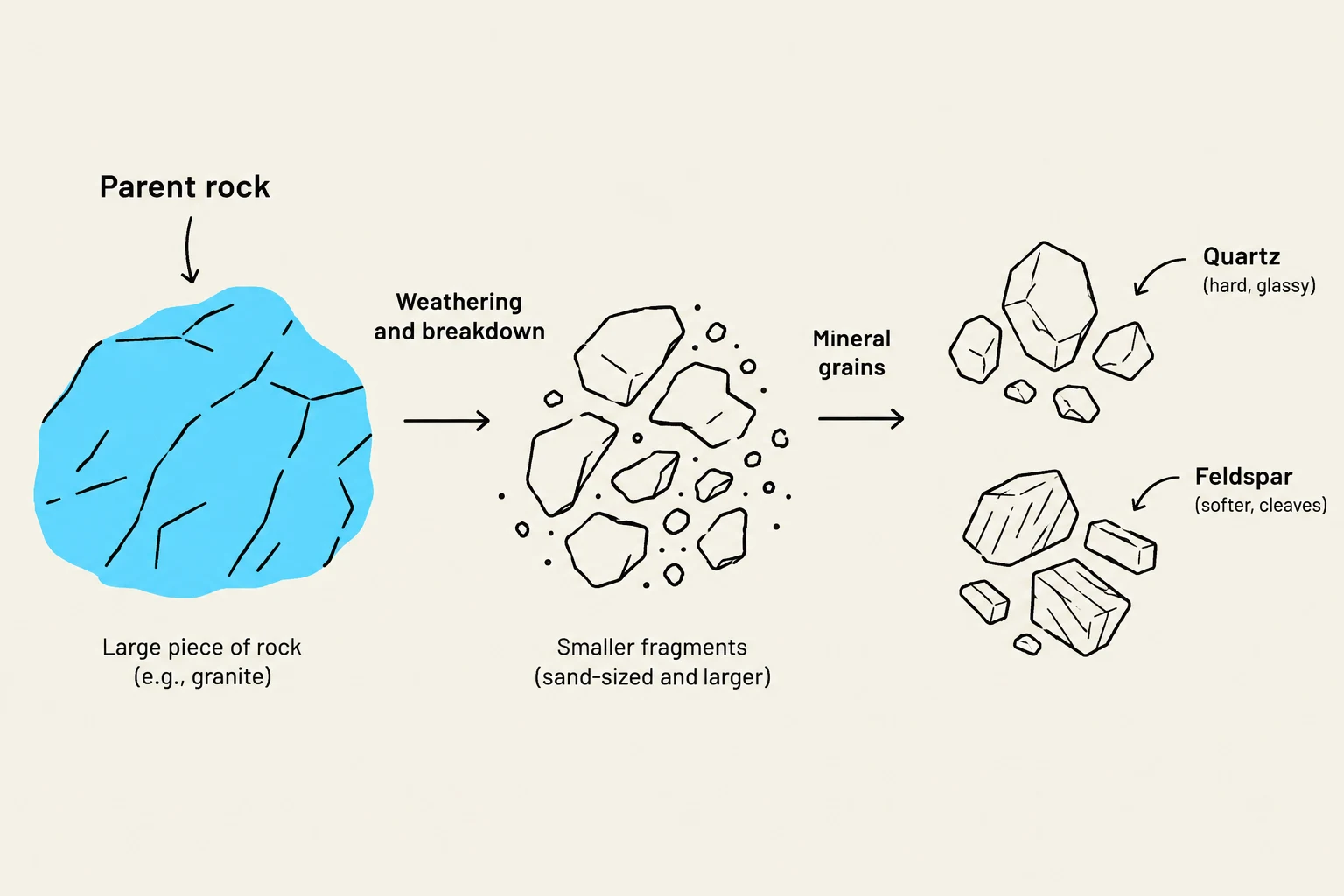
Primary minerals are the "original" components of the soil. They are formed through the cooling and crystallization of molten rock (magma or lava) or through high-temperature metamorphic processes. When a parent rock—such as granite or basalt—is exposed to the surface through weathering, the minerals within that rock are released into the soil profile.
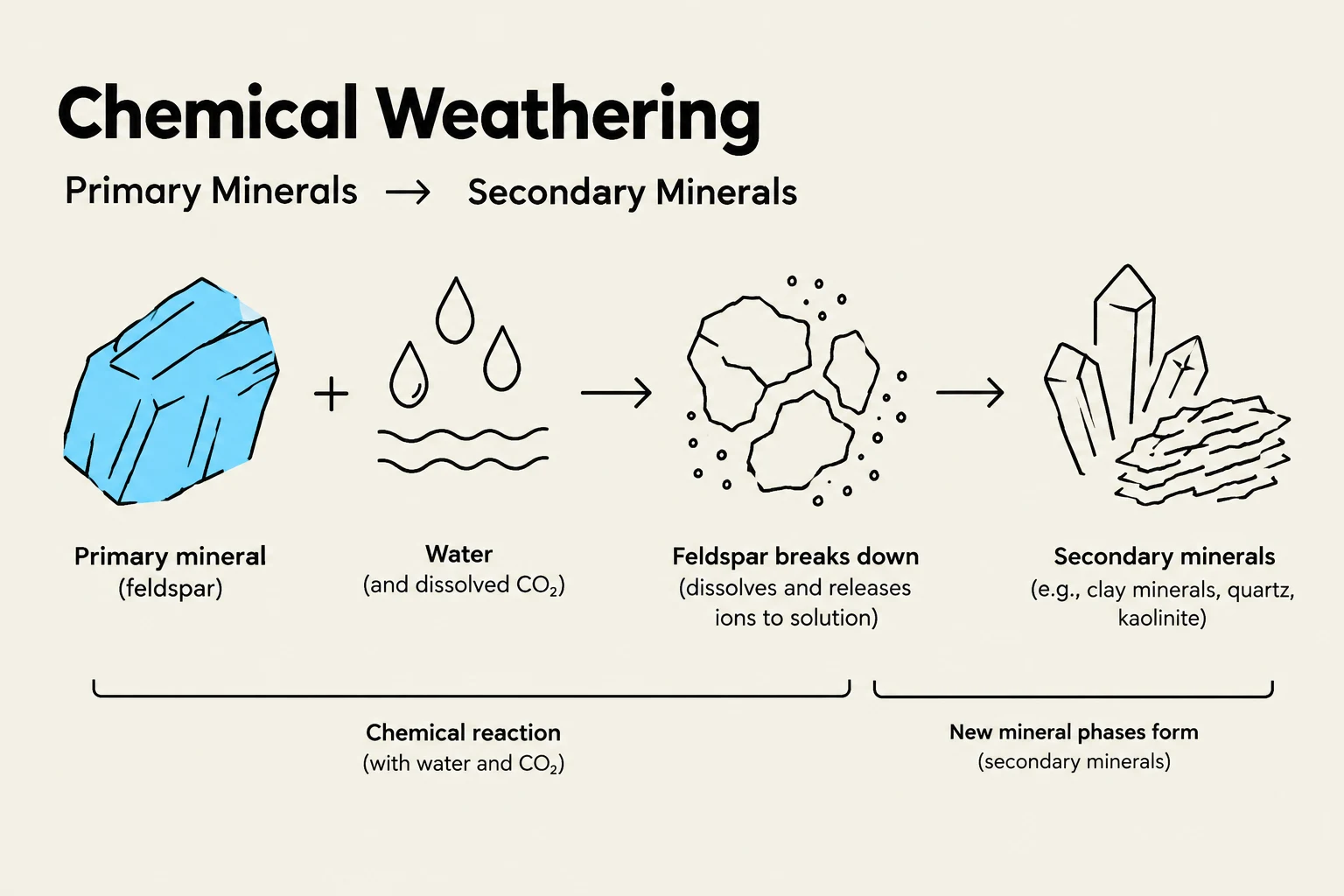
The defining characteristic of a primary mineral is that it remains chemically unchanged from its original state in the parent rock. While they may be physically broken down into smaller pieces (sand and silt) through mechanical weathering, their internal chemical structure remains intact. Common examples include:
- Quartz: Highly resistant to chemical weathering, often making up the bulk of sandy soils.
- Feldspars: A large group of minerals that are major constituents of most igneous rocks.
- Micas: Sheet-like minerals that can be found in various stages of weathering.
Exam Tip: If a question asks you to identify a primary mineral, look for its origin. If it was formed deep underground under high heat and pressure and has not undergone chemical transformation, it is a primary mineral.
Keep reading for free.
Create an account to finish this reading and make it part of your study routine.
Continue reading freeAlready have an account? Log in
Updated