


Obesity is a complex, multifaceted health challenge that requires proactive management before chronic complications arise. In public health, the most effective way to combat this trend is through primary prevention—interventions designed to prevent the onset of obesity and its associated metabolic disorders in the first place.

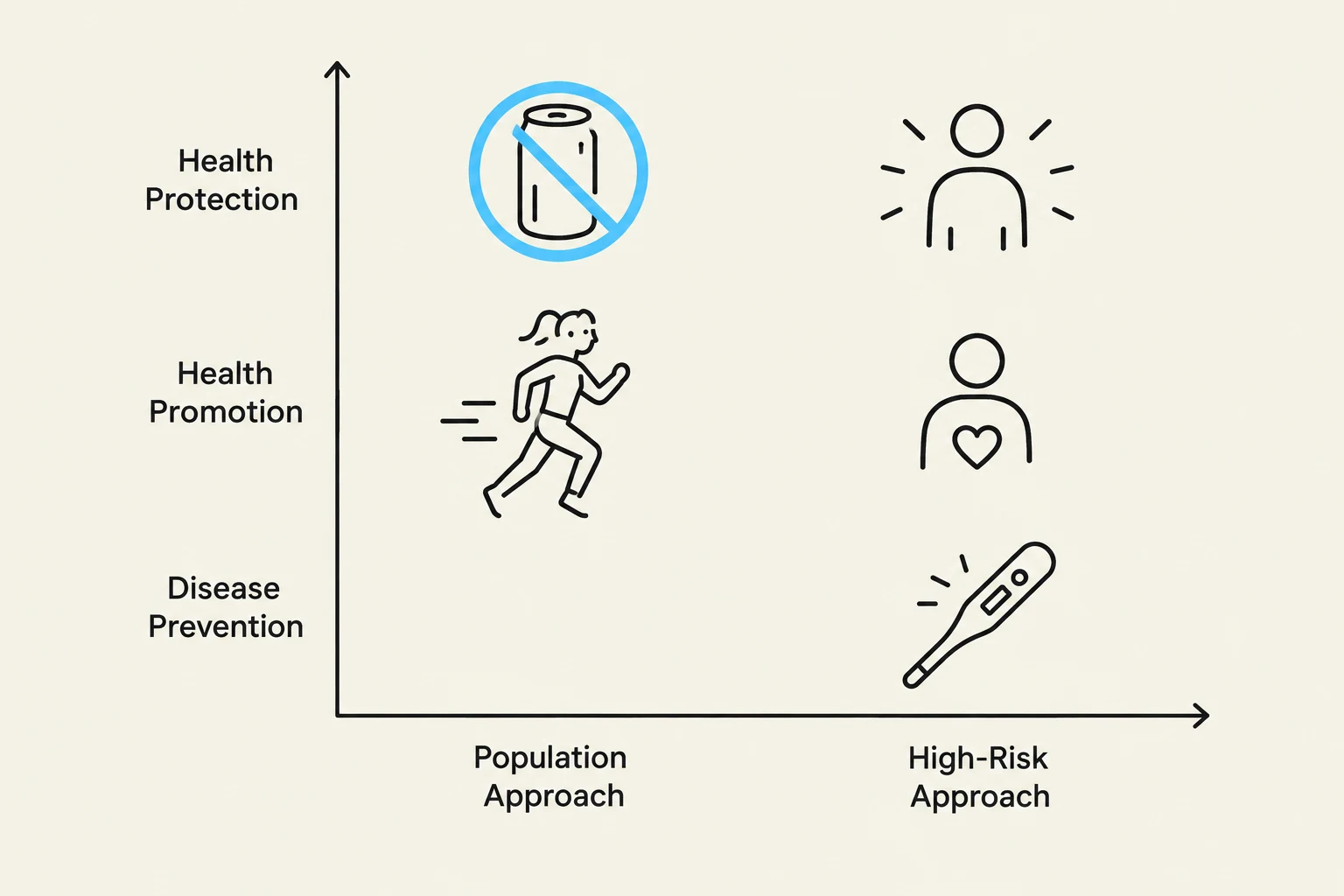
To implement effective primary prevention, health professionals categorize strategies into two distinct frameworks: the population approach and the high-risk approach. Understanding the difference between these two is essential for designing effective public health policies and clinical interventions.
The Two Strategic Frameworks
The Population Approach
The population approach aims to shift the entire distribution of health outcomes across a whole community or nation. Rather than focusing on specific "unhealthy" individuals, this strategy seeks to change the environment or social structures so that the entire "bell curve" of the population shifts toward a healthier state.
When we implement population-level changes, we aim for population redistribution. By altering the environment (such as making healthy food more accessible or physical activity more mandatory), we reduce the total number of people who fall into the "high-risk" category on the right side of the distribution curve.
Figure 1: Visualizing population redistribution due to environmental changes.
The High-Risk Approach
In contrast, the high-risk approach is targeted and individualized. Instead of trying to change the environment for everyone, this strategy identifies specific individuals or groups who are already at an elevated risk for obesity or related complications (such as prediabetes).

Keep reading for free.
Create an account to finish this reading and make it part of your study routine.
Continue reading freeAlready have an account? Log in
Updated