


Mastering pharmacology requires more than just memorizing drug names; it requires understanding how different classes of medications interact with physiological systems to manage chronic conditions. This guide focuses on the essential classes used to treat hypertension, heart failure, diabetes, and hyperlipidemia, emphasizing clinical pearls, side effects, and critical patient safety considerations.
Hypertension and Heart Failure Management
Managing blood pressure (hypertension) and heart failure often involves targeting the Renin-Angiotensin-Aldosterone System (RAAS) or modulating calcium and sympathetic nervous system activity.
The RAAS Pathway: ACE Inhibitors and ARBs
ACE (Angiotensin-Converting Enzyme) inhibitors, such as lisinopril, enalapril, and benazepril, are foundational for treating hypertension and heart failure. They work by preventing the conversion of Angiotensin I to Angiotensin II, a potent vasoconstrictor. A hallmark side effect of ACE inhibitors is a persistent dry cough.
Angiotensin Receptor Blockers (ARBs), including losartan, valsartan, and olmesartan, serve a similar purpose but act directly on the receptors rather than the enzyme. These are often used for hypertension and diabetic nephropathy.
Clinical Alert: Pregnancy and Potassium Both ACE inhibitors and ARBs are strictly contraindicated during pregnancy. Additionally, both classes carry a risk of hyperkalemia (elevated potassium). Patients must be monitored closely, and potassium or salt supplements should only be used under strict medical supervision.
Advanced Heart Failure: Neprilysin Inhibitors
For patients with heart failure, clinicians may use a combination therapy known as a Neprilysin Inhibitor + ARB, such as sacubitril/valsartan (Entresto). This combination provides more comprehensive neurohormonal modulation than an ARB alone.
Calcium Channel Blockers (CCBs)
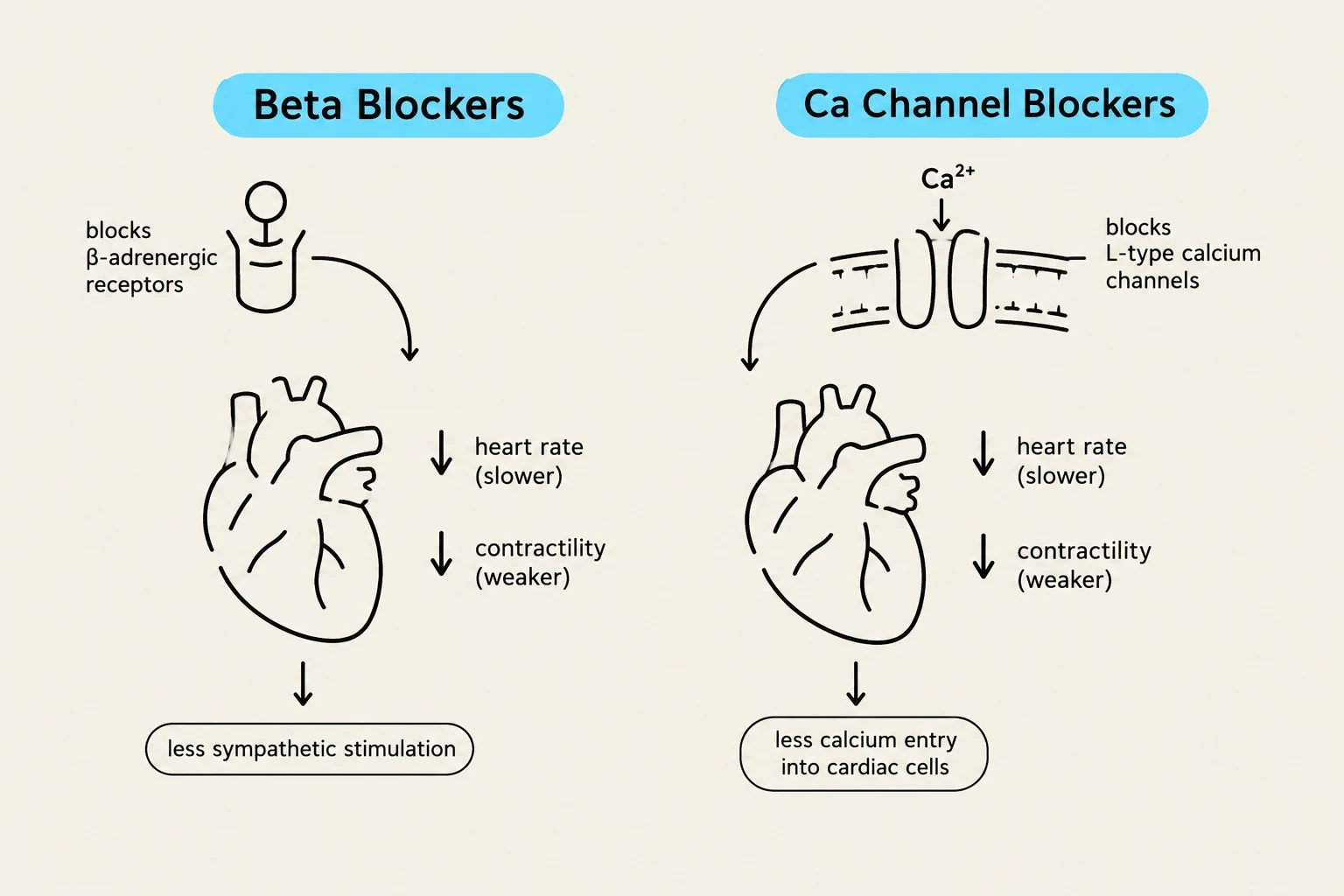
CCBs like amlodipine, diltiazem, nifedipine, and verapamil are used to manage hypertension by relaxing vascular smooth muscle.
Keep reading for free.
Create an account to finish this reading and make it part of your study routine.
Continue reading freeAlready have an account? Log in
Updated