Risk Factors
Several factors can increase a patient's susceptibility to iron deficiency, including:
- Nutritional Status: Poor overall dietary intake.
- Demographics: Adolescence, as nutritional demands are high during growth spurts.
- Pregnancy Patterns: Multiple gestations (twins, triplets) or closely spaced pregnancies.
- Physiological Loss: Excess bleeding.
Clinical Manifestations
Patients experiencing iron deficiency anemia may present with several classic symptoms:
- Fatigue and weakness
- Pallor (pale skin)
- Shortness of breath
- Dizziness
Management and Treatment
The primary goal of management is the prevention of deficiency and the maintenance of normal hemoglobin levels.
Clinical Note: Supplementation
The standard pharmacological treatment for iron deficiency is Ferrous Sulfate. A common dosage regimen involves 325 mg administered twice to three times daily (BID-TID).
Folic Acid Deficiency Anemia
Folic acid (Vitamin B9) is a critical nutrient because its metabolism increases significantly during both pregnancy and lactation. Unlike iron deficiency, which primarily impacts maternal energy and oxygen transport, folic acid deficiency poses a direct threat to the structural development of the fetus.
Fetal Risks and Neural Tube Defects
A deficiency in folic acid is linked to impaired brain and spinal cord development. This can lead to severe Neural Tube Defects (NTDs), which include:
- Anencephaly: A serious condition where the brain and skull do not develop properly.
- Spina Bifida: A defect in the formation of the spinal column.
Prevention and Nutritional Management
Because these defects occur very early in gestation, prevention must begin before conception.
- Prophylactic Dose: Women are advised to take folic acid supplements at a dose of 0.4 mg/day prior to conception.
- Therapeutic Dose: If a deficiency is clinically documented, the treatment dose increases to 1 mg/day.
- Dietary Support: Patients should be encouraged to consume foods rich in both iron and folic acid, such as:
- Green leafy vegetables
- Red meat, fish, and poultry
- Legumes
Summary Table: Anemia Comparison
| Feature | Iron Deficiency Anemia | Folic Acid Deficiency Anemia |
|---|
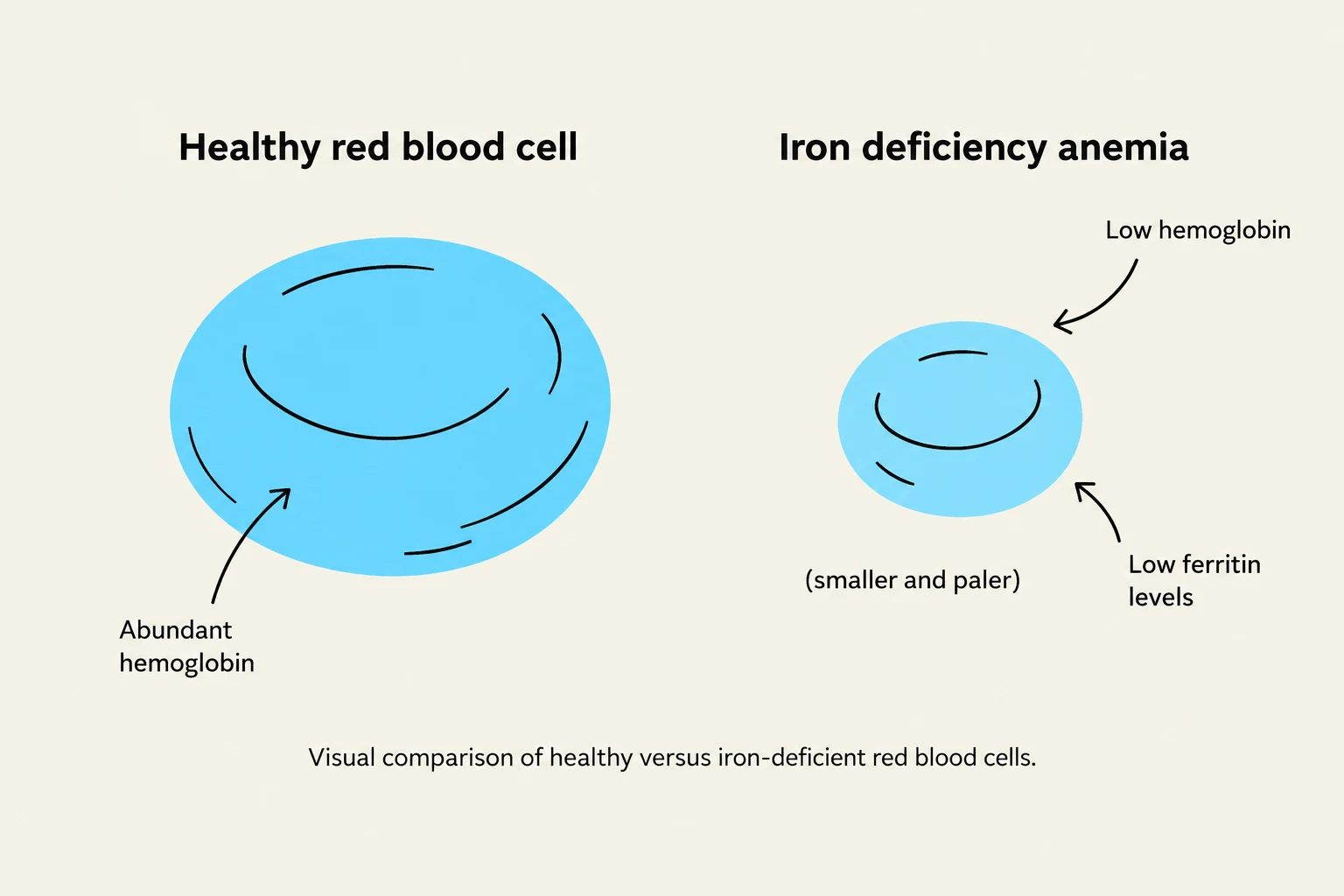
| Key Lab Findings | Low Hgb, Low Ferritin | Impaired folate metabolism |
| Primary Risk | Maternal fatigue/weakness | Fetal Neural Tube Defects (NTD) |
| Key Supplement | Ferrous Sulfate (325 mg BID-TID) | Folic Acid (0.4 mg to 1 mg/day) |
| Prevention Timing | Throughout pregnancy | Prior to conception |
Exam Tip: The "Why" of Folic Acid
When answering questions about folic acid, always link the deficiency to the Neural Tube. If the question mentions Anencephaly or Spina Bifida, the answer is almost certainly related to folic acid levels.