Positive Psychology and the Dimensions of Wellness
An overview of positive psychology, its focus on wellbeing and human flourishing, and the nine dimensions of wellness including emotional, physical, intellectual, social, environmental, financial, academic/career, spiritual, and creative wellness. It also covers resilience, stress management, character strengths, and s
Many people live under the misconception that happiness is a destination reached through specific achievements, such as a high-paying job, marriage, or wealth. However, research suggests there is no magic formula for happiness. Instead of focusing solely on the absence of illness or the presence of "feeling good," modern science looks toward a more robust framework of human potential. This is the domain of Positive Psychology, the scientific study of wellbeing and human flourishing. By exploring topics like resilience, character strengths, and mindfulness, positive psychology provides practical strategies for personal and professional development.
Understanding Wellbeing and Wellness
While the terms are often used interchangeably, they represent different aspects of our health journey.
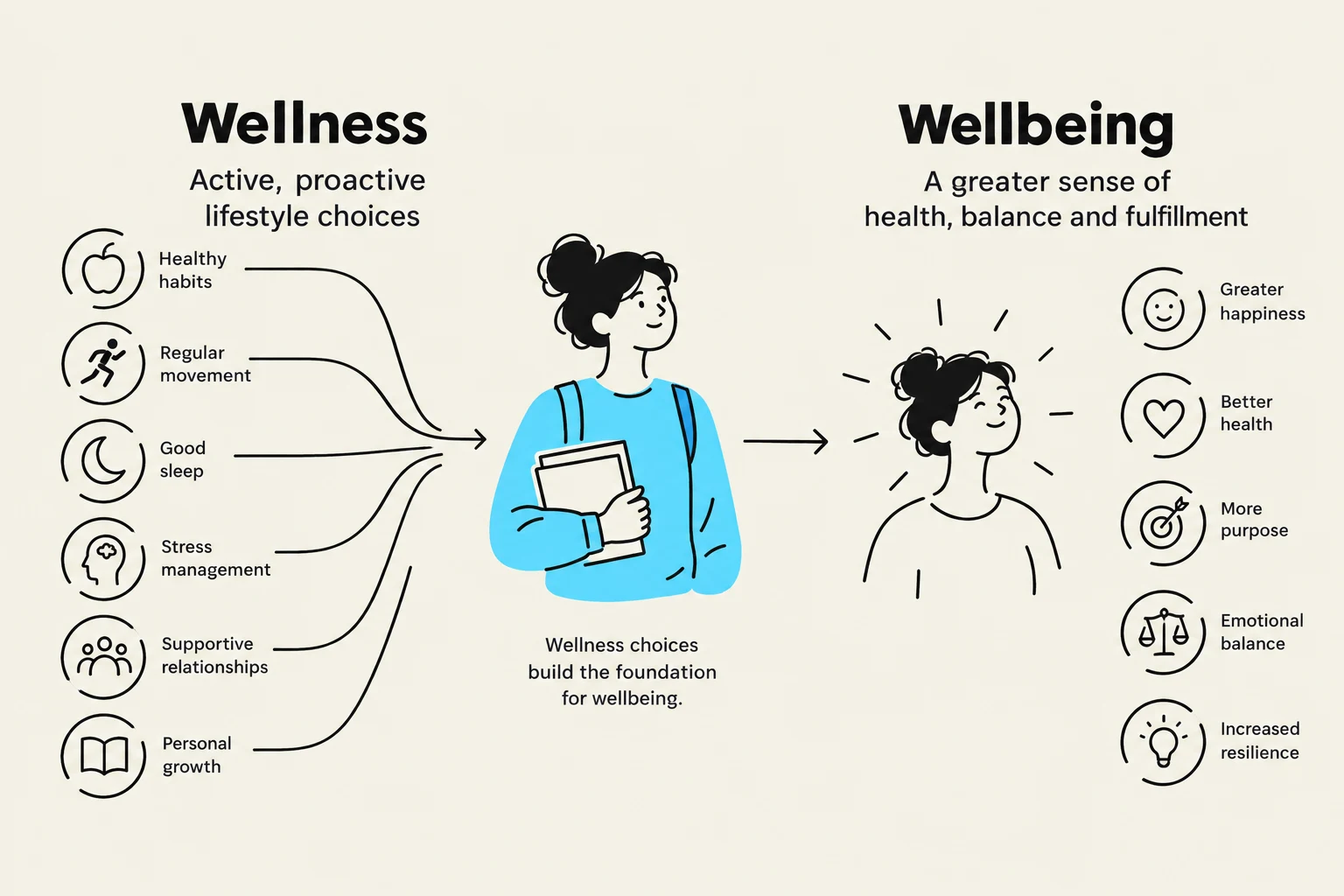
Wellness is an active, ongoing process. It involves making conscious lifestyle choices and establishing habits to prevent illness and improve health. Think of wellness as the proactive steps you take every day.
Wellbeing is a broader, holistic concept. It encompasses your overall experience of health, happiness, and prosperity, including life satisfaction, stress management, and the ability to engage in meaningful work.
Exam Tip: If a question asks about the "active process of making lifestyle choices," the answer is Wellness. If it asks about the "holistic experience of life satisfaction and prosperity," the answer is Wellbeing.
This illustration depicts the relationship between wellness choices and overall wellbeing, highlighting factors such as healthy habits, regular movement, good sleep, stress management, supportive relationships, and personal growth as foundations for greater happiness, better health, more purpose, emotional balance, and increased resilience.
The Nine Dimensions of Wellness
To achieve optimal health, one must navigate a "Wellness Wheel" consisting of nine interconnected dimensions. Balancing these dimensions helps individuals thrive and reach personal health goals.
1. Emotional Wellness and Emotions
Emotional wellness involves understanding and sharing your feelings, maintaining optimism, and practicing self-care. It is not about being happy all the time; rather, it is about making space for all feelings and responding appropriately to upsetting events rather than being overpowered by them.
Emotions are defined as complex psychological states involving subjective experiences, physiological responses, and behavioral reactions. They are crucial for navigating daily life and influencing decision-making.
2. Physical Wellness
Physical wellness requires making conscious decisions about your body. Key components include:
Nutrition: Choosing healthy foods.
Sleep: Aiming for 6–8 hours of restful sleep.
Physical Activity: Engaging in movement to reduce the risk of chronic conditions like hypertension or type 2 diabetes. Regular exercise releases endorphins, which can improve emotional health.
3. Intellectual Wellness
This dimension focuses on being a lifelong learner. It involves expanding your knowledge, finding creative outlets, and being open to new ideas. Two critical tools for intellectual wellness are:
Growth Mindset: A focus on how you use your mind and your desire to learn, rather than just what you currently know.
Critical Thinking: Using information to make sound judgments and solve problems independently.
4. Social Wellness
Socially well individuals build healthy relationships based on interdependence, trust, and respect. A reliable support system is essential for navigating difficult times.
5. Environmental Wellness
This involves ensuring your surroundings are safe and encourage both physical and mental health. A positive environment can have a calming effect on the mind.
6. Financial Wellness
Financial wellness is about understanding your finances and establishing good habits to mitigate the impact of money on your health and academic performance.
7. Academic/Career Wellness
This dimension involves finding passion in your work or studies and managing tasks based on urgency and priority.
8. Spiritual Wellness
Spirituality is broader than religion; it is an individual's sense of peace, purpose, and connection to self, nature, and others.
9. Creative Wellness
Expressing creativity—through music, visual arts, or writing—can reduce stress and improve the immune system.
The Wellness Wheel illustrates nine dimensions of well-being: Spiritual, Occupational, Social, Physical, Emotional, Environmental, Financial, and Intellectual, emphasizing their interconnectedness for a fuller life.
Resilience, Stress, and the Stress Curve
Life inevitably presents challenges. Resilience is the ability to adapt to these setbacks and shift back toward balance. It is not about avoiding stress, but about noticing it and taking proactive steps to manage it.
Understanding the Stress Curve is vital for students. Small amounts of stress can actually increase alertness and energy, helping you meet challenges. However, if demands become too high or last too long, you may experience fatigue, burnout, or serious illness.
Self-Awareness Check-in: To build resilience, practice critical thinking about your own wellness. Ask yourself: Is there anything bothering me? Is it within my control? What can I do to support myself?
Applying Strengths for Personal Growth
A powerful strategy in positive psychology is the application of character strengths. Research shows that using your unique skills and talents can improve relationships, enhance health, and help you overcome problems.
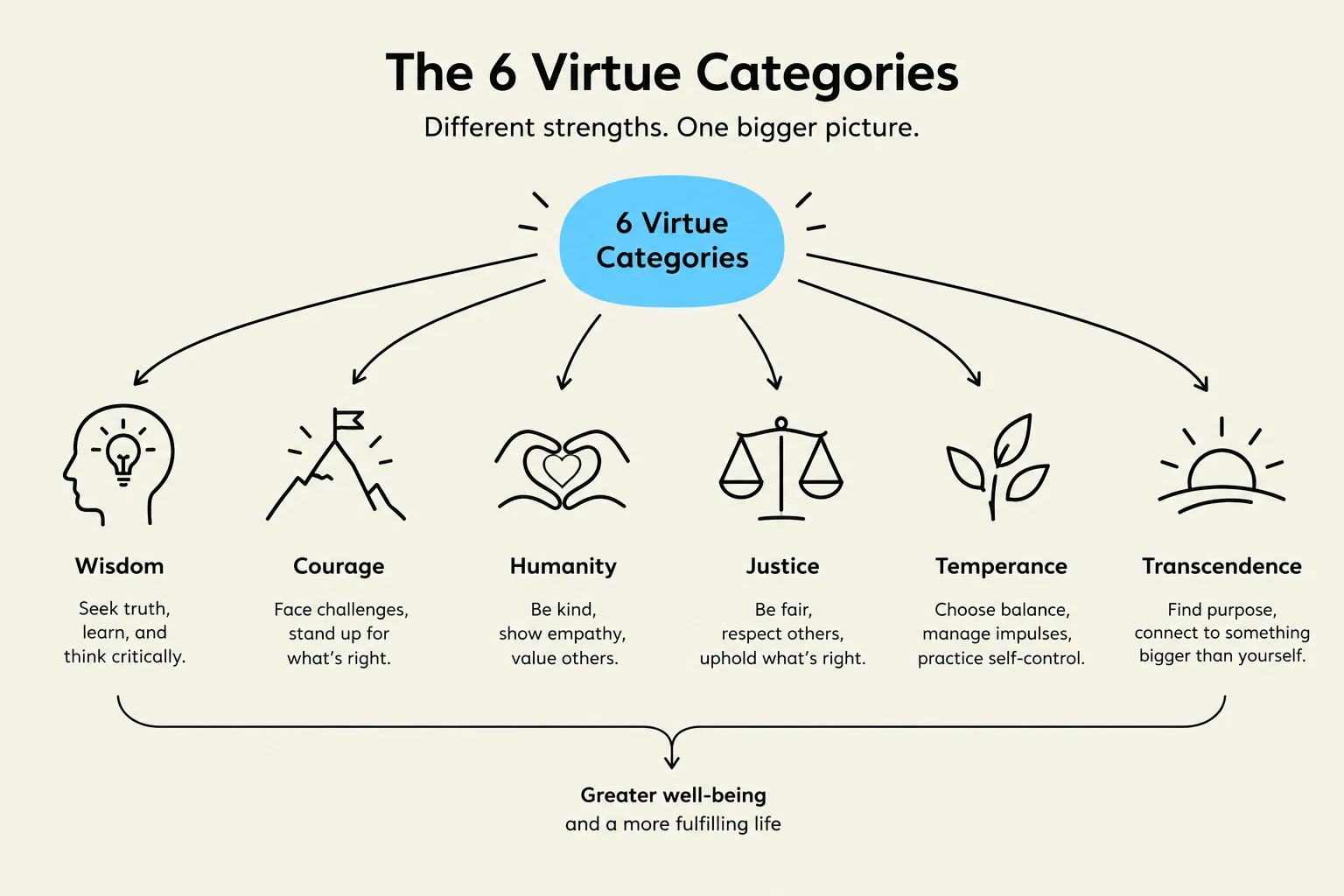
The VIA Institute on Character identifies 24 strengths categorized into six universal virtues:
Wisdom: Creativity, Curiosity, Judgment, Love of Learning, Perspective.
Transcendence: Appreciation of Beauty, Gratitude, Hope, Humor, Spirituality.
This diagram illustrates the six virtue categories: Wisdom, Courage, Humanity, Justice, Temperance, and Transcendence, which contribute to greater well-being and a more fulfilling life.
Strategies for Change
Changing habitual behavior is difficult and requires a "compelling reason" or a strong "why". Understanding the Stages of Change can help you track your progress:
Precontemplation: Unaware that the behavior is problematic.
Contemplation: Recognizing the problem and weighing pros and cons.
Preparation: Taking small steps toward change within the next 30 days.
Action: Actively modifying behavior (within the last 6 months).
Maintenance: Sustaining the change for more than 6 months.
To succeed, follow the APA's tips: make a specific plan, start small, change only one behavior at a time, involve a "buddy" for accountability, and always ask for support.
If you or someone you know is struggling, please reach out to a medical professional or contact support services such as 9-8-8 in Canada.
Keep reading for free.
Create an account to finish this reading and make it part of your study routine.