An overview of pneumonia, including its pathophysiology, common classifications (CAP vs. HAP), clinical manifestations, and essential nursing interventions for respiratory support, pharmacological management, and patient comfort.
Pneumonia is a significant respiratory condition characterized by an inflammatory process within the lungs, often triggered by infectious agents. With 2 to 5 million cases occurring annually in the United States, it remains the 7th leading cause of death. Understanding the complex physiological changes and the nursing interventions required to manage them is critical for patient safety and recovery.
Pathophysiology of Pneumonia
The development of pneumonia begins when an infectious agent enters the lungs, triggering an inflammatory response. This inflammation leads to an increase in white blood cells (WBCs) as the body attempts to fight the infection.
As the inflammatory process intensifies, capillary leakage occurs, leading to the accumulation of edema and exudate within the lung tissue. This buildup of fluid and cellular debris creates several physiological complications:
Reduced Oxygen Exchange: The presence of fluid in the alveoli prevents efficient gas transfer between the lungs and the bloodstream.
Alveolar Collapse (Atelectasis): Increased fibrin and edema can lead to reduced lung compliance and decreased vital capacity, eventually causing the alveoli to collapse, a condition known as atelectasis.
Hypoxemia: As gas exchange is impaired, the oxygen saturation in the blood drops, leading to hypoxemia.
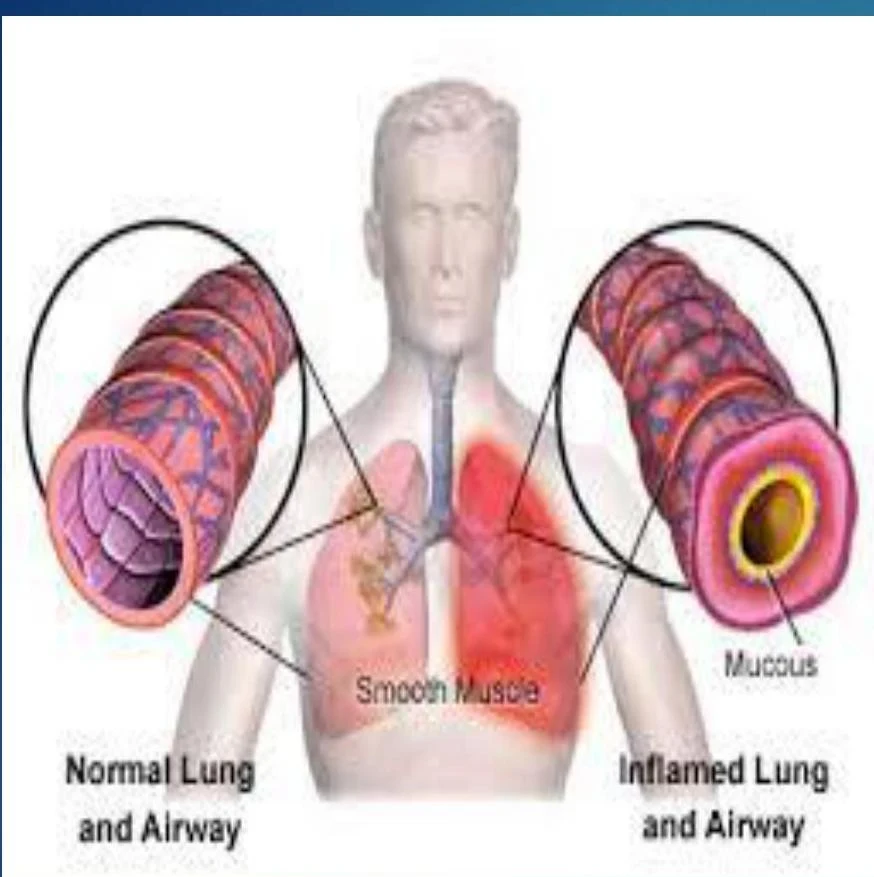
Diagram illustrating the difference between a normal lung and airway and an inflamed lung and airway, highlighting smooth muscle and mucous.
Classifications: CAP vs. HAP
Pneumonia is generally classified based on where the infection was acquired:
Community-Acquired Pneumonia (CAP): This refers to pneumonia contracted in a community setting.
Hospital-Acquired Pneumonia (HAP): Also known as nosocomial pneumonia, this is acquired during a hospital stay.
Clinical Manifestations and Assessment
Patients presenting with pneumonia may exhibit a variety of symptoms depending on whether the infection is "typical" or "atypical".
Typical Symptoms
Typical pneumonia often presents with more acute and severe symptoms, including:
Fever and chills
Productive cough
Tachycardia and tachypnea (rapid heart rate and breathing)
Dyspnea (shortness of breath) and respiratory distress
Pleuritic chest pain: Sharp pain experienced during breathing
Decreased breath sounds and crackles upon auscultation
Confusion and elevated WBC counts
Atypical Symptoms
Atypical pneumonia may present more subtly, often without fever or chills. Common signs include headache, sore throat, fatigue, a dry/nonproductive cough, and scattered wheezes.
Nursing Alert: When assessing a patient with suspected pneumonia, monitor oxygen saturation closely. A saturation level of <90% is a significant indicator of hypoxemia.
Nursing Management and Interventions
Nursing care for pneumonia focuses on three priority problems: managing hypoxemia, preventing airway obstruction, and preventing sepsis.
Respiratory Support
To address impaired gas exchange, nurses must prioritize oxygen administration. Oxygen should be treated like a drug, meaning the concentration must be continuously monitored for safety.
To combat ineffective airway clearance, several interventions are used:
Incentive Spirometer: Encourages deep breathing to prevent atelectasis.
Cough and Deep Breathe: Helps mobilize secretions.
Medications are used to target the underlying infection and manage symptoms:
Medication Category
Example
Purpose
Antibiotics
Ceftriaxone (Rocephin)
Treats the infectious agent
Adrenergics
Albuterol
Bronchodilation
Antitussives
Benzonatate, Dextromethorphan
Inhibits coughing
Expectorants
Guaifenesin (Mucinex)
Liquefies secretions for easier removal
Mucolytics
Acetylcysteine (Mucomyst)
Thins and loosens mucus in the airway
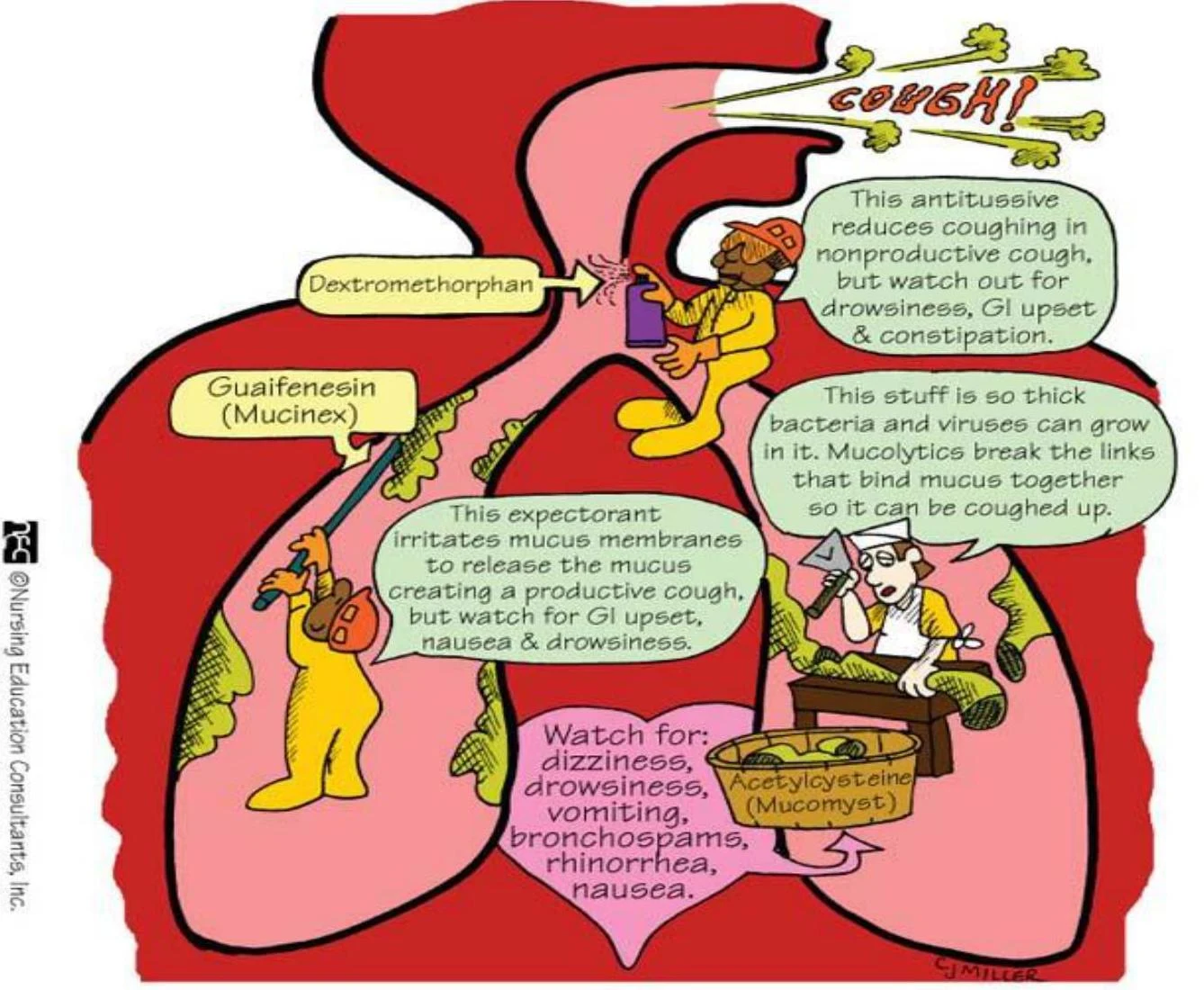
This illustration depicts the mechanisms of action for common cough and mucus medications, including Dextromethorphan, Guaifenesin, and Acetylcysteine, and their potential side effects.
Nutritional and Activity Support
Because fighting an infection is metabolically demanding, patients may experience activity intolerance. Nurses should:
Provide rest periods to conserve energy.
Offer a high-calorie, low-carbohydrate diet.
Encourage small, frequent meals and nutritional supplements.
Decrease sodium intake to help manage edema.
An illustration of various pills and capsules.
Summary of Nursing Diagnoses
When developing a care plan, nurses should focus on the following primary diagnoses:
Ineffective airway clearance related to increased exudate and mucus.
Impaired gas exchange related to alveolar collapse and fluid accumulation.
Activity intolerance related to imbalance between oxygen supply and demand.
Keep reading for free.
Create an account to finish this reading and make it part of your study routine.