


Geology is often described as the study of "sexy and exciting" phenomena like volcanoes, tsunamis, and earthquakes. At the heart of these dramatic events lies a single, unifying principle: Plate Tectonics. This theory explains why oceans and continents are positioned where they are, how mountains are uplifted, and why certain regions are prone to natural hazards. By understanding how the Earth's outer shell moves, we can reconstruct the history of our planet and predict the future of the landscapes we inhabit.
The Mechanics of Plate Tectonics
The Earth's outermost layer is not a solid, unbroken shell. Instead, it is divided into several large and small pieces known as tectonic plates. To understand how these plates move, we must distinguish between the Earth's layers based on their mechanical strength (rheology). The rigid, brittle outer layer—comprising the crust and the uppermost part of the mantle—is called the lithosphere. This lithosphere floats upon the asthenosphere, a deeper layer of the mantle that is "plastic" or ductile, meaning it can flow like silly-putty. This flowing nature of the asthenosphere is what allows the lithospheric plates to slide and interact.
There are three primary ways these plates interact at their boundaries:
1. Convergent Boundaries: The Great Collisions
At a convergent boundary, plates move toward one another. This interaction typically results in one of two scenarios:
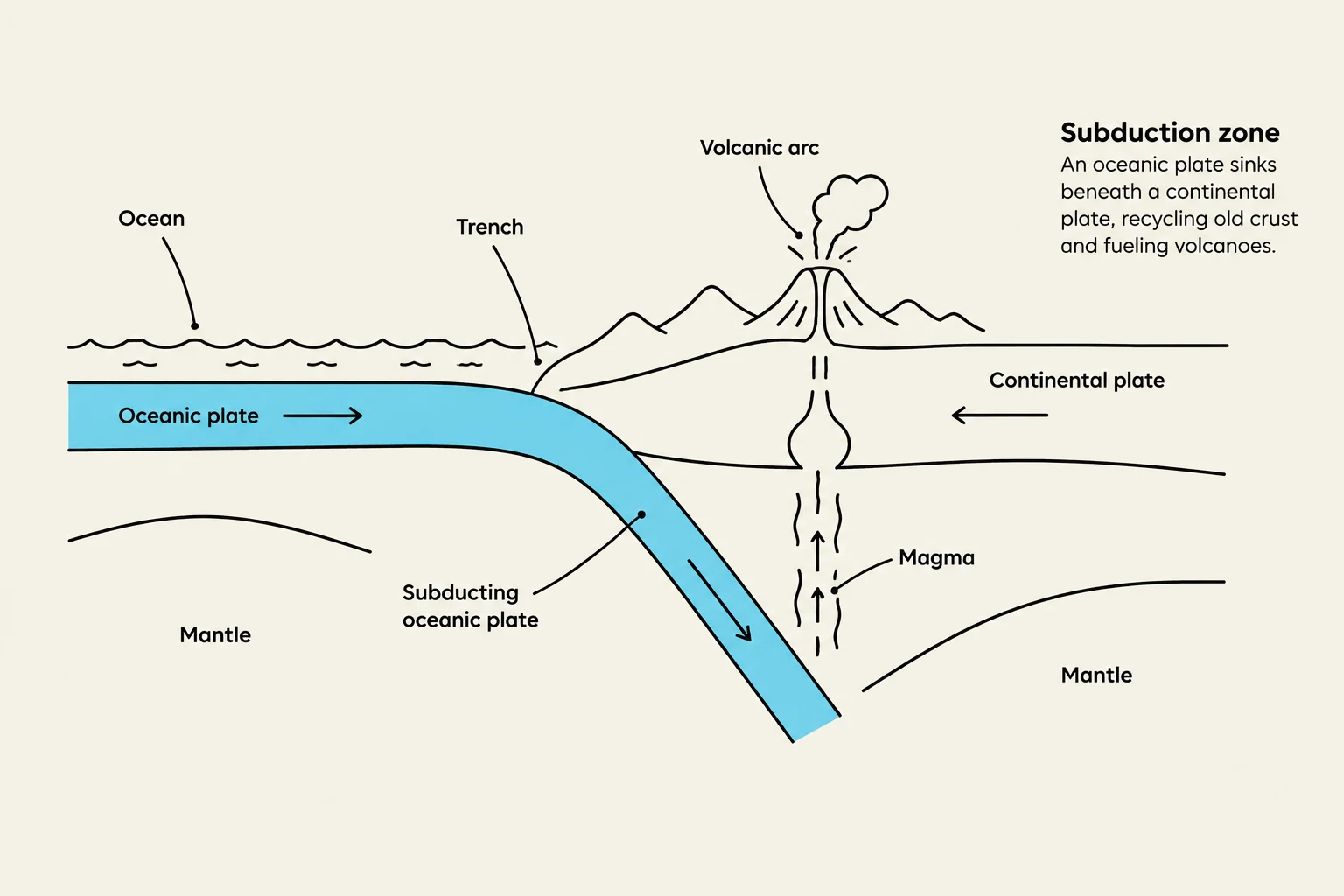
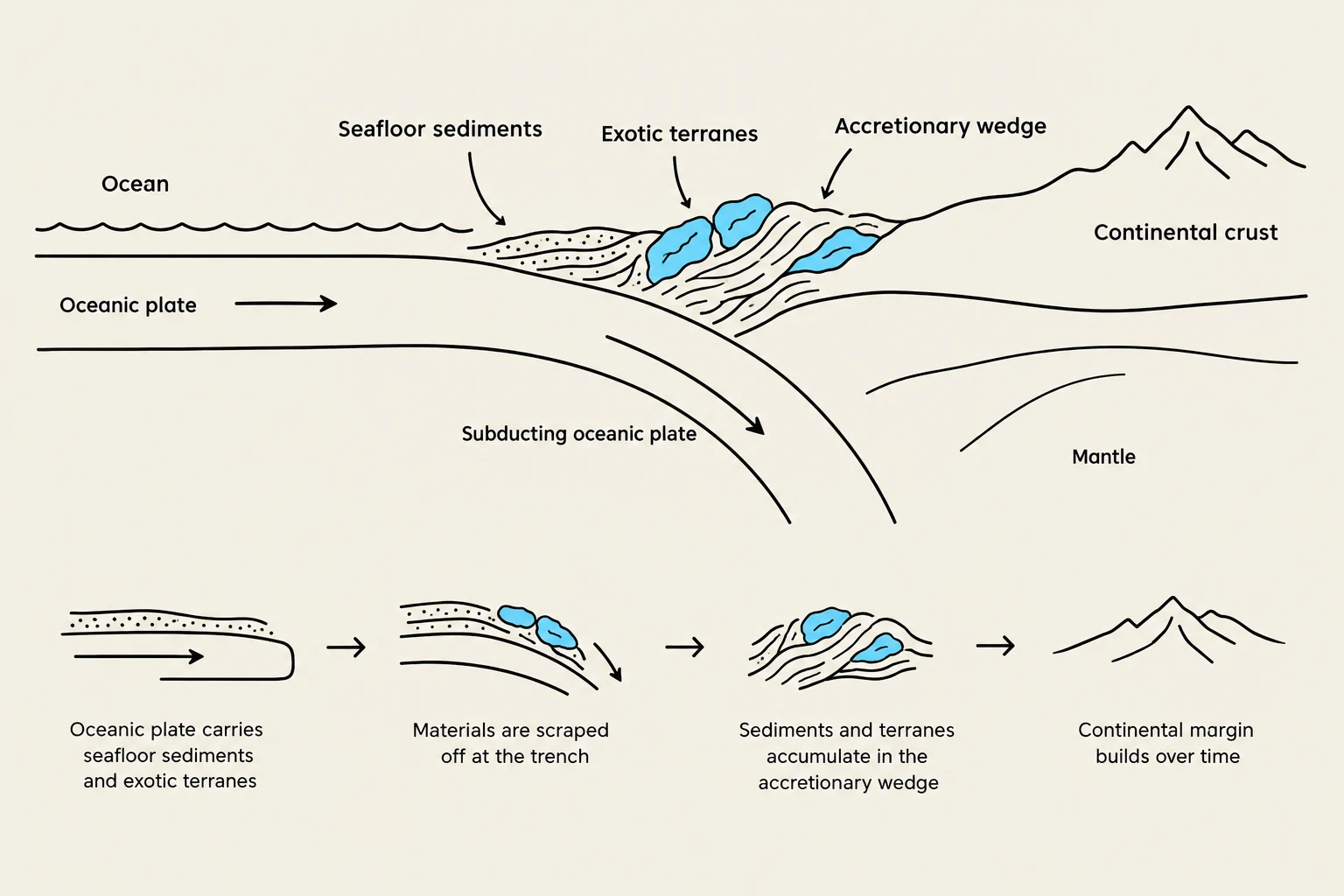
- Subduction Zones: When a dense oceanic plate meets a less dense continental plate, the oceanic plate is forced downward into the mantle. As the plate sinks, it melts at depth, fueling the creation of a volcanic arc—a chain of volcanoes on the overriding plate.
- Continental Collision Zones: When two thick continental plates collide, neither is dense enough to subduct easily. Instead, the crust crumples and pushes upward, forming massive mountain ranges like the Himalayas.
Keep reading for free.
Create an account to finish this reading and make it part of your study routine.
Continue reading freeAlready have an account? Log in
Updated