


Plant disease epidemiology is the study of the temporal (time) and spatial (space) changes that occur during disease outbreaks in plant populations. An epidemic is defined as a rapid increase and spread of a pathogen across a large area of a specific crop. Understanding how these diseases progress is not just a theoretical exercise; it is essential for predicting crop loss, modeling the effects of climate change, and designing effective management strategies to protect global food security.
To manage a disease, we must first understand its "cycle"—the way the pathogen reproduces and spreads through a population. These cycles are generally categorized into three types: monocyclic, polycyclic, and polyetic.
Understanding Disease Cycles
Monocyclic Diseases
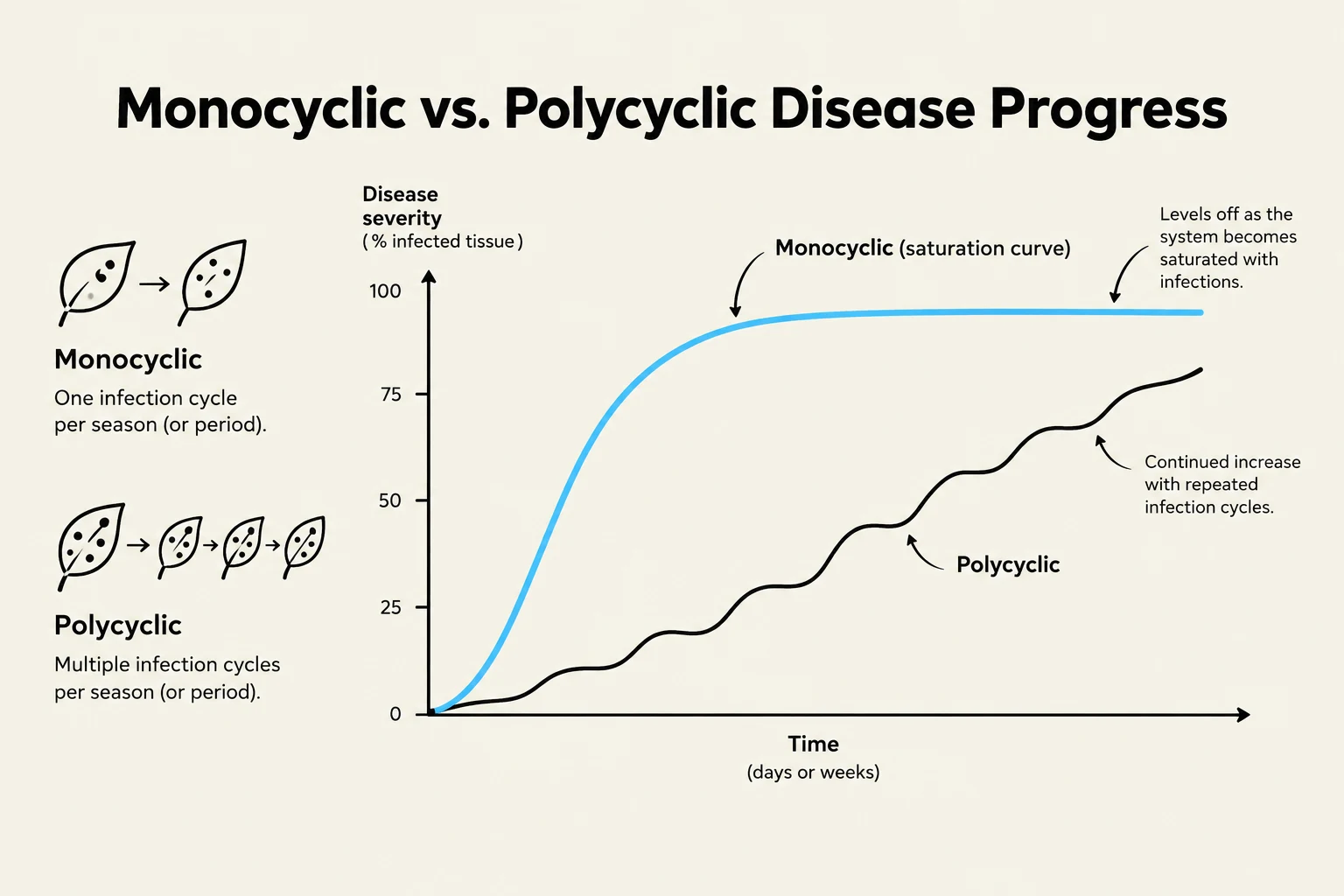
A monocyclic disease is characterized by having only one infection cycle per growing season. In these cases, there is no secondary inoculum produced during the current epidemic; the disease is driven entirely by the amount of pathogen present at the start of the season. Many soilborne pathogens, such as clubroot of crucifers, follow this pattern.
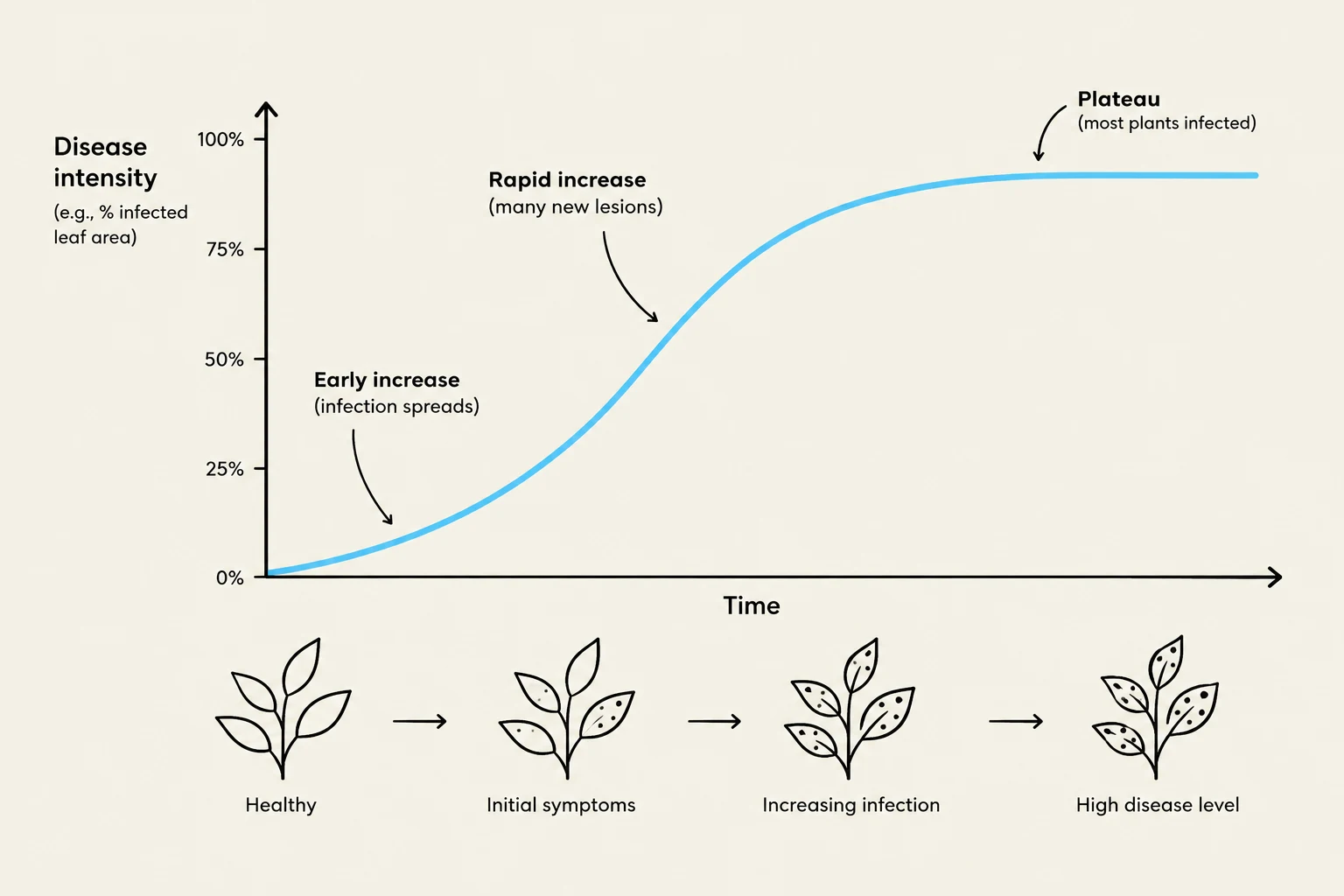
Because there is no buildup of new spores during the season, the disease progress resembles a "saturation curve," where the amount of disease increases until it reaches a maximum level.
Polycyclic Diseases
Polycyclic diseases are much more explosive and dangerous for farmers. These pathogens undergo several secondary infection cycles within a single growing season. The pathogen produces secondary inoculum (such as spores or conidia) on the host plants, which then spreads to neighboring healthy plants, creating a continuous loop of infection. Examples include many airborne pathogens like the late blight of potato.

Keep reading for free.
Create an account to finish this reading and make it part of your study routine.
Continue reading freeAlready have an account? Log in
Updated