Explores the internal components of the plant cell, including the protoplast, cytoplasm, nucleus, and organelles. Discusses the plasma membrane's fluid mosaic model, osmosis, and the effects of different solutions on plant cells. Details specialized plant structures like the cell wall, central vacuole, and plastids, an
Understanding the plant cell requires looking at it as a highly organized, compartmentalized system designed to convert sunlight into energy and maintain structural integrity. Unlike animal cells, plant cells possess specialized structures—such as a rigid cell wall, plastids, and a large central vacuole—that allow them to thrive as stationary, self-sustaining producers. This article explores the internal components of the plant cell, the dynamic nature of its membrane, and how these structures organize into functional tissues.
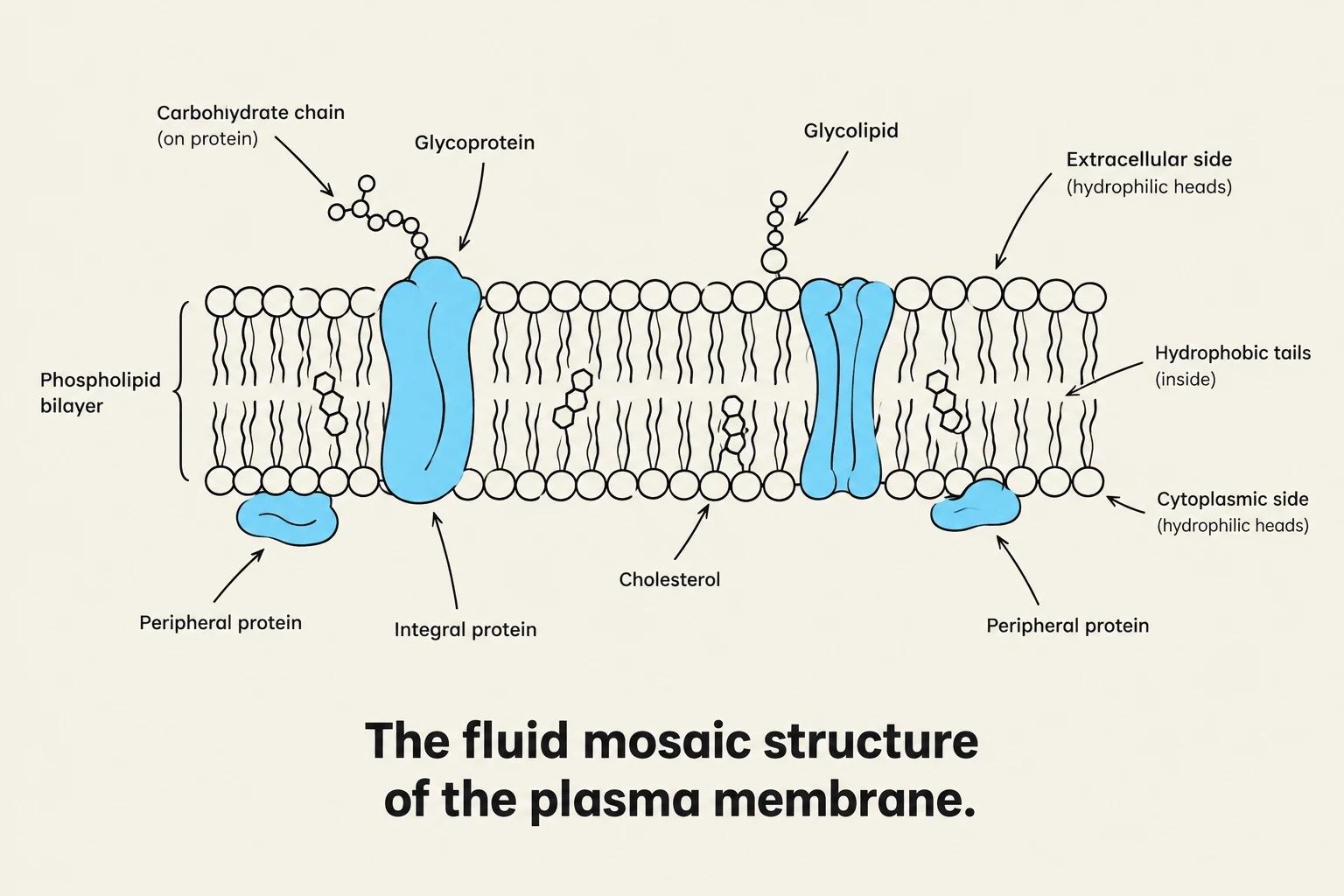
Diagram illustrating the fluid mosaic model of the plasma membrane, showing its components like the phospholipid bilayer, integral and peripheral proteins, cholesterol, glycoproteins, and glycolipids.
The Protoplast and Internal Organization
In botany, the term protoplast is used as a collective noun to describe the entire living content of a cell contained within the plasma membrane. This includes the nucleus, the cytoplasm, and all the various organelles.
The Cytoplasm and Cytoskeleton
The cytoplasm acts as the medium for most cellular metabolic activities. It is a colloid consisting of a liquid substance known as the cytosol. To prevent the cell from being a mere bag of liquid, the cytoskeleton provides a vital internal scaffolding. This structural network is composed of two primary elements:
Microtubules: Provide structural support and aid in movement.
Microfilaments: Assist in maintaining cell shape and facilitating internal transport.
The Nucleus and Organelles
The nucleus serves as the control center of the cell, directing protein synthesis and cell reproduction. Within the nucleus, the nucleolus is a concentrated area of RNA and protein responsible for ribosome formation. Other membrane-bound organelles, such as the endoplasmic reticulum and Golgi apparatus, work together to transport, package, and secrete proteins and lipids.
Exam Tip: If asked to define "protoplast," remember it is everything inside the plasma membrane, including the nucleus and organelles.
The Plasma Membrane and Osmotic Dynamics
The plasma membrane is a critical boundary that regulates what enters and exits the cell. It is characterized by two fundamental properties: it is differentially permeable (selectively allowing certain substances to pass) and it follows the Fluid Mosaic Model.
The Fluid Mosaic Model
This model describes the membrane not as a rigid wall, but as a dynamic, fluid structure. It is a "mosaic" composed of various molecules, including:
Phospholipids: The primary structural fabric of the bilayer.
Proteins: Often embedded within the bilayer to assist in transport.
Cholesterol and Carbohydrates: Components that contribute to the membrane's fluidity and cell recognition.
Membrane Dynamics: Osmosis and Solutions
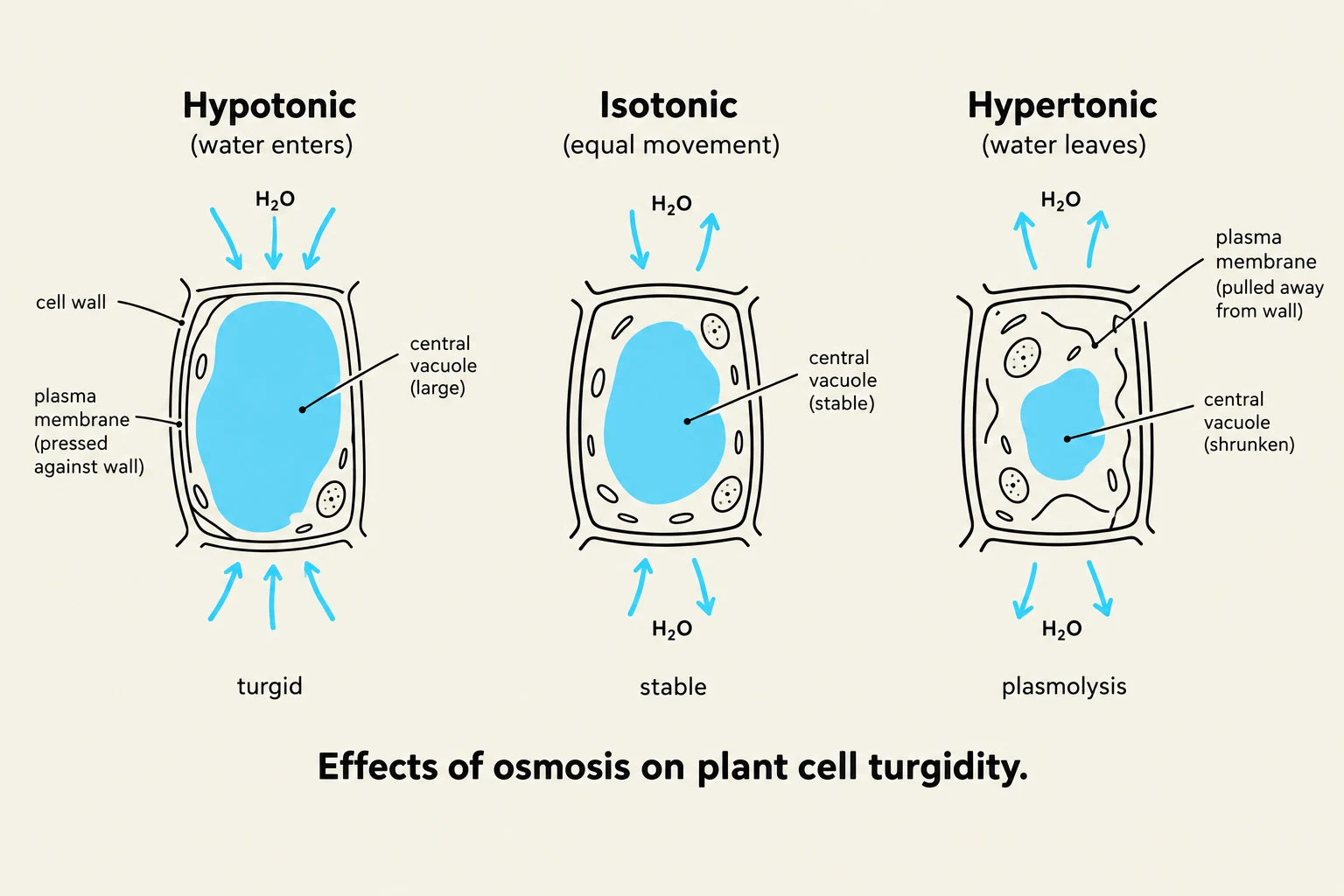
This diagram illustrates the effects of osmosis on plant cell turgidity, showing hypotonic, isotonic, and hypertonic conditions and their impact on the central vacuole and plasma membrane.
Because the membrane is differentially permeable, the movement of water—a process called osmosis—is heavily influenced by the solute concentration of the surrounding environment.
Solution Type
Solute Concentration
Water Movement
Cellular Effect
Hypotonic
Lower outside than inside
Water enters the cell
Cell becomes turgid
Isotonic
Equal concentrations
No net movement
Cell remains stable
Hypertonic
Higher outside than inside
Water leaves the cell
Cell shrinks
When a plant cell is in a hypotonic solution, water rushes in, creating internal pressure against the cell wall. This state is known as being turgid. Turgidity is essential for plants, as it provides the mechanical support needed to keep the plant upright.
Specialized Plant Structures
Plant cells possess three unique features that distinguish them from animal cells: the cell wall, plastids, and the central vacuole.
The Cell Wall and Connectivity
The cell wall is a rigid exterior structure that provides support and protection. It consists of a primary cell wall made of cellulose and, in many cases, a secondary cell wall made of lignin.
Cells do not exist in isolation; they are connected by:
Middle Lamella: A layer primarily made of pectin that acts as "cement" between adjacent cells.
Plasmodesmata: Cytoplasmic bridges that allow for the movement of materials between cells.
The Central Vacuole
The central vacuole can occupy up to 90% of the cell's total volume. It is bounded by a specialized membrane called the tonoplast. The vacuole stores cell sap—a watery mixture of sugars, salts, amino acids, and proteins. It also serves as a reservoir for:
Flavonoid pigments: Such as anthocyanins, which provide colors like the deep red in red cabbage.
Crystals: Such as calcium oxalate.
Turgor Pressure: By maintaining water content, the vacuole pushes against the cell wall to maintain plant structure.
Plastids and Chloroplasts
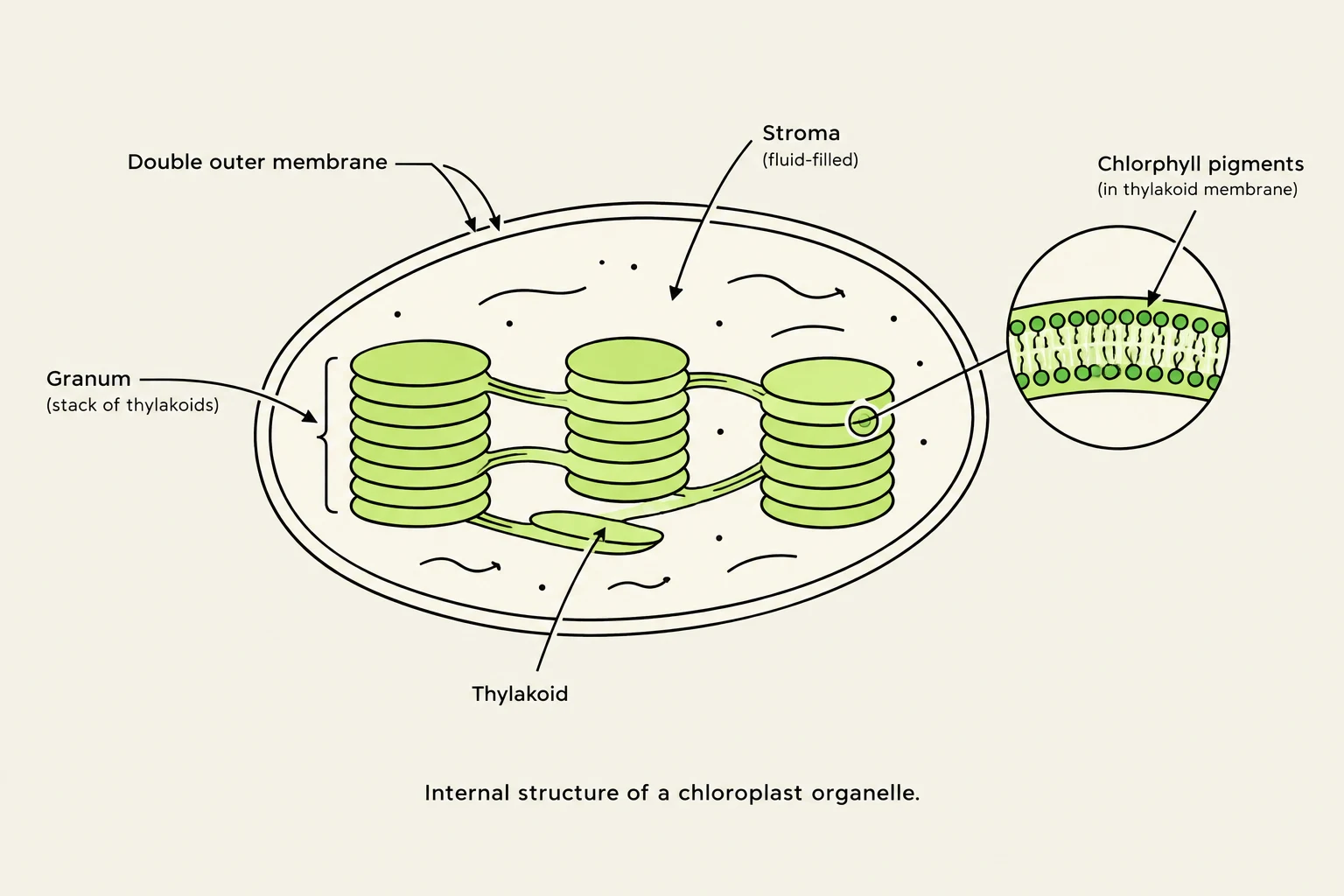
Internal structure of a chloroplast organelle.Plastids are unique to plants and algae. The most famous is the chloroplast, the site of photosynthesis. Chloroplasts are double-membraned organelles containing:
Thylakoid membranes: These house photosynthetic pigments (like chlorophyll) and are organized into stacks called grana.
Stroma: The fluid surrounding the thylakoids where the biochemical phase of photosynthesis (the Calvin Cycle) occurs.
Other plastids include chromoplasts (which impart color via carotenoids) and leucoplasts (colorless organelles used for storage, such as starch).
Organization into Tissues
In multicellular plants, cells specialize and group together to form three functional tissue systems:
Dermal Tissue: The plant's "skin." This includes the epidermis in young plants and the periderm (bark) in woody plants. Woody plants use lenticels for gas exchange instead of stomata.
Ground Tissue: The bulk of the plant body. It consists of:
Parenchyma: Versatile cells used for storage and photosynthesis.
Collenchyma: Provides structural support through thickened cell corners.
Sclerenchyma: Provides heavy-duty support via secondary walls; includes fibres and sclereids.
Vascular Tissue: The plant's transport system.
Xylem: Composed primarily of dead cells, it conducts water and dissolved minerals upward from the soil.
Phloem: Living tissue that conducts organic solutes (sugars) in multiple directions; it relies on specialized companion cells to function.
Keep reading for free.
Create an account to finish this reading and make it part of your study routine.