This content explores the physiological, functional, cognitive, and psychosocial changes associated with aging, distinguishing normal age-related changes from pathological processes. It covers systemic alterations, functional assessments (ADLs), cognitive health, mental health, and health promotion strategies for older
Nursing assessment of the older adult requires a holistic perspective that integrates physical, social, emotional, spiritual, and cognitive dimensions. A fundamental principle in gerontological nursing is recognizing that aging is a highly variable process; there is great variation in physiological, cognitive, and psychosocial health among older individuals. Crucially, nurses must distinguish between normal age-related physiological changes and pathological processes. While many bodily changes are expected parts of the aging journey, significant declines in function or cognition are often linked to specific illnesses or chronic conditions.
Physiological Changes and Systemic Impact
As the body ages, various systems undergo structural and functional alterations. These changes do not always signify disease, but they do change how a patient responds to illness and stress.
Integumentary System
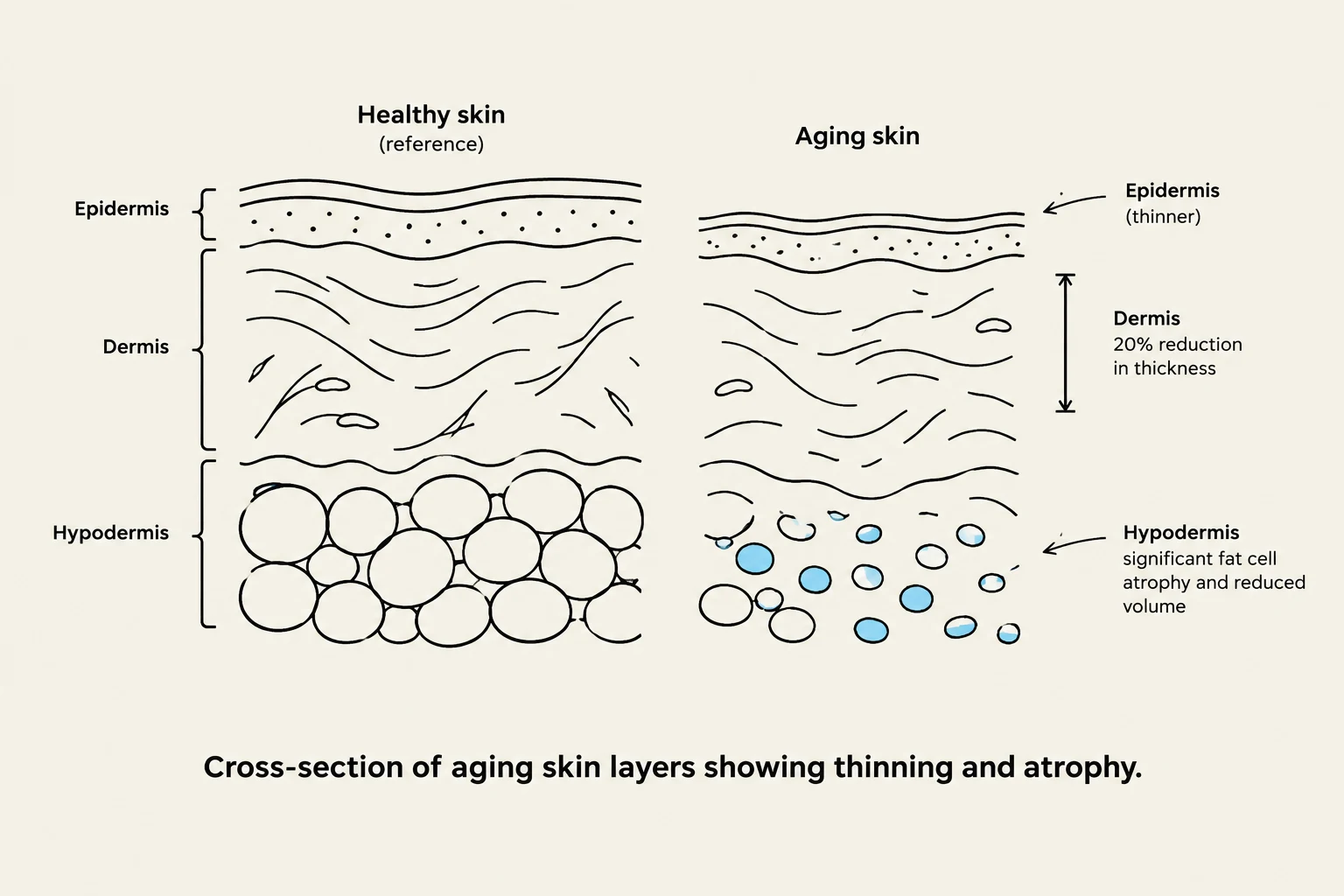
Cross-section of aging skin layers showing thinning and atrophy.
The skin undergoes significant thinning, which has direct implications for wound care and injury prevention. The epidermis thins, making blood vessels and bruises much more visible. The dermis loses approximately 20% of its thickness, and the hypodermis may experience atrophy and a decrease in fat.
Hair and nail changes are also common:
Hair: Density generally decreases across all ethnic groups, though men may experience increased, stiff hair in the ears, nose, and eyebrows.
Nails: Nails often become harder, thicker, more brittle, and may change shape to become flat or concave.
Nutritional and Bone Health
Maintaining bone density is a primary concern for preventing osteoporosis. Because Vitamin D is essential for calcium absorption, supplementation is often necessary.
Clinical Recommendation: For individuals over the age of 50, a daily supplement of at least 800 IU of Vitamin D is recommended to support bone health.
Other Systemic Changes
Cardiovascular: Decreased elasticity in blood vessels and myocardial stiffening can lead to decreased perfusion in organs like the liver and kidneys. This may result in dizziness or fainting when an older adult stands up suddenly.
Respiratory: The primary change is a decrease in efficiency due to the loss of elastic recoil and a stiffening of the chest wall.
Gastrointestinal: Changes include decreased gastric motility, reduced nutrient absorption due to shorter intestinal villi, and a decrease in salivary secretion.
Immune: Reduced immunity at the cellular level and thinner skin make older adults more susceptible to bacterial invasion, pneumonia, and urinary tract infections.
Functional Assessment: Activities of Daily Living (ADLs)
In gerontological nursing, the capacity to perform Activities of Daily Living (ADLs) is one of the most sensitive indicators of an older person's health or illness. While physiological changes are often normal, a decline in functional ability—the ability to perform tasks independently—is usually linked to disease or the degree of chronicity.
When assisting with ADLs, such as bathing, nurses should adopt a person-centered approach:
Respect the person's lifetime routines and preferences.
Encourage self-care to the greatest extent possible.
Ensure the environment (e.g., bathrooms) is warm, comfortable, and safe.
Cognitive Changes and Mental Health
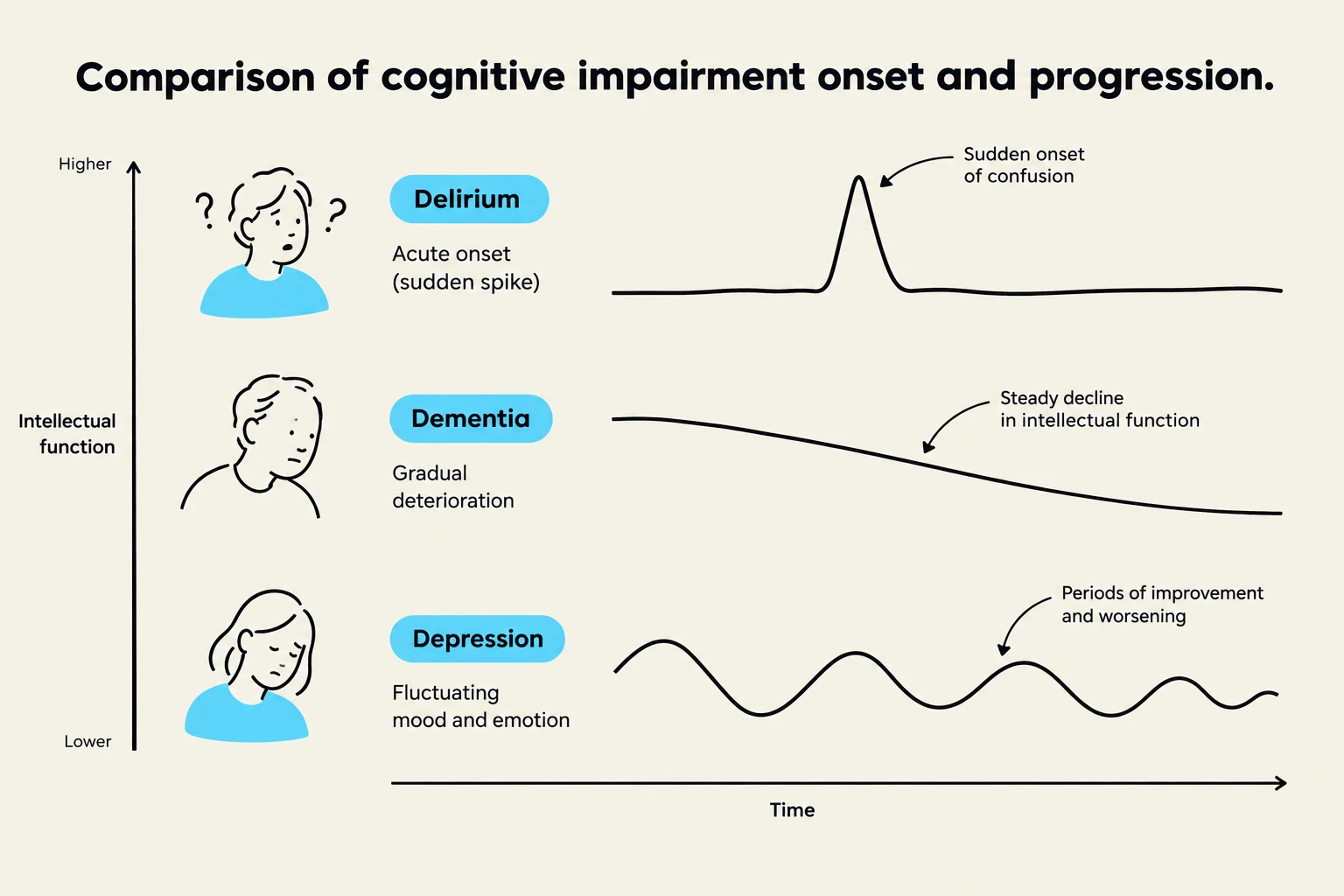
This graph compares the onset and progression of delirium, dementia, and depression, illustrating how intellectual function changes over time for each condition.
A common misconception is that cognitive impairment is an inevitable part of aging. While structural changes in the brain are normal, significant impairments in judgment, language, or calculation are not normal. Nurses must be able to differentiate between three distinct conditions:
Condition
Characteristics
Delirium
An acute, sudden state of confusion.
Dementia
A gradual, generalized deterioration of intellectual functioning.
Depression
A mood disturbance characterized by feelings of sadness and despair.
Nursing Tip: Cognitive assessment can be perceived by older adults as intrusive or intimidating. Timing is critical; ensure the patient is not fatigued before beginning tools like the Mini-Mental State Exam (MMSE) or the Clock Drawing Test (CDT).
Psychosocial Changes and Health Promotion
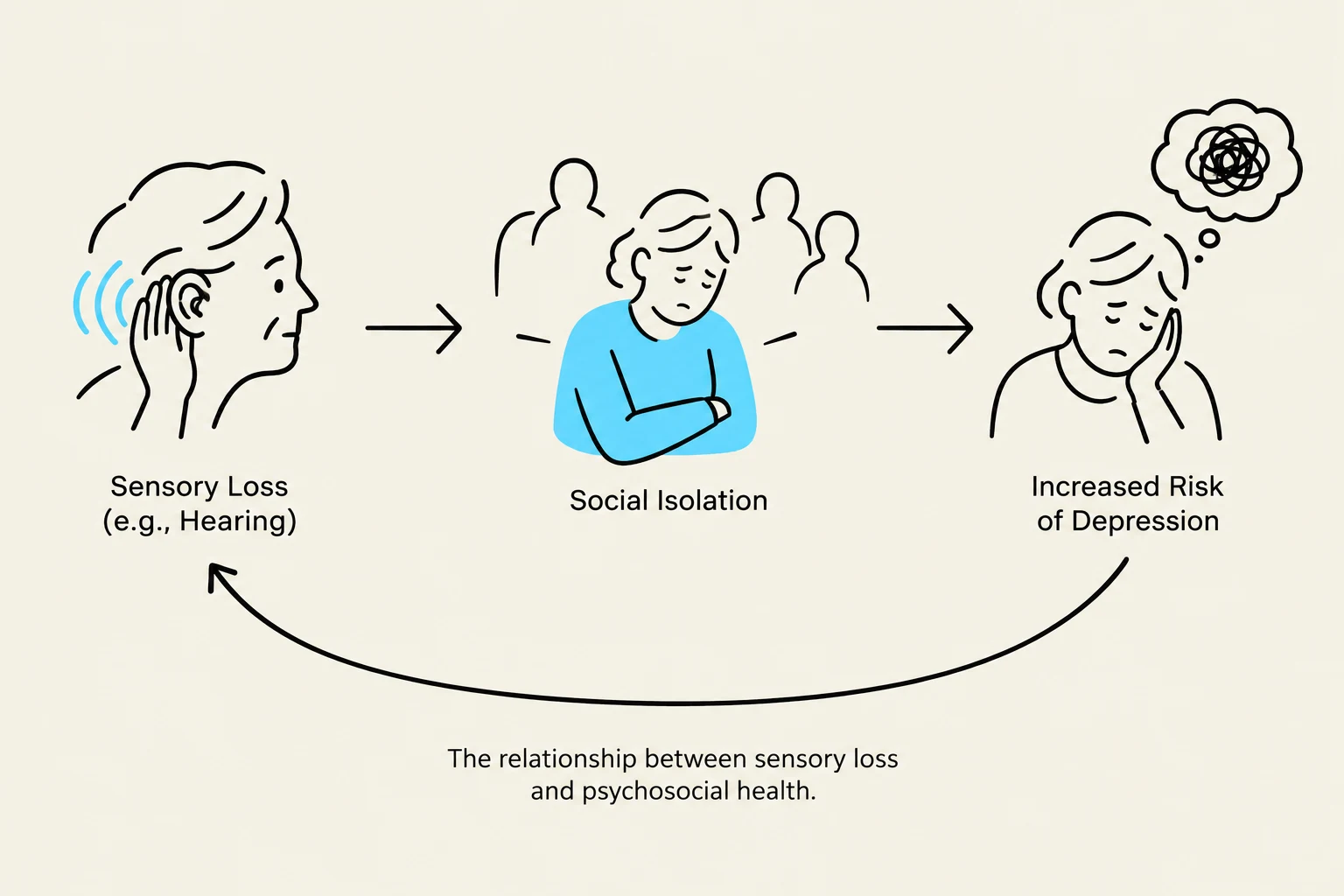
This diagram illustrates the relationship between sensory loss, such as hearing impairment, and its potential to lead to social isolation and an increased risk of depression.
Aging involves navigating significant psychosocial shifts, including retirement, social isolation, changes in sexuality, and adjusting to the death of a spouse. Sensory losses, such as hearing impairment, can exacerbate these issues by leading to further social isolation and increased risks for depression.
To support "aging well," nurses should implement health promotion and maintenance strategies:
Cognitive Stimulation: Engaging the mind to maintain function.
Reminiscence: Using life stories to promote emotional well-being.
Therapeutic Communication: Using touch and effective communication to build rapport.
Clinical Risks and Restorative Care
Older adults are at a heightened risk for adverse events in acute care settings, including:
Delirium and dehydration.
Malnutrition and nosocomial (hospital-acquired) infections.
Falls and skin breakdown.
To mitigate these risks and promote independence, nurses utilize restorative care. Restorative care serves two main purposes:
Continuing the recovery process from an acute illness or surgery.
Addressing chronic conditions to help the patient regain or improve their prior level of independence and ADL performance.
Keep reading for free.
Create an account to finish this reading and make it part of your study routine.