


In the study of chemistry, understanding how atoms bond is fundamental to predicting how a substance will behave in the real world. Chemical compounds are primarily categorized into two distinct groups based on the nature of their chemical bonds: ionic compounds and molecular compounds. While the microscopic difference lies in how electrons are shared or transferred, the macroscopic result is a dramatic difference in how these substances look, feel, and react to heat or electricity.
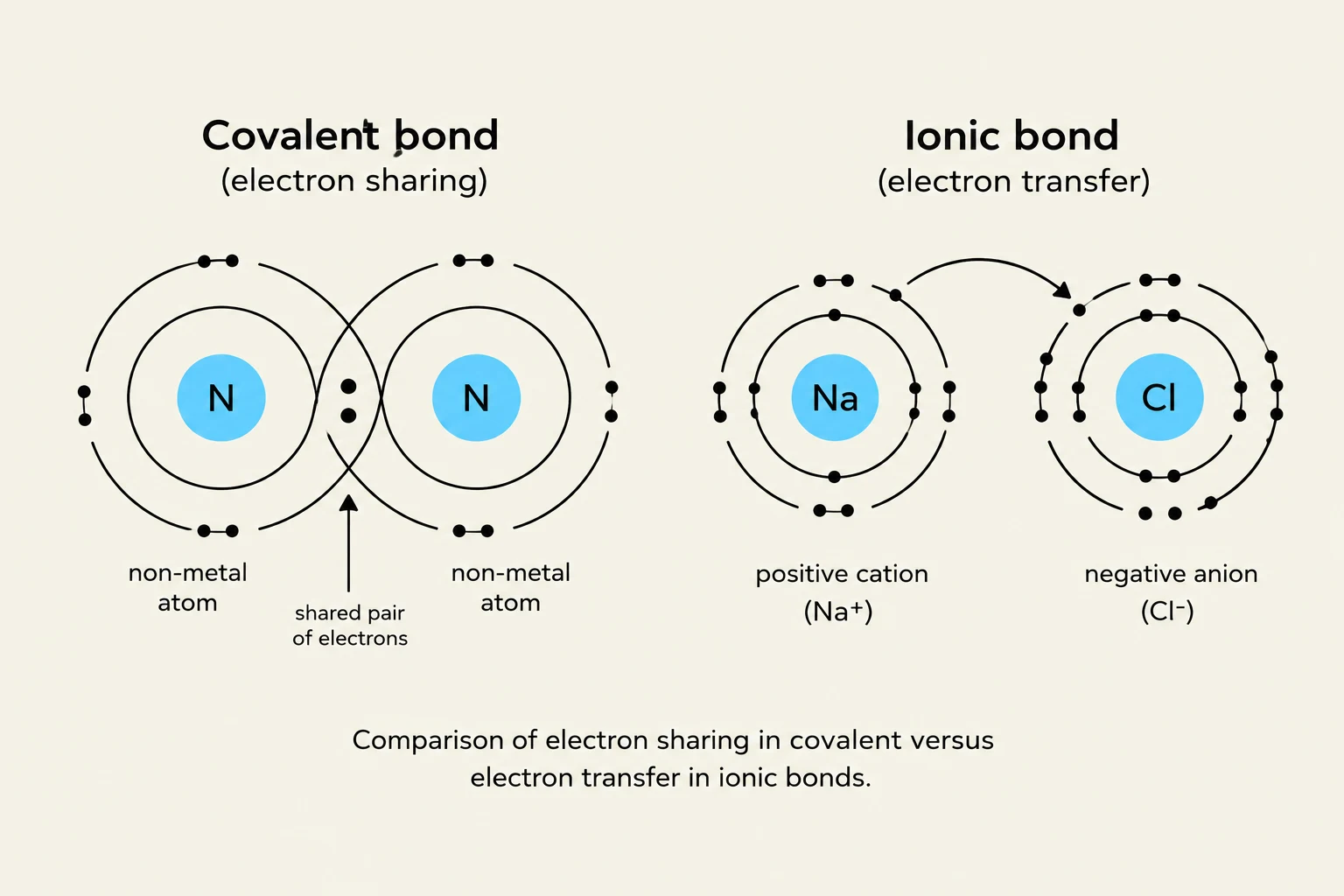
Molecular Compounds and Covalent Bonding
Molecular compounds are typically composed of two or more non-metal atoms held together by covalent bonds. Unlike ionic bonds, which involve the transfer of electrons, a covalent bond is formed when atoms share one or more pairs of valence electrons to achieve stability.
Types of Covalent Bonds
Depending on how many electron pairs are shared between two atoms, covalent bonds are classified into three categories:
- Single covalent bond: A single pair of electrons is shared between two atoms.
- Double covalent bond: Two pairs of electrons are shared.
- Triple covalent bond: Three pairs of electrons are shared.
It is important to note that molecules can be complex and may contain more than one type of covalent bond within a single structure.
Representing Molecules: Lewis Structures and Structural Formulas
To visualize how these electrons are distributed, chemists use specific notation systems:
- Lewis Structures: These diagrams show all valence electrons, including those involved in bonding and "lone pairs" (electrons that are not shared). Lewis structures are essential for representing both simple molecules and polyatomic ions. When drawing polyatomic ions, you must always include the overall charge of the ion.
- Structural Formulas: These are simplified versions of Lewis structures. In a structural formula, the lone pairs of electrons are omitted, focusing instead on the connections (the bonds) between the atoms.

Keep reading for free.
Create an account to finish this reading and make it part of your study routine.
Continue reading freeAlready have an account? Log in
Updated