


In the clinical setting, a physical assessment is a systematic process used to evaluate a patient's health status. To ensure a thorough and accurate evaluation, clinicians follow a specific sequence of techniques. While a full assessment may eventually include percussion and auscultation, the foundation of any physical exam begins with two primary methods: Inspection and Palpation. Mastering these techniques allows a clinician to move from a broad visual overview to a detailed tactile investigation of specific body structures.
Inspection: The Power of Visual Evaluation
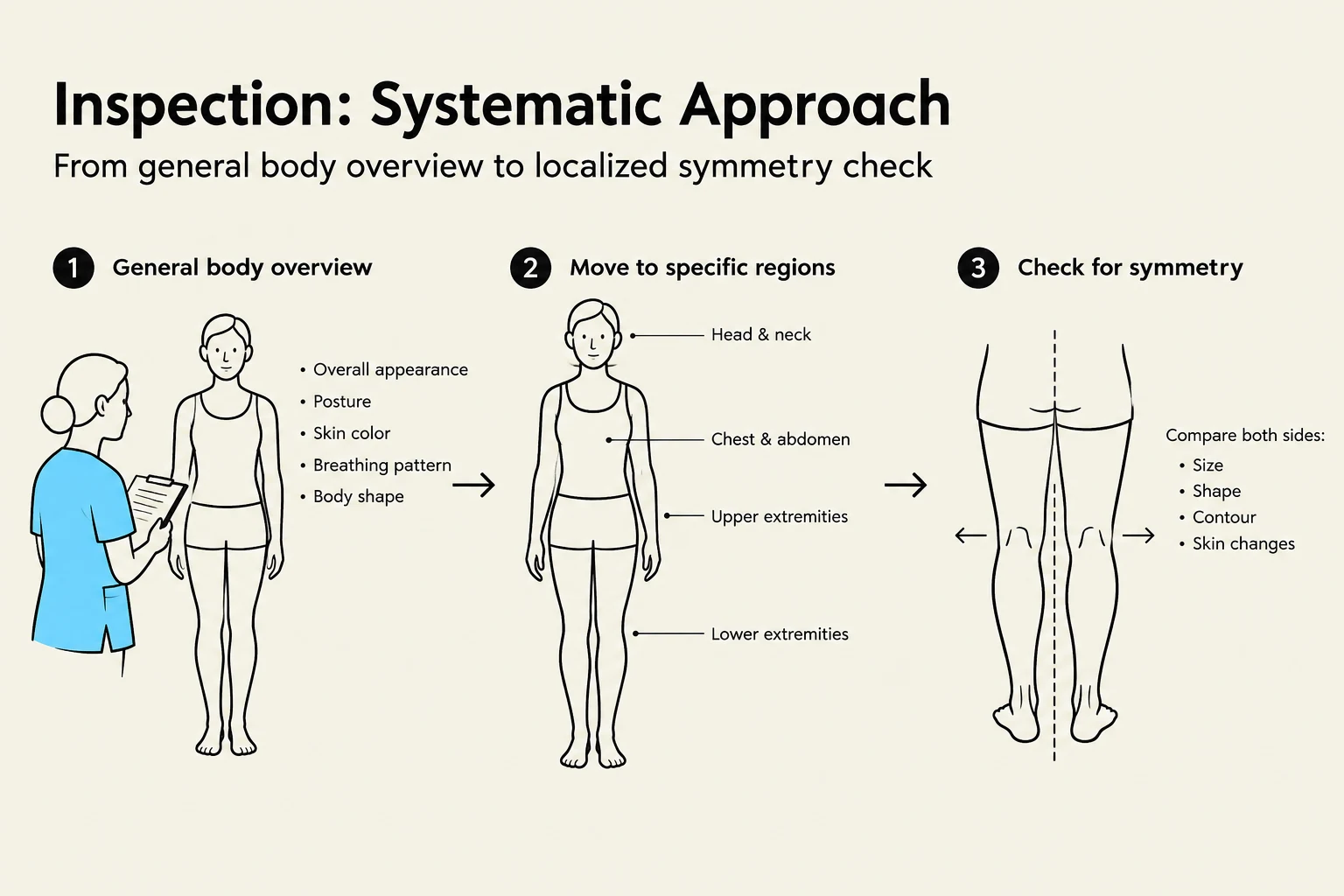
Inspection is defined as concentrated watching and the visual evaluation of the patient as a whole, as well as of individual body systems. It is always the first technique performed in a physical examination. Because inspection relies on the clinician's ability to see clearly, several environmental factors must be optimized to ensure accuracy.
To perform an effective inspection, the clinician should:
- Start with a general overview before moving to localized, specific areas.
- Utilize good lighting to ensure all details are visible.
- Ensure adequate exposure of the area being assessed.
- Check for symmetry by comparing the patient's right and left sides.
Depending on the area of focus, clinicians may use specialized tools to enhance visualization, such as an otoscope for the ear, an ophthalmoscope for the eyes, or a penlight for general illumination.
Focus Areas of Inspection
During inspection, the clinician looks for specific clinical markers across different categories:
- Integument (Skin): The clinician evaluates color, vascularity, the presence of lesions, moisture levels, secretions, pulsations, hygiene, and any signs of infestations.
- Structure: The clinician assesses the size, shape, alignment, contour, presence of depressions or elevations, and any visible masses.
Palpation: Tactile Assessment
Once inspection is complete, the clinician may proceed to Palpation. This technique involves physical contact with or the manipulation of a target structure to assess its characteristics. Unlike inspection, which is purely visual, palpation uses the sense of touch to gather data about the body's internal and external structures.
The Procedure of Palpation
Palpation should be performed using intermittent pressure and can be done with one hand or two hands (known as bimanual palpation). To avoid causing unnecessary discomfort or altering the patient's physiological response, clinicians must follow a specific depth sequence:
- Superficial Palpation: This is performed first, assessing the surface and structures at a depth of less than 1 cm.
- Deep Palpation: If necessary, the clinician proceeds to deeper structures, reaching approximately 3–4 cm in depth.
Clinical Tip: Always assess areas of tenderness or pain last. If you palpate a painful area first, the patient may tense their muscles (guarding), which makes it difficult to accurately assess other structures.
Using the Hands for Tactile Discrimination
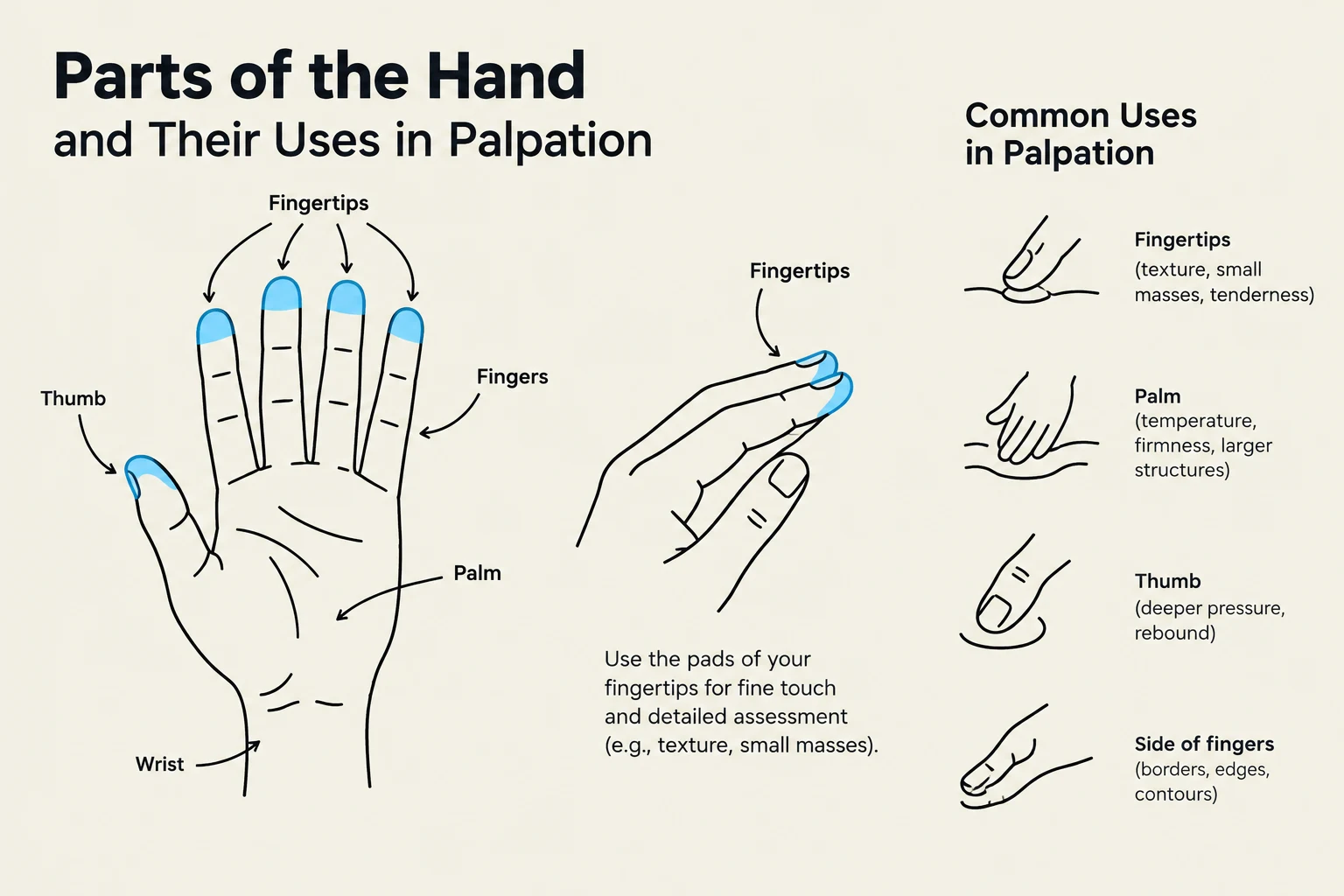
Different parts of the hand are specialized for different types of sensory input. A skilled clinician uses specific hand surfaces to achieve high levels of tactile discrimination:
| Hand Part | Clinical Utility |
|---|---|
| Fingertips | Used for fine tactile discrimination (e.g., texture, small lumps) |
| Grasping fingers and thumb | Used to assess position, shape, and consistency |
| Dorsal aspect (back) of hands/fingers | Used to assess temperature |
| Base of fingers or ulnar surface | Used to assess vibrations |
Clinical Findings in Palpation
Through the process of palpation, the clinician gathers data across four major domains of patient health:
- Structure: Identifying organ location, swelling, lumps or masses, and areas of tenderness.
- Function: Detecting physiological changes such as muscle rigidity or spasticity.
- Symptomology Assessment: Evaluating physical sensations like temperature and moisture levels.
- Sensation: Assessing the presence of vibrations, pulsations, crepitation (a grating sound/feeling), and texture.
![A flowchart showing how palpation leads to the assessment of four domains: Structure, Function, Symptomology, and Sensation.](sf-read-illust:yetcpfm6rki5dkkr6rki5dkkr6rki5dkkr6rki5dkkr6rki5dkkr6rki5dkkr6rki5dkkr6rki5dkkr6rki5dkkr6rki5dkkr6rki5dkkr6rki5dkkr6rki5dkkr6rki5dkkr6rki5dkkr6rki5dkkr6rki5dkkr6rki5dkkr6rki5dkkr6rki5dkkr6rki5dkkr6rki5dkkr6rki5dkkr6rki5dkkr6rki5dkkr6rki5dkkr6rki5dkkr6rki5dkkr6rki5dkkr6rki5dkkr6rki5dkkr6rki5dkkr6rki5dkkr6rki5dkkr6rki5dkkr6rki5dkkr6rki5dkkr6rki5dkkr6rki5dkkr6rki5dkkr6rki5dkkr6rki5dkkr6rki5dkkr6rki5dkkr6rki5dkkr6rki5dkkr6rki5dkkr6rki5dkkr6rki5dkkr6rki5dkkr6rki5dkkr6rki5dkkr6rki5dkkr6rki5dkkr6rki5dkkr6rki5dkkr6rki5dkkr6rki5dkkr6rki5dkkr6rki5dkkr6rki5dkkr6rki5dkkr6rki5dkkr6rki5dkkr6rki5dkkr6rki5dkkr6rki5dkkr6rki5dkkr6rki5dkkr6rki5dkkr6rki5dkkr6rki5dkkr6rki5dkkr6rki5dkkr6rki5dkkr6rki5dkkr6rki5dkkr6rki5dkkr6rki5dkkr6rki5dkkr6rki5dkkr6rki5dkkr6rki5dkkr6rki5dkkr6rki5dkkr6rki5dkkr6rki5dkkr6rki5dkkr6rki5dkkr6rki5dkkr6rki5dkkr6rki5dkkr6rki5dkkr6rki5dkkr6rki5dkkr6rki5dkkr6rki5dkkr6rki5dkkr6rki5dkkr6rki5dkkr6rki5dkkr6rki5dkkr6rki5dkkr6rki5dkkr6rki5dkkr6rki5dkkr6rki5dkkr6rki5dkkr6rki5dkkr6rki5dkkr6rki5dkkr6rki5dkkr6rki5dkkr6rki5dkkr6rki5dkkr6rki5dkkr6rki5dkkr6rki5dkkr6rki5dkkr6rki5dkkr6rki5dkkr6rki5dkkr6rki5dkkr6rki5dkkr6rki5dkkr6rki5dkkr6rki5dkkr6rki5dkkr6rki5dkkr6rki5dkkr6rki5dkkr6rki5dkkr6rki5dkkr6rki5dkkr6rki5dkkr6rki5dkkr6rki5dkkr6rki5dkkr6rki5dkkr6rki5dkkr6rki5dkkr6rki5dkkr6rki5dkkr6rki5dkkr6rki5dkkr6rki5dkkr6rki5dkkr6rki5dkkr6rki5dkkr6rki5dkkr6rki5dkkr6rki5dkkr6rki5dkkr6rki5dkkr6rki5dkkr6rki5dkkr6rki5dkkr6rki5dkkr6rki5dkkr6rki5dkkr6rki5dkkr6rki5dkkr6rki5dkkr6rki5dkkr6rki5dkkr6rki5dkkr6rki5dkkr6rki5dkkr6rki5dkkr6rki5dkkr6rki5dkkr6rki5dkkr6rki5dkkr6rki5dkkr6rki5dkkr6rki5dkkr6rki5dkkr6rki5dkkr6rki5dkkr6rki5dkkr6rki5dkkr6rki5dkkr6rki5dkkr6rki5dkkr6rki5dkkr6rki5dkkr6rki5dkkr6rki5dkkr6rki5dkkr6rki5dkkr6rki5dkkr6rki5dkkr6rki5dkkr6rki5dkkr6rki5dkkr6rki5dkkr6rki5dkkr6rki5dkkr6rki5dkkr6rki5dkkr6rki5dkkr6rki5dkkr6rki5dkkr6rki5dkkr6rki5dkkr6rki5dkkr6rki5dkkr6rki5dkkr6rki5dkkr6rki5dkkr6rki5dkkr6rki5dkkr6rki5dkkr6rki5dkkr6rki5dkkr6rki5dkkr6rki5dkkr6rki5dkkr6rki5dkkr6rki5dkkr6rki5dkkr6rki5dkkr6rki5dkkr6rki5dkkr6rki5dkkr6rki5dkkr6rki5dkkr6rki5dkkr6rki5dkkr6rki5dkkr6rki5dkkr6rki5dkkr6rki5dkkr6rki5dkkr6rki5dkkr6rki5dkkr6rki5dkkr6rki5dkkr6rki5dkkr6rki5dkkr6rki5dkkr6rki5dkkr6rki5dkkr6rki5dkkr6rki5dkkr6rki5dkkr6rki5dkkr6rki5dkkr6rki5dkkr6rki5dkkr6rki5dkkr6rki5dkkr6rki5dkkr6rki5dkkr6rki5dkkr6rki5dkkr6rki5dkkr6rki5dkkr6rki5dkkr6rki5dkkr6rki5dkkr6rki5dkkr6rki5dkkr6rki5dkkr6rki5dkkr6rki5dkkr6rki5dkkr6rki5dkkr6rki5dkkr6rki5dkkr6rki5dkkr6rki5dkkr6rki5dkkr6rki5dkkr6rki5dkkr6rki5dkkr6rki5dkkr6rki5dkkr6rki5dkkr6rki5dkkr6rki5dkkr6rki5dkkr6rki5dkkr6rki5dkkr6rki5dkkr6rki5dkkr6rki5dkkr6rki5dkkr6rki5dkkr6rki5dkkr6rki5dkkr6rki5dkkr6rki5dkkr6rki5dkkr6rki5dkkr6rki5dkkr6rki5dkkr6rki5dkkr6rki5dkkr6rki5dkkr6rki5dkkr6rki5dkkr6rki5dkkr6rki5dkkr6rki5dkkr6rki5dkkr6rki5dkkr6rki5dkkr6rki5dkkr6rki5dkkr6rki5dkkr6rki5dkkr6rki5dkkr6rki5dkkr6rki5dkkr6rki5dkkr6rki5dkkr6rki5dkkr6rki5dkkr6rki5dkkr6rki5dkkr6rki5dkkr6rki5dkkr6rki5dkkr6rki5dkkr6rki5dkkr6rki5dkkr6rki5dkkr6rki5dkkr6rki5dkkr6rki5dkkr6rki5dkkr6rki5dkkr6rki5dkkr6rki5dkkr6rki5dkkr6rki5dkkr6rki5dkkr6rki5dkkr6rki5dkkr6rki5dkkr6rki5dkkr6rki5dkkr6rki5dkkr6rki5dkkr6rki5dkkr6rki5dkkr6rki5dkkr6rki5dkkr6rki5dkkr6rki5dkkr6rki5dkkr6rki5dkkr6rki5dkkr6rki5dkkr6rki5dkkr6rki5dkkr6rki5dkkr6rki5dkkr6rki5dkkr6rki5dkkr6rki5dkkr6rki5dkkr6rki5dkkr6rki5dkkr6rki5dkkr6rki5dkkr6rki5dkkr6rki5dkkr6rki5dkkr6rki5dkkr6rki5dkkr6rki5dkkr6rki5dkkr6rki5dkkr6rki5dkkr6rki5dkkr6rki5dkkr6rki5dkkr6rki5dkkr6rki5dkkr6rki5dkkr6rki5dkkr6rki5dkkr6rki5dkkr6rki5dkkr6rki5dkkr6rki5dkkr6rki5dkkr6rki5dkkr6rki5dkkr6rki5dkkr6rki5dkkr6rki5dkkr6rki5dkkr6rki5dkkr6rki5dkkr6rki5dkkr6rki5dkkr6rki5dkkr6rki5dkkr6rki5dkkr6rki5dkkr6rki5dkkr6rki5dkkr6rki5dkkr6rki5dkkr6rki5dkkr6rki5dkkr6rki5dkkr6rki5dkkr6rki5dkkr6rki5dkkr6rki5dkkr6rki5dkkr6rki5dkkr6rki5dkkr6rki5dkkr6rki5dkkr6rki5dkkr6rki5dkkr6rki5dkkr6rki5dkkr6rki5dkkr6rki5dkkr6rki5dkkr6rki5dkkr6rki5dkkr6rki5dkkr6rki5dkkr6rki5dkkr6rki5dkkr6rki5dkkr6rki5dkkr6rki5dkkr6rki5dkkr6rki5dkkr6rki5dkkr6rki5dkkr6rki5dkkr6rki5dkkr6rki5dkkr6rki5dkkr6rki5dkkr6rki5dkkr6rki5dkkr6rki5dkkr6rki5dkkr6rki5dkkr6rki5dkkr6rki5dkkr6rki5dkkr6rki5dkkr6rki5dkkr6rki5dkkr6rki5dkkr6rki5dkkr6rki5dkkr6rki5dkkr6rki5dkkr6rki5dkkr6rki5dkkr6rki5dkkr6rki5dkkr6rki5dkkr6rki5dkkr6rki5dkkr6rki5dkkr6rki5dkkr6rki5dkkr6rki5dkkr6rki5dkkr6rki5dkkr6rki5dkkr6rki5dkkr6rki5dkkr6rki5dkkr6rki5dkkr6rki5dkkr6rki5dkkr6rki5dkkr6rki5dkkr6rki5dkkr6rki5dkkr6rki5dkkr6rki5dkkr6rki5dkkr6rki5dkkr6rki5dkkr6rki5dkkr6rki5dkkr6rki5dkkr6rki5dkkr6rki5dkkr6rki5dkkr6rki5dkkr6rki5dkkr6rki5dkkr6rki5dkkr6rki5dkkr6rki5dkkr6rki5dkkr6rki5dkkr6rki5dkkr6rki5dkkr6rki5dkkr6rki5dkkr6rki5dkkr6rki5dkkr6rki5dkkr6rki5dkkr6rki5dkkr6rki5dkkr6rki5dkkr6rki5dkkr6rki5dkkr6rki5dkkr6rki5dkkr6rki5dkkr6rki5dkkr6rki5dkkr6rki5dkkr6rki5dkkr6rki5dkkr6rki5dkkr6rki5dkkr6rki5dkkr6rki5dkkr6rki5dkkr6rki5dkkr6rki5dkkr6rki5dkkr6rki5dkkr6rki5dkkr6rki5dkkr6rki5dkkr6rki5dkkr6rki5dkkr6rki5dkkr6rki5dkkr6rki5dkkr6rki5dkkr6rki5dkkr6rki5dkkr6rki5dkkr6rki5dkkr6rki5dkkr6rki5dkkr6rki5dkkr6rki5dkkr6rki5dkkr6rki5dkkr6rki5dkkr6rki5dkkr6rki5dkkr6rki5dkkr6rki5dkkr6rki5dkkr6rki5dkkr6rki5dkkr6rki5dkkr6rki5dkkr6rki5dkkr6rki5dkkr6rki5dkkr6rki5dkkr6rki5dkkr6rki5dkkr6rki5dkkr6rki5dkkr6rki5dkkr6rki5dkkr6rki5dkkr6rki5dkkr6rki5dkkr6rki5dkkr6rki5dkkr6rki5dkkr6rki5dkkr6rki5dkkr6rki5dkkr6rki5dkkr6rki5dkkr6rki5dkkr6rki5dkkr6rki5dkkr6rki5dkkr6rki5dkkr6rki5dkkr6rki5dkkr6rki5dkkr6rki5dkkr6rki5dkkr6rki5dkkr6rki5dkkr6rki5dkkr6rki5dkkr6rki5dkkr6rki5dkkr6rki5dkkr6rki5dkkr6rki5dkkr6rki5dkkr6rki5dkkr6rki5dkkr6rki5dkkr6rki5dkkr6rki5dkkr6rki5dkkr6rki5dkkr6rki5dkkr6rki5dkkr6rki5dkkr6rki5dkkr6rki5dkkr6rki5dkkr6rki5dkkr6rki5dkkr6rki5dkkr6rki5dkkr6rki5dkkr6rki5dkkr6rki5dkkr6rki5dkkr6rki5dkkr6rki5dkkr6rki5dkkr6rki5dkkr6rki5dkkr6rki5dkkr6rki5dkkr6rki5dkkr6rki5dkkr6rki5dkkr6rki5dkkr6rki5dkkr6rki5dkkr6rki5dkkr6rki5dkkr6rki5dkkr6rki5dkkr6rki5dkkr6rki5dkkr6rki5dkkr6rki5dkkr6rki5dkkr6rki5dkkr6rki5dkkr6rki5dkkr6rki5dkkr6rki5dkkr6rki5dkkr6rki5dkkr6rki5dkkr6rki5dkkr6rki5dkkr6rki5dkkr6rki5dkkr6rki5dkkr6rki5dkkr6rki5dkkr6rki5dkkr6rki5dkkr6rki5dkkr6rki5dkkr6rki5dkkr6rki5dkkr6rki5dkkr6rki5dkkr6rki5dkkr6rki5dkkr6rki5dkkr6rki5dkkr6rki5dkkr6rki5dkkr6rki5dkkr6rki5dkkr6rki5dkkr6rki5dkkr6rki5dkkr6rki5dkkr6rki5dkkr6rki5dkkr6rki5dkkr6rki5dkkr6rki5dkkr6rki5dkkr6rki5dkkr6rki5dkkr6rki5dkkr6rki5dkkr6rki5dkkr6rki5dkkr6rki5dkkr6rki5dkkr6rki5dkkr6rki5dkkr6rki5dkkr6rki5dkkr6rki5dkkr6rki5dkkr6rki5dkkr6rki5dkkr6rki5dkkr6rki5dkkr6rki5dkkr6rki5dkkr6rki5dkkr6rki5dkkr6rki5dkkr6rki5dkkr6rki5dkkr6rki5dkkr6rki5dkkr6rki5dkkr6rki5dkkr6rki5dkkr6rki5dkkr6rki5dkkr6rki5dkkr6rki5dkkr6rki5dkkr6rki5dkkr6rki5dkkr6rki5dkkr6rki5dkkr6rki5dkkr6rki5dkkr6rki5dkkr6rki5dkkr6rki5dkkr6rki5dkkr6rki5dkkr6rki5dkkr6rki5dkkr6rki5dkkr6rki5dkkr6rki5dkkr6rki5dkkr6rki5dkkr6rki5dkkr6rki5dkkr6rki5dkkr6rki5dkkr6rki5dkkr6rki5dkkr6rki5dkkr6rki5dkkr6rki5dkkr6rki5dkkr6rki5dkkr6rki5dkkr6rki5dkkr6rki5dkkr6rki5dkkr6rki5dkkr6rki5dkkr6rki5dkkr6rki5dkkr6rki5dkkr6rki5dkkr6rki5dkkr6rki5dkkr6rki5dkkr6rki5dkkr6rki5dkkr6rki5dkkr6rki5dkkr6rki5dkkr6rki5dkkr6rki5dkkr6rki5dkkr6rki5dkkr6rki5dkkr6rki5dkkr6rki5dkkr6rki5dkkr6rki5dkkr6rki5dkkr6rki5dkkr6rki5dkkr6rki5dkkr6rki5dkkr6rki5dkkr6rki5dkkr6rki5dkkr6rki5dkkr6rki5dkkr6rki5dkkr6rki5dkkr6rki5dkkr6rki5dkkr6rki5dkkr6rki5dkkr6rki5dkkr6rki5dkkr6rki5dkkr6rki5dkkr6rki5dkkr6rki5dkkr6rki5dkkr6rki5dkkr6rki5dkkr6rki5dkkr6rki5dkkr6rki5dkkr6rki5dkkr6rki5dkkr6rki5dkkr6rki5dkkr6rki5dkkr6rki5dkkr6rki5dkkr6rki5dkkr6rki5dkkr6rki5dkkr6rki5dkkr6rki5dkkr6rki5dkkr6rki5dkkr6rki5dkkr6rki5dkkr6rki5dkkr6rki5dkkr6rki5dkkr6rki5dkkr6rki5dkkr6rki5dkkr6rki5dkkr6rki5dkkr6rki5dkkr6rki5dkkr6rki5dkkr6rki5dkkr6rki5dkkr6rki5dkkr6rki5dkkr6rki5dkkr6rki5dkkr6rki5dkkr6rki5dkkr6rki5dkkr6rki5dkkr6rki5dkkr6rki5dkkr6rki5dkkr6rki5dkkr6rki5dkkr6rki5dkkr6rki5dkkr6rki5dkkr6rki5dkkr6rki5dkkr6rki5dkkr6rki5dkkr6rki5dkkr6rki5dkkr6rki5dkkr6rki5dkkr6rki5dkkr6rki5dkkr6rki5dkkr6rki5dkkr6rki5dkkr6rki5dkkr6rki5dkkr6rki5dkkr6rki5dkkr6rki5dkkr6rki5dkkr6rki5dkkr6rki5dkkr6rki5dkkr6rki5dkkr6rki5dkkr6rki5dkkr6rki5dkkr6rki5dkkr6rki5dkkr6rki5dkkr6rki5dkkr6rki5dkkr6rki5dkkr6rki5dkkr6rki5dkkr6rki5dkkr6rki5dkkr6rki5dkkr6rki5dkkr6rki5dkkr6rki5dkkr6rki5dkkr6rki5dkkr6rki5dkkr6rki5dkkr6rki5dkkr6rki5dkkr6rki5dkkr6rki5dkkr6rki5dkkr6rki5dkkr6rki5dkkr6rki5dkkr6rki5dkkr6rki5dkkr6rki5dkkr6rki5dkkr6rki5dkkr6rki5dkkr6rki5dkkr6rki5dkkr6rki5dkkr6rki5dkkr6rki5dkkr6rki5dkkr6rki5dkkr6rki5dkkr6rki5dkkr6rki5dkkr6rki5dkkr6rki5dkkr6rki5dkkr6rki5dkkr6rki5dkkr6rki5dkkr6rki5dkkr6rki5dkkr6rki5dkkr6rki5dkkr6rki5dkkr6rki5dkkr6rki5dkkr6rki5dkkr6rki5dkkr6rki5dkkr6rki5dkkr6rki5dkkr6rki5dkkr6rki5dkkr6rki5dkkr6rki5dkkr6rki5dkkr6rki5dkkr6rki5dkkr6rki5dkkr6rki5dkkr6rki5dkkr6rki5dkkr6rki5dkkr6rki5dkkr6rki5dkkr6rki5dkkr6rki5dkkr6rki5dkkr6rki5dkkr6rki5dkkr6rki5dkkr6rki5dkkr6rki5dkkr6rki5dkkr6rki5dkkr6rki5dkkr6rki5dkkr6rki5dkkr6rki5dkkr6rki5dkkr6rki5dkkr6rki5dkkr6rki5dkkr6rki5dkkr6rki5dkkr6rki5dkkr6rki5dkkr6rki5dkkr6rki5dkkr6rki5dkkr6rki5dkkr6rki5dkkr6rki5dkkr6rki5dkkr6rki5dkkr6rki5dkkr6rki5dkkr6rki5dkkr6rki5dkkr6rki5dkkr6rki5dkkr6rki5dkkr6rki5dkkr6rki5dkkr6rki5dkkr6rki5dkkr6rki5dkkr6rki5dkkr6rki5dkkr6rki5dkkr6rki5dkkr6rki5dkkr6rki5dkkr6rki5dkkr6rki5dkkr6rki5dkkr6rki5dkkr6rki5dkkr6rki5dkkr6rki5dkkr6rki5dkkr6rki5dkkr6rki5dkkr6rki5dkkr6rki5dkkr6rki5dkkr6rki5dkkr6rki5dkkr6rki5dkkr6rki5dkkr6rki5dkkr6rki5dkkr6rki5dkkr6rki5dkkr6rki5dkkr6rki5dkkr6rki5dkkr6rki5dkkr6rki5dkkr6rki5dkkr6rki5dkkr6rki5dkkr6rki5dkkr6rki5dkkr6rki5dkkr6rki5dkkr6rki5dkkr6rki5dkkr6rki5dkkr6rki5dkkr6rki5dkkr6rki5dkkr6rki5dkkr6rki5dkkr6rki5dkkr6rki5dkkr6rki5dkkr6rki5dkkr6rki5dkkr6rki5dkkr6rki5dkkr6rki5dkkr6rki5dkkr6rki5dkkr6rki5dkkr6rki5dkkr6rki5dkkr6rki5dkkr6rki5dkkr6rki5dkkr6rki5dkkr6rki5dkkr6rki5dkkr6rki5dkkr6rki5dkkr6rki5dkkr6rki5dkkr6rki5dkkr6rki5dkkr6rki5dkkr6rki5dkkr6rki5dkkr6rki5dkkr6rki5dkkr6rki5dkkr6rki5dkkr6rki5dkkr6rki5dkkr6rki5dkkr6rki5dkkr6rki5dkkr6rki5dkkr6rki5dkkr6rki5dkkr6rki5dkkr6rki5dkkr6rki5dkkr6rki5dkkr6rki5dkkr6rki5dkkr6rki5dkkr6rki5dkkr6rki5dkkr6rki5dkkr6rki5dkkr6rki5dkkr6rki5dkkr6rki5dkkr6rki5dkkr6rki5dkkr6rki5dkkr6rki5dkkr6rki5dkkr6rki5dkkr6rki5dkkr6rki5dkkr6rki5dkkr6rki5dkkr6rki5dkkr6rki5dkkr6rki5dkkr6rki5dkkr6rki5dkkr6rki5dkkr6rki5dkkr6rki5dkkr6rki5dkkr6rki5dkkr6rki5dkkr6rki5dkkr6rki5dkkr6rki5dkkr6rki5dkkr6rki5dkkr6rki5dkkr6rki5dkkr6rki5dkkr6rki5dkkr6rki5dkkr6rki5dkkr6rki5dkkr6rki5dkkr6rki5dkkr6rki5dkkr6rki5dkkr6rki5dkkr6rki5dkkr6rki5dkkr6rki5dkkr6rki5dkkr6rki5dkkr6rki5dkkr6rki5dkkr6rki5dkkr6rki5dkkr6rki5dkkr6rki5dkkr6rki5dkkr6rki5dkkr6rki5dkkr6rki5dkkr6rki5dkkr6rki5dkkr6rki5dkkr6rki5dkkr6rki5dkkr6rki5dkkr6rki5dkkr6rki5dkkr6rki5dkkr6rki5dkkr6rki5dkkr6rki5dkkr6rki5dkkr6rki5dkkr6rki5dkkr6rki5dkkr6rki5dkkr6rki5dkkr6rki5dkkr6rki5dkkr6rki5dkkr6rki5dkkr6rki5dkkr6rki5dkkr6rki5dkkr6rki5dkkr6rki5dkkr6rki5dkkr6rki5dkkr6rki5dkkr6rki5dkkr6rki5dkkr6rki5dkkr6rki5dkkr6rki5dkkr6rki5dkkr6rki5dkkr6rki5dkkr6rki5dkkr6rki5dkkr6rki5dkkr6rki5dkkr6rki5dkkr6rki5dkkr6rki5dkkr6rki5dkkr6rki5dkkr6rki5dkkr6rki5dkkr6rki5dkkr6rki5dkkr6rki5dkkr6rki5dkkr6rki5dkkr6rki5dkkr6rki5dkkr6rki5dkkr6rki5dkkr6rki5dkkr6rki5dkkr6rki5dkkr6rki5dkkr6rki5dkkr6rki5dkkr6rki5dkkr6rki5dkkr6rki5dkkr6rki5dkkr6rki5dkkr6rki5dkkr6rki5dkkr6rki5dkkr6rki5dkkr6rki5dkkr6rki5dkkr6rki5dkkr6rki5dkkr6rki5dkkr6rki5dkkr6rki5dkkr6rki5dkkr6rki5dkkr6rki5dkkr6rki5dkkr6rki5dkkr6rki5dkkr6rki5dkkr6rki5dkkr6rki5dkkr6rki5dkkr6rki5dkkr6rki5dkkr6rki5dkkr6rki5dkkr6rki5dkkr6rki5dkkr6rki5dkkr6rki5dkkr6rki5dkkr6rki5dkkr6rki5dkkr6rki5dkkr6rki5dkkr6rki5dkkr6rki5dkkr6rki5dkkr6rki5dkkr6rki5dkkr6rki5dkkr6rki5dkkr6rki5dkkr6rki5dkkr6rki5dkkr6rki5dkkr6rki5dkkr6rki5dkkr6rki5dkkr6rki5dkkr6rki5dkkr6rki5dkkr6rki5dkkr6rki5dkkr6rki5dkkr6rki5dkkr6rki5dkkr6rki5dkkr6rki5dkkr6rki5dkkr6rki5dkkr6rki5dkkr6rki5dkkr6rki5dkkr6rki5dkkr6rki5dkkr6rki5dkkr6rki5dkkr6rki5dkkr6rki5dkkr6rki5dkkr6rki5dkkr6rki5dkkr6rki5dkkr6rki5dkkr6rki5dkkr6rki5dkkr6rki5dkkr6rki5dkkr6rki5dkkr6rki5dkkr6rki5dkkr6rki5dkkr6rki5dkkr6rki5dkkr6rki5dkkr6rki5dkkr6rki5dkkr6rki5dkkr6rki5dkkr6rki5dkkr6rki5dkkr6rki5dkkr6rki5dkkr6rki5dkkr6rki5dkkr6rki5dkkr6rki5dkkr6rki5dkkr6rki5dkkr6rki5dkkr6rki5dkkr6rki5dkkr6rki5dkkr6rki5dkkr6rki5dkkr6rki5dkkr6rki5dkkr6rki5dkkr6rki5dkkr6rki5dkkr6rki5dkkr6rki5dkkr6rki5dkkr6rki5dkkr6rki5dkkr6rki5dkkr6rki5dkkr6rki5dkkr6rki5dkkr6rki5dkkr6rki5dkkr6rki5dkkr6rki5dkkr6rki5dkkr6rki5dkkr6rki5dkkr6rki5dkkr6rki5dkkr6rki5dkkr6rki5dkkr6rki5dkkr6rki5dkkr6rki5dkkr6rki5dkkr6rki5dkkr6rki5dkkr6rki5dkkr6rki5dkkr6rki5dkkr6rki5dkkr6rki5dkkr6rki5dkkr6rki5dkkr6rki5dkkr6rki5dkkr6rki5dkkr6rki5dkkr6rki5dkkr6rki5dkkr6rki5dkkr6rki5dkkr6rki5dkkr6rki5dkkr6rki5dkkr6rki5dkkr6rki5dkkr6rki5dkkr6rki5dkkr6rki5dkkr6rki5dkkr6rki5dkkr6rki5dkkr6rki5dkkr6rki5dkkr6rki5dkkr6rki5dkkr6rki5dkkr6rki5dkkr6rki5dkkr6rki5dkkr6rki5dkkr6rki5dkkr6rki5dkkr6rki5dkkr6rki5dkkr6rki5dkkr6rki5dkkr6rki5dkkr6rki5dkkr6rki5dkkr6rki5dkkr6rki5dkkr6rki5dkkr6rki5dkkr6rki5dkkr6rki5dkkr6rki5dkkr6rki5dkkr6rki5dkkr6rki5dkkr6rki5dkkr6rki5dkkr6rki5dkkr6rki5dkkr6rki5dkkr6rki5dkkr6rki5dkkr6rki5dkkr6rki5dkkr6rki5dkkr6rki5dkkr6rki5dkkr6rki5dkkr6rki5dkkr6rki5dkkr6rki5dkkr6rki5dkkr6rki5dkkr6rki5dkkr6rki5dkkr6rki5dkkr6rki5dkkr6rki5dkkr6rki5dkkr6rki5dkkr6rki5dkkr6rki5dkkr6rki5dkkr6rki5dkkr6rki5dkkr6rki5dkkr6rki5dkkr6rki5dkkr6rki5dkkr6rki5dkkr6rki5dkkr6rki5dkkr6rki5dkkr6rki5dkkr6rki5dkkr6rki5dkkr6rki5dkkr6rki5dkkr6rki5dkkr6rki5dkkr6rki5dkkr6rki5dkkr6rki5dkkr6rki5dkkr6rki5dkkr6rki5dkkr6rki5dkkr6rki5dkkr6rki5dkkr6rki5dkkr6rki5dkkr6rki5dkkr6rki5dkkr6rki5dkkr6rki5dkkr6rki5dkkr6rki5dkkr6rki5dkkr6rki5dkkr6rki5dkkr6rki5dkkr6rki5dkkr6rki5dkkr6rki5dkkr6rki5dkkr6rki5dkkr6rki5dkkr6rki5dkkr6rki5dkkr6rki5dkkr6rki5dkkr6rki5dkkr6rki5dkkr6rki5dkkr6rki5dkkr6rki5dkkr6rki5dkkr6rki5dkkr6rki5dkkr6rki5dkkr6rki5dkkr6rki5dkkr6rki5dkkr6rki5dkkr6rki5dkkr6rki5dkkr6rki5dkkr6rki5dkkr6rki5dkkr6rki5dkkr6rki5dkkr6rki5dkkr6rki5dkkr6rki5dkkr6rki5dkkr6rki5dkkr6rki5dkkr6rki5dkkr6rki5dkkr6rki5dkkr6rki5dkkr6rki5dkkr6rki5dkkr6rki5dkkr6rki5dkkr6rki5dkkr6rki5dkkr6rki5dkkr6rki5dkkr6rki5dkkr6rki5dkkr6rki5dkkr6rki5dkkr6rki5dkkr6rki5dkkr6rki5dkkr6rki5dkkr6rki5dkkr6rki5dkkr6rki5dkkr6rki5dkkr6rki5dkkr6rki5dkkr6rki5dkkr6rki5dkkr6rki5dkkr6rki5dkkr6rki5dkkr6rki5dkkr6rki5dkkr6rki5dkkr6rki5dkkr6rki5dkkr6rki5dkkr6rki5dkkr6rki5dkkr6rki5dkkr6rki5dkkr6rki5dkkr6rki5dkkr6rki5dkkr6rki5dkkr6rki5dkkr6rki5dkkr6rki5dkkr6rki5dkkr6rki5dkkr6rki5dkkr6rki5dkkr6rki5dkkr6rki5dkkr6rki5dkkr6rki5dkkr6rki5dkkr6rki5dkkr6rki5dkkr6rki5dkkr6rki5dkkr6rki5dkkr6rki5dkkr6rki5dkkr6rki5dkkr6rki5dkkr6rki5dkkr6rki5dkkr6rki5dkkr6rki5dkkr6rki5dkkr6rki5dkkr6rki5dkkr6rki5dkkr6rki5dkkr6rki5dkkr6rki5dkkr6rki5dkkr6rki5dkkr6rki5dkkr6rki5dkkr6rki5dkkr6rki5dkkr6rki5dkkr6rki5dkkr6rki5dkkr6rki5dkkr6rki5dkkr6rki5dkkr6rki5dkkr6rki5dkkr6rki5dkkr6rki5dkkr6rki5dkkr6rki5dkkr6rki5dkkr6rki5dkkr6rki5dkkr6rki5dkkr6rki5dkkr6rki5dkkr6rki5dkkr6rki5dkkr6rki5dkkr6rki5dkkr6rki5dkkr6rki5dkkr6rki5dkkr6rki5dkkr6rki5dkkr6rki5dkkr6rki5dkkr6rki5dkkr6rki5dkkr6rki5dkkr6rki5dkkr6rki5dkkr6rki5dkkr6rki5dkkr6rki5dkkr6rki5dkkr6rki5dkkr6rki5dkkr6rki5dkkr6rki5dkkr6rki5dkkr6rki5dkkr6rki5dkkr6rki5dkkr6rki5dkkr6rki5dkkr6rki5dkkr6rki5dkkr6rki5dkkr6rki5dkkr6rki5dkkr6rki5dkkr6rki5dkkr6rki5dkkr6rki5dkkr6rki5dkkr6rki5dkkr6rki5dkkr6rki5dkkr6rki5dkkr6rki5dkkr6rki5dkkr6rki5dkkr6rki5dkkr6rki5dkkr6rki5dkkr6rki5dkkr6rki5dkkr6rki5dkkr6rki5dkkr6rki5dkkr6rki5dkkr6rki5dkkr6rki5dkkr6rki5dkkr6rki5dkkr6rki5dkkr6rki5dkkr6rki5dkkr6rki5dkkr6rki5dkkr6rki5dkkr6rki5dkkr6rki5dkkr6rki5dkkr6rki5dkkr6rki5dkkr6rki5dkkr6rki5dkkr6rki5dkkr6rki5dkkr6rki5dkkr6rki5dkkr6rki5dkkr6rki5dkkr6rki5dkkr6rki5dkkr6rki5dkkr6rki5dkkr6rki5dkkr6rki5dkkr6rki5dkkr6rki5dkkr6rki5dkkr6rki5dkkr6rki5dkkr6rki5dkkr6rki5dkkr6rki5dkkr6rki5dkkr6rki5dkkr6rki5dkkr6rki5dkkr6rki5dkkr6rki5dkkr6rki5dkkr6rki5dkkr6rki5dkkr6rki5dkkr6rki5dkkr6rki5dkkr6rki5dkkr6rki5dkkr6rki5dkkr6rki5dkkr6rki5dkkr6rki5dkkr6rki5dkkr6rki5dkkr6rki5dkkr6rki5dkkr6rki5dkkr6rki5dkkr6rki5dkkr6rki5dkkr6rki5dkkr6rki5dkkr6rki5dkkr6rki5dkkr6rki5dkkr6rki5dkkr6rki5dkkr6rki5dkkr6rki5dkkr6rki5dkkr6rki5dkkr6rki5dkkr6rki5dkkr6rki5dkkr6rki5dkkr6rki5dkkr6rki5dkkr6rki5dkkr6rki5dkkr6rki5dkkr6rki5dkkr6rki5dkkr6rki5dkkr6rki5dkkr6rki5dkkr6rki5dkkr6rki5dkkr6rki5dkkr6rki5dkkr6rki5dkkr6rki5dkkr6rki5dkkr6rki5dkkr6rki5dkkr6rki5dkkr6rki5dkkr6rki5dkkr6rki5dkkr6rki5dkkr6rki5dkkr6rki5dkkr6rki5dkkr6rki5dkkr6rki5dkkr6rki5dkkr6rki5dkkr6rki5dkkr6rki5dkkr6rki5dkkr6rki5dkkr6rki5dkkr6rki5dkkr6rki5dkkr6rki5dkkr6rki5dkkr6rki5dkkr6rki5dkkr6rki5dkkr6rki5dkkr6rki5dkkr6rki5dkkr6rki5dkkr6rki5dkkr6rki5dkkr6rki5dkkr6rki5dkkr6rki5dkkr6rki5dkkr6rki5dkkr6rki5dkkr6rki5dkkr6rki5dkkr6rki5dkkr6rki5dkkr6rki5dkkr6rki5dkkr6rki5dkkr6rki5dkkr6rki5dkkr6rki5dkkr6rki5dkkr6rki5dkkr6rki5dkkr6rki5dkkr6rki5dkkr6rki5dkkr6rki5dkkr6rki5dkkr6rki5dkkr6rki5dkkr6rki5dkkr6rki5dkkr6rki5dkkr6rki5dkkr6rki5dkkr6rki5dkkr6rki5dkkr6rki5dkkr6rki5dkkr6rki5dkkr6rki5dkkr6rki5dkkr6rki5dkkr6rki5dkkr6rki5dkkr6rki5dkkr6rki5dkkr6rki5dkkr6rki5dkkr6rki5dkkr6rki5dkkr6rki5dkkr6rki5dkkr6rki5dkkr6rki5dkkr6rki5dkkr6rki5dkkr6rki5dkkr6rki5dkkr6rki5dkkr6rki5dkkr6rki5dkkr6rki5dkkr6rki5dkkr6rki5dkkr6rki5dkkr6rki5dkkr6rki5dkkr6rki5dkkr6rki5dkkr6rki5dkkr6rki5dkkr6rki5dkkr6rki5dkkr6rki5dkkr6rki5dkkr6rki5dkkr6rki5dkkr6rki5dkkr6rki5dkkr6rki5dkkr6rki5dkkr6rki5dkkr6rki5dkkr6rki5dkkr6rki5dkkr6rki5dkkr6rki5dkkr6rki5dkkr6rki5dkkr6rki5dkkr6rki5dkkr6rki5dkkr6rki5dkkr6rki5dkkr6rki5dkkr6rki5dkkr6rki5dkkr6rki5dkkr6rki5dkkr6rki5dkkr6rki5dkkr6rki5dkkr6rki5dkkr6rki5dkkr6rki5dkkr6rki5dkkr6rki5dkkr6rki5dkkr6rki5dkkr6rki5dkkr6rki5dkkr6rki5dkkr6rki5dkkr6rki5dkkr6rki5dkkr6rki5dkkr6rki5dkkr6rki5dkkr6rki5dkkr6rki5dkkr6rki5dkkr6rki5dkkr6rki5dkkr6rki5dkkr6rki5dkkr6rki5dkkr6rki5dkkr6rki5dkkr6rki5dkkr6rki5dkkr6rki5dkkr6rki5dkkr6rki5dkkr6rki5dkkr6rki5dkkr6rki5dkkr6rki5dkkr6rki5dkkr6rki5dkkr6rki5dkkr6rki5dkkr6rki5dkkr6rki5dkkr6rki5dkkr6rki5dkkr6rki5dkkr6rki5dkkr6rki5dkkr6rki5dkkr6rki5dkkr6rki5dkkr6rki5dkkr6rki5dkkr6rki5dkkr6rki5dkkr6rki5dkkr6rki5dkkr6rki5dkkr6rki5dkkr6rki5dkkr6rki5dkkr6rki5dkkr6rki5dkkr6rki5dkkr6rki5dkkr6rki5dkkr6rki5dkkr6rki5dkkr6rki5dkkr6rki5dkkr6rki5dkkr6rki5dkkr6rki5dkkr6rki5dkkr6rki5dkkr6rki5dkkr6rki5dkkr6rki5dkkr6rki5dkkr6rki5dkkr6rki5dkkr6rki5dkkr6rki5dkkr6rki5dkkr6rki5dkkr6rki5dkkr6rki5dkkr6rki5dkkr6rki5dkkr6rki5dkkr6rki5dkkr6rki5dkkr6rki5dkkr6rki5dkkr6rki5dkkr6rki5dkkr6rki5dkkr6rki5dkkr6rki5dkkr6rki5dkkr6rki5dkkr6rki5dkkr6rki5dkkr6rki5dkkr6rki5dkkr6rki5dkkr6rki5dkkr6rki5dkkr6rki5dkkr6rki5dkkr6rki5dkkr6rki5dkkr6rki5dkkr6rki5dkkr6rki5dkkr6rki5dkkr6rki5dkkr6rki5dkkr6rki5dkkr6rki5dkkr6rki5dkkr6rki5dkkr6rki5dkkr6rki5dkkr6rki5dkkr6rki5dkkr6rki5dkkr6rki5dkkr6rki5dkkr6rki5dkkr6rki5dkkr6rki5dkkr6rki5dkkr6rki5dkkr6rki5dkkr6rki5dkkr6rki5dkkr6rki5dkkr6rki5dkkr6rki5dkkr6rki5dkkr6rki5dkkr6rki5dkkr6rki5dkkr6rki5dkkr6rki5dkkr6rki5dkkr6rki5dkkr6rki5dkkr6rki5dkkr6rki5dkkr6rki5dkkr6rki5dkkr6rki5dkkr6rki5dkkr6rki5dkkr6rki5dkkr6rki5dkkr6rki5dkkr6rki5dkkr6rki5dkkr6rki5dkkr6rki5dkkr6rki5dkkr6rki5dkkr6rki5dkkr6rki5dkkr6rki5dkkr6rki5dkkr6rki5dkkr6rki5dkkr6rki5dkkr6rki5dkkr6rki5dkkr6rki5dkkr6rki5dkkr6rki5dkkr6rki5dkkr6rki5dkkr6rki5dkkr6rki5dkkr6rki5dkkr6rki5dkkr6rki5dkkr6rki5dkkr6rki5dkkr6rki5dkkr6rki5dkkr6rki5dkkr6rki5dkkr6rki5dkkr6rki5dkkr6rki5dkkr6rki5dkkr6rki5dkkr6rki5dkkr6rki5dkkr6rki5dkkr6rki5dkkr6rki5dkkr6rki5dkkr6rki5dkkr6rki5dkkr6rki5dkkr6rki5dkkr6rki5dkkr6rki5dkkr6rki5dkkr6rki5dkkr6rki5dkkr6rki5dkkr6rki5dkkr6rki5dkkr6rki5dkkr6rki5dkkr6rki5dkkr6rki5dkkr6rki5dkkr6rki5dkkr6rki5dkkr6rki5dkkr6rki5dkkr6rki5dkkr6rki5dkkr6rki5dkkr6rki5dkkr6rki5dkkr6rki5dkkr6rki5dkkr6rki5dkkr6rki5dkkr6rki5dkkr6rki5dkkr6rki5dkkr6rki5dkkr6rki5dkkr6rki5dkkr6rki5dkkr6rki5dkkr6rki5dkkr6rki5dkkr6rki5dkkr6rki5dkkr6rki5dkkr6rki5dkkr6rki5dkkr6rki5dkkr6rki5dkkr6rki5dkkr6rki5dkkr6rki5dkkr6rki5dkkr6rki5dkkr6rki5dkkr6rki5dkkr6rki5dkkr6rki5dkkr6rki5dkkr6rki5dkkr6rki5dkkr6rki5dkkr6rki5dkkr6rki5dkkr6rki5dkkr6rki5dkkr6rki5dkkr6rki5dkkr6rki5dkkr6rki5dkkr6rki5dkkr6rki5dkkr6rki5dkkr6rki5dkkr6rki5dkkr6rki5dkkr6rki5dkkr6rki5dkkr6rki5dkkr6rki5dkkr6rki5dkkr6rki5dkkr6rki5dkkr6rki5dkkr6rki5dkkr6rki5dkkr6rki5dkkr6rki5dkkr6rki5dkkr6rki5dkkr6rki5dkkr6rki5dkkr6rki5dkkr6rki5dkkr6rki5dkkr6rki5dkkr6rki5dkkr6rki5dkkr6rki5dkkr6rki5dkkr6rki5dkkr6rki5dkkr6rki5dkkr6rki5dkkr6rki5dkkr6rki5dkkr6rki5dkkr6rki5dkkr6rki5dkkr6rki5dkkr6rki5dkkr6rki5dkkr6rki5dkkr6rki5dkkr6rki5dkkr6rki5dkkr6rki5dkkr6rki5dkkr6rki5dkkr6rki5dkkr6rki5dkkr6rki5dkkr6rki5dkkr6rki5dkkr6rki5dkkr6rki5dkkr6rki5dkkr6rki5dkkr6rki5dkkr6rki5dkkr6rki5dkkr6rki5dkkr6rki5dkkr6rki5dkkr6rki5dkkr6rki5dkkr6rki5dkkr6rki5dkkr6rki5dkkr6rki5dkkr6rki5dkkr6rki5dkkr6rki5dkkr6rki5dkkr6rki5dkkr6rki5dkkr6rki5dkkr6rki5dkkr6rki5dkkr6rki5dkkr6rki5dkkr6rki5dkkr6rki5dkkr6rki5dkkr6rki5dkkr6rki5dkkr6rki5dkkr6rki5dkkr6rki5dkkr6rki5dkkr6rki5dkkr6rki5dkkr6rki5dkkr6rki5dkkr6rki5dkkr6rki5dkkr6rki5dkkr6rki5dkkr6rki5dkkr6rki5dkkr6rki5dkkr6rki5dkkr6rki5dkkr6rki5dkkr6rki5dkkr6rki5dkkr6rki5dkkr6rki5dkkr6rki5dkkr6rki5dkkr6rki5dkkr6rki5dkkr6rki5dkkr6rki5dkkr6rki5dkkr6rki5dkkr6rki5dkkr6rki5dkkr6rki5dkkr6rki5dkkr6rki5dkkr6rki5dkkr6rki5dkkr6rki5dkkr6rki5dkkr6rki5dkkr6rki5dkkr6rki5dkkr6rki5dkkr6rki5dkkr6rki5dkkr6rki5dkkr6rki5dkkr6rki5dkkr6rki5dkkr6rki5dkkr6rki5dkkr6rki5dkkr6rki5dkkr6rki5dkkr6rki5dkkr6rki5dkkr6rki5dkkr6rki5dkkr6rki5dkkr6rki5dkkr6rki5dkkr6rki5dkkr6rki5dkkr6rki5dkkr6rki5dkkr6rki5dkkr6rki5dkkr6rki5dkkr6rki5dkkr6rki5dkkr6rki5dkkr6rki5dkkr6rki5dkkr6rki5dkkr6rki5dkkr6rki5dkkr6rki5dkkr6rki5dkkr6rki5dkkr6rki5dkkr6rki5dkkr6rki5dkkr6rki5dkkr6rki5dkkr6rki5dkkr6rki5dkkr6rki5dkkr6rki5dkkr6rki5dkkr6rki5dkkr6rki5dkkr6rki5dkkr6rki5dkkr6rki5dkkr6rki5dkkr6rki5dkkr6rki5dkkr6rki5dkkr6rki5dkkr6rki5dkkr6rki5dkkr6rki5dkkr6rki5dkkr6rki5dkkr6rki5dkkr6rki5dkkr6rki5dkkr6rki5dkkr6rki5dkkr6rki5dkkr6rki5dkkr6rki5dkkr6rki5dkkr6rki5dkkr6rki5dkkr6rki5dkkr6rki5dkkr6rki5dkkr6rki5dkkr6rki5dkkr6rki5dkkr6rki5dkkr6rki5dkkr6rki5dkkr6rki5dkkr6rki5dkkr6rki5dkkr6rki5dkkr6rki5dkkr6rki5dkkr6rki5dkkr6rki5dkkr6rki5dkkr6rki5dkkr6rki5dkkr6rki5dkkr6rki5dkkr6rki5dkkr6rki5dkkr6rki5dkkr6rki5dkkr6rki5dkkr6rki5dkkr6rki5dkkr6rki5dkkr6rki5dkkr6rki5dkkr6rki5dkkr6rki5dkkr6rki5dkkr6rki5dkkr6rki5dkkr6rki5dkkr6rki5dkkr6rki5dkkr6rki5dkkr6rki5dkkr6rki5dkkr6rki5dkkr6rki5dkkr6rki5dkkr6rki5dkkr6rki5dkkr6rki5dkkr6rki5dkkr6rki5dkkr6rki5dkkr6rki5dkkr6rki5dkkr6rki5dkkr6rki5dkkr6rki5dkkr6rki5dkkr6rki5dkkr6rki5dkkr6rki5dkkr6rki5dkkr6rki5dkkr6rki5dkkr6rki5dkkr6rki5dkkr6rki5dkkr6rki5dkkr6rki5dkkr6rki5dkkr6rki5dkkr6rki5dkkr6rki5dkkr6rki5dkkr6rki5dkkr6rki5dkkr6rki5dkkr6rki5dkkr6rki5dkkr6rki5dkkr6rki5dkkr6rki5dkkr6rki5dkkr6rki5dkkr6rki5dkkr6rki5dkkr6rki5dkkr6rki5dkkr6rki5dkkr6rki5dkkr6rki5dkkr6rki5dkkr6rki5dkkr6rki5dkkr6rki5dkkr6rki5dkkr6rki5dkkr6rki5dkkr6rki5dkkr6rki5dkkr6rki5dkkr
Keep reading for free.
Create an account to finish this reading and make it part of your study routine.
Continue reading freeAlready have an account? Log in
Updated