Physical Assessment of Skin and Integumentary System
This guide details the techniques for performing a physical assessment of the skin, hair, nails, and mucous membranes, including inspection and palpation methods for identifying normal and abnormal findings.
The integumentary system, comprising the skin, hair, nails, and mucous membranes, serves as the body's primary barrier against the external environment. A thorough physical assessment is a fundamental component of the nursing process, requiring a systematic approach of inspection and palpation to identify both normal and abnormal findings. By accurately assessing the skin's color, temperature, moisture, and integrity, healthcare providers can detect early signs of systemic issues, such as dehydration, infection, or impaired oxygenation.
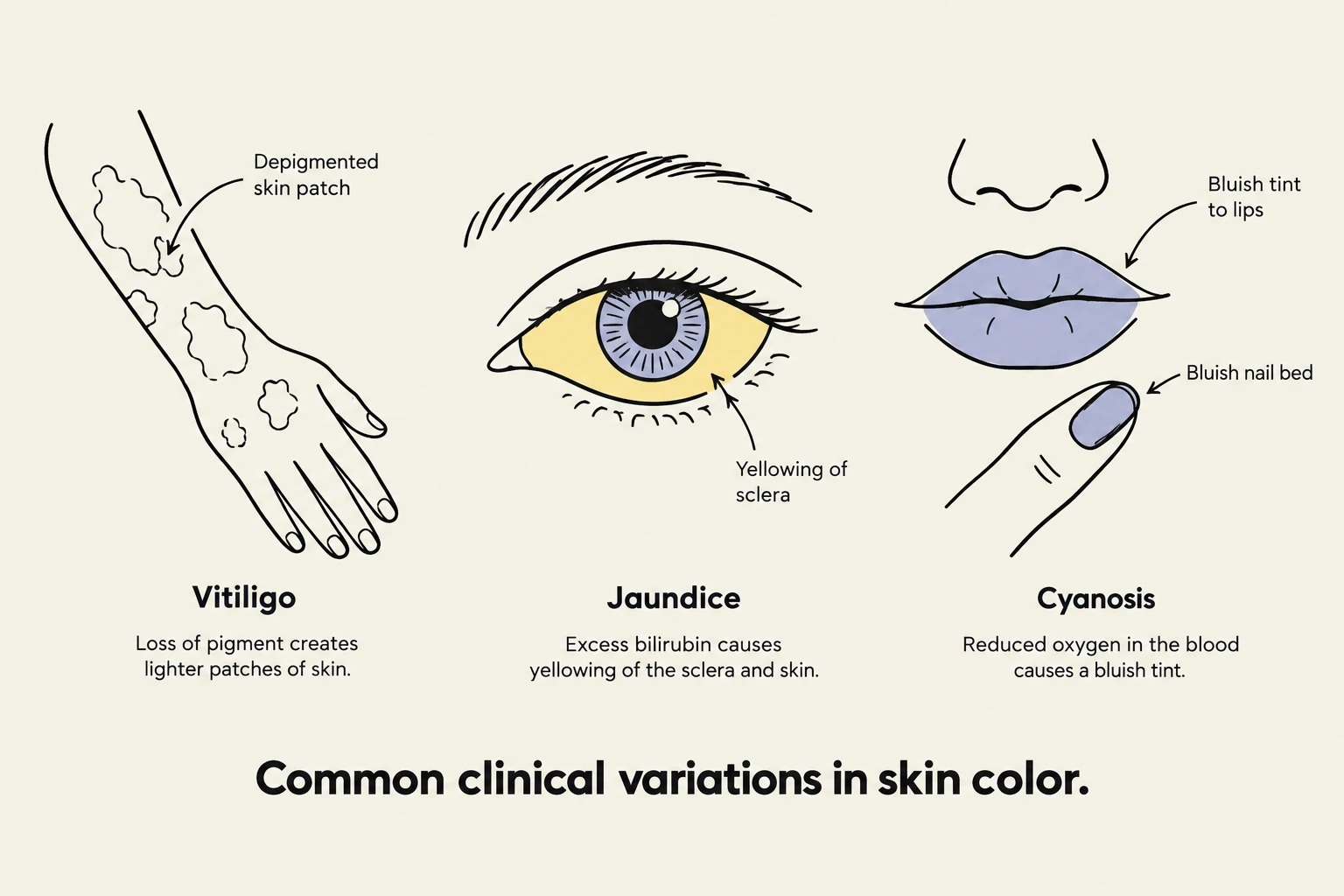
Common clinical variations in skin color, including Vitiligo, Jaundice, and Cyanosis.
Skin Inspection and Palpation Techniques
A comprehensive assessment begins with a visual inspection, followed by palpation to gather more tactile information. Nurses should use these techniques during routine care, such as bathing or performing a backrub, as these moments provide optimal opportunities to observe the skin's condition.
Skin Color and Warmth
The first step in inspection is evaluating skin color. Variations in color can provide critical clues regarding a patient's physiological state:
Vitiligo: Characterized by a loss of pigmentation in certain areas.
Cyanosis: A bluish tint in white skin or a dusky appearance in dark skin, which often indicates inadequate oxygenation.
Jaundice: A yellowing of the skin, most easily observed in the sclera (the whites of the eyes).
To assess temperature, the nurse should use the back of the hands, which are more sensitive to thermal changes than the palms.
Moisture, Circulation, and Turgor
Diagrams illustrating techniques for assessing capillary refill, skin turgor, and pitting edema.
Palpation is also used to assess the skin's moisture level and the client's circulatory status.
Capillary Refill: This is tested by applying pressure to the nail beds and monitoring how quickly color returns. This serves as a quick indicator of peripheral circulation.
Skin Turgor: To evaluate hydration, the nurse pinches a fold of skin (often on the forearm or clavicle). If the skin returns to its original shape slowly, it indicates a loss of turgor, which is a common sign of dehydration.
Edema Assessment
Edema, or swelling caused by fluid accumulation, is detected by applying gentle pressure over bony prominences, such as the ankles.
Pitting Edema: This is a specific finding where a persistent indentation or "dent" remains in the skin after the pressure is released.
Classification of Skin Lesions
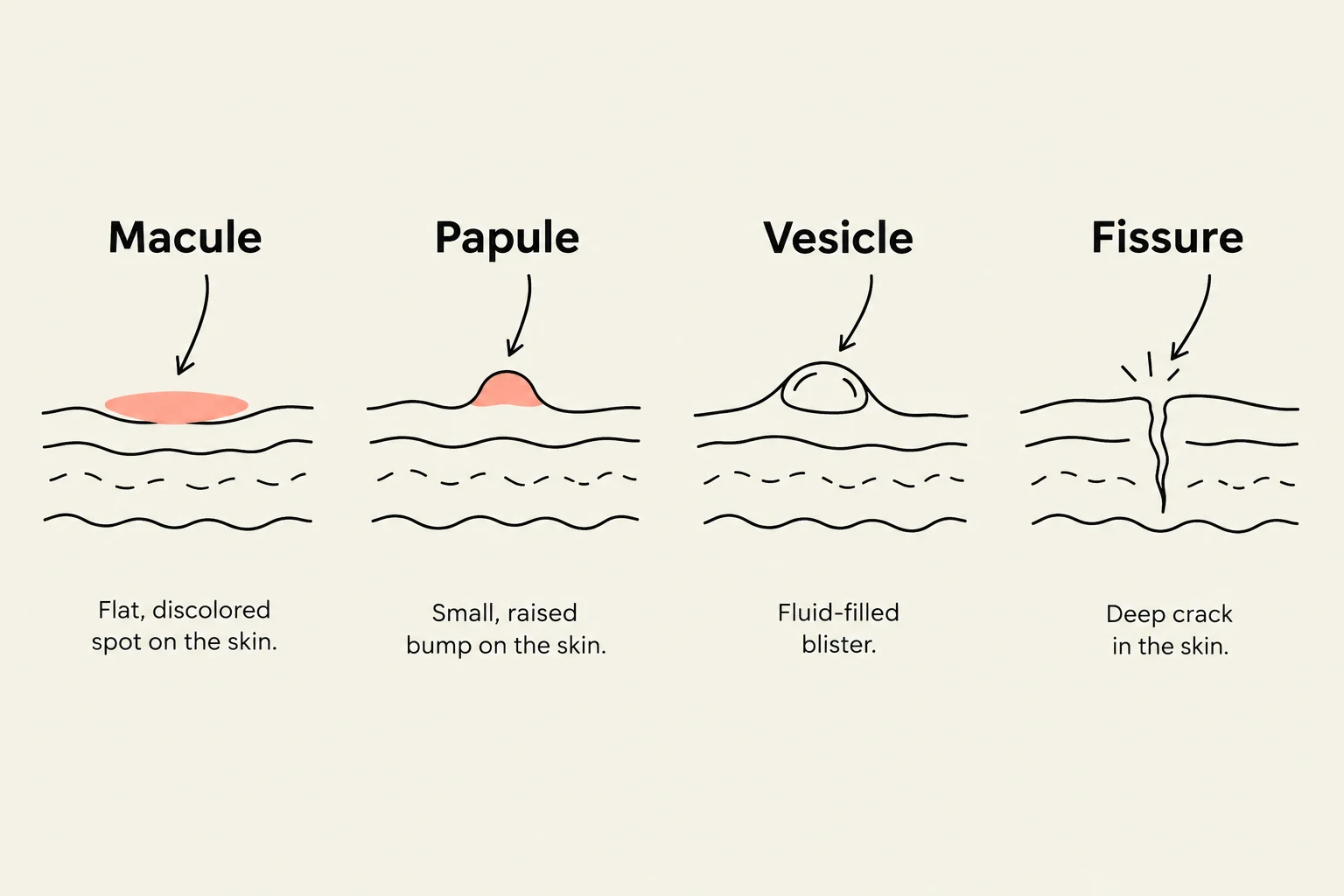
Diagram illustrating four types of skin lesions: macule, papule, vesicle, and fissure, with brief descriptions.
When inspecting the skin, nurses must be able to categorize lesions based on their physical characteristics. Distinguishing between these types is essential for accurate documentation and communicating findings to the healthcare team.
Lesion Type
Description
Clinical Example/Context
Macules
Small, flat, reddened areas
Often the earliest sign of many skin conditions
Papules
Firm, raised lesions
Frequently caused by viral infections
Wheals
Raised, transient lesions
Lasting less than 24 hours (e.g., hives)
Vesicles
Small, blister-like lesions containing fluid
Such as Herpes simplex
Pustules
Vesicles containing pus
Often associated with acne vulgaris
Fissures
Cracks in the skin
Seen in conditions like tinea pedis (athlete's foot)
Ulcers
Open sores resulting from tissue death
Such as venous stasis ulcers from poor blood flow
Clinical Alert: Malignant Melanoma
During any skin inspection, nurses must remain vigilant for signs of malignant melanoma. This critical form of skin cancer requires careful, detailed inspection of all skin surfaces to identify irregular pigment changes.
Hair, Nails, and Mucosa
The integumentary assessment extends beyond the skin surface to include hair, nails, and the mucous membranes of the mouth.
Hair and Scalp
Inspection of the hair should include looking for alopecia (excessive or abnormal hair loss). When providing hair care, such as shampooing, the nurse should also inspect the scalp for signs of disease, injury, or parasitic infestations like pediculosis (lice) or scabies.
Nails and Oral Mucosa
Nails should be examined for shape, color, and integrity. In clients with diabetes or hemophilia, nurses must exercise extreme caution; for these patients, it is often recommended not to cut toenails to avoid accidental injury, as wounds in these populations heal very slowly.
While not strictly part of the skin, the assessment of the mouth is often integrated into a comprehensive exam. This includes checking the mucous membranes for dryness or sores, which can occur due to mouth breathing or certain illnesses.
Pupillary Assessment
A complete physical exam often includes the assessment of the eyes using the PERRLA + C mnemonic. This ensures that the pupils are:
Pupils Equal
Round
Reactive to Light
Accommodation
Coordinated (eyes move together)
Exam Tip: The Nursing Process Connection
Remember that skin assessment is the "Assessment" phase of the nursing process. Accurate data collection (objective data like skin color and subjective data like a client's report of itching) is the foundation for making a nursing diagnosis and developing an effective care plan.
Keep reading for free.
Create an account to finish this reading and make it part of your study routine.