


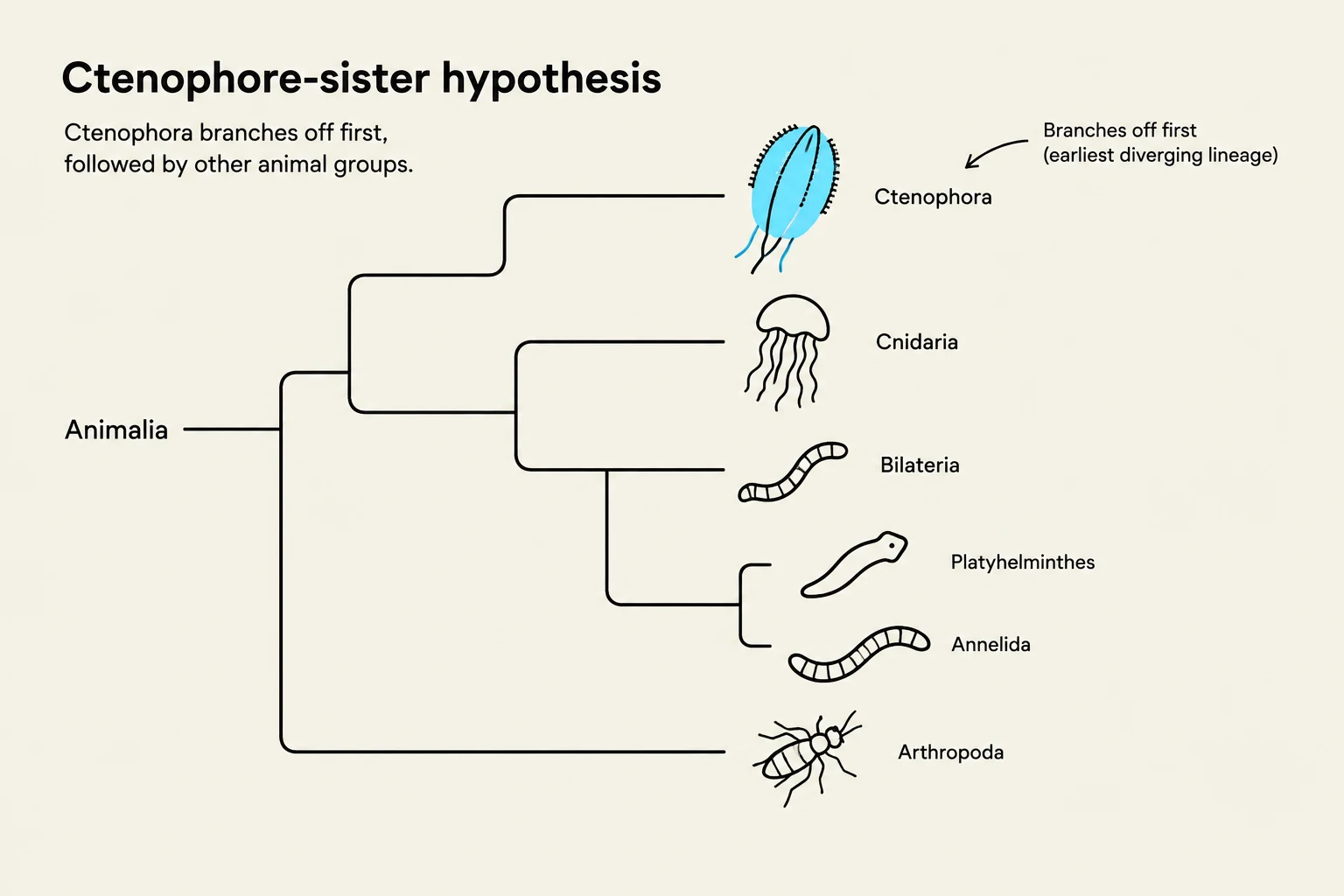
The Phylum Ctenophora, commonly known as comb jellies, represents one of the most intriguing groups in evolutionary biology. While they share the ocean with other gelatinous organisms like jellyfish (Cnidaria), ctenophores possess a unique suite of biological traits that distinguish them from all other animal groups. Beyond their striking appearance, ctenophores sit at the center of a fierce debate regarding the very origins of animal complexity: are they a primitive lineage that branched off before the evolution of complex nervous systems, or are they a highly specialized group that evolved complex traits independently?
Distinctive Biological Characteristics
Ctenophores are defined by several specialized anatomical features that allow them to function as efficient predators in marine environments.
Predatory Mechanisms: Colloblasts and Cilia
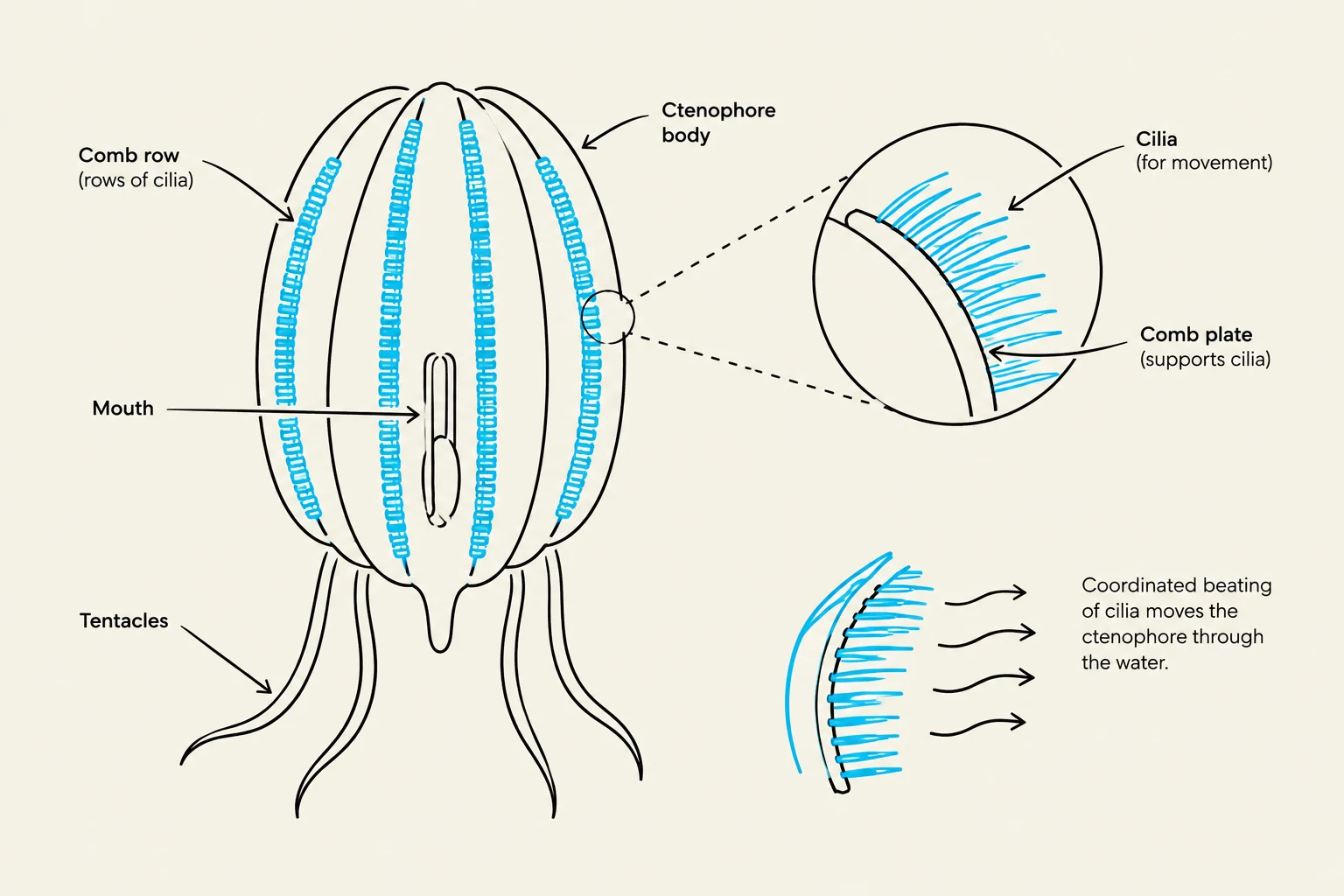
Unlike Cnidarians, which use stinging cells called cnidocytes to capture prey, ctenophores utilize specialized sticky cells known as colloblasts. These cells allow them to adhere to prey without the use of toxins. Furthermore, the phylum derives its name from the presence of prominent rows of cilia used for locomotion. These ciliary plates allow the organisms to move through the water column with a rhythmic, shimmering motion.
Internal Complexity: Gut and Musculature
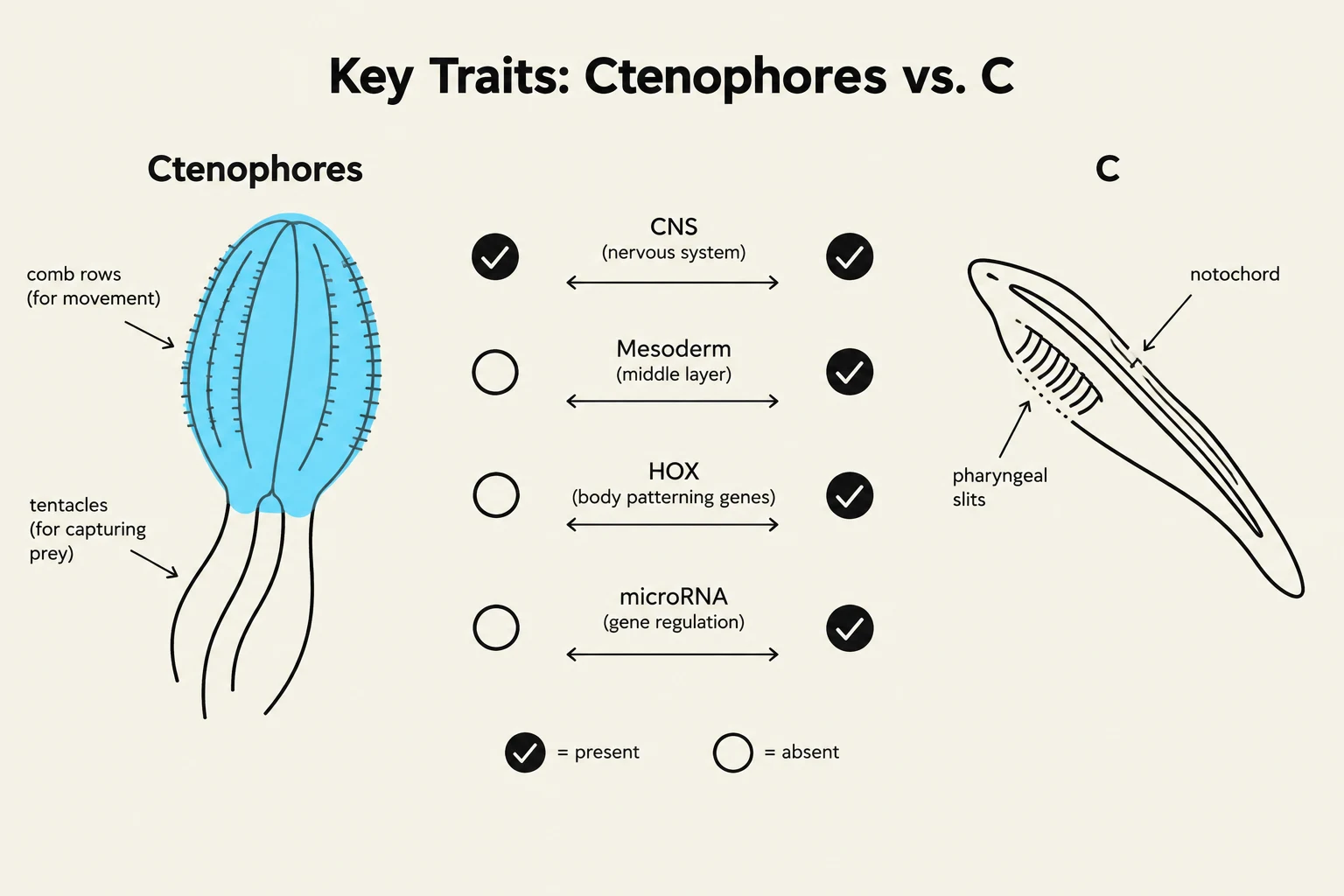
While many early-branching animals possess incomplete digestive systems, ctenophores have independently evolved a complete gut. Additionally, certain groups within the phylum possess mesoderm muscles, a trait typically associated with more complex, triploblastic animals.
Keep reading for free.
Create an account to finish this reading and make it part of your study routine.
Continue reading freeAlready have an account? Log in
Updated