


Photosynthesis is the fundamental biological process that converts light energy into the chemical energy of food. This process is carried out by autotrophs, a diverse group of organisms that includes everything from microscopic cyanobacteria and purple sulfur bacteria to large-scale plants. By capturing sunlight, these organisms produce sugars (specifically G3P) and release oxygen () as a byproduct.
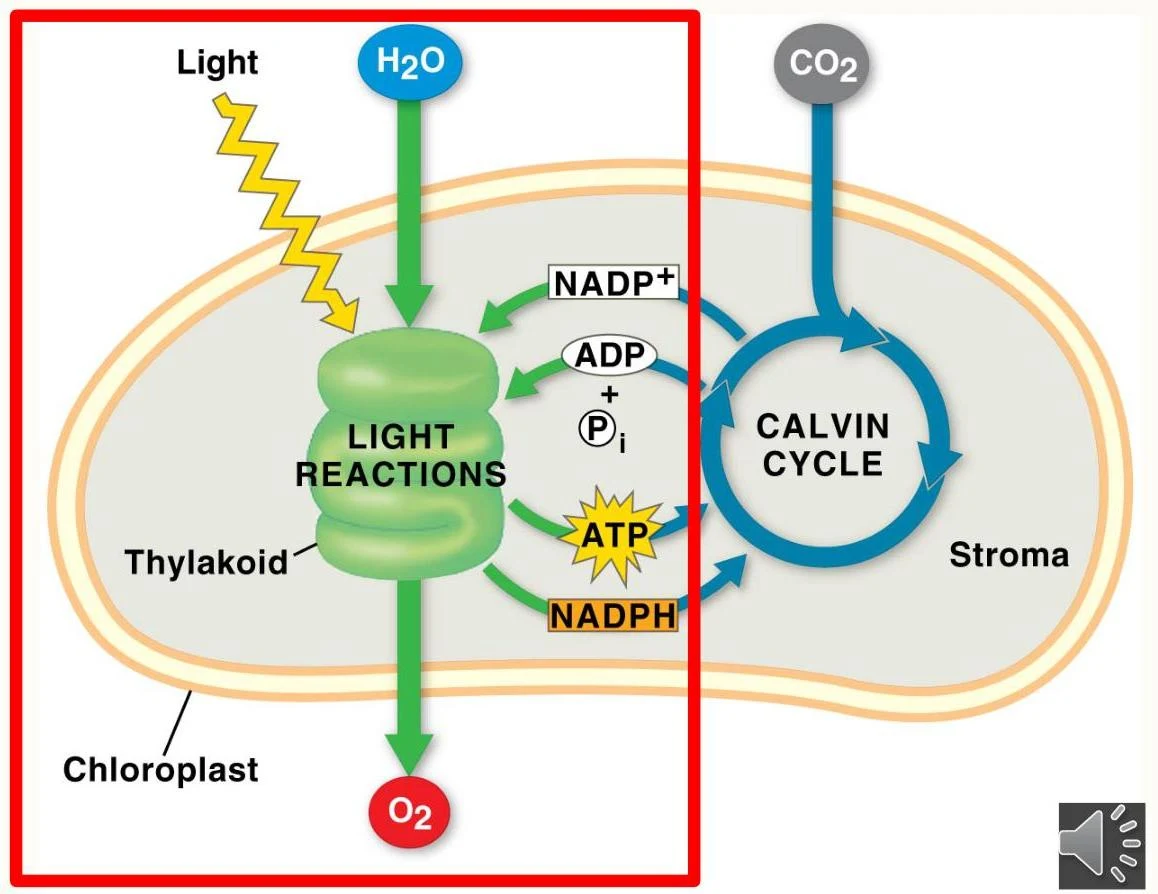
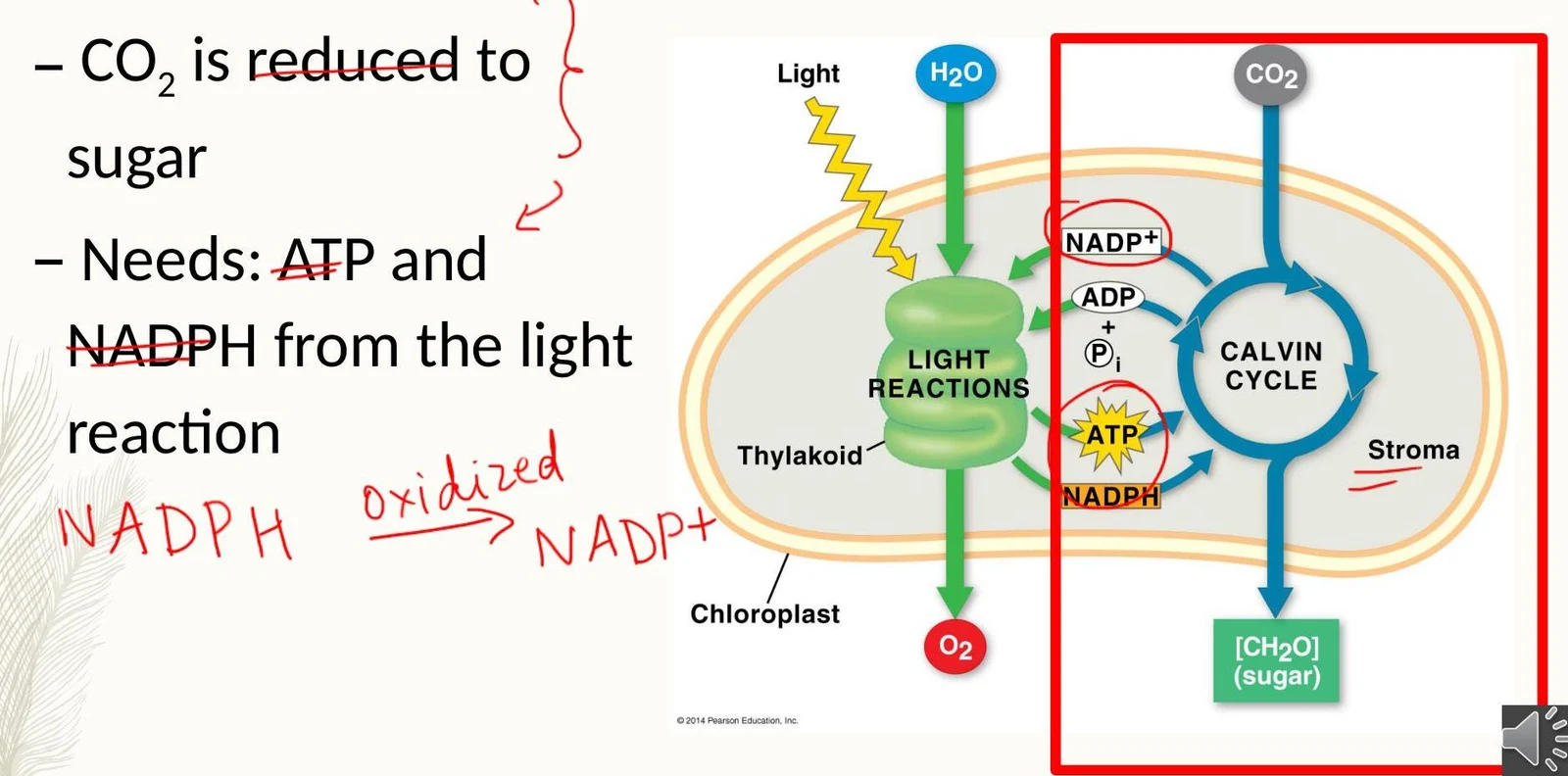
The entire process takes place within specialized organelles called chloroplasts. To understand how a plant turns sunlight into sugar, we must look at the two distinct but interconnected stages: the Light Reactions and the Calvin Cycle.
The Chloroplast: Location of the Action
Photosynthesis does not happen in one single spot; it is divided between two different compartments within the chloroplast.
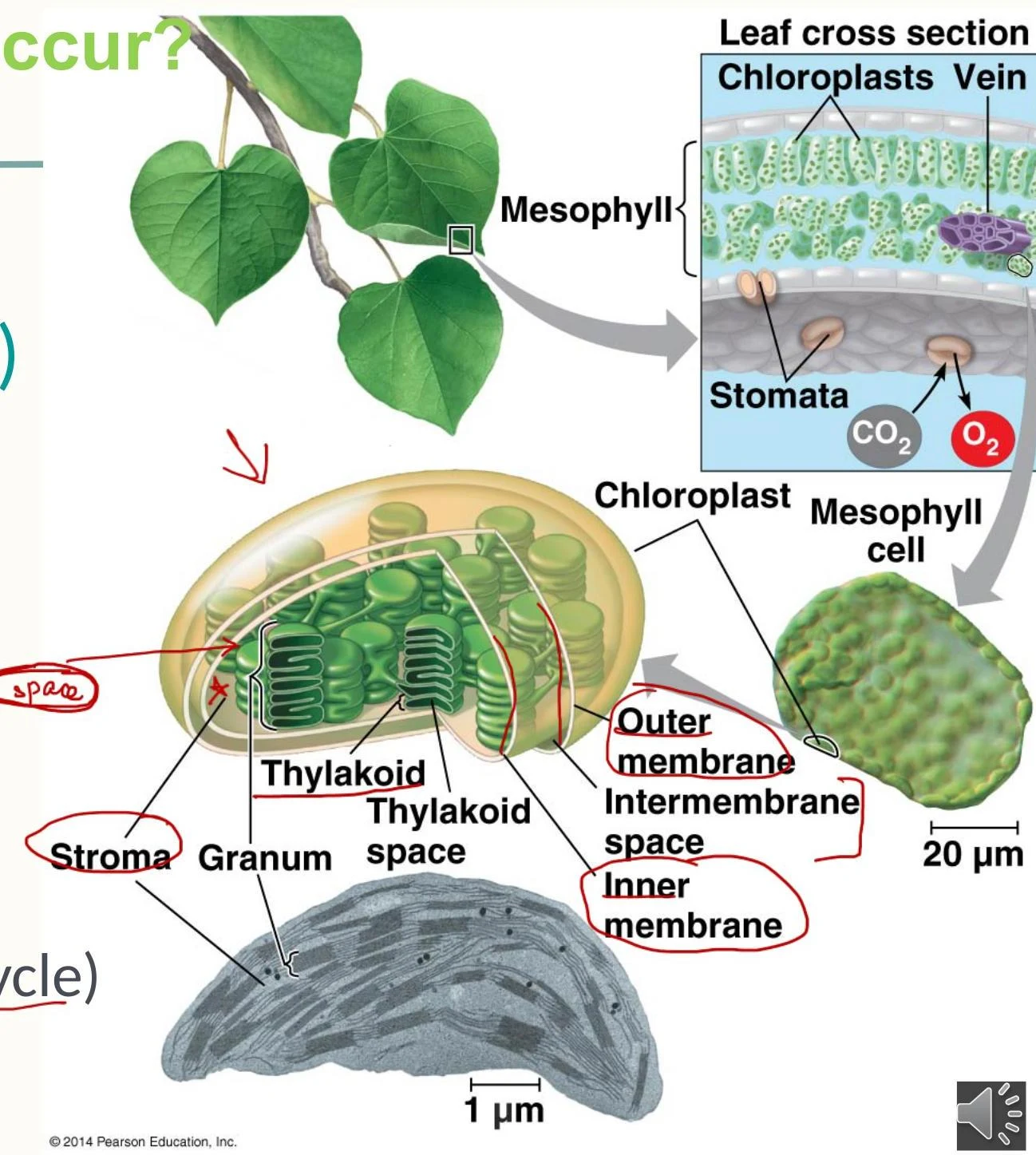
- Thylakoid: These are membrane-bound compartments where the Light Reactions occur.
- Stroma: This is the fluid-filled space surrounding the thylakoids, where the Calvin Cycle takes place.
Study Tip: Remember that the Light Reactions happen in the "pancake" structures (thylakoids) to capture light, while the Calvin Cycle happens in the "syrup" (stroma) to build sugar.
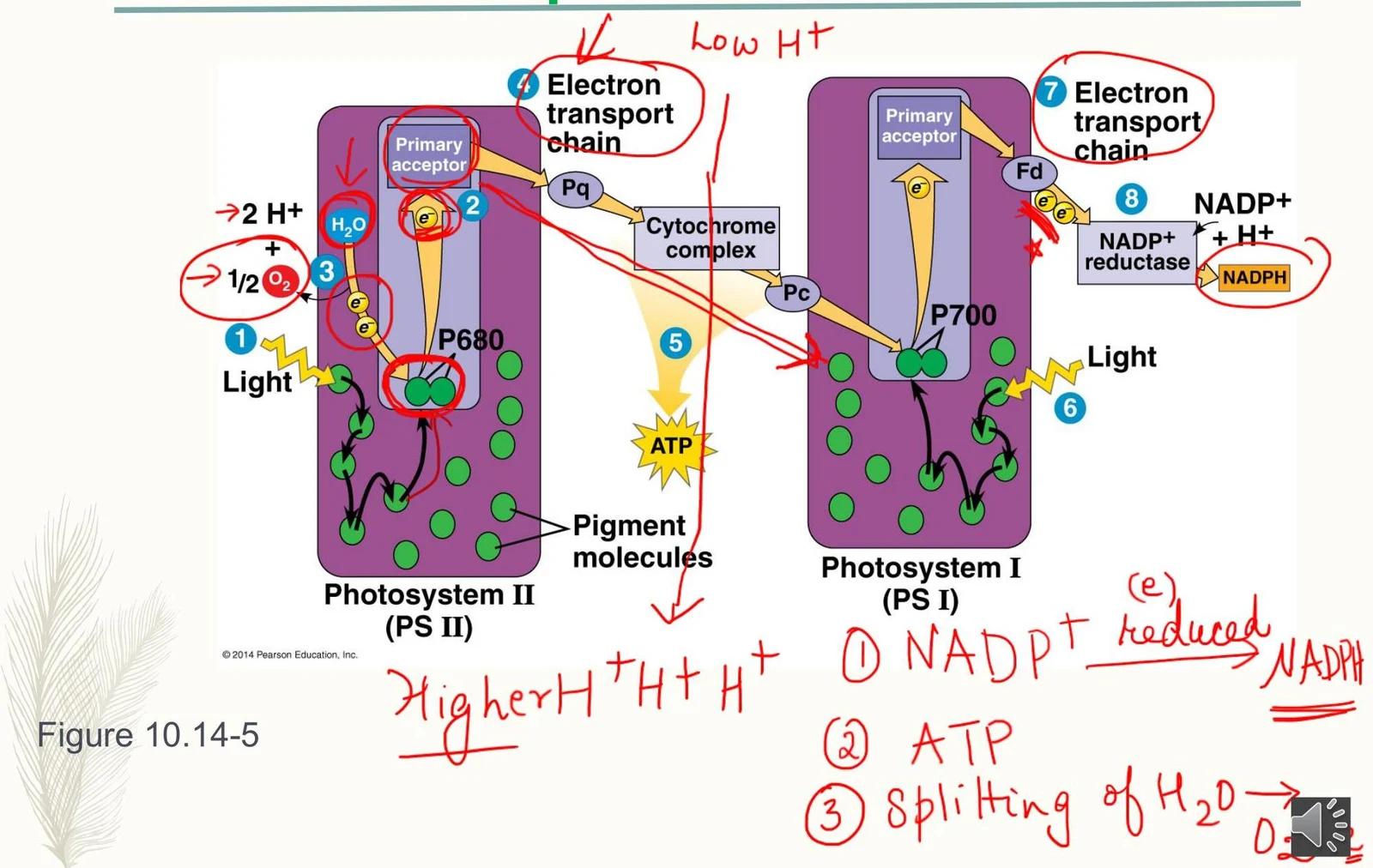
The Light Reactions: Harvesting Energy
The primary goal of the Light Reactions is to convert solar energy into chemical energy in the form of two specific molecules: ATP and NADPH. This stage requires light and water () and results in the release of oxygen ().
Keep reading for free.
Create an account to finish this reading and make it part of your study routine.
Continue reading freeAlready have an account? Log in
Updated