


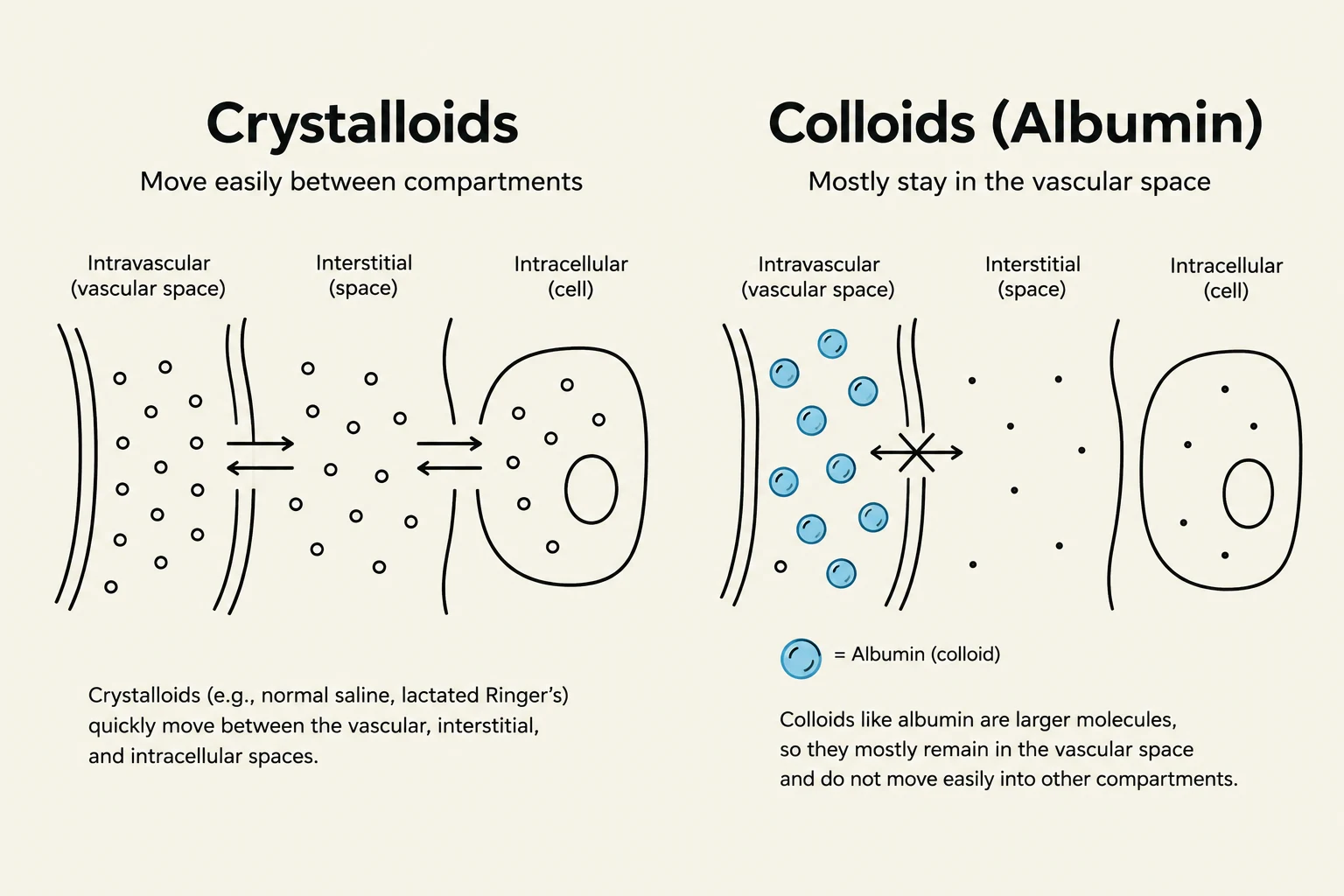
In emergency medicine and critical care, the rapid restoration of circulating blood volume is vital for maintaining hemodynamic stability and ensuring adequate tissue perfusion. This process, known as fluid resuscitation, involves the strategic use of various agents to combat hypovolemia, shock, and hemorrhage. These agents are broadly categorized into crystalloids, colloids (such as albumin), and blood products, each serving a specific physiological role in expanding intravascular or interstitial compartments.
Fluid Resuscitation and Crystalloid Fluids
Crystalloids are aqueous solutions of mineral salts or other substances. They are the most common first-line agents used for volume expansion due to their availability and ease of administration.
Normal Saline (NS)
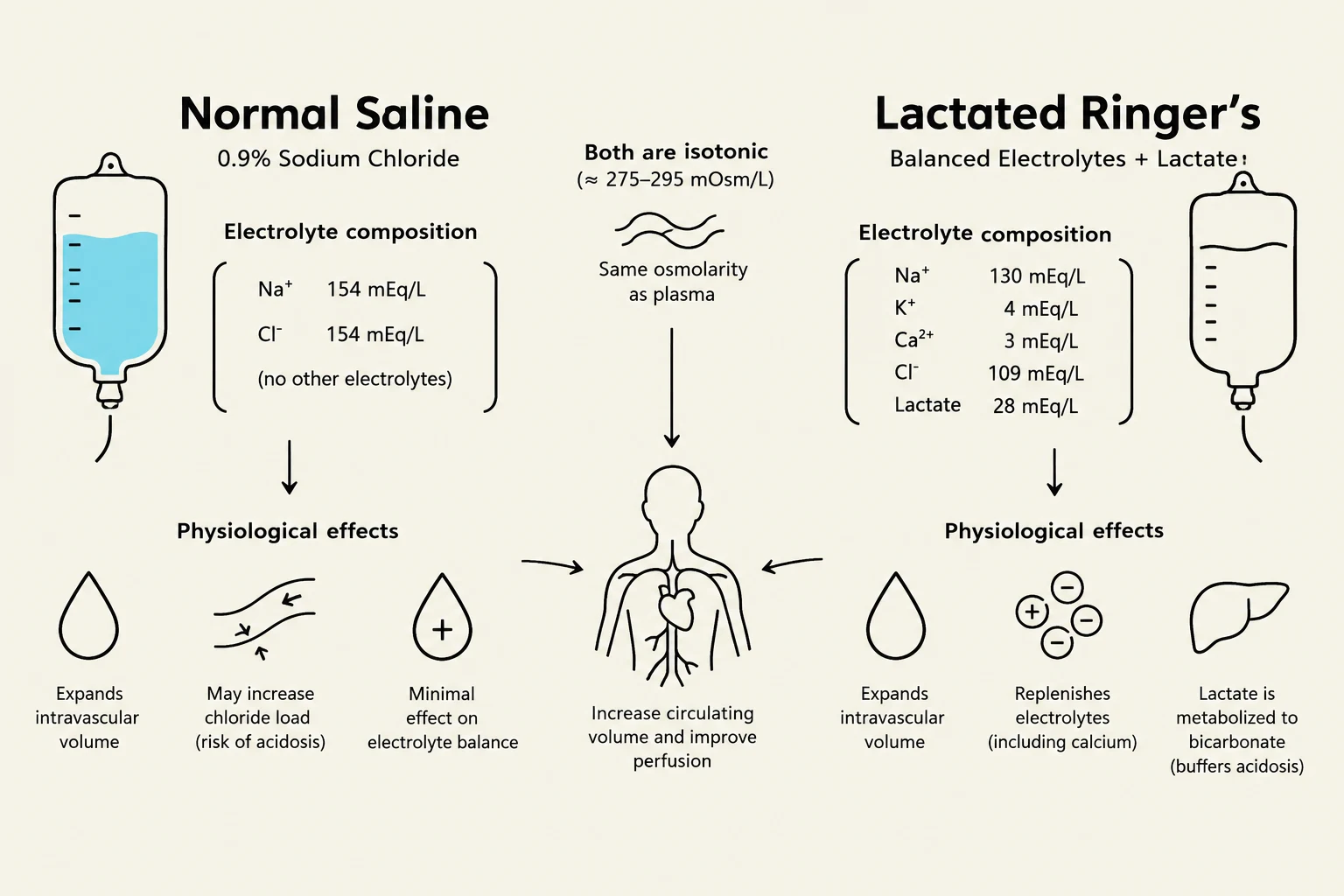
Normal Saline (0.9% sodium chloride) is an isotonic crystalloid used for fluid resuscitation, maintenance, the dilution of medications, and irrigation. It is particularly indicated in cases of hypovolemia, shock, and metabolic alkalosis. While widely available and compatible with most medications, clinicians must be cautious of its high chloride content, which can lead to hyperchloremic metabolic acidosis and renal vasoconstriction if administered in large volumes.
Lactated Ringer’s (LR)
Lactated Ringer’s is a "balanced" isotonic crystalloid containing sodium, chloride, potassium, calcium, and lactate. The lactate acts as a buffer, as it is metabolized to bicarbonate in the body, making LR highly effective for fluid resuscitation in trauma, burns, sepsis, and acute pancreatitis. Clinical studies suggest that balanced solutions like LR may be associated with lower rates of acute kidney injury and mortality in septic patients compared to Normal Saline.
Clinical Pearl: Avoid using Lactated Ringer's in patients with severe liver dysfunction (due to lactate metabolism issues), hyperkalemia, or existing lactic acidosis.
Keep reading for free.
Create an account to finish this reading and make it part of your study routine.
Continue reading freeAlready have an account? Log in
Updated