


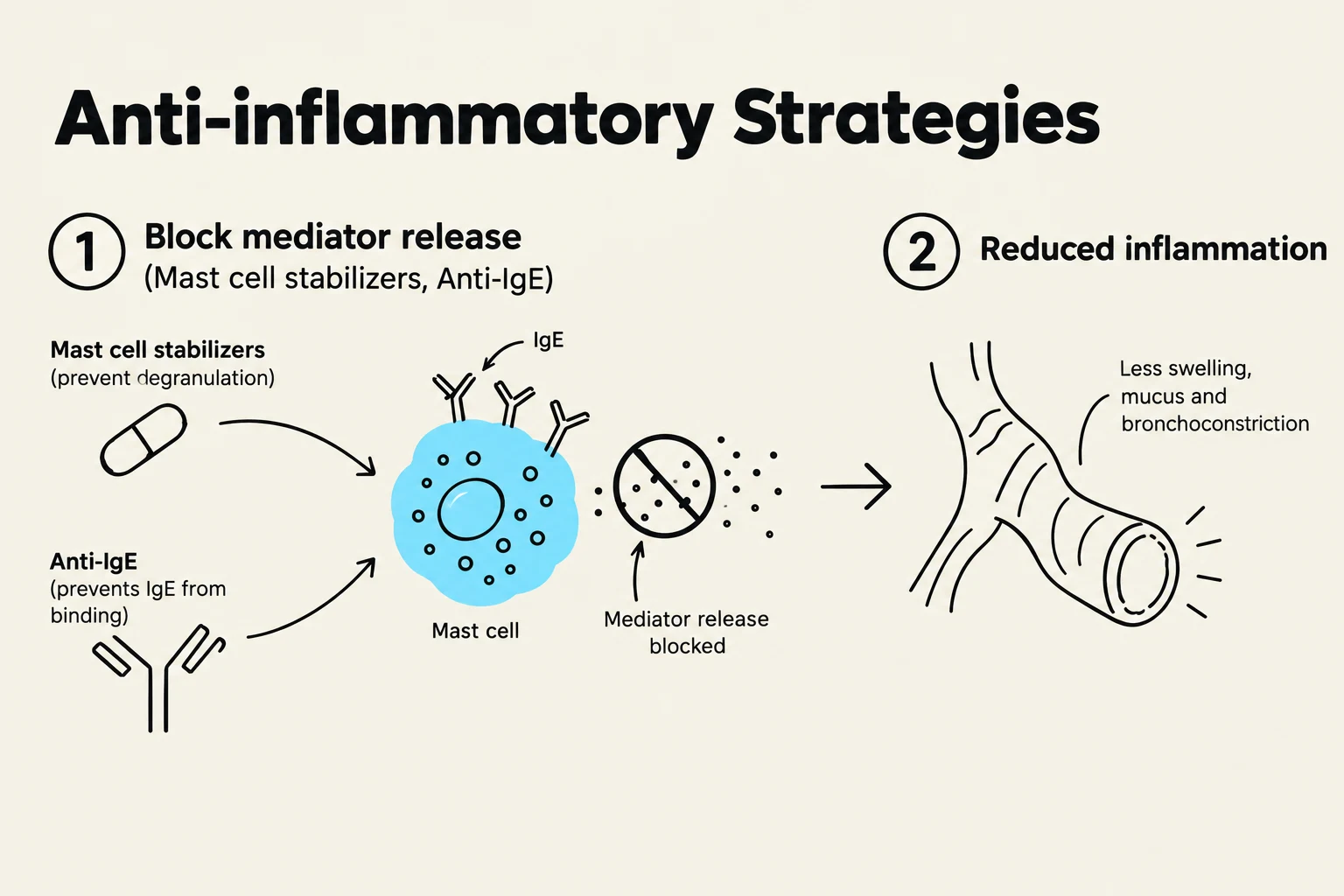
Asthma is a complex respiratory disorder that significantly impacts a patient's quality of life by restricting airflow and causing physical distress. To effectively manage this condition, clinicians must understand the interplay between the autonomic nervous system and the inflammatory pathways that drive the disease. Pharmacological intervention is generally split into two distinct strategies: reversing the immediate physical narrowing of the airways (bronchodilation) and addressing the underlying biological causes of airway swelling and sensitivity (anti-inflammation).
Understanding Asthma: Inflammation and Hyperresponsiveness
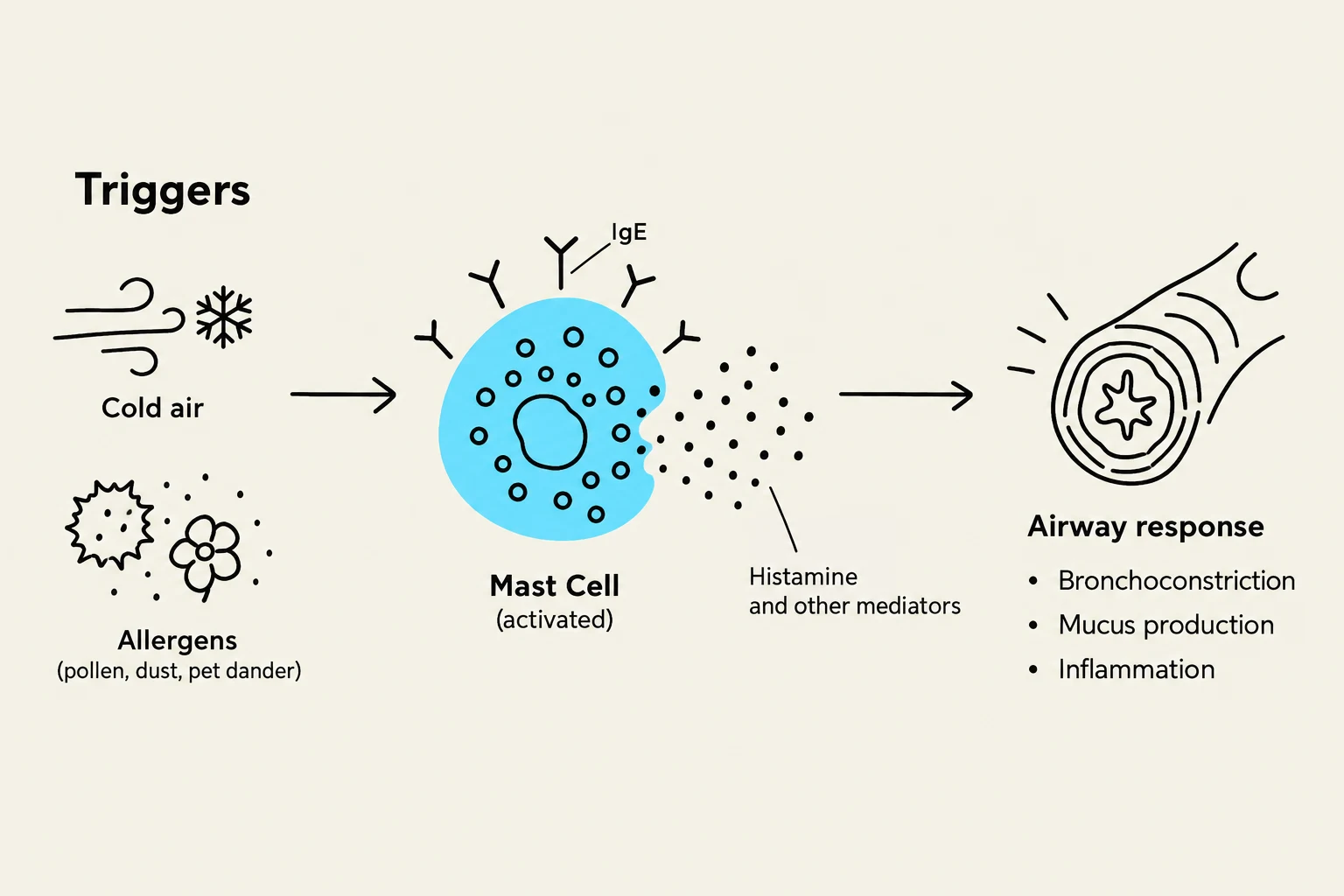
Asthma is characterized by two primary pathological features: airway inflammation and hyperresponsiveness. Hyperresponsiveness means that the airways react excessively to stimuli that might not affect a healthy individual, such as cold air, allergens, exercise, or stress.
When these triggers are encountered, a cascade of cellular events occurs. Specifically, mast cells become activated, leading to the mast cell histamine release. This release, along with other mediators like leukotrienes, triggers bronchoconstriction—the tightening of the lung smooth muscle. This process not only narrows the airways but also increases mucus secretion, further obstructing breathing.
The Role of the Autonomic Nervous System (ANS)
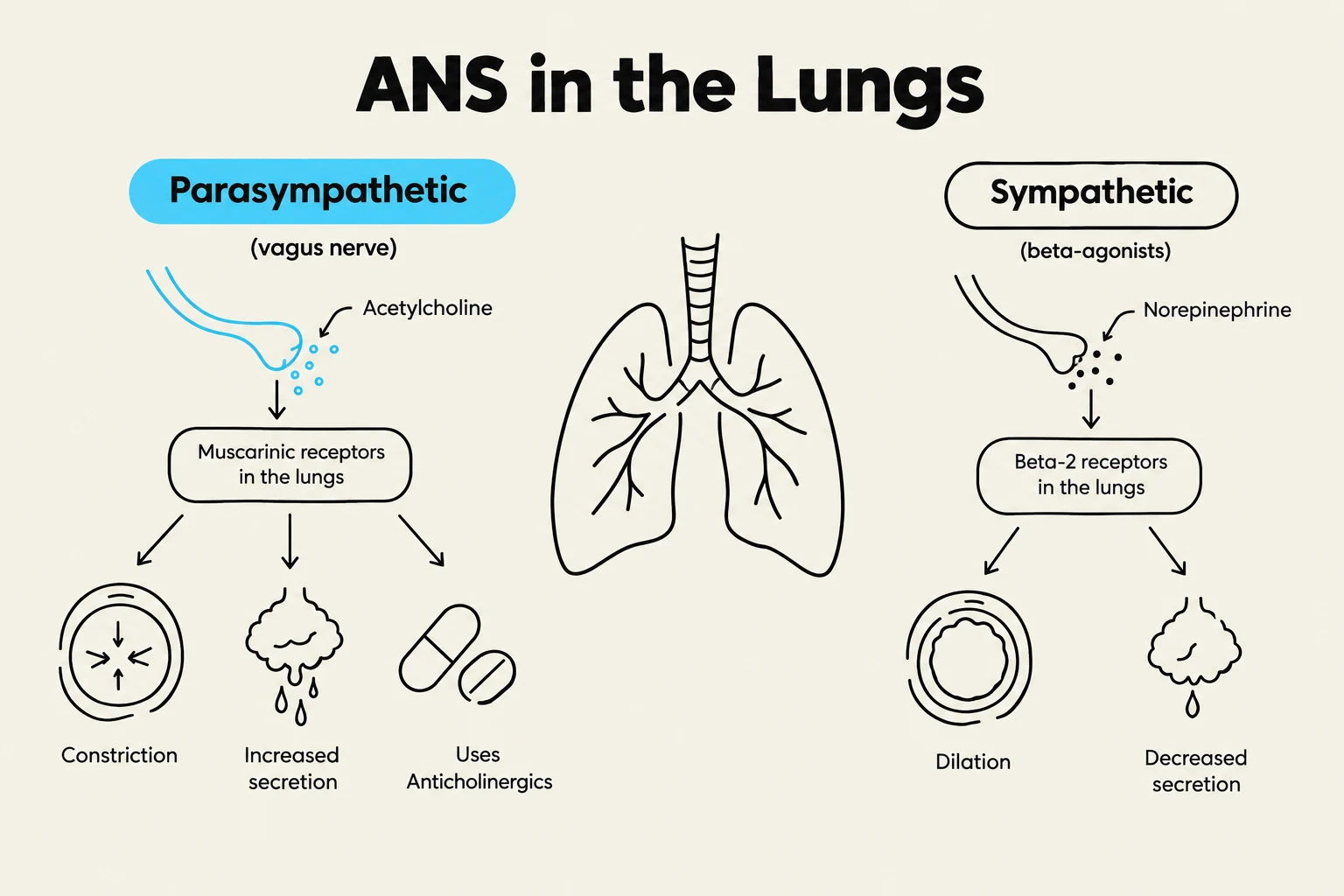
The regulation of the airways is heavily influenced by the Autonomic Nervous System (ANS), which maintains homeostasis through two opposing branches: the Parasympathetic and the Sympathetic systems.
The Parasympathetic Nervous System (PNS)
The PNS is often associated with "rest and digest" functions. In the lungs, activation of the PNS leads to the constriction of the bronchi and increased mucus secretion. Because the PNS uses acetylcholine to stimulate these effects, drugs that block these receptors—known as anticholinergics—are used to prevent airway narrowing.
Keep reading for free.
Create an account to finish this reading and make it part of your study routine.
Continue reading freeAlready have an account? Log in
Updated