Pharmacology of Cardiovascular, Respiratory, and Hematological Systems
An educational guide to essential medications for the cardiovascular, respiratory, and hematological systems, categorized by their mechanisms of action. Covers diuretics, antihypertensives, antiarrhythmics, bronchodilators, anticoagulants, and more.
Preparing for pharmacology exams requires more than just memorizing drug names; it requires understanding how different medication classes interact with the body's physiological systems. This study guide organizes the essential medications for your upcoming quizzes and Exam 2, focusing on the cardiovascular, respiratory, and hematological systems. By categorizing these drugs by their mechanism of action, you can better predict their therapeutic effects and potential side effects.
Cardiovascular Medications: Fluid Balance and Blood Pressure
The cardiovascular system is managed through several distinct pathways, starting with the regulation of fluid volume and blood pressure.
Diuretics
Diuretics are used to manage fluid balance by promoting the excretion of water and electrolytes through the kidneys. These are categorized by where they act in the nephron:
Loop Diuretics: Potent agents used for rapid fluid removal.
Thiazide Diuretics: Often used for long-term blood pressure management.
Potassium-Sparing Diuretics: Used to prevent the depletion of potassium during diuresis.
Osmotic Diuretics: Used to shift fluid between compartments, often in neurological emergencies.
Antihypertensives and Hypertensive Crisis
To control high blood pressure, clinicians use various classes of drugs that target different parts of the Renin-Angiotensin-Aldosterone System (RAAS) or vascular tone:
ACE Inhibitors: Block the conversion of Angiotensin I to Angiotensin II.
Angiotensin II Receptor Blockers (ARBs): Block the action of Angiotensin II at the receptor site.
Prazosin: An alpha-1 blocker that reduces peripheral resistance.
Centrally Acting Alpha 2 Agonists: Act on the brain to decrease sympathetic outflow.
In extreme cases, medications for hypertensive crisis are required to rapidly lower blood pressure and prevent organ damage.
Exam Tip: When studying ACE inhibitors and ARBs, remember that while they both target the RAAS, ACE inhibitors often cause a "dry cough" due to bradykinin accumulation, whereas ARBs typically do not.
Cardiac Rhythm, Contractility, and Lipids
Beyond blood pressure, medications must manage the actual beating of the heart and the composition of the blood.
Cardiac Glycosides and Rhythm Control
Managing heart rhythm involves a delicate balance of drugs that affect how the heart contracts and how electrical signals travel through the myocardium:
Cardiac Glycosides: The most notable being Digoxin, which increases the force of contraction.
Antiarrhythmics: Drugs like Quinidine, Lidocaine, Amiodarone, and Adenosine are used to stabilize or reset irregular rhythms.
Beta-adrenergic Blockers: Such as Propranolol, these slow the heart rate and reduce the workload of the heart.
Adrenergic Agonists and Vasopressors
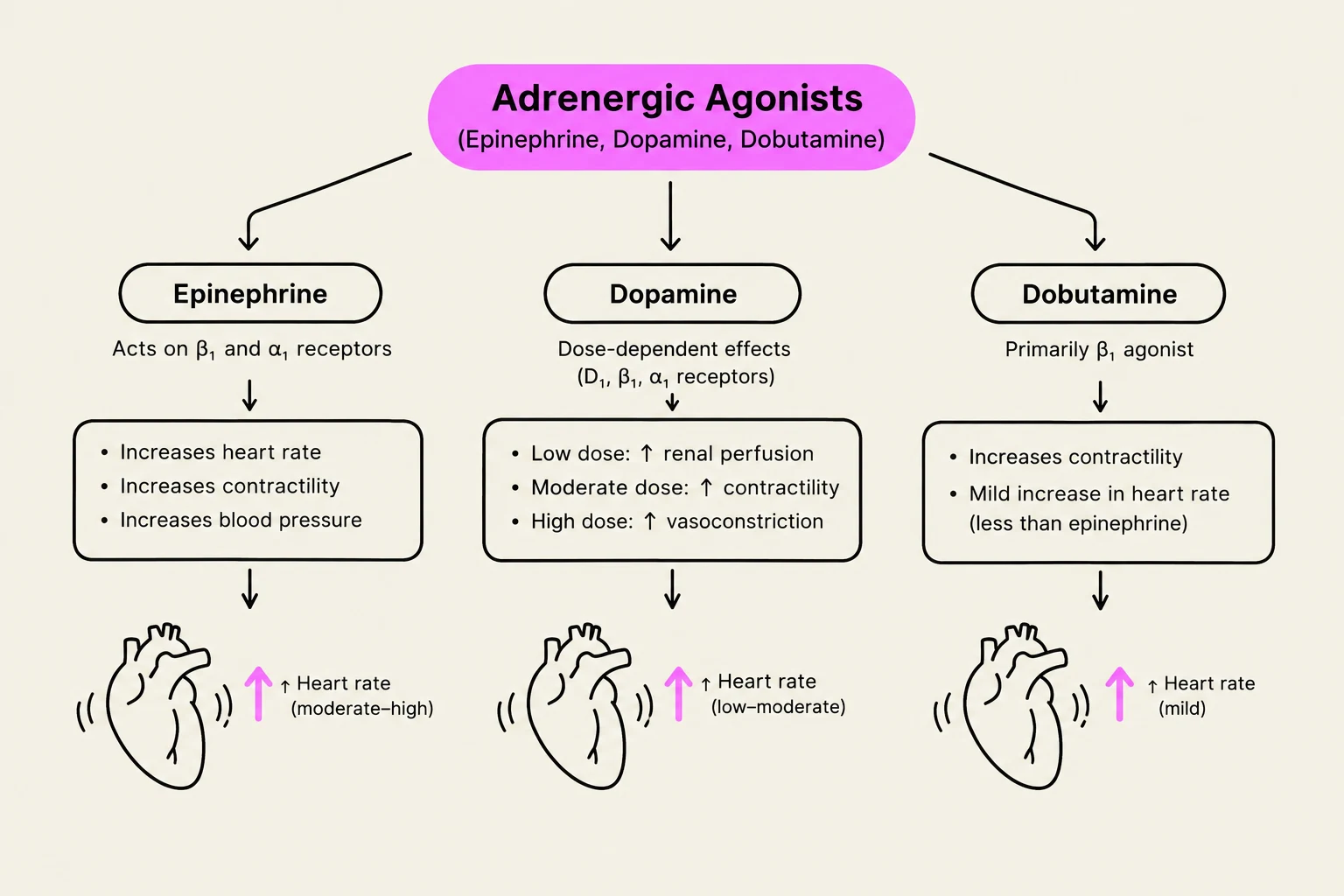
In emergency or critical care settings, Adrenergic Agonists are used to stimulate the sympathetic nervous system to increase heart rate and blood pressure. Key agents include:
Epinephrine: Provides broad stimulation of alpha and beta receptors.
Dopamine and Dobutamine: Used to increase cardiac output and blood pressure.
Vasopressors: A general class of drugs used to constrict blood vessels and raise blood pressure.
This diagram illustrates the effects of adrenergic agonists, specifically epinephrine, dopamine, and dobutamine, on the cardiovascular system. It details their receptor interactions and dose-dependent effects on heart rate, contractility, blood pressure, and renal perfusion.
Angina and Antilipidemics
For patients with coronary artery disease, Organic Nitrates are used to treat angina by dilating coronary arteries. To manage long-term cardiovascular risk, Antilipidemic medications are prescribed:
HMG-CoA Inhibitors (Statins): Reduce cholesterol production in the liver.
Bile-acid Sequestrants: Bind bile acids in the gut to lower cholesterol levels.
Respiratory Medications
Respiratory pharmacology focuses on opening the airways (bronchodilation), reducing swelling (inflammation), and managing secretions.
Bronchodilation and Inflammation
Beta 2 Adrenergic Agonists: Stimulate beta-2 receptors in the lungs to cause rapid bronchodilation.
Theophylline: A methylxanthine used for long-term airway maintenance.
Ipratropium: An anticholinergic that helps prevent bronchoconstriction.
Glucocorticoids: Powerful anti-inflammatory agents used to reduce airway swelling.
Montelukast: A leukotriene modifier used for asthma prophylaxis.
Symptom Management
To address the secondary symptoms of respiratory distress, several classes are utilized:
Antitussives: Such as Codeine, used to suppress a non-productive cough.
Expectorants: Help thin mucus so it can be coughed up.
Mucolytics: Chemically break down the structure of mucus.
Decongestants: Reduce swelling in the nasal passages.
Antihistamines: Block histamine receptors to treat allergic responses.
Hematological, Coagulation, and Minerals
The final category involves the management of blood clotting, the production of blood cells, and the maintenance of vital electrolytes.
Coagulation and Blood Products
Managing blood viscosity and clotting is critical for preventing both clots (thrombosis) and excessive bleeding:
Anticoagulants: Include Vitamin K inhibitors (like Warfarin) to prevent clot formation.
Antiplatelets: Prevent platelets from sticking together.
Thrombolytics: "Clot busters" used to dissolve existing clots in emergencies.
Growth Factors: Agents like Epoetin Alfa (to stimulate red blood cell production) and Filgrastim (to stimulate white blood cell production).
Blood and Blood Products: Used for direct replacement of lost volume or components.
Minerals and Electrolytes
Electrolyte balance is fundamental to all cellular functions, particularly in the heart and muscles.
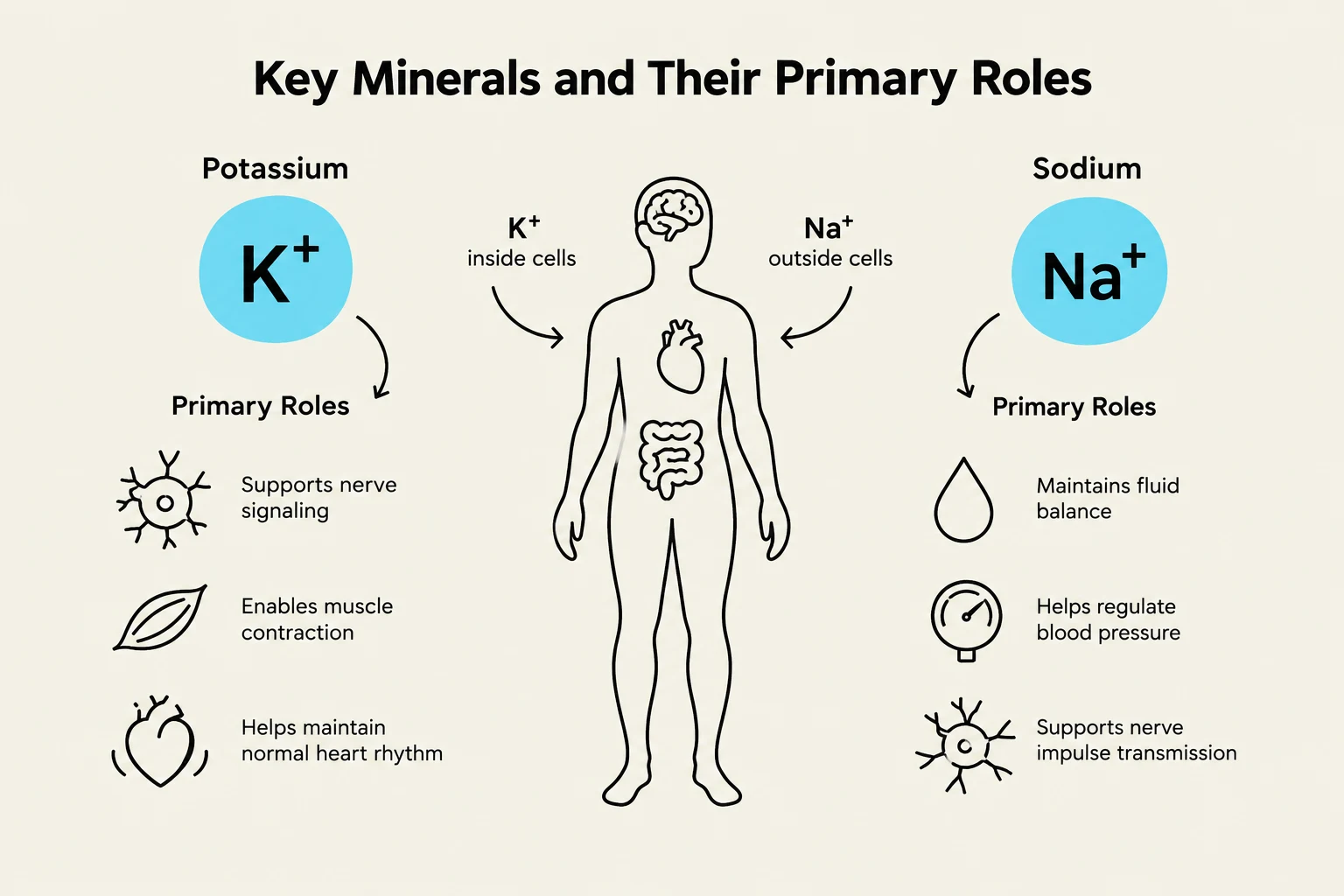
Potassium: Vital for cardiac conduction and muscle function.
Sodium: Essential for fluid balance and neurological function.
This diagram illustrates the primary roles of potassium and sodium in the human body, including their functions in nerve signaling, muscle contraction, fluid balance, and blood pressure regulation.
Exam Tip: When studying Hematology, distinguish between preventing a clot (Anticoagulants/Antiplatelets) and dissolving an existing clot (Thrombolytics). This distinction is a frequent source of exam questions.
Keep reading for free.
Create an account to finish this reading and make it part of your study routine.