


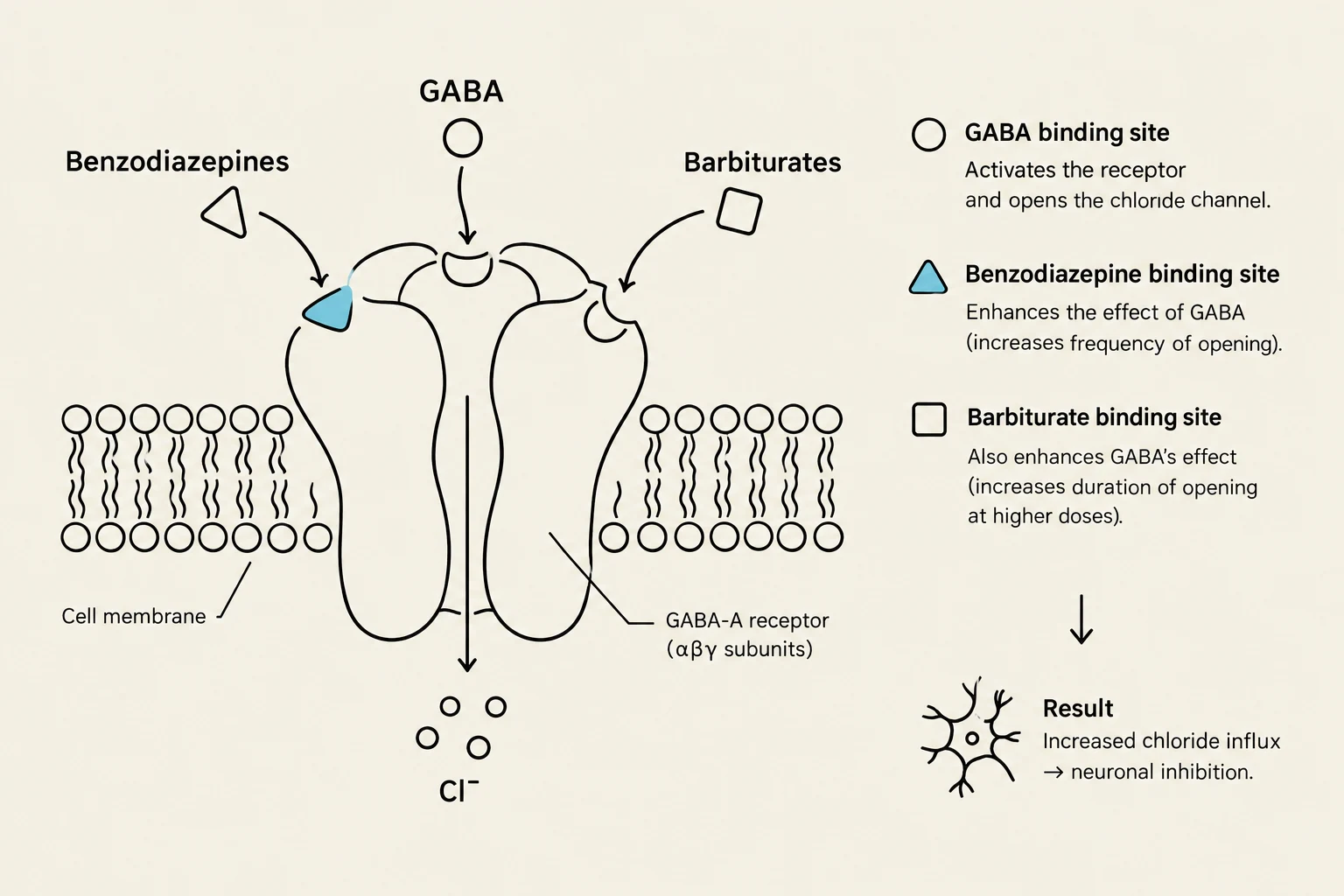
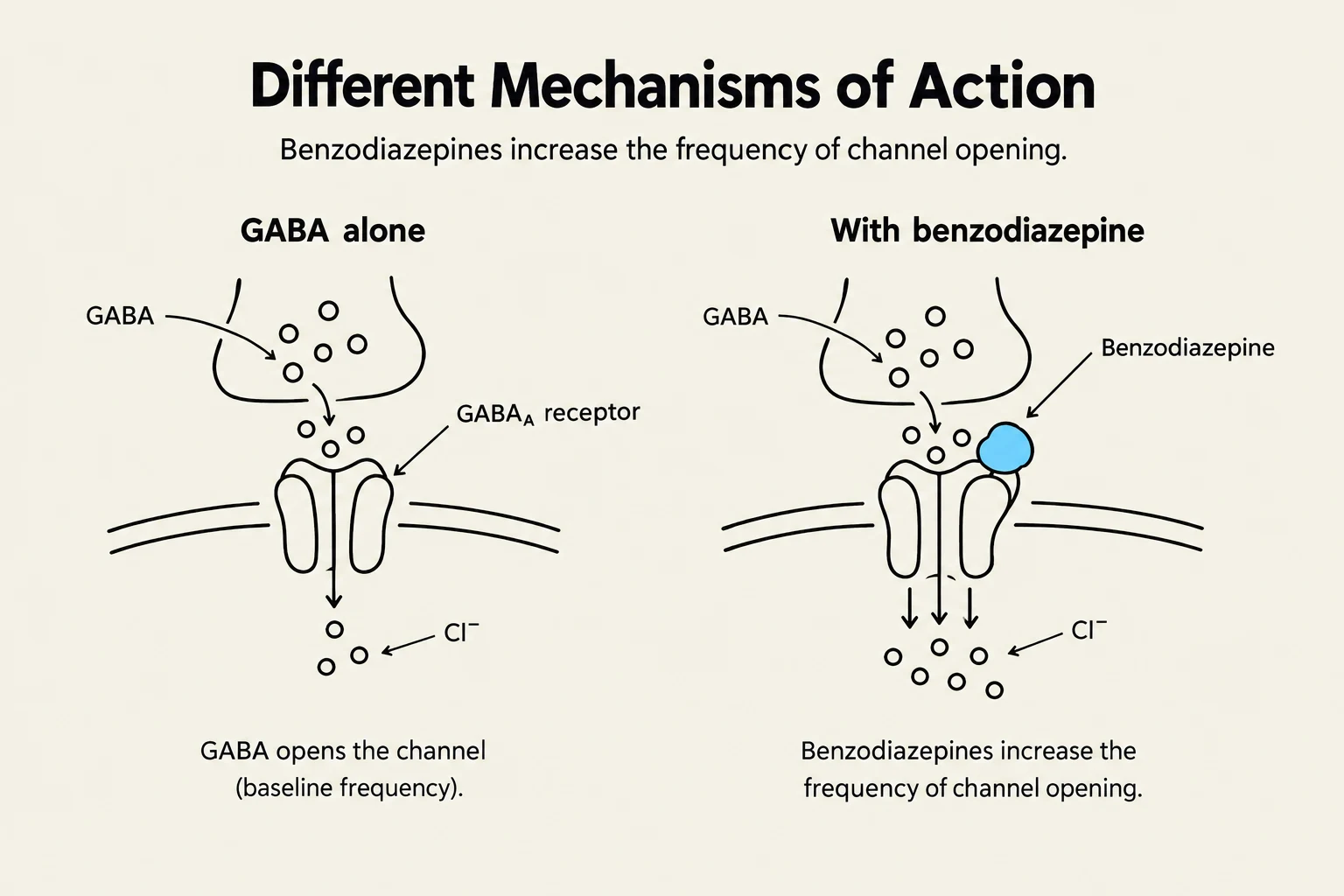
Intravenous (IV) anesthetics are essential tools in modern medicine, used to induce states of sedation, amnesia, analgesia, or complete unconsciousness. While various classes of drugs exist—including isopropylphenols like propofol and imidazoles like etomidate—the barbiturates and benzodiazepines remain foundational due to their profound modulation of the central nervous system (CNS) via the -aminobutyric acid (GABA) system. Understanding the nuances of how these drugs interact with specific receptor subunits is critical for predicting their clinical effects and managing potential adverse outcomes.
GABA Receptor Modulation
The primary mechanism for most IV anesthetics is the modulation of the GABA receptor, the brain's major inhibitory neurotransmitter. GABA acts on two distinct types of receptors to reduce neuronal excitability:
- GABA-A Receptors (Ionotropic): These are fast-acting, ligand-gated chloride channels. When GABA binds, the channel opens, allowing chloride ions ($Cl^-$) to flow into the neuron. This influx increases the negative charge inside the cell, leading to hyperpolarization, which makes the neuron less likely to fire an action potential.
- GABA-B Receptors (Metabotropic): These are slower, G-protein coupled receptors that increase potassium ($K^+$) conductance. They produce a slow inhibitory current that helps regulate the overall balance between excitation and inhibition in the CNS.
The clinical profile of an anesthetic often depends on which specific subunits of the GABA-A receptor it targets. For example, the subunit is essential for benzodiazepine sensitivity, whereas the or subunits are required for etomidate sensitivity. Interestingly, selective enhancement of -subunit containing GABA-A receptors in the spinal cord can provide antihyperalgesia (relief from inflammatory or neuropathic pain) without the side effects of sedation or motor impairment.
Keep reading for free.
Create an account to finish this reading and make it part of your study routine.
Continue reading freeAlready have an account? Log in
Updated