Selective Serotonin Reuptake Inhibitors (SSRIs)
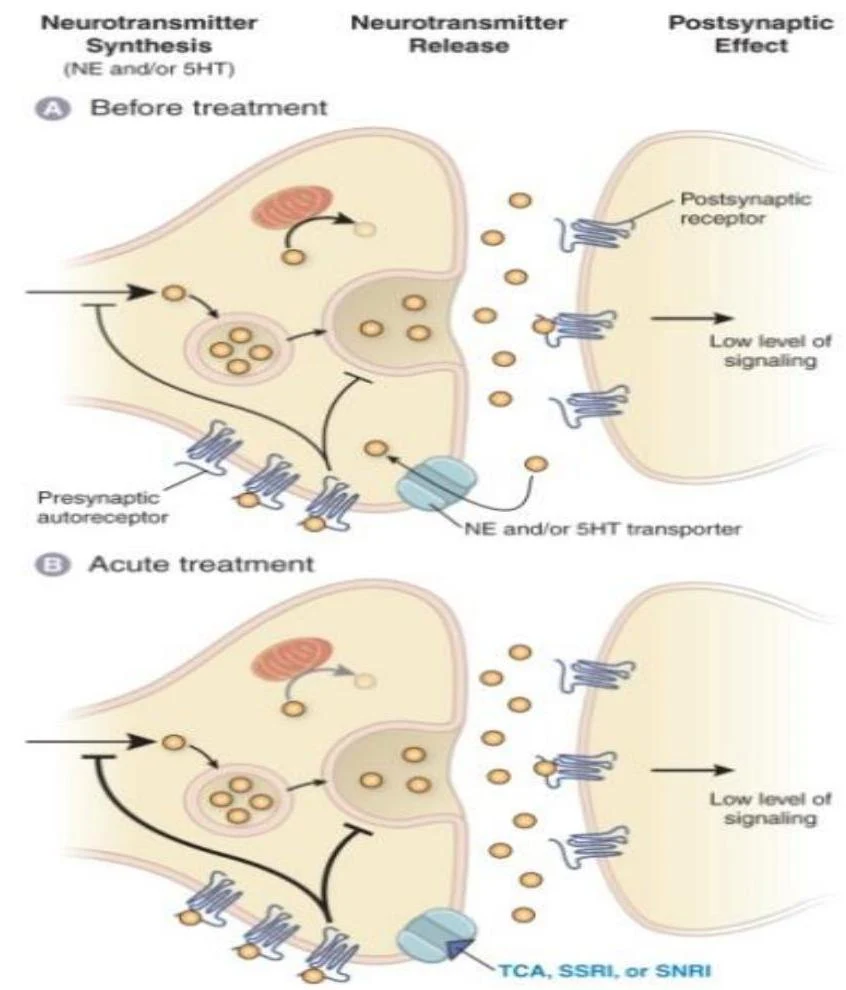
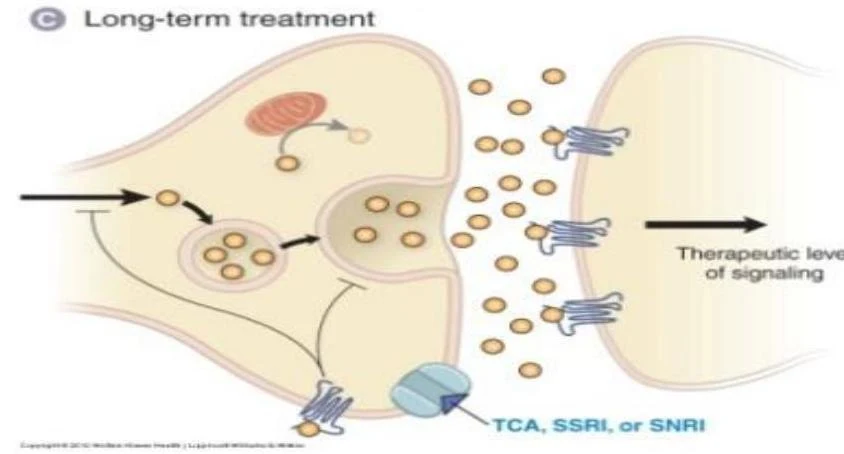
SSRIs are the primary treatment for major depression and most anxiety disorders. They work by selectively blocking the serotonin transporter (SERT), preventing the reuptake of 5-HT into the presynaptic neuron and thereby increasing its availability in the synaptic cleft.
- Sample Drugs: Fluoxetine (Prozac), Sertraline, Citalopram, Escitalopram, and Paroxetine.
- Adverse Effects: Common issues include gastrointestinal (GI) disturbances, sexual dysfunction, and CNS effects like insomnia or tremors.
- Warning: Overdose can lead to serotonin syndrome, and sudden discontinuation may cause discontinuation syndrome.
Serotonin-Norepinephrine Reuptake Inhibitors (SNRIs)
SNRIs provide a dual mechanism by inhibiting both the serotonin transporter (SERT) and the norepinephrine transporter (NET).
- Sample Drugs: Venlafaxine, Desvenlafaxine, and Duloxetine.
- Clinical Use: These are particularly useful for general anxiety, chronic pain disorders, and fibromyalgia.
- Adverse Effects: They may cause increased blood pressure, increased heart rate, and CNS stimulation.
Tricyclic Antidepressants (TCAs)
TCAs are older antidepressants that block the reuptake of both 5-HT and NE. Their chemical structure determines their preference: TCAs with tertiary amines primarily affect the 5-HT system, while those with secondary amines preferentially affect the NE system.
- Sample Drugs: Imipramine, Amitriptyline, Clomipramine, and Nortriptyline.
- Adverse Effects: TCAs have a broad side-effect profile due to their lack of selectivity, including:
- Anticholinergic effects: Dry mouth, constipation, and urinary retention.
- Alpha-adrenergic blockade: Postural hypotension and drowsiness.
- Toxicity: Overdose is highly dangerous and can result in lethal cardiac arrhythmias, seizures, and death.
Monoamine Oxidase Inhibitors (MAOIs)
MAOIs work by inhibiting the enzyme monoamine oxidase (MAO), which is responsible for breaking down 5-HT, NE, and dopamine (DA) in the presynaptic cytoplasm. By blocking this degradation, more neurotransmitters are available for storage in vesicles and subsequent release.
- Sample Drugs: Phenelzine, Isocarboxazid (irreversible); Selegiline, Moclobemide (reversible).
- Drug Interactions and Diet: MAOIs require strict dietary restrictions. Patients must avoid foods high in tyramine to prevent dangerous interactions.
Norepinephrine Reuptake Inhibitors (NRIs)
NRIs selectively block the uptake of norepinephrine.
- Sample Drugs: Atomoxetine, Reboxetine, and Maprotiline.
- Clinical Use: Often used in the treatment of Attention-Deficit Hyperactivity Disorder (ADHD).
Serotonin Receptor Agonists
Beyond reuptake inhibition, some drugs act directly on serotonin receptors.
- Buspirone is a selective 5-HT1A agonist used for anxiety.
- Triptans (e.g., Sumatriptan, Rizatriptan) are serotonin agonists used specifically for the treatment of migraine headaches.
Mood Stabilizers and Psychomotor Stimulants
For patients experiencing the alternating cycles of mania and depression characteristic of bipolar disorder, mood stabilizers are the first-line treatment.
Lithium
Lithium is the gold standard for treating mania and bipolar disorder. Its mechanism involves decreasing nerve tissue excitability by blocking the phosphatidylinositol signaling cascade in the brain.
- Pharmacokinetics: Lithium has a narrow therapeutic index (TI), meaning the difference between a therapeutic dose and a toxic dose is small. Blood levels must be monitored regularly.
- Adverse Effects: Common side effects include nausea, tremors, and thyroid disturbances. Toxicity can lead to cardiac arrhythmias or nephritis.
Anticonvulsants as Mood Stabilizers
Certain drugs traditionally used for epilepsy also serve as effective mood stabilizers:
- Valproic Acid: Inhibits low-threshold T-type calcium channels.
- Carbamazepine: Inhibits electrical neurotransmission by blocking voltage-gated sodium channels.
Psychomotor Stimulants
Drugs like Amphetamines are used to increase CNS activity by stimulating the release or inhibiting the reuptake of NE and dopamine. They are clinically indicated for narcolepsy and ADHD. However, they carry a high risk of tolerance, dependence, and potential for psychosis in toxic doses.
💡 Exam Tip: Differentiating Antidepressants
When asked to distinguish between drug classes, remember the "Selectivity Hierarchy":
- SSRIs: Only 5-HT (Serotonin).
- SNRIs: 5-HT + NE (Norepinephrine).
- TCAs: 5-HT + NE + significant anticholinergic/alpha-blocking side effects.
- MAOIs: Increases cytoplasmic levels of all monoamines by inhibiting degradation.