Pharmacology of Anti-inflammatory and Antigout Agents
An overview of the pharmacology of anti-inflammatory drugs (NSAIDs, salicylates, acetaminophen) and antigout medications (colchicine, allopurinol), including their mechanisms of action, therapeutic uses, adverse effects, and nursing considerations.
Understanding the pharmacology of inflammation and gout requires a clear distinction between treating the symptoms of an acute flare and managing the underlying physiological causes. For nurses, the priority lies in differentiating between medications that provide immediate relief (analgesics and antipyretics) and those that target the inflammatory cascade or metabolic imbalances (NSAIDs and antigout agents).
The Inflammatory Cascade: COX-1 and COX-2
To understand how these drugs work, we must first look at the role of prostaglandins in the body. Prostaglandins are substances produced during the inflammatory process that contribute to pain, fever, and swelling. The synthesis of these prostaglandins is driven by enzymes known as cyclooxygenase, or COX enzymes.
There are two primary types of COX enzymes:
COX-1: This is a "housekeeping" enzyme that is always present in the body. It helps maintain normal functions in the gastric mucosa (protecting the stomach lining), kidneys, and platelets.
COX-2: This enzyme is "induced" by inflammatory stimuli. It is primarily found at sites of injury, in inflamed tissues, and in the hypothalamus, where it contributes to fever.
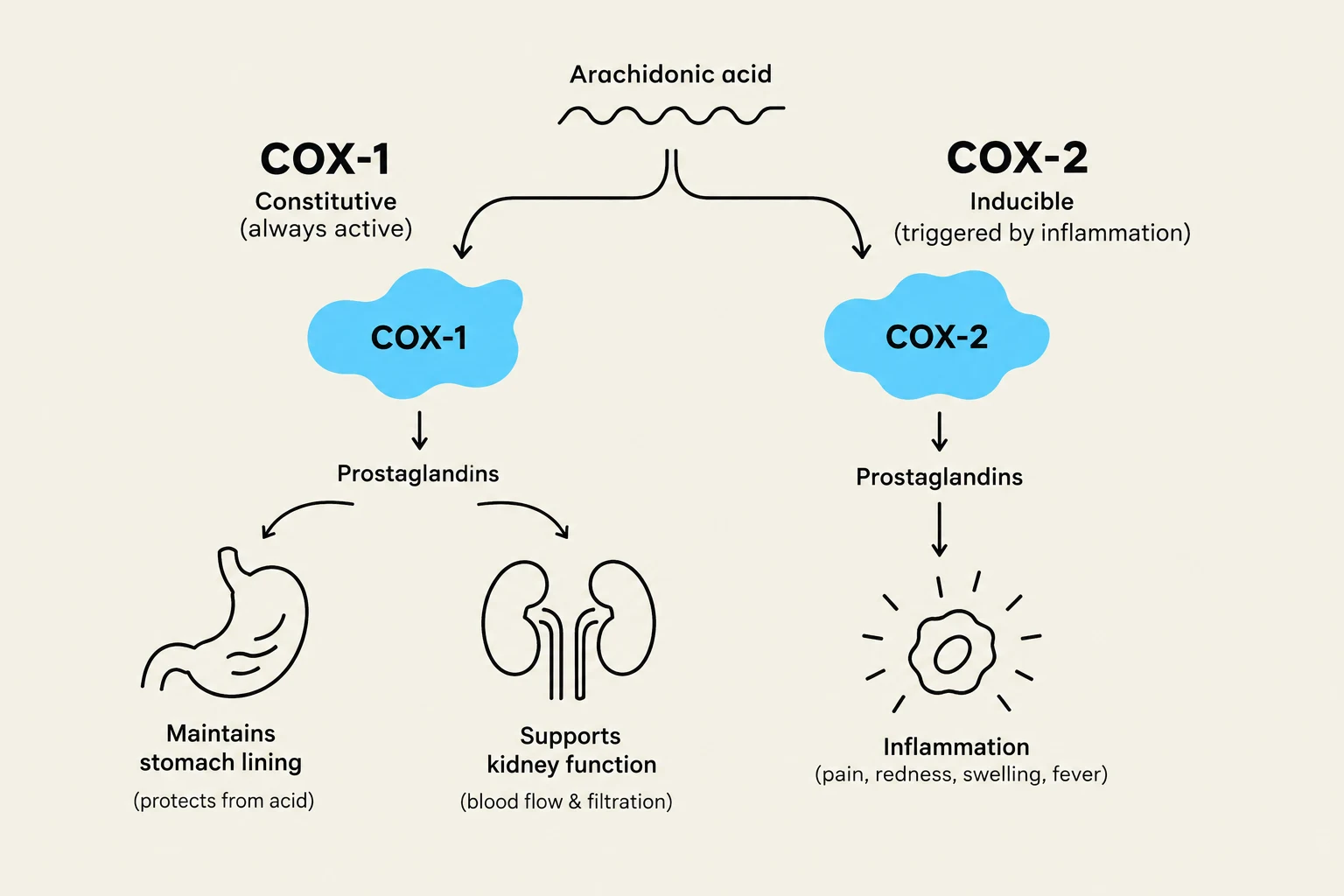
This diagram illustrates the roles of COX-1 and COX-2 enzymes in the body. COX-1, which is always active, helps maintain the stomach lining and supports kidney function. COX-2, triggered by inflammation, leads to inflammatory responses.
Salicylates and NSAIDs
Salicylates (Aspirin)
Aspirin (acetylsalicylic acid) is a classic salicylate that acts as an analgesic, antipyretic, and anti-inflammatory agent. A unique characteristic of aspirin is that it inhibits COX enzymes irreversibly. This means its effect on platelets—inhibiting their ability to aggregate—lasts for the entire life of the platelet, which is approximately seven days.
Clinical Alert: Reye’s Syndrome
Never administer aspirin to children or adolescents with viral infections, as this carries a risk of Reye’s syndrome, a rare but serious condition.
Non-Steroidal Anti-inflammatory Drugs (NSAIDs)
NSAIDs like Ibuprofen, Naproxen, and Ketorolac work by inhibiting prostaglandin synthesis. They are categorized based on their selectivity:
Nonselective NSAIDs: These inhibit both COX-1 and COX-2. While effective at reducing pain and swelling, inhibiting COX-1 increases the risk of gastric ulcers, GI bleeding, and renal injury.
Selective NSAIDs (Celecoxib): These target only the COX-2 enzyme. While they offer a lower risk of GI bleeding, they carry an increased risk of cardiovascular events, such as myocardial infarction (MI) or stroke, due to blood clotting implications.
Ketorolac (Toradol) is noted as the strongest NSAID and is often used as an opiate alternative for short-term postoperative pain management (less than 5 days).
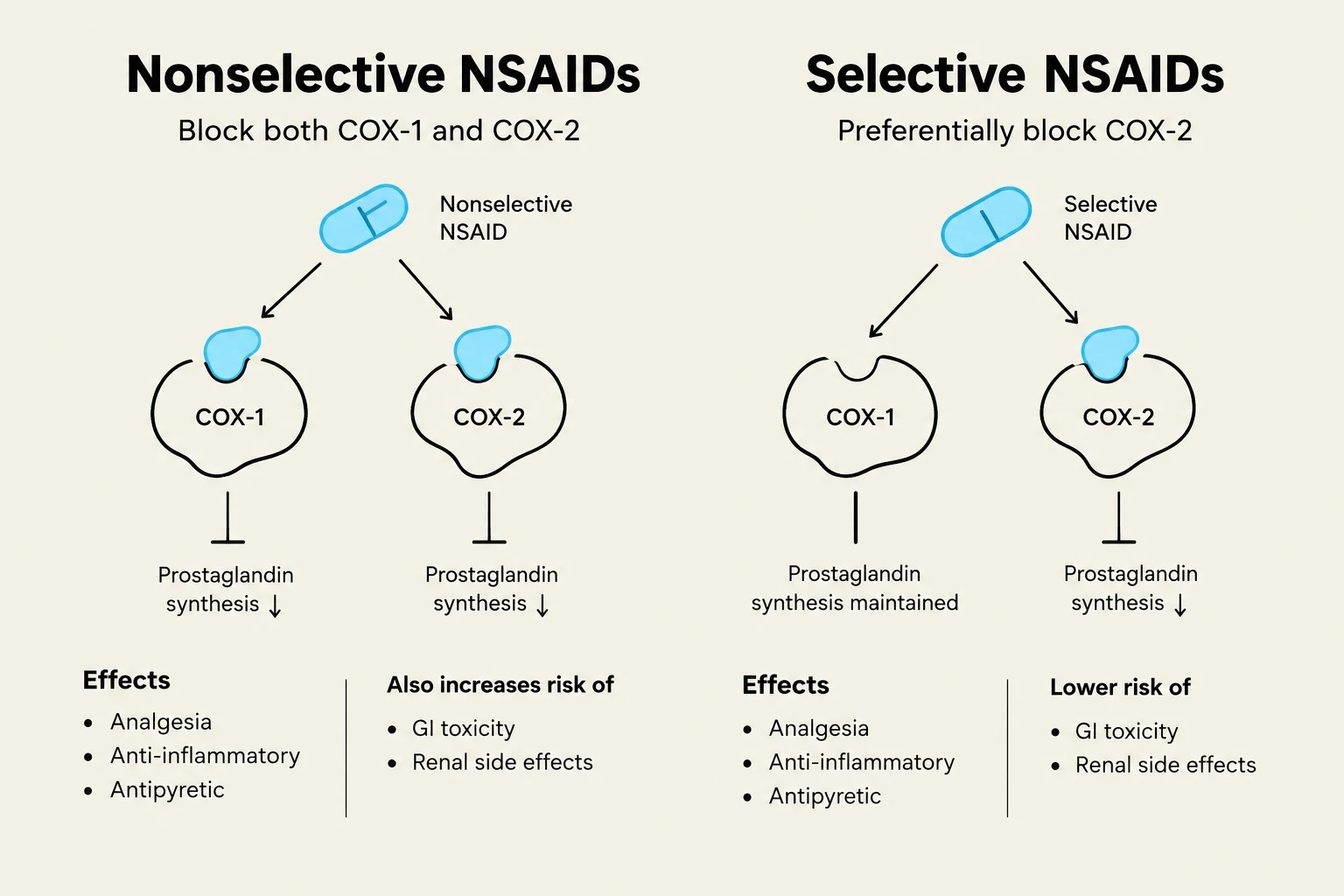
Diagram illustrating the mechanisms of action and effects of nonselective and selective NSAIDs on COX-1 and COX-2 enzymes, and their resulting effects on prostaglandin synthesis and associated risks.
Antipyretics: Acetaminophen
Unlike NSAIDs, Acetaminophen (Tylenol) is not considered a primary anti-inflammatory agent because it does not work significantly at peripheral sites. Instead, it acts centrally within the brain, specifically inhibiting COX enzyme pathways in the hypothalamus to reduce fever and relieve pain.
While it is generally easier on the stomach than NSAIDs, the primary toxicity concern for acetaminophen is the liver.
Nursing Tip: Acetaminophen Dosing
The maximum daily dose for a healthy adult is typically 4g. However, for patients who consume alcohol regularly or have hepatic impairment, this should be limited to 3g or less to prevent hepatotoxicity. The antidote for an acetaminophen overdose is Acetylcysteine IV.
Gout Management: Acute vs. Chronic
Gout is a clinical condition characterized by hyperuricemia—excessive levels of uric acid in the blood. This leads to the formation of uric acid crystals in the joints (often the big toe) and kidneys, triggering a severe inflammatory response.
Acute Attack Management (The Flare)
During an acute flare, the goal is to stop the immediate pain and inflammation.
Colchicine: This agent blocks neutrophil action at the joint, thereby inhibiting the inflammatory response triggered by the crystals. It is used for acute management and does not treat the underlying cause or remove the crystals. It is often administered as a "loading dose" followed by smaller subsequent doses.
Chronic Management (Prevention)
To prevent future flares, the underlying hyperuricemia must be addressed.
Allopurinol: This medication inhibits the enzyme xanthine oxidase, which is necessary for converting purines into uric acid in the liver. By reducing the production of uric acid, it prevents the formation of new crystals.
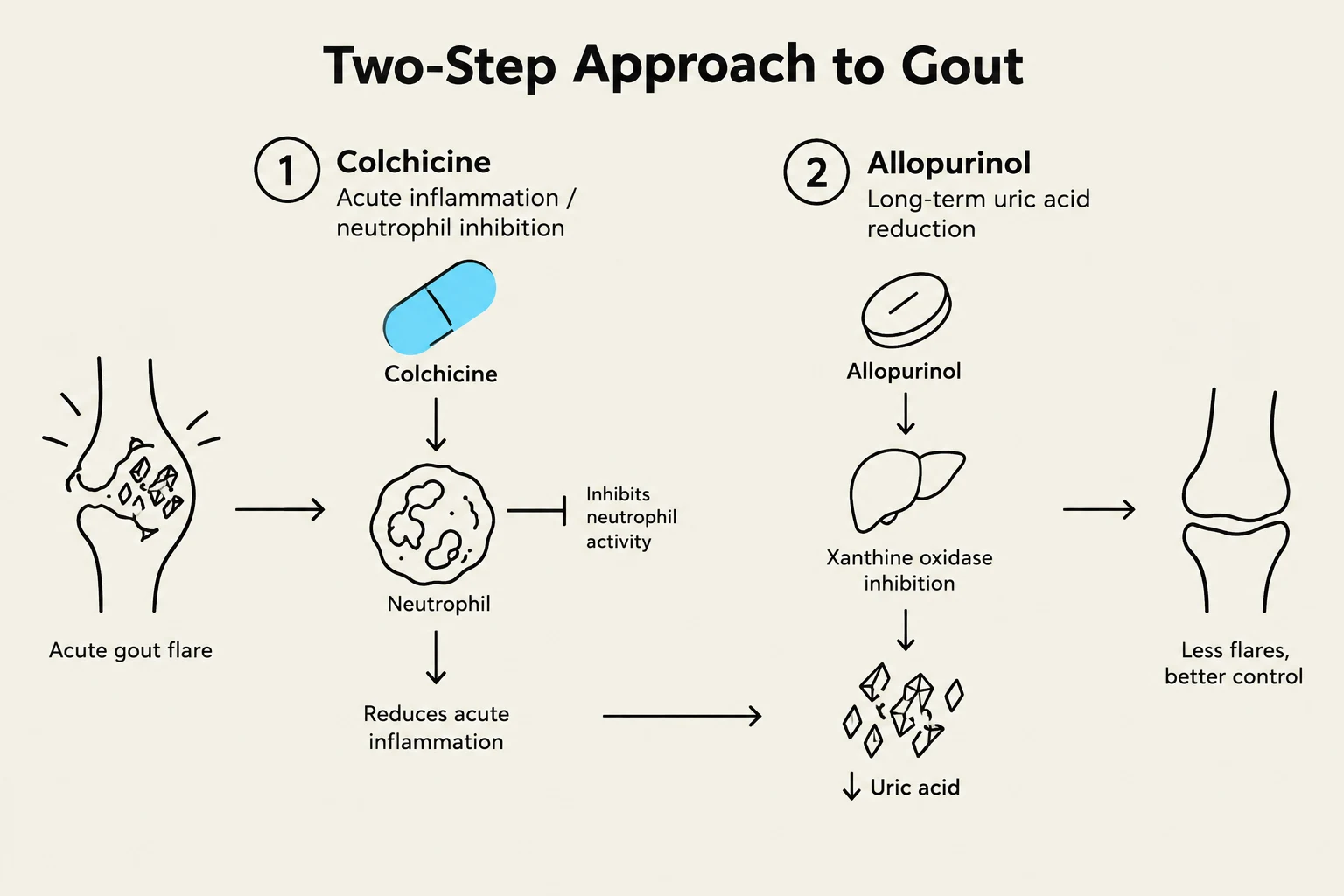
This diagram illustrates a two-step approach to managing gout, involving Colchicine to reduce acute inflammation and Allopurinol to lower uric acid levels.
Nursing Responsibilities and Assessments
When administering these medications, nurses must perform comprehensive assessments to ensure safety and efficacy.
Key Nursing Assessments
Pain and Fever: Monitor the effectiveness of analgesics and antipyretics.
Renal Function: Both NSAIDs and Colchicine can cause renal impairment or failure; monitor creatinine and urine output.
Gastrointestinal Integrity: Monitor for signs of GI bleeding (e.g., black/tarry stools, abdominal pain, or decreased Hgb/Hct) especially with Aspirin and NSAIDs.
Hepatic Function: Monitor ALT/AST levels, particularly for Acetaminophen and Allopurinol.
Hematologic Trends: Monitor CBC and platelet counts, especially when using Aspirin or Colchicine.
Hypersensitivity: Watch for rashes or skin reactions in patients taking Allopurinol; the medication must be stopped immediately if a rash develops.
Patient Education
Diet and Lifestyle: For gout patients, advise limiting high-purine foods and alcohol intake, and emphasize the importance of staying hydrated.
Administration: Advise patients to take NSAIDs, Aspirin, and Allopurinol with food to minimize GI upset.
Compliance: Emphasize that Allopurinol is a chronic medication that must not be skipped, even if the patient feels well.
Safety: Instruct patients to report any signs of bleeding or unusual skin changes immediately.
Keep reading for free.
Create an account to finish this reading and make it part of your study routine.