


The autonomic nervous system (ANS) is the body's primary mechanism for maintaining homeostasis and regulating involuntary functions such as heart rate, digestion, and respiratory efficiency. Within this system, the Sympathetic Nervous System (SNS) acts as the "fight or flight" driver, preparing the body for intense physical activity or stress. To understand how drugs can manipulate these vital processes, we must first understand the chemical messengers and the specific receptors that receive them.
The Mechanism of Adrenergic Transmission
Adrenergic transmission is the process by which the sympathetic nervous system communicates with target organs. This process occurs at the sympathetic neuro-effector junction, a specialized synapse where nerve endings meet target tissues. The primary neurotransmitter responsible for this communication is Noradrenaline (NA), also known as Norepinephrine.
The transmission follows a highly regulated four-step sequence:
- Synthesis: The production of noradrenaline within the nerve terminal.
- Release: The movement of noradrenaline from the nerve terminal into the synaptic cleft.
- Interaction: The binding of noradrenaline to specific adrenoceptors on the post-synaptic membrane.
- Removal: The breakdown or removal of noradrenaline from the synapse to terminate the signal.
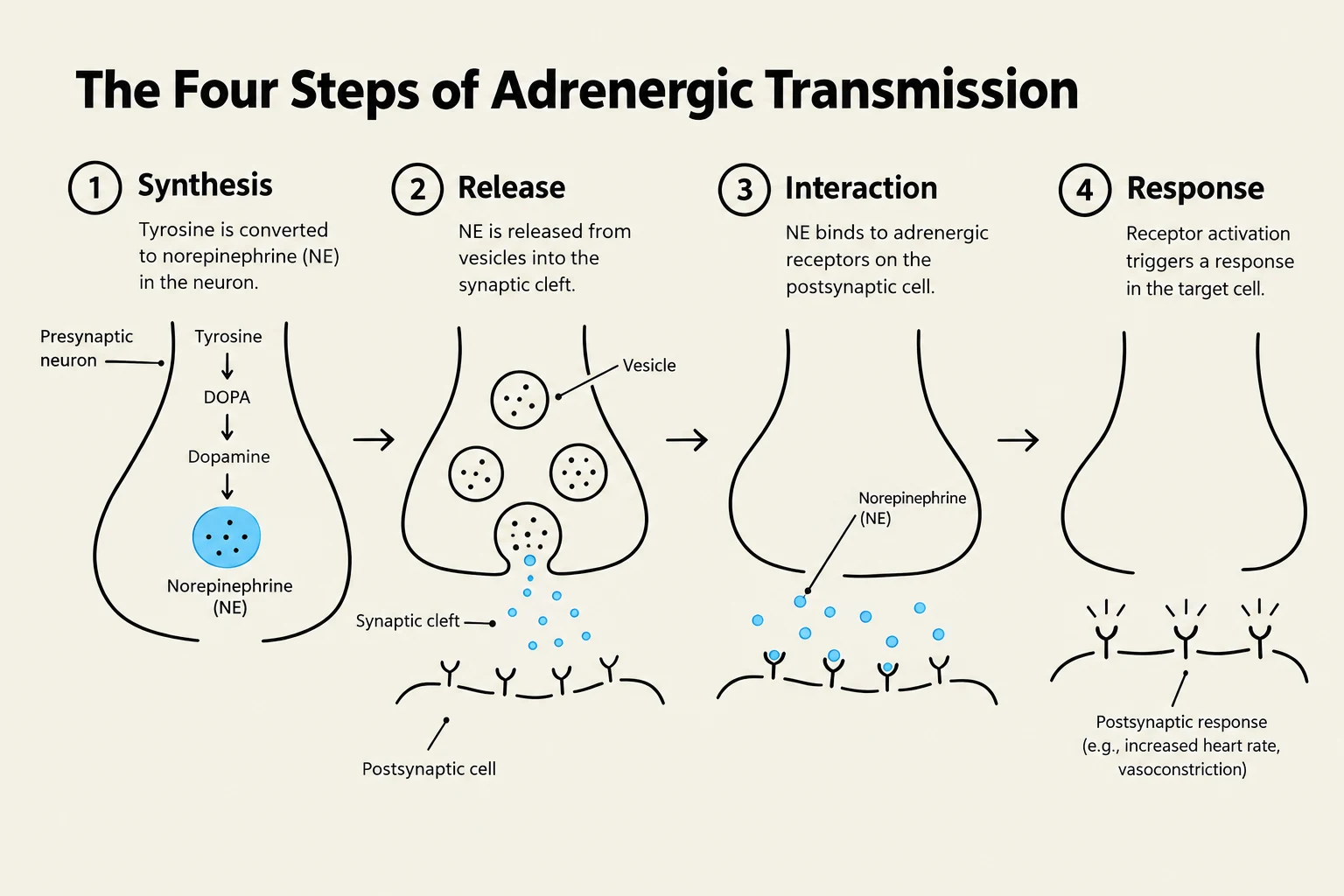
Exam Tip: Remember that the physiological response is not just about the presence of noradrenaline, but about where it binds. The specific receptor subtype determines whether the result is contraction, relaxation, or secretion.
Adrenoceptor Subtypes and Affinities
Adrenoceptors are categorized into two main families: Alpha () and Beta () receptors. These receptors are further divided into subtypes (), which allow the SNS to produce diverse and sometimes even opposing effects in different organs.

Keep reading for free.
Create an account to finish this reading and make it part of your study routine.
Continue reading freeAlready have an account? Log in
Updated