


In the world of over-the-counter (OTC) medications, few drugs are as ubiquitous as Acetylsalicylic Acid (ASA) and Acetaminophen. While both are frequently used to manage pain and fever, they belong to different pharmacological classes and possess distinct mechanisms of action, safety profiles, and toxicological risks. Understanding the nuance between these two substances is critical for both clinical practice and forensic toxicology.
Acetylsalicylic Acid (ASA) and the NSAID Class
Acetylsalicylic Acid, commonly known as Aspirin®, is a prominent member of the Non-Steroidal Anti-Inflammatory Drugs (NSAIDs) class. Unlike many other analgesics, ASA is characterized by its ability to exert significant anti-inflammatory effects.
The therapeutic utility of ASA is broad, encompassing three primary effects:
- Analgesic effect: Reduction of pain.
- Anti-pyretic effect: Reduction of fever.
- Anti-inflammatory effect: Reduction of swelling and inflammation, making it useful for conditions like rheumatoid arthritis.
Furthermore, in low, chronic daily doses (approximately 81 mg), ASA acts as an anti-coagulant. By acting as a "blood thinner," it helps prevent strokes in select cardiac patients.
Mechanism of Action: The Role of Prostaglandins
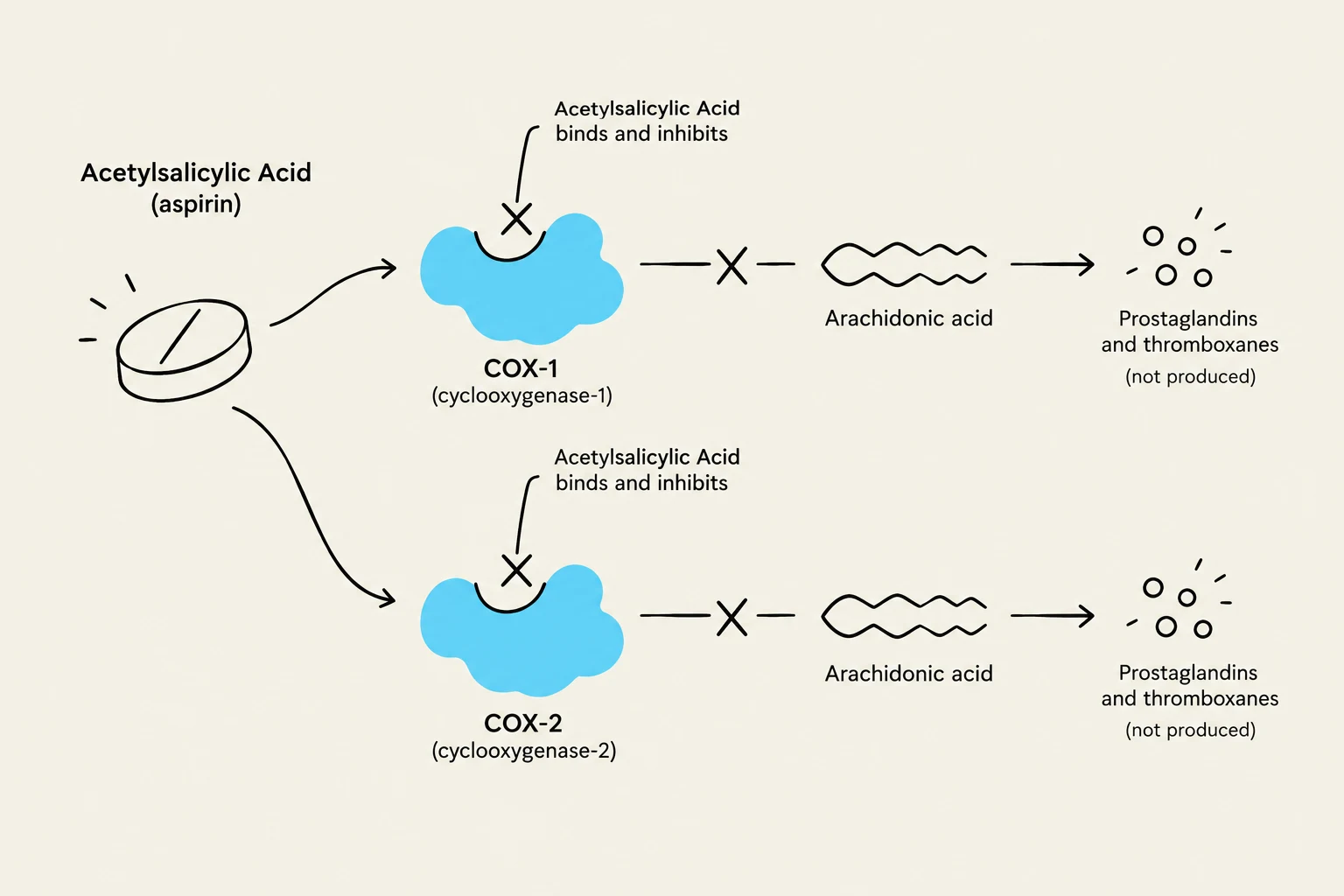
To understand how ASA works, one must understand the role of prostaglandins. Prostaglandins are hormone-like chemicals released by the body in response to injury. These chemicals trigger the inflammatory response, leading to swelling, fever, and increased sensitivity to pain.
ASA works by inhibiting the enzymes responsible for synthesizing these prostaglandins: Cyclooxygenase-1 (COX-1) and Cyclooxygenase-2 (COX-2).
Exam Tip: Distinguish between the therapeutic and adverse effects of COX inhibition. While inhibiting COX-2 helps reduce inflammation, inhibiting COX-1 can lead to adverse gastrointestinal effects because COX-1 is involved in producing the protective mucus lining of the stomach.
Keep reading for free.
Create an account to finish this reading and make it part of your study routine.
Continue reading freeAlready have an account? Log in
Updated