Pharmacology Essentials: Mechanisms, Indications, and Toxicities
A structured overview of critical pharmacological classes, including cytotoxic agents, antimetabolites, anti-inflammatory drugs, and antihistamines, detailing their mechanisms of action, clinical indications, and potential toxicities for healthcare students.
Pharmacology is a vast field that requires understanding not just what a drug does, but how it interacts with cellular machinery to produce a therapeutic effect. For healthcare students, the key to mastering this subject is linking a drug's mechanism of action (MOA) to its clinical indication and its potential toxicities. This article provides a structured overview of several critical pharmacological classes, ranging from potent cytotoxic agents used in oncology to common anti-inflammatory medications.
Cytotoxic Agents and Antimetabolites
In oncology, drugs are classified by how they interfere with the cell cycle. Because cancer cells divide rapidly, they are particularly susceptible to agents that disrupt DNA replication or cell division.
Alkylating Agents and Antimetabolites
Alkylating agents, such as Cyclophosphamide, are considered cell cycle non-specific. They work by cross-linking and damaging DNA, which prevents the replication of malignant cells or rapidly dividing immune cells. A major clinical concern with cyclophosphamide is myelosuppression (a decrease in bone marrow activity) and the risk of hemorrhagic cystitis.
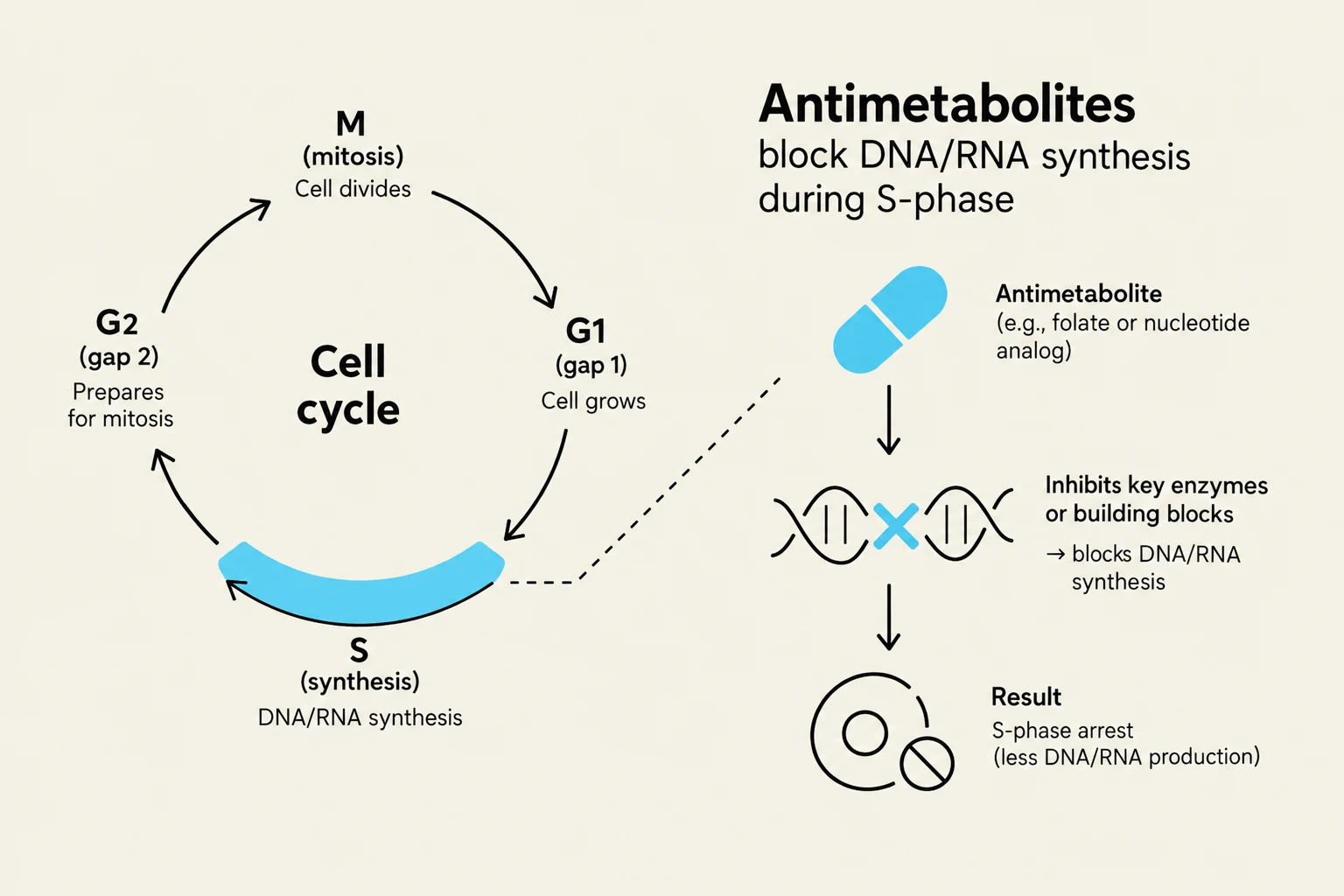
Antimetabolites (e.g., Methotrexate, 5-fluorouracil) are S-phase specific. They act as "imposters," blocking the substances required for DNA and RNA synthesis. Because they target the synthesis phase, they are highly effective against rapidly dividing cells but can cause significant side effects like mucositis and GI toxicity.
This diagram illustrates the cell cycle, including the M, G1, S, and G2 phases, and explains how antimetabolites inhibit DNA/RNA synthesis during the S-phase, leading to S-phase arrest.
Antitumour Antibiotics and Mitotic Inhibitors
Antitumour antibiotics like Doxorubicin disrupt DNA function directly. While highly effective, they carry a significant risk of cardiotoxicity, necessitating ongoing cardiac assessment for patients on this regimen.
Mitotic inhibitors (e.g., Vincristine, Paclitaxel) target the structural components of the cell. They disrupt microtubule function, which is essential for the process of mitosis. A hallmark side effect of these agents is peripheral neuropathy.
Exam Tip: When distinguishing between these classes, remember: Alkylating agents damage the DNA structure itself, Antimetabolites block the "building blocks" of DNA, and Mitotic inhibitors break the "machinery" (microtubules) used to move DNA during division.
Anti-inflammatory and Immunomodulatory Agents
Managing inflammation involves targeting different stages of the biochemical cascade, from the initial release of arachidonic acid to the production of cytokines.
NSAIDs and Acetaminophen
Non-steroidal anti-inflammatory drugs (NSAIDs) primarily target the cyclooxygenase (COX) enzymes to inhibit prostaglandin production.
Non-selective COX inhibitors: Aspirin and Ibuprofen block both COX-1 and COX-2. Aspirin is unique because its anti-platelet effect is permanent, making it useful for long-term prevention of heart attacks and strokes.
Selective COX-2 inhibitors: Celecoxib targets only the COX-2 enzyme, which reduces the risk of gastrointestinal (GI) issues and bleeding. However, it carries a "black box" warning due to an increased risk of cardiovascular events caused by a pro-clotting state in the blood.
Acetaminophen (Tylenol) is often used for pain and fever, but its mechanism is distinct. It blocks COX-1 and COX-2 primarily within the Central Nervous System (CNS). Unlike NSAIDs, it lacks significant peripheral anti-inflammatory effects.
Warning: Acetaminophen overdose is a medical emergency due to the risk of severe hepatotoxicity (liver damage). The specific antidote is N-acetylcysteine.
Corticosteroids and Immunosuppressants
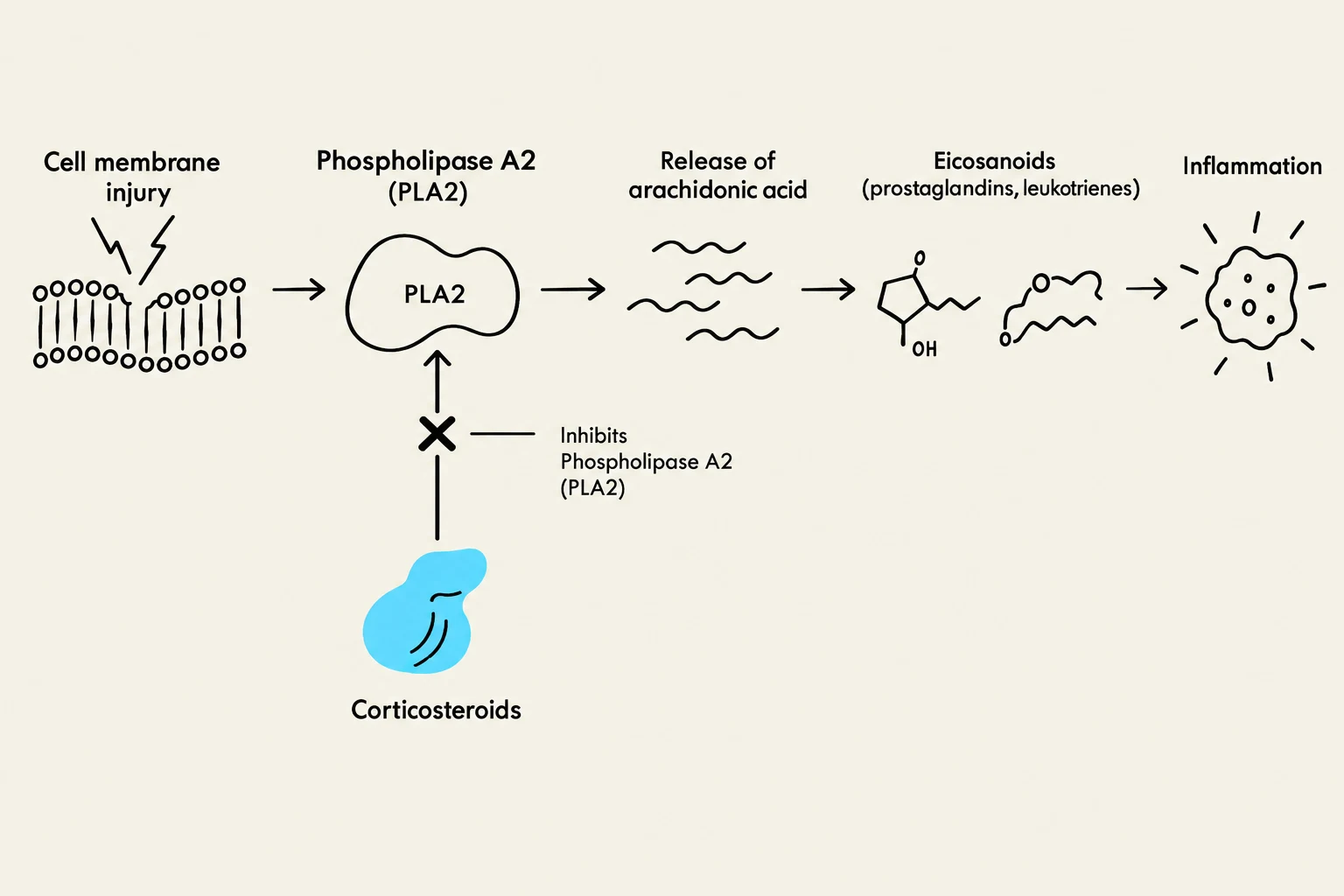
Corticosteroids (e.g., Prednisone, Dexamethasone, Hydrocortisone) are broad-spectrum anti-inflammatory agents. They work by altering gene transcription: they "turn off" pro-inflammatory genes (reducing cytokines and chemokines) and "turn on" anti-inflammatory genes. This process inhibits Phospholipase A2, preventing the release of arachidonic acid. Long-term use can lead to side effects such as Cushing's Syndrome.
For more targeted immune suppression, clinicians use:
Calcineurin inhibitors: Cyclosporine and Tacrolimus inhibit calcineurin, which leads to decreased production of IL-2, thereby reducing T-cell activation.
Monoclonal Antibodies (Targeted Biologics): These are highly specific. Infliximab and Adalimumab neutralize TNF-α to reduce inflammation, while Rituximab binds to CD20 on B cells to deplete them.
DMARDs: Sulfasalazine acts as a prodrug that degrades into 5-ASA (Mesalamine) to reduce local inflammation, particularly in the bowel.
This diagram illustrates the biochemical pathway leading to inflammation, initiated by cell membrane injury and the release of arachidonic acid. It also shows how corticosteroids inhibit Phospholipase A2 (PLA2), a key enzyme in this process.
Other Essential Agents
Antihistamines
Antihistamines block the H1 receptor to treat allergic reactions. They are categorized by their ability to cross the blood-brain barrier (BBB):
2nd Generation (e.g., Loratadine, Cetirizine): Has less penetration of the BBB, resulting in much less sedation.
Immunostimulants and Adrenergic Agonists
While immunosuppressants dampen the immune system, immunostimulants enhance it. Filgrastim is a colony-stimulating factor that stimulates the bone marrow to produce white blood cells (WBCs) to combat neutropenia. Interferons enhance the body's natural antiviral and antitumour responses.
Finally, Adrenergic Agonists like Epinephrine are critical in emergency settings like anaphylaxis. Epinephrine activates various α and β receptors to produce systemic effects:
\alpha_1 &\rightarrow \text{Vasoconstriction} \\
\beta_1 &\rightarrow \text{Increased Heart Rate} \\
\beta_2 &\rightarrow \text{Bronchodilation}
\end{aligned}$$

$$$
$$$
Keep reading for free.
Create an account to finish this reading and make it part of your study routine.