An overview of the pharmacological management of Type 2 Diabetes Mellitus, including various drug classes, their mechanisms of action, benefits, side effects, and considerations for managing comorbidities.
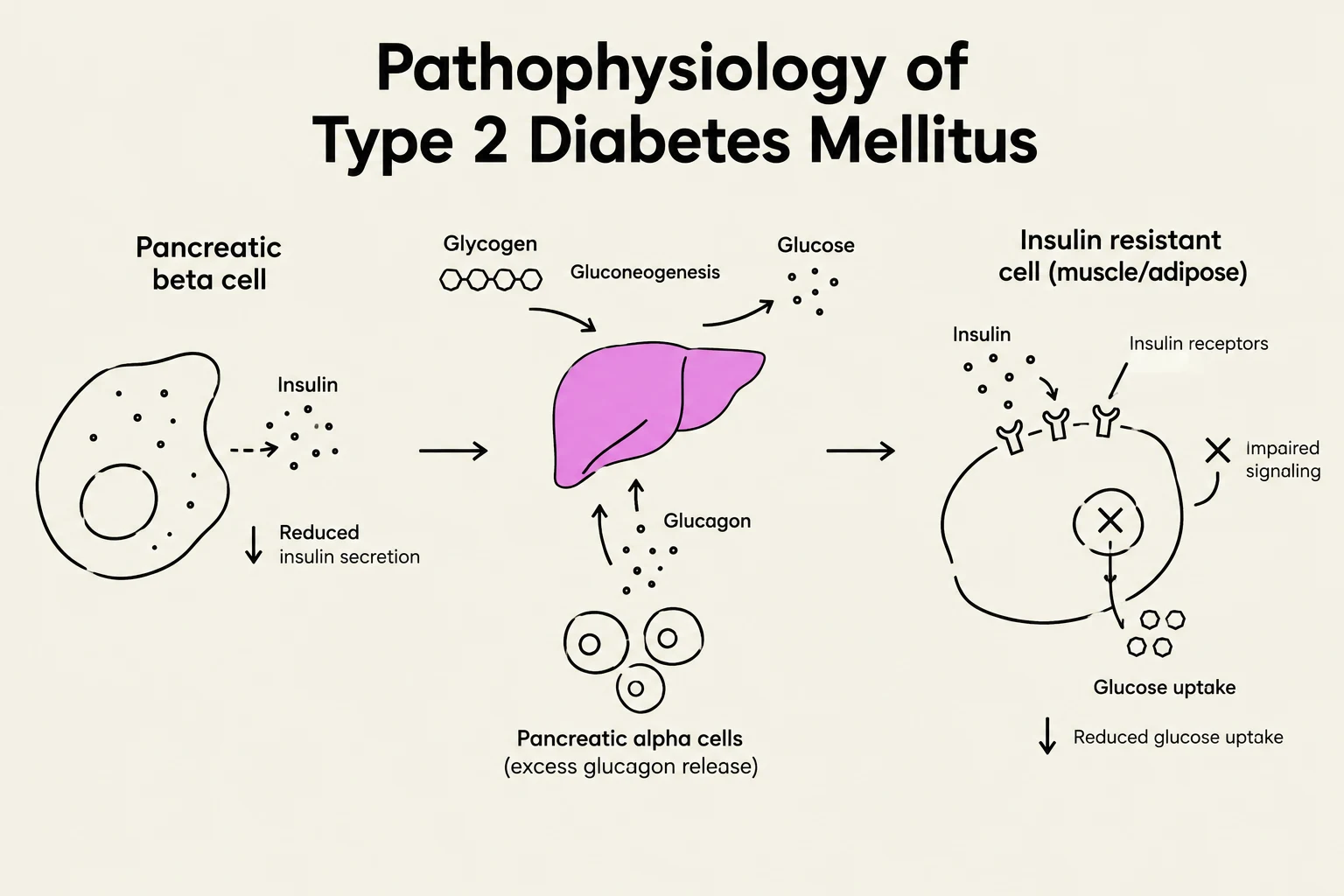
Type 2 Diabetes Mellitus (T2DM) is a progressive metabolic disorder characterized by a combination of decreased insulin production by pancreatic beta cells and decreased insulin sensitivity (insulin resistance). This disruption in homeostasis often involves alpha-cells producing excess glucagon and the liver increasing the breakdown of glycogen into glucose. Effective management requires a multi-faceted approach aimed at reducing the risk of microvascular complications (retinopathy, nephropathy, neuropathy) and macrovascular complications (coronary artery disease, stroke).
Diagram illustrating the pathophysiology of Type 2 Diabetes Mellitus, showing reduced insulin secretion from pancreatic beta cells, impaired insulin signaling in insulin-resistant cells, and the role of the liver and pancreatic alpha cells.
First-Line Therapy: Biguanides
Metformin remains the first-line oral therapy for both Type 2 diabetes and pre-diabetes. Its mechanism of action involves reducing hepatic gluconeogenesis, increasing glucose uptake at target cells, and decreasing intestinal absorption of glucose.
Benefits: It is weight-neutral and carries a low risk of hypoglycemia.
Side Effects: Gastrointestinal issues like nausea, vomiting, and diarrhea are very common (affecting over 50% of patients). Long-term use may lead to Vitamin B12 deficiency.
Availability: Available in Immediate Release (IR) and Extended Release (ER) formulations.
Insulin Secretagogues
These agents work by stimulating the pancreatic beta cells to secrete more insulin.
Sulfonylureas
Examples include Gliclazide, Glimepiride, and Glyburide. They increase insulin sensitivity and decrease hepatic glucose production.
Risks: They carry a significant risk of hypoglycemia and can cause weight gain due to the anabolic nature of insulin.
Clinical Note:Glyburide has been noted in studies to have the highest risk of hypoglycemia among sulfonylureas. Additionally, beta-blockers can mask the symptoms of hypoglycemia, which is a critical safety consideration.
Meglitinides
Repaglinide is the primary example. Unlike sulfonylureas, these provide a rapid, short-lived insulin release and are taken approximately 30 minutes before meals. This makes them suitable for patients with sporadic diets, but if a meal is delayed, the risk of hypoglycemia increases.
Insulin Sensitizers and Absorption Inhibitors
Thiazolidinediones (TZDs)
Agents like Pioglitazone and Rosiglitazone improve peripheral insulin sensitivity via the PPARγ enzyme.
Side Effects: They are associated with weight gain and fluid retention.
Contraindications: Due to fluid retention, they are contraindicated in patients with heart failure. They also increase the risk of fractures and bladder cancer.
Alpha-glucosidase Inhibitors
Acarbose blocks the intestinal absorption of carbohydrates by preventing the breakdown of complex carbs into glucose. While weight-neutral, it frequently causes gastrointestinal side effects such as flatulence, abdominal pain, and diarrhea.
Incretin-Based Therapies
Incretins (such as GLP-1 and GIP) are hormones that increase insulin secretion and decrease glucagon secretion in a glucose-dependent manner.
DPP-4 Inhibitors
Drugs like Sitagliptin (Januvia®), Saxagliptin (Onglyza®), Linagliptin (Trajenta®), and Alogliptin (Nesina®) prevent the rapid breakdown of endogenous incretins.
Profile: They are generally weight-neutral and have a low risk of hypoglycemia.
Specifics: Linagliptin is often the drug of choice for patients with renal impairment. Saxagliptin should be avoided in patients with heart failure.
GLP-1 Receptor Agonists (GLP-1RA)
These agents (e.g., Liraglutide, Dulaglutide, Semaglutide) mimic incretin hormones to stimulate insulin release, slow gastric emptying, and decrease appetite.
Benefits: They are highly effective for weight loss and provide significant cardiovascular (CVD) risk reduction.
Side Effects: Common GI issues include nausea, vomiting, and diarrhea.
Note: They are contraindicated in patients with a personal or family history of Medullary Thyroid cancer.
Dual Incretin Mimetics (GLP-1/GIP)
Tirzepatide (Mounjaro®/Zepbound®) targets both GIP and GLP-1 receptors. This dual action results in even more significant weight loss (up to 21% after 18 months) compared to single-pathway agonists.
SGLT2 Inhibitors
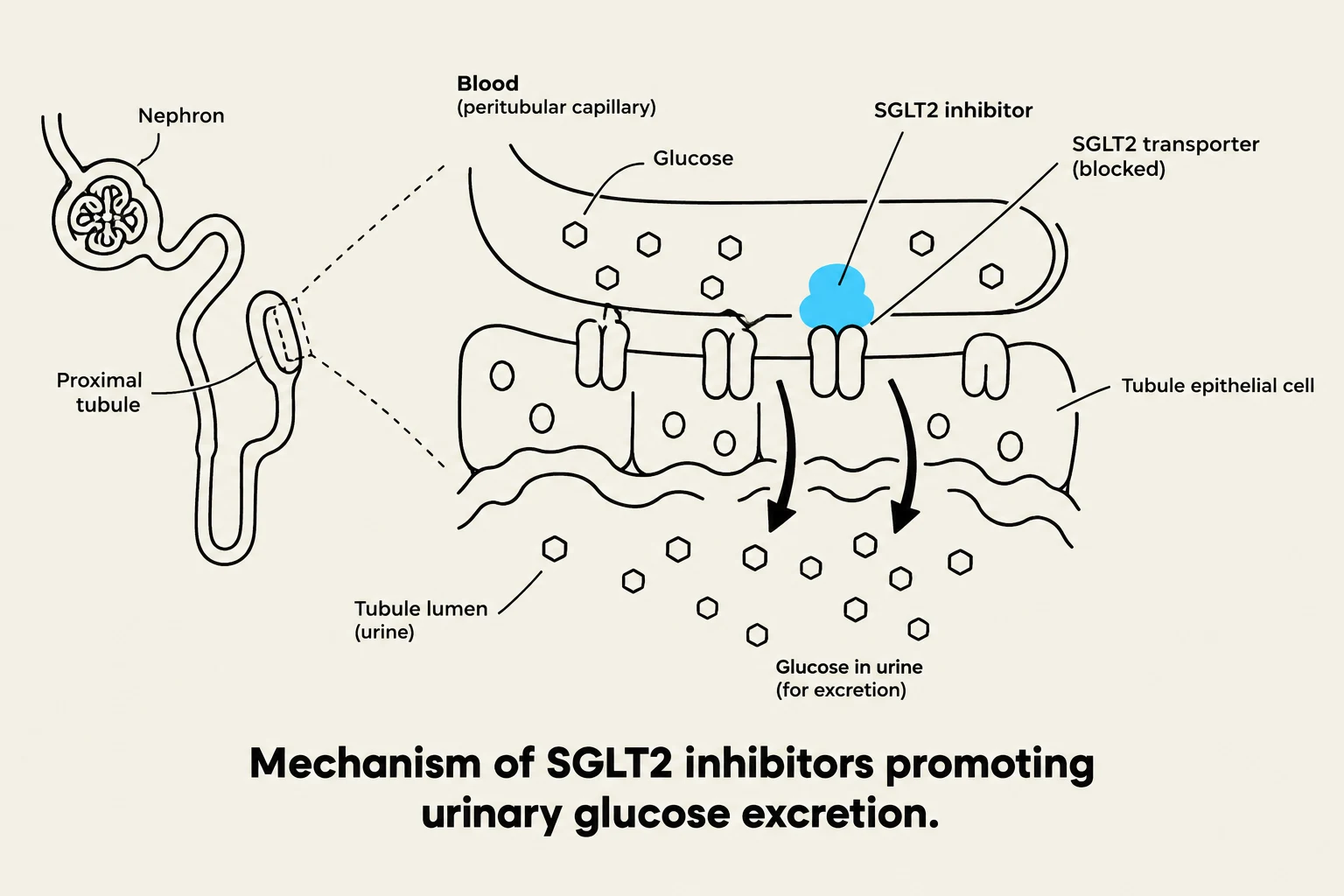
Diagram illustrating the mechanism of SGLT2 inhibitors in promoting urinary glucose excretion by blocking glucose reabsorption in the proximal tubule of the nephron.SGLT2 inhibitors (e.g., Empagliflozin, Dapagliflozin, Canagliflozin) work in the kidneys to prevent the reabsorption of glucose, allowing it to be excreted in the urine.
Benefits: They promote modest weight loss and provide significant cardio-renal protection.
Side Effects: Increased risk of yeast infections (due to glucose in urine), hypotension, and dehydration.
Interactions: Caution should be used when combining with diuretics, anti-hypertensives, or NSAIDs due to the compounded risk of dehydration and kidney damage.
Insulin Therapy
When oral agents are insufficient, insulin therapy may be required.
Regimens: Options include basal-only, basal-plus (adding bolus at large meals), full basal-bolus, or pre-mixed insulins.
Characteristics: Insulin is an anabolic agent, meaning it typically leads to weight gain.
💡 Exam Tip: Combination Products
Many patients are prescribed combination pills to improve adherence. Common ODB-covered combinations include Janumet® (Sitagliptin/Metformin) and Synjardy® (Empagliflozin/Metformin).
Management of Comorbidities and Sequelae
Managing T2DM requires addressing the systemic impact of the disease.
Condition
Management Strategy
Target/Agent
Hypertension
Strict control to prevent renal damage
Target <130/80 mmHg using ACE-inhibitors or ARBs
Dyslipidemia
Cardiovascular protection
Target LDL-c<2 mmol/L using Statins
Coronary Artery Disease
Secondary prevention
Aspirin 81mg; SGLT2i or GLP-1RA for added protection
Clinical Case Study: Applying Knowledge
Patient: JJ, an 82-year-old with T2DM.
Current Meds: Atorvastatin, Ramipril, and Glyburide 5mg BID.
Presentation: Found confused with a blood glucose of 2.9 mmol/L.
Analysis:
The patient is experiencing hypoglycemia. The likely culprit is Glyburide, a sulfonylurea. In elderly patients, sulfonylureas are particularly risky because they can cause prolonged or severe hypoglycemia, which may lead to falls or confusion.
Keep reading for free.
Create an account to finish this reading and make it part of your study routine.