Pharmacological Management of Osteoporosis and Paget's Disease
An overview of the physiological regulators of bone turnover and the specific mechanisms of pharmacologic interventions for osteoporosis and Paget's disease, including bisphosphonates, SERMs, monoclonal antibodies, and PTH analogs.
Bone health is a dynamic process governed by the delicate balance between bone resorption (breakdown) and bone formation (building). When this balance is disrupted, skeletal integrity is compromised, leading to conditions such as osteoporosis and Paget’s disease. Osteoporosis is a significant public health concern in the United States, affecting approximately 11 million adults and contributing to substantial healthcare costs and morbidity. Understanding the physiological regulators of bone turnover and the specific mechanisms of pharmacologic interventions is essential for effective clinical management.
The Physiology of Bone Turnover
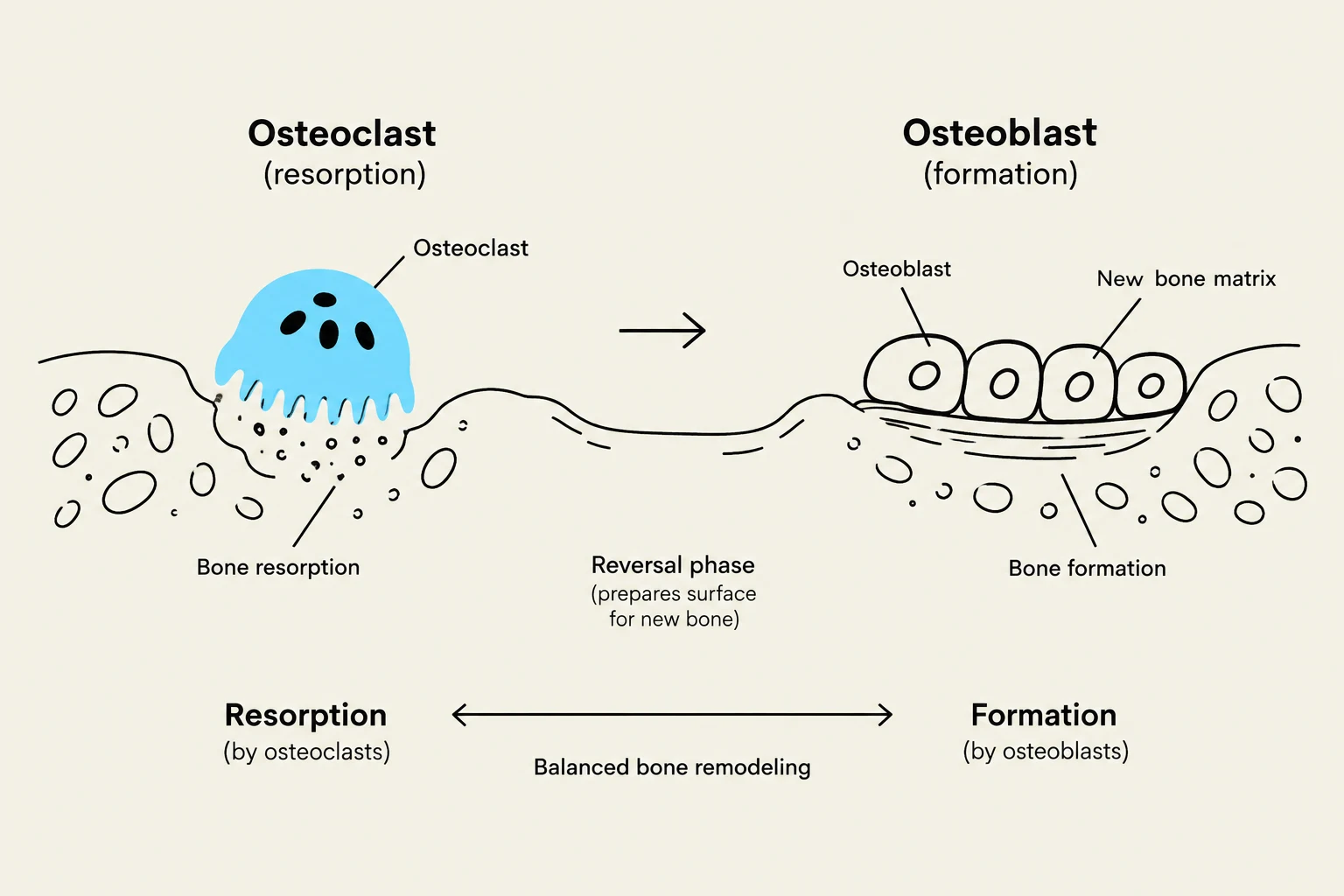
Bone remodeling is a continuous cycle. In a healthy state, the rate of bone resorption by osteoclasts is equal to the rate of bone formation by osteoblasts. Osteoporosis occurs when this equilibrium shifts toward resorption, leading to reduced Bone Mineral Density (BMD), microarchitectural disruption, and increased skeletal fragility.
Several physiological factors influence this turnover:
Calcium and Vitamin D: Calcium is a fundamental building block of bone. Low serum calcium levels trigger the release of Parathyroid Hormone (PTH), which stimulates bone resorption to restore calcium homeostasis. Vitamin D (specifically its active form, calcitriol) is crucial for calcium absorption; it promotes bone turnover by increasing both osteoclast and osteoblast activity.
Hormonal Regulators: Estrogens play a protective role by inhibiting osteoclast activity, thereby indirectly supporting bone formation. Growth hormone (somatotropin) stimulates osteoblast activity, promoting bone formation.
Parathyroid Hormone (PTH): The effect of PTH is highly dependent on the pattern of administration. Continuous, excess endogenous PTH increases bone resorption. However, low-dose, intermittent exogenous PTH administration stimulates osteoblast activity and promotes bone formation.
Diagram illustrating the process of balanced bone remodeling, showing the roles of osteoclasts in resorption and osteoblasts in formation.
Clinical Pearl: When assessing a patient's risk for osteoporosis, consider primary factors like age, menopause, and family history, as well as secondary factors like smoking, excessive alcohol/caffeine, and medications such as glucocorticoids or phenytoin.
Osteoporosis: Diagnosis and Management
The gold standard for assessing bone density is Dual Energy X-ray Absorptiometry (DEXA). Diagnosis is typically based on a T-score; a T-score ≤−2.5 at the femoral neck, total hip, or lumbar spine is diagnostic for osteoporosis.
First-Line Therapies: Bisphosphonates
Bisphosphonates (e.g., alendronate, risedronate, zoledronic acid) are considered first-line therapy for both men and women. These drugs are pyrophosphate analogs that bind to hydroxyapatite in the bone mineral matrix. When osteoclasts attempt to resorb the bone, they take up the bisphosphonate, which subsequently inhibits their function and induces apoptosis.
Administration and Safety:
Oral bisphosphonates (like alendronate) have strict administration requirements to prevent esophageal irritation. Patients must take the dose first thing in the morning with a full glass of water and remain upright (sitting or standing) for at least 30 minutes (60 minutes for ibandronate).
Contraindications and Adverse Effects:
Contraindications: Hypersensitivity, hypocalcemia (must be resolved before starting), renal impairment (CrCl < 30 mL/min, or < 35 mL/min for alendronate/zoledronic acid), and esophageal abnormalities.
Adverse Effects: Common issues include esophagitis and GI upset. Rare but serious risks include osteonecrosis of the jaw and atypical femur fractures, particularly with long-term treatment (> 5 years).
Selective Estrogen Receptor Modulators (SERMs)
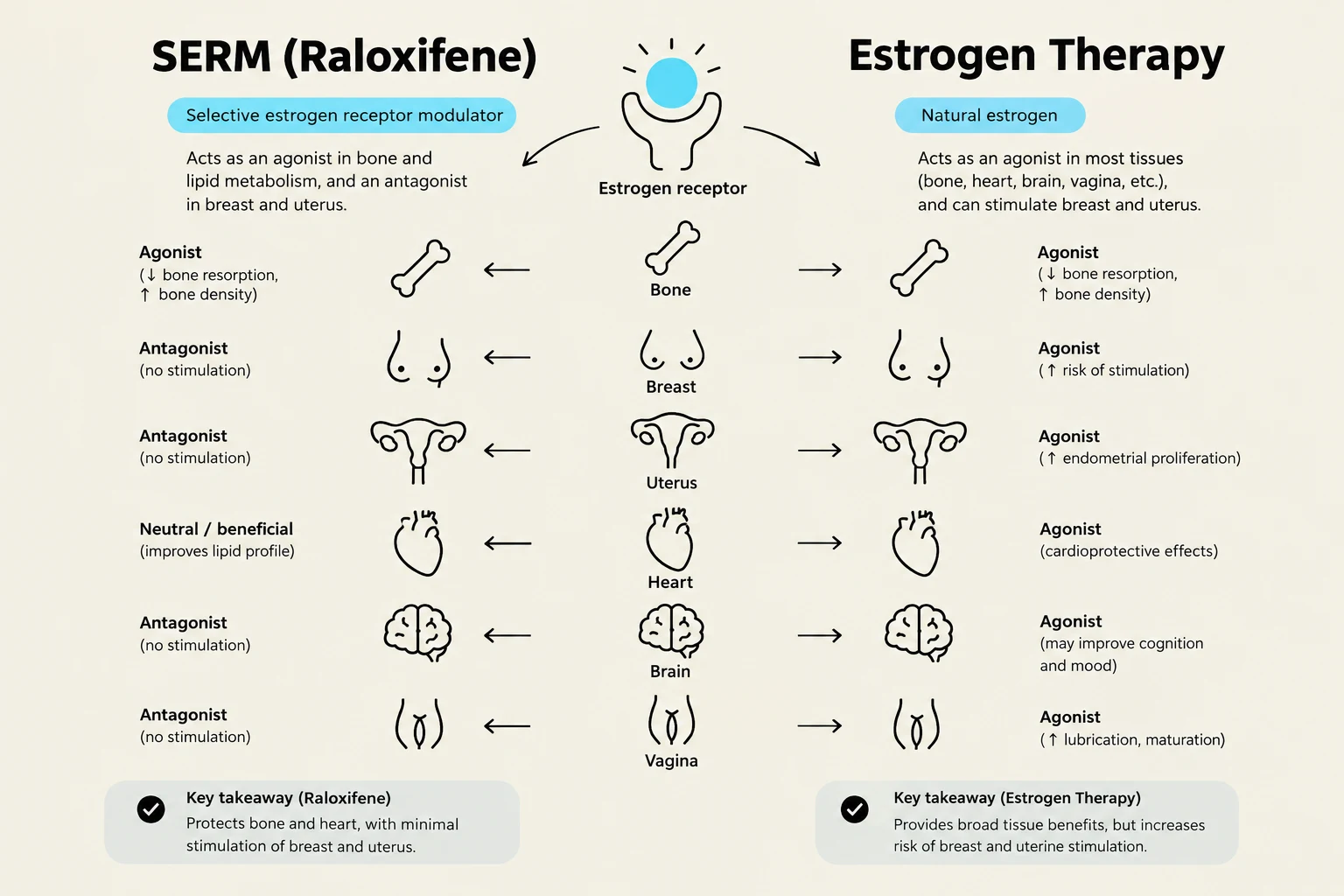
SERMs like raloxifene provide a targeted approach to hormonal therapy. They act as estrogen agonists in the bone (reducing osteoclast activity) but act as estrogen antagonists in the breast and uterine tissues. This makes raloxifene useful for both the treatment and prophylaxis of postmenopausal osteoporosis and for reducing the risk of breast cancer in high-risk women.
Important Note: Conjugated estrogens combined with bazedoxifene (Duavee) are used for osteoporosis prophylaxis and menopausal hot flashes, but they carry risks of breast cancer, endometrial cancer, and venous thromboembolism (VTE).
This diagram illustrates the differing effects of Selective Estrogen Receptor Modulators (SERMs) like Raloxifene and natural estrogen on various body tissues, including bone, breast, uterus, heart, brain, and vagina.
Advanced Monoclonal Antibodies and PTH Analogs
For patients at very high fracture risk or those who have failed bisphosphonate therapy, other potent agents are available:
Teriparatide: A recombinant form of PTH that stimulates osteoblast activity and new bone formation.
Warning: It carries a boxed warning for an increased risk of osteosarcoma.
Denosumab: A monoclonal antibody that inhibits RANKL (receptor activator of nuclear factor kappa-B ligand). By inhibiting RANKL, it decreases osteoclast formation and function.
Romosozumab: A monoclonal antibody that inhibits sclerostin. Sclerostin is a protein produced by osteocytes that normally inhibits bone formation; by inhibiting the inhibitor, romosozumab primarily increases bone formation and, to a lesser extent, decreases resorption.
Warning: It carries a boxed warning due to the risk of myocardial infarction, stroke, and cardiovascular death.
Paget’s Disease of Bone (PDB)
Unlike osteoporosis, which is a systemic loss of bone mass, Paget’s disease is a localized disorder characterized by excessive, uncontrolled osteoclastic bone resorption followed by a compensatory, but poorly organized, increase in bone formation. This results in bone that is structurally weak and prone to deformity, pain, and fractures.
Management of PDB:
The primary goal is to control bone turnover and manage symptoms.
First-line treatment: Bisphosphonates are the treatment of choice. Zoledronic acid is particularly noted as a preferred option.
Alternative: Calcitonin (injection) may be used if bisphosphonates are contraindicated.
Supportive care: Ensuring adequate Vitamin D and calcium levels is vital, along with NSAIDs or acetaminophen for pain management.
Summary of Pharmacologic Strategies
The choice of therapy depends on the patient's specific risk profile, T-score, and history of fractures.
Exam Tip: If a question asks which drug stimulates bone formation rather than just inhibiting resorption, look for Teriparatide (PTH analog) or Romosozumab (sclerostin inhibitor).
In conclusion, effective management of bone diseases requires a nuanced understanding of how different medications interact with the bone remodeling cycle. From the foundational role of calcium and Vitamin D to the sophisticated mechanisms of monoclonal antibodies, clinicians must tailor therapy to balance the risks of side effects—such as gastrointestinal issues with bisphosphonates or cardiovascular risks with romosozumab—against the necessity of preventing debilitating fractures.
Keep reading for free.
Create an account to finish this reading and make it part of your study routine.