Pharmacological Management of Osteoporosis and Paget's Disease
This article explores the pathophysiology and pharmacological management of osteoporosis and Paget's Disease of Bone (PDB), detailing bone turnover, key hormones, risk factors, diagnosis, and various drug classes used for treatment, including anti-resorptive and bone-forming agents.
Bone health is a dynamic process governed by a delicate equilibrium between bone formation and bone resorption. In a healthy adult, this "remodeling" process is balanced, meaning the amount of bone removed by osteoclasts is equal to the amount of bone deposited by osteoblasts. However, when this balance shifts toward resorption, or when the structural integrity of the bone is compromised, skeletal fragility increases, leading to significant clinical consequences. This article explores the pathophysiology and pharmacological management of two major bone disorders: Osteoporosis and Paget’s Disease of Bone (PDB).
Understanding Bone Turnover and Homeostasis
To understand how drugs work, one must first understand the physiological factors that influence bone mineral density (BMD) and turnover. Bone turnover is regulated by a complex interplay of hormones, vitamins, and minerals.
Several key factors drive this process:
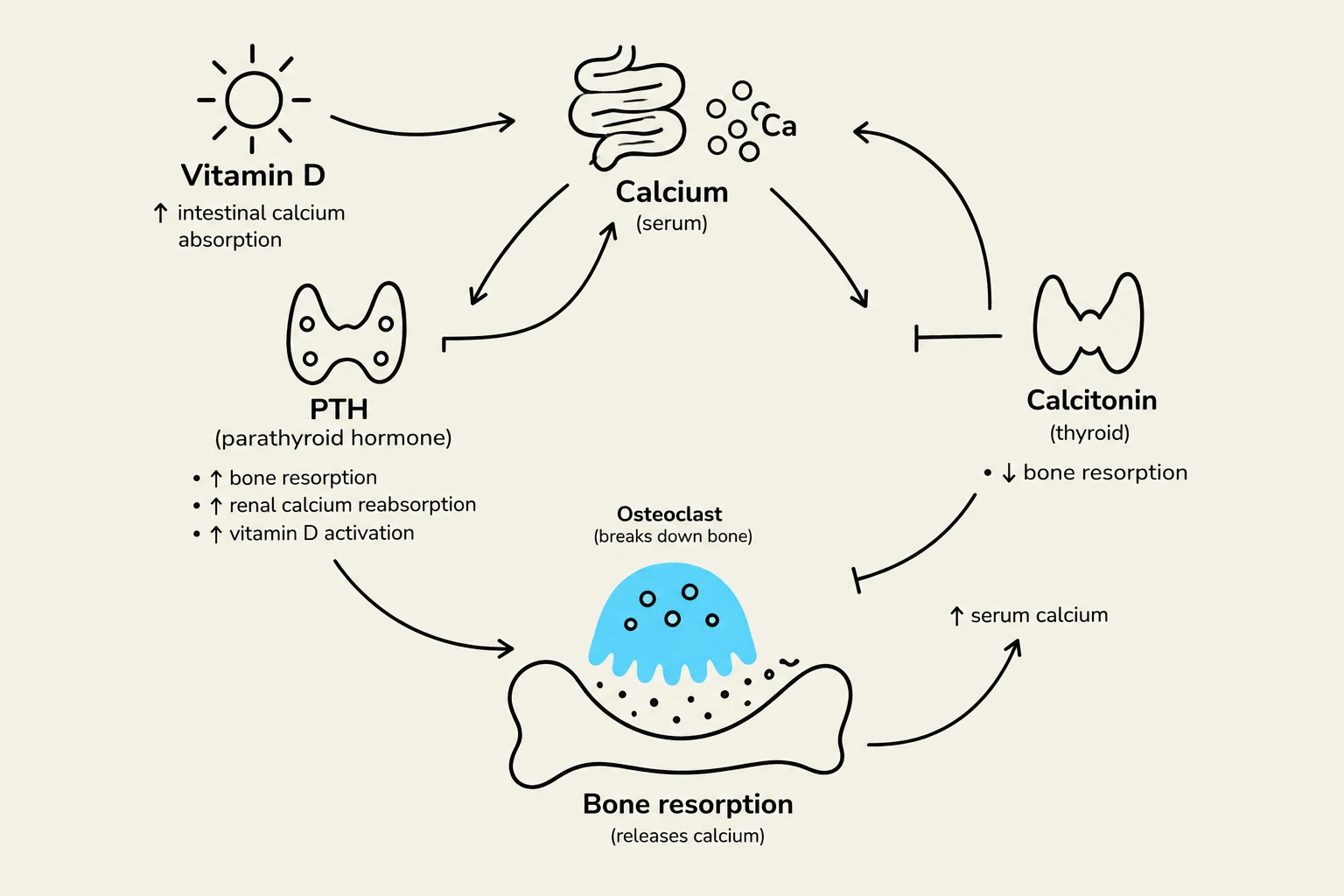
Vitamin D: Acts as a prohormone. Through conversion in the liver and kidneys, it becomes calcitriol (the active form), which increases bone turnover by stimulating both osteoclasts and osteoblasts.
Calcium: Serum calcium levels are tightly regulated. Low levels trigger the release of Parathyroid Hormone (PTH), which increases bone resorption to liberate calcium into the bloodstream.
Calcitonin: This hormone acts as a physiological antagonist to PTH by inhibiting osteoclast activity, thereby decreasing bone resorption.
Estrogens: These play a crucial role in maintaining bone density by decreasing osteoclast activity, which indirectly promotes bone formation.
Growth Hormone (Somatotropin): Promotes bone formation by increasing osteoblast activity.
Parathyroid Hormone (PTH): The timing and frequency of PTH exposure are critical. While excess endogenous PTH leads to increased bone resorption, low, intermittent exogenous administration of PTH actually stimulates bone formation.
This diagram illustrates the hormonal regulation of calcium levels in the body, involving Vitamin D, PTH, and Calcitonin, and their effects on bone resorption and calcium absorption.
Osteoporosis: Pathophysiology and Diagnosis
Osteoporosis is a systemic skeletal disorder characterized by low bone mass and microarchitectural deterioration of bone tissue, leading to increased bone fragility and fracture risk. It is a massive public health burden in the USA, affecting approximately 11 million adults and costing roughly $17 billion annually in morbidity and mortality.
Risk Factors and Screening
Risk factors are categorized into primary and secondary causes:
Primary Factors: Increasing age, menopause (due to declining estrogen), low body weight (<58 kg), and family history.
Secondary Factors: Excess alcohol, caffeine, tobacco use, inactivity, and certain medications such as glucocorticoids (steroids), heparin, and phenytoin.
Diagnosis is primarily achieved through Dual Energy X-ray Absorptiometry (DEXA), which measures Bone Mineral Density (BMD). Clinical guidelines recommend screening all women ≥65 years old.
Clinical Decision Making
Treatment is not always necessary for every patient with low bone density. Clinicians must distinguish between osteopenia and osteoporosis. A T-score ≤−2.5 at the femoral neck, total hip, or lumbar spine is diagnostic of osteoporosis.
For patients with osteopenia (T-score between −1.0 and −2.5), further treatment should be considered if they meet specific risk thresholds:
A 10-year hip fracture probability ≥3%.
A 10-year major osteoporosis-related fracture probability ≥20%.
Exam Tip: Don't just look at the T-score! In clinical scenarios, always check for secondary risk factors like long-term glucocorticoid use or a history of previous fractures, as these significantly elevate the need for pharmacologic intervention.
Pharmacological Management of Osteoporosis
The choice of therapy depends on whether the goal is to inhibit bone resorption or stimulate bone formation.
Bisphosphonates
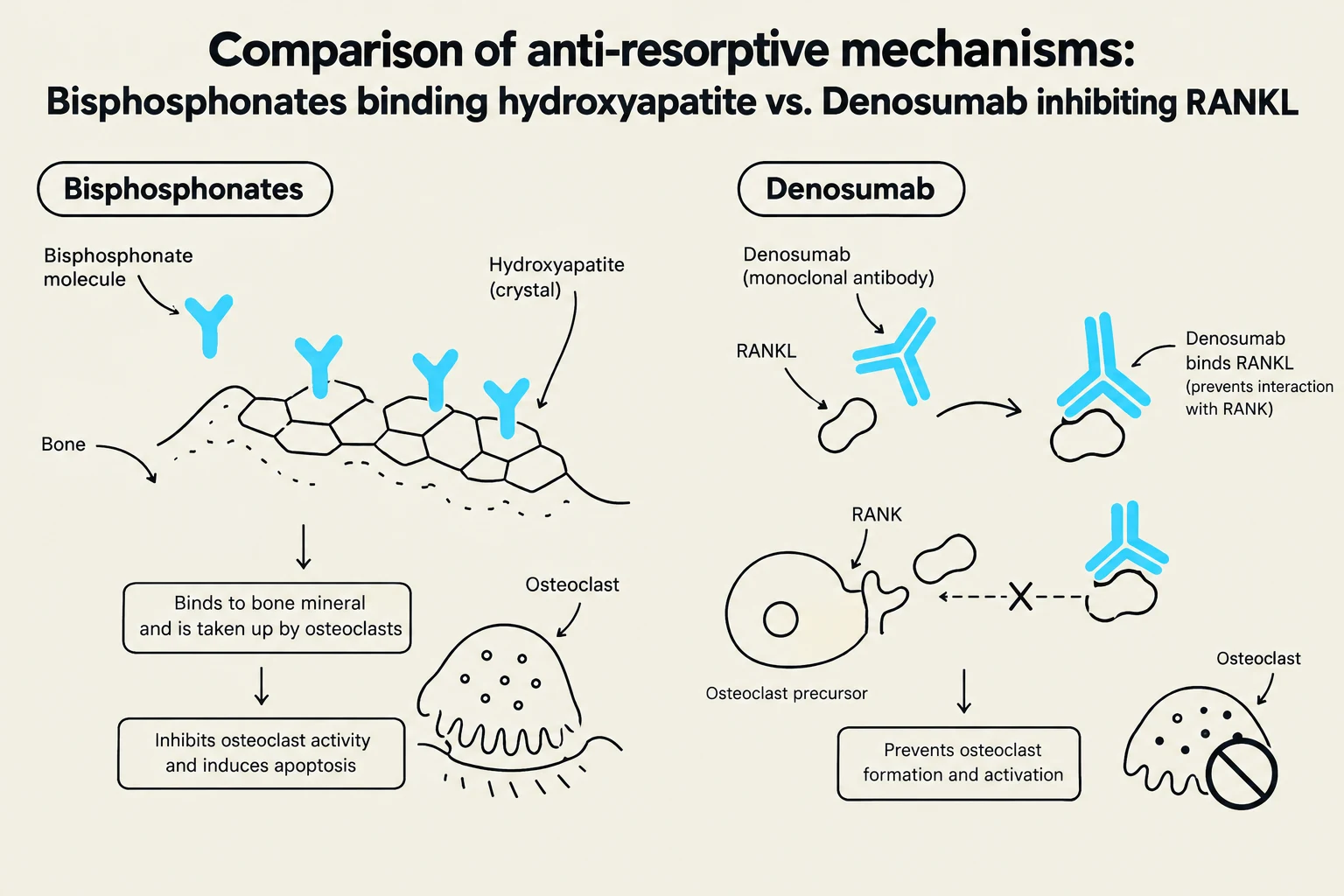
Bisphosphonates (e.g., alendronate, risedronate, ibandronate, and zoledronic acid) are considered first-line therapy for both men and women. They are pyrophosphate analogs that bind to hydroxyapatite in the bone matrix. When osteoclasts attempt to resorb the bone, they take up the bisphosphonate, which subsequently inhibits their function and induces apoptosis.
Administration is critical: Oral bisphosphonates must be taken first thing in the morning with a full glass of water. The patient must remain upright (sitting or standing) for at least 30 minutes (60 minutes for ibandronate) to prevent esophageal irritation.
Contraindications: Hypersensitivity, hypocalcemia (must be resolved first), esophageal abnormalities, and renal impairment (CrCl <30 mL/min, or <35 mL/min for alendronate/zoledronic acid).
Adverse Effects: Common issues include esophagitis and GI upset. Rare but serious risks include osteonecrosis of the jaw and atypical femur fractures, particularly with long-term use (>5 years).
Calcitonin
Used for postmenopausal osteoporosis, hypercalcemia, and Paget's disease. It works by binding to and inhibiting osteoclasts.
Adverse Effects: Arthralgia, back pain, and nasal symptoms (rhinitis, epistaxis) if using the nasal form.
Drug Interaction: It may decrease the concentration and efficacy of lithium.
Selective Estrogen Receptor Modulators (SERMs)
SERMs like Raloxifene provide a unique "tissue-selective" approach. They act as estrogen agonists in the bone (decreasing osteoclast activity) but as estrogen antagonists in the breast and uterine tissue (reducing the risk of breast cancer and uterine hyperplasia).
Indications: Postmenopausal osteoporosis treatment/prophylaxis and breast cancer prophylaxis.
Black Box Warning (BW): Increased risk of venous thromboembolism (VTE), such as DVT or PE.
Conjugated Estrogens + Bazedoxifene (Duavee): Used primarily for prophylaxis and managing menopausal hot flashes. Like Raloxifene, the bazedoxifene component acts as a SERM to protect the uterus.
Monoclonal Antibodies: Denosumab
Denosumab is a monoclonal antibody that inhibits RANKL (receptor activator of nuclear factor kappa-B ligand). By inhibiting RANKL, it prevents the formation and function of osteoclasts. It is an alternative first-line therapy for postmenopausal women and men on androgen deprivation therapy (ADT) for prostate cancer.
This diagram compares two anti-resorptive mechanisms: Bisphosphonates binding to hydroxyapatite in bone and Denosumab inhibiting RANKL. Bisphosphonates are taken up by osteoclasts and inhibit their activity, while Denosumab prevents RANKL from interacting with RANK, thus preventing osteoclast formation and activation.
2. Bone-Forming Agents (Stimulating Osteoblasts)
Teriparatide
Teriparatide is a recombinant form of human parathyroid hormone (PTH). Unlike continuous high levels of PTH, intermittent administration of teriparatide stimulates osteoblast activity and new bone formation.
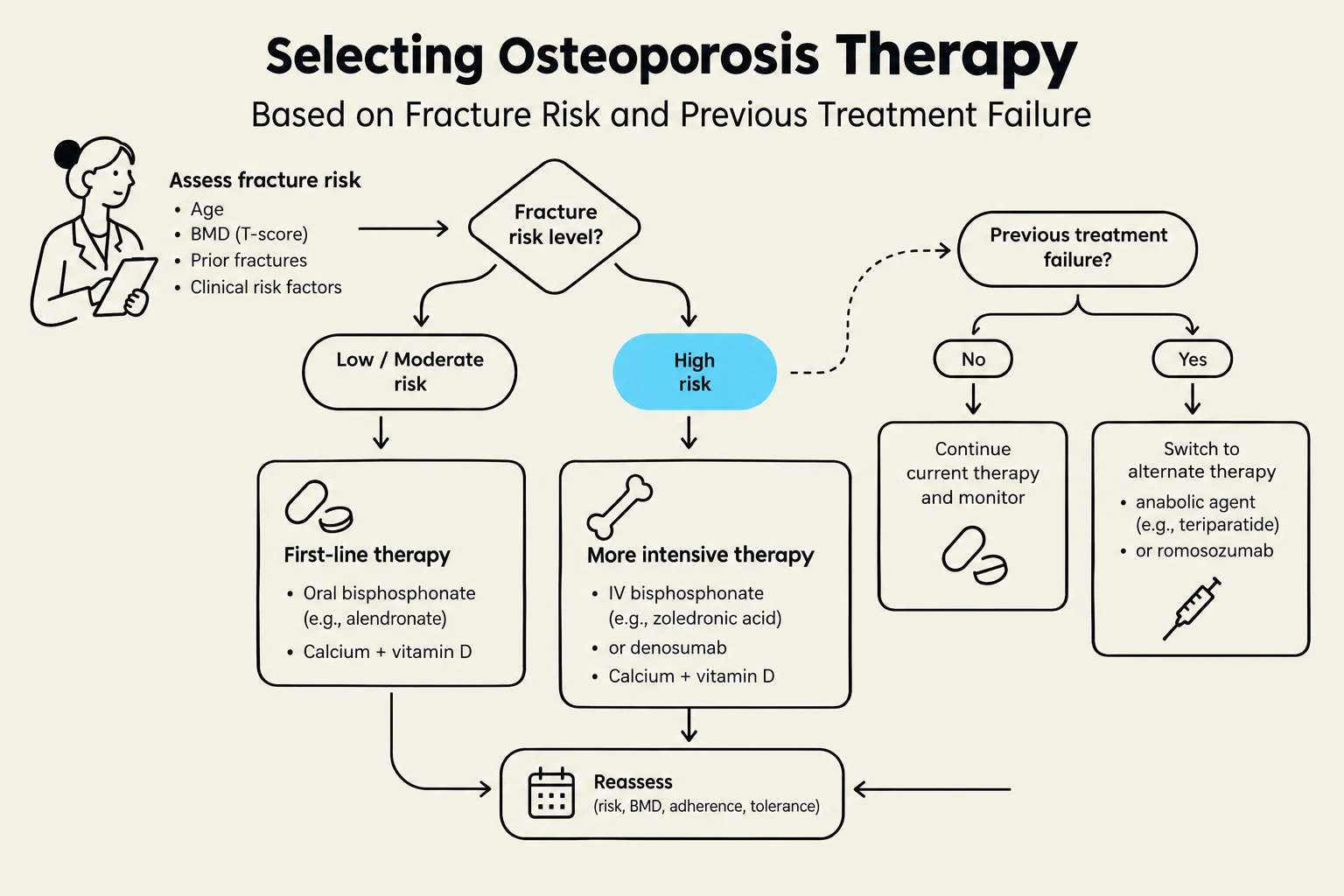
Indications: Consider if the patient has a very high fracture risk or if bisphosphonate therapy has failed.
Black Box Warning (BW): Increased risk of osteosarcoma.
Drug Interaction: May increase the risk of digoxin toxicity.
Romosozumab
Romosozumab is a newer monoclonal antibody that inhibits sclerostin. Sclerostin is a protein produced by osteocytes that normally inhibits bone formation; by blocking it, Romosozumab provides a dual effect: primarily increasing bone formation and, to a lesser extent, decreasing resorption.
Indications: Postmenopausal osteoporosis in patients at high risk for fracture or those who have failed/are intolerant to other therapies.
Black Box Warning (BW): Increased risk of myocardial infarction (MI), stroke, and cardiovascular death.
Paget’s Disease of Bone (PDB)
Paget’s Disease is a localized disorder characterized by uncontrolled, excessive osteoclastic bone resorption, followed by a compensatory but disorganized increase in bone formation. Because the new bone is poorly organized, it is structurally weak.
Clinical Presentation and Management
PDB typically affects older adults (>55 years old). While many patients are asymptomatic and diagnosed incidentally via radiography, others may experience bone or joint pain, skeletal deformities, fractures, hypercalcemia, or even osteosarcoma.
Treatment Strategies:
First-line: Bisphosphonates used short-term. Zoledronic acid is considered the treatment of choice. Other options include alendronate and risedronate.
Supportive Care: Ensure adequate Vitamin D and Calcium levels. Nonprescription pain relief (NSAIDs or acetaminophen) can be used for symptomatic management.
Alternative: Calcitonin (injection) may be used if bisphosphonates are contraindicated.
Summary of Pharmacological Profiles
To master this topic, you must be able to distinguish between agents that "stop the breakdown" and those that "build the bone."
This flowchart outlines a therapeutic approach for osteoporosis, considering fracture risk and prior treatment outcomes. It guides decisions on first-line therapy, more intensive options, and adjustments based on treatment failure.
Edge Case Alert: If a patient presents with both osteoporosis and a history of recent myocardial infarction or stroke, avoid Romosozumab due to its cardiovascular Black Box Warning. Conversely, if a patient has a history of bone metastases or skeletal malignancy, avoid Teriparatide due to the risk of osteosarcoma.
Finally, universal recommendations for all patients at risk include adequate intake of calcium (via food or supplements like calcium carbonate/citrate) and Vitamin D (via sun or supplements), weight-bearing exercise, smoking cessation, and fall prevention.
Keep reading for free.
Create an account to finish this reading and make it part of your study routine.