Pharmacological Management of Heart Failure and Hypertension
This article explores essential medications for hypertension and heart failure, focusing on their mechanisms, adverse effects, and critical nursing priorities for patient safety. It covers ACE inhibitors, ARBs, vasodilators, beta-blockers, inotropic agents, and statins, along with patient education and nursing alerts.
Effective management of cardiovascular health requires a deep understanding of how medications influence perfusion, blood pressure, and cardiac workload. For patients living with hypertension or heart failure, pharmacological therapy is not just about lowering numbers on a monitor; it is about protecting vital organs from ischemia and preventing the progression toward tissue death. This article explores the essential medications used in these conditions, focusing on their mechanisms, adverse effects, and the critical nursing priorities required to ensure patient safety.
Understanding the Foundation: Hypertension and Heart Failure
Before diving into pharmacology, one must understand the physiological drivers of these conditions. Hypertension is often categorized by its severity and risk factors, which include non-modifiable elements like age, gender, and genetics, as well as modifiable factors like obesity, sedentary lifestyle, and high sodium intake. Uncontrolled hypertension is a primary driver of vascular damage and is the leading risk factor for catastrophic events like hemorrhagic strokes.
Heart failure occurs when the heart cannot effectively pump enough oxygenated blood to meet the body's metabolic demands. This is often tied to changes in cardiac output, which is determined by the relationship between heart rate and stroke volume.
Pathophysiology of Heart Failure
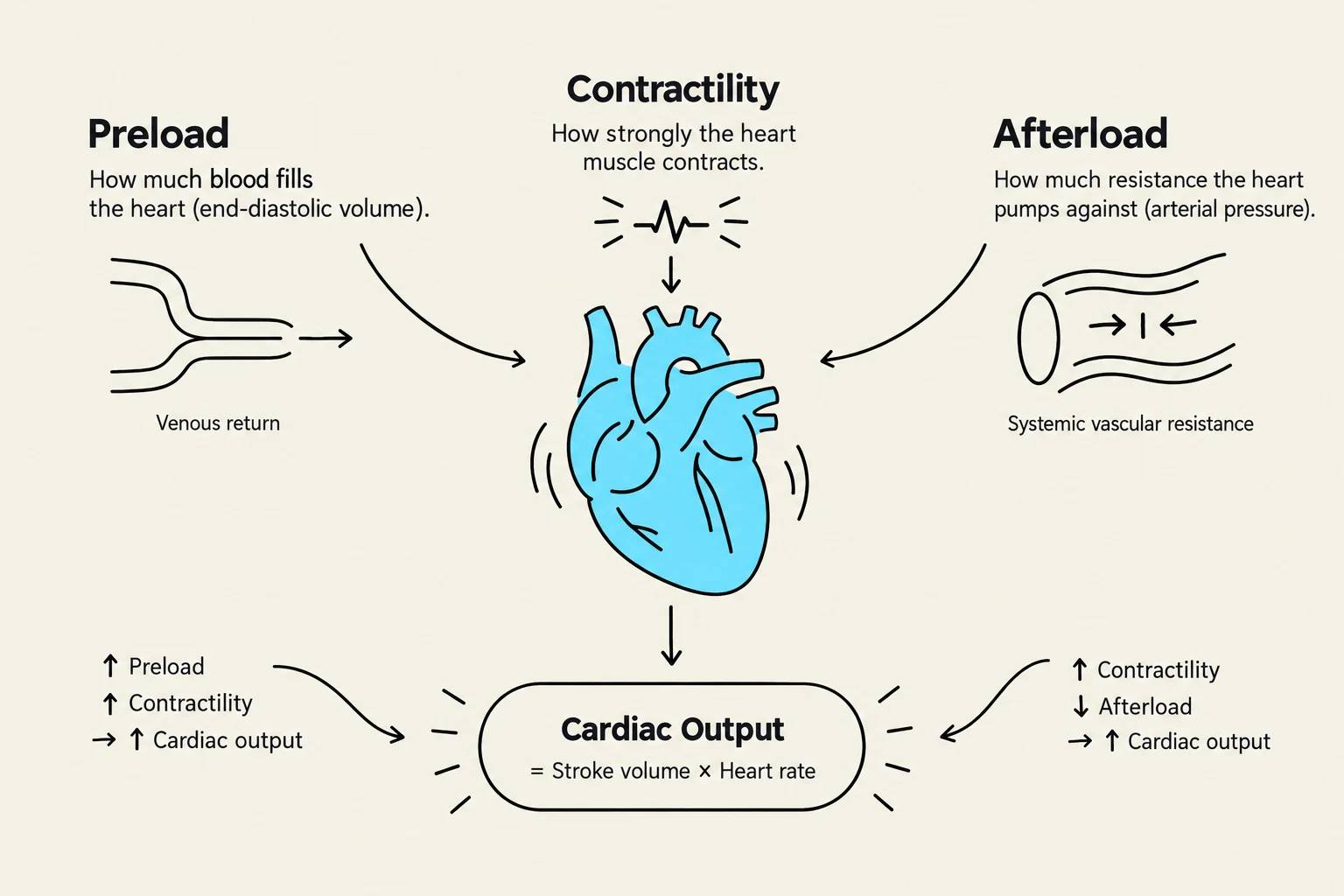
In heart failure, the heart's ability to manage preload (the stretch of the muscle at the end of diastole) and afterload (the resistance the ventricle must overcome to eject blood) becomes compromised.
Increased Preload: Often seen in fluid volume excess (common in heart failure), where the heart is overstretched by retained sodium and water.
Increased Afterload: Occurs during vasoconstriction, forcing the heart to work harder and increasing myocardial oxygen consumption, which can eventually "wear the heart out".
This diagram illustrates the key factors influencing cardiac output: preload, contractility, and afterload. Preload refers to the volume of blood filling the heart, contractility is the strength of heart muscle contraction, and afterload is the resistance the heart pumps against. Cardiac output is determined by stroke volume and heart rate.
Managing Blood Pressure: ACE Inhibitors, ARBs, and Vasodilators
Pharmacological management often begins with targeting the Renin-Angiotensin-Aldosterone System (RAAS) to reduce blood pressure and cardiac workload.
ACE Inhibitors and ARBs
Lisinopril is a common Angiotensin-Converting Enzyme (ACE) inhibitor. While highly effective at reducing afterload, it carries a specific, high-priority adverse effect: angioedema (swelling of the face, lips, or airway). Nurses must monitor patients closely for any signs of swelling, as this can become a life-threatening airway emergency.
Losartan belongs to the class of Angiotensin Receptor Blockers (ARBs). These are often used as alternatives for patients who cannot tolerate ACE inhibitors due to side effects like a persistent dry cough or angioedema.
Calcium Channel Blockers (CCBs) and Vasodilators
Calcium channel blockers like Nifedipine are used to promote vasodilation, thereby decreasing afterload and making it easier for the heart to pump. However, clinicians must be cautious with drugs like Diltiazem; due to its effects on both blood pressure and heart rate, it may be contraindicated in patients with certain conduction issues or low heart rates.
For more acute or severe hypertensive crises, direct vasodilators may be employed:
Hydralazine: Acts directly on the smooth muscle of the arteries to cause vasodilation.
Nitroprusside: A potent vasodilator used in emergencies, but it carries a significant risk of cyanide toxicity if used for prolonged periods.
Alpha-Blockers and Specialized Uses
Doxazosin is an alpha-blocker used to treat hypertension, but it is also clinically significant for its ability to assist in the management of Benign Prostatic Hyperplasia (BPH) by relaxing smooth muscle in the bladder neck.
Controlling Heart Rate and Contractility
In heart failure and rhythm management, controlling how fast and how hard the heart beats is essential.
Beta-Blockers
Metoprolol is a beta-blocker used to slow the heart rate and reduce the workload on the myocardium. When administering metoprolol, nursing priorities include monitoring the heart rate and blood pressure to ensure the patient does not become bradycardic, which could lead to impaired perfusion.
Inotropic Agents
Digoxin is used to increase the force of myocardial contraction (contractility). However, it has a narrow therapeutic index, meaning the margin between a therapeutic dose and a toxic dose is small.
Nursing Alert: Digoxin Toxicity
Monitor for signs of toxicity, which can include nausea, vomiting, and visual disturbances (such as yellow-green halos). If toxicity is suspected, the antidote is Digoxin Immune Fab.
Emergency Interventions
In cases of acute chest pain or ischemia, Nitroglycerin is administered to promote vasodilation and increase oxygen delivery to the myocardium. Nurses must ensure the patient is in a safe position (often sitting) due to the risk of hypotension and must monitor for severe headaches as a common side effect.
Managing Muscle and Metabolic Complications
While not primary treatments for hypertension, certain medications are critical in managing the systemic complications of cardiovascular or metabolic crises.
Dantrolene: This medication is used in specific emergencies (such as malignant hyperthermia) because of its unique mechanism of action: it acts directly on the muscle to inhibit the release of calcium from the sarcoplasmic reticulum, thereby reducing muscle contraction and heat production.
Atorvastatin: Used to manage hyperlipidemia (high cholesterol), which is a major modifiable risk factor for atherosclerosis and hypertension. Nurses should monitor for adverse effects such as muscle pain or weakness (myalgia), which could indicate rhabdomyolysis.
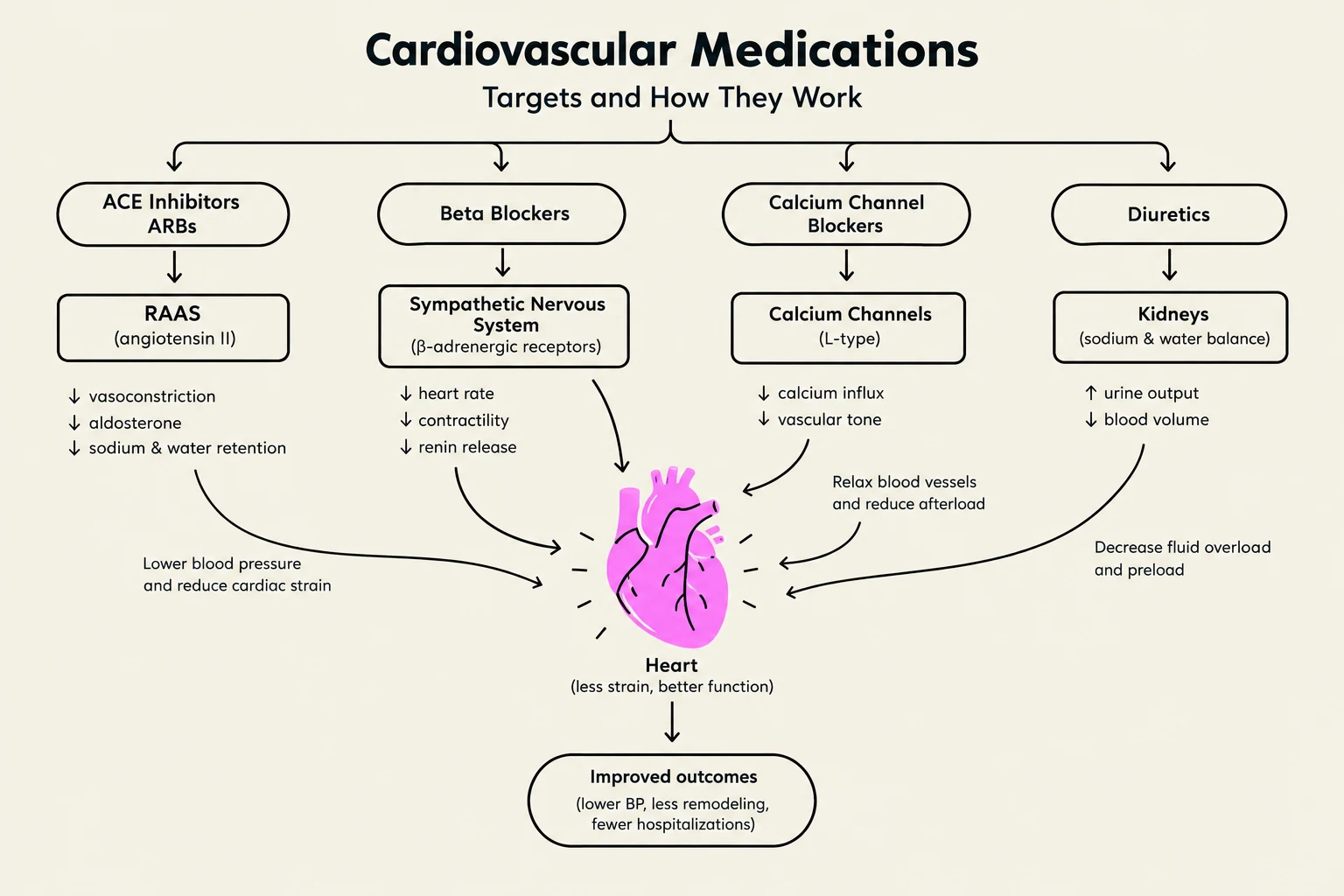
This diagram illustrates various classes of cardiovascular medications, their targets within the body, and their mechanisms of action, ultimately leading to improved patient outcomes.
Summary of Nursing Priorities and Patient Education
For any patient on cardiovascular pharmacology, the nurse's role extends beyond administration to vigilant assessment and education.
Medication Class
Example
Key Nursing Priority
Patient Education
ACE Inhibitors
Lisinopril
Monitor for angioedema/swelling
Report facial swelling immediately
Beta-Blockers
Metoprolol
Monitor HR and BP
Do not stop abruptly; watch for dizziness
Digoxin
Digoxin
Monitor for toxicity (nausea/vision)
Report visual changes or vomiting
Statins
Atorvastatin
Monitor for muscle pain
Report unexplained muscle weakness
Exam Tip: The "Time is Brain" Rule
When discussing strokes (CVA), remember that for ischemic strokes, fibrinolytic therapy (like TPA) must ideally be administered within 3 to 4.5 hours of symptom onset. Always ask the patient, "When was the last time you were seen well?"
Ultimately, the goal of pharmacological management is to maintain optimal perfusion—ensuring that all body tissues receive adequate oxygen and nutrients through the circulatory system. By understanding the interplay between medication mechanisms and the underlying pathophysiology of the heart, nurses can provide safer, more effective care.
Keep reading for free.
Create an account to finish this reading and make it part of your study routine.