


Clinical practice in primary care frequently involves managing localized infections and inflammatory conditions of the sensory organs. Understanding the distinction between bacterial, viral, and allergic presentations is essential for selecting the appropriate topical therapy and providing effective patient education. This article explores the pharmacological management of ophthalmic, otic, nasal, and oral/throat conditions.
Ophthalmic Infections and Conjunctivitis
Conjunctivitis, or "pink eye," is one of the most common eye ailments encountered in primary care. While the clinical presentation of redness can look similar across different etiologies, the underlying cause dictates the treatment strategy.
Bacterial Conjunctivitis
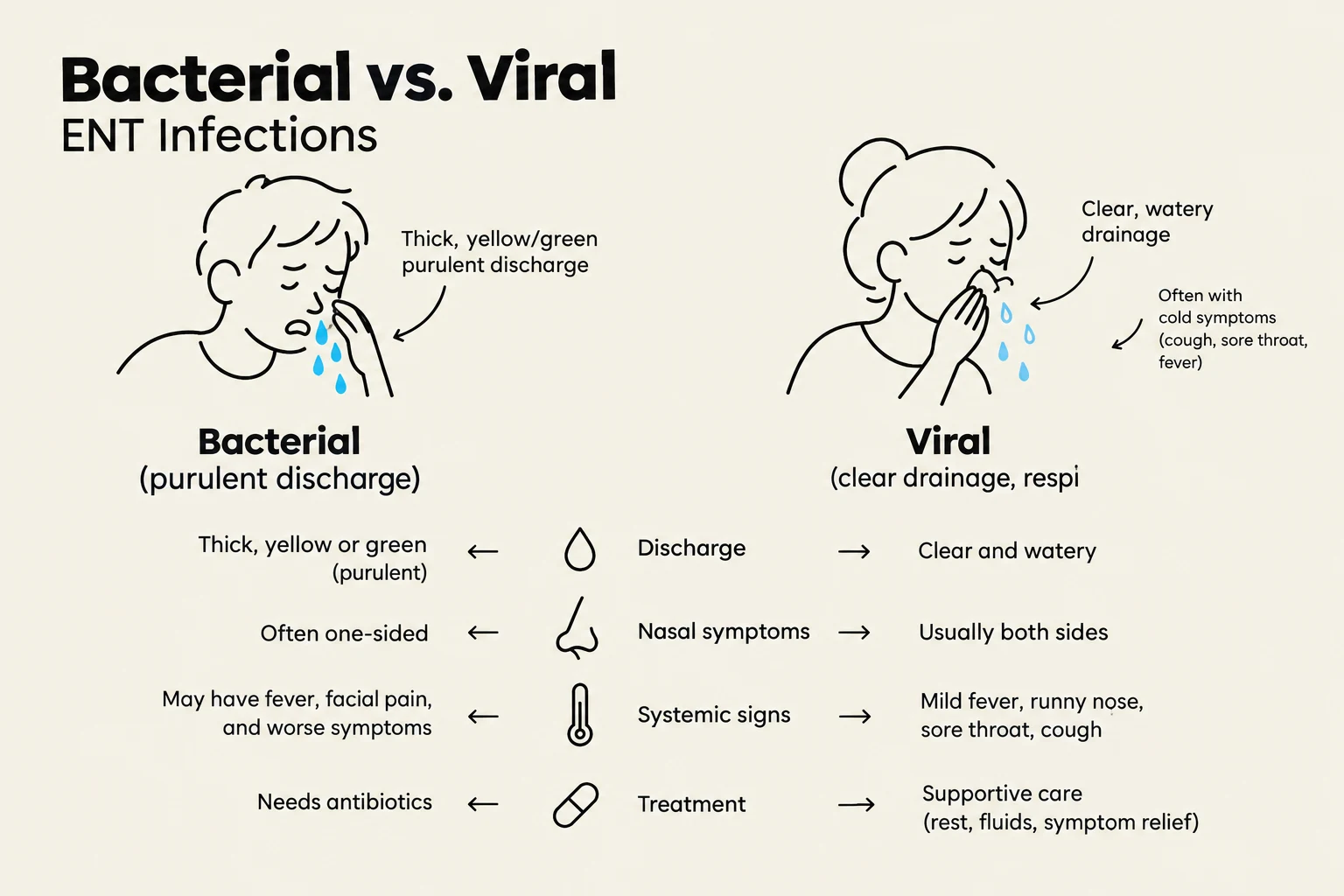
Bacterial conjunctivitis is often caused by Staphylococcus, Streptococcus, H. influenzae, Moraxella, and Pseudomonas species. A hallmark clinical sign is the presence of large amounts of purulent (pus-like) discharge. This condition is highly contagious and spreads easily through direct or indirect contact.
Viral Conjunctivitis
Viral conjunctivitis is frequently caused by adenovirus type 3. Unlike the purulent discharge seen in bacterial cases, viral conjunctivitis typically presents with a red eye accompanied by clear, watery drainage. It often occurs in conjunction with other respiratory illnesses, such as the common cold.
Allergic Conjunctivitis
Allergic conjunctivitis is driven by an immune response to allergens, manifesting primarily as intense itching and tearing.
Clinical Pearl: When treating conjunctivitis, it is standard practice to treat both eyes simultaneously, as the infection can easily spread from one to the other.
Management of Conjunctivitis
Therapeutic Approaches
When selecting an antibiotic for bacterial conjunctivitis, there is no appreciable difference in overall effectiveness between different products. Clinicians should prioritize agents that are broad-spectrum, inexpensive, and easy for the patient to administer.

Keep reading for free.
Create an account to finish this reading and make it part of your study routine.
Continue reading freeAlready have an account? Log in
Updated