


The kidneys are sophisticated filtration organs responsible for maintaining homeostasis by removing waste products, regulating fluid balance, managing electrolytes, and controlling blood pressure. When these functions are compromised, patients may experience Acute Kidney Injury (AKI) or progress to Chronic Kidney Disease (CKD). Managing these conditions requires a multi-faceted approach involving precise pharmacological interventions to stabilize electrolytes, manage fluid volume, and support declining renal function.
Understanding Renal Function and Decline
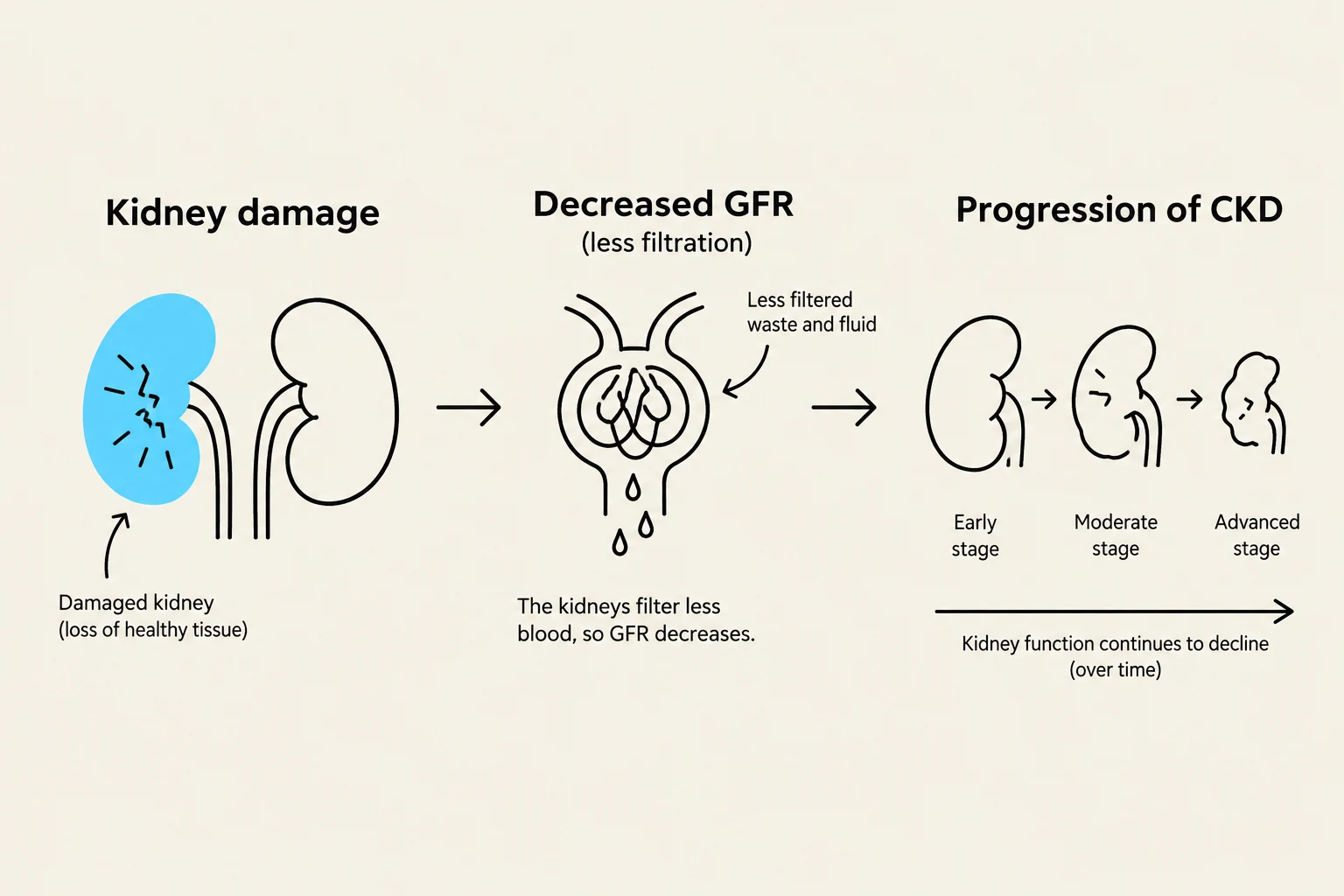
To understand pharmacological needs, one must first understand the metric of kidney health: the Glomerular Filtration Rate (GFR). The GFR represents how well the kidneys are filtering blood. A significant decrease in GFR that persists for more than three months is the clinical hallmark of Chronic Kidney Disease.
The kidneys rely on millions of nephrons—both cortical and juxtamedullary—to perform their work. When these nephrons are damaged by prerenal causes (like hypotension), intrarenal causes (like nephrotoxins), or postrenal causes (like obstructions), the body loses its ability to regulate vital substances.
Clinical Note: Monitoring Blood Urea Nitrogen (BUN) and Creatinine (Cr) is essential. Creatinine is the end product of muscle breakdown and serves as a primary indicator of renal function.
Managing Electrolyte Imbalances
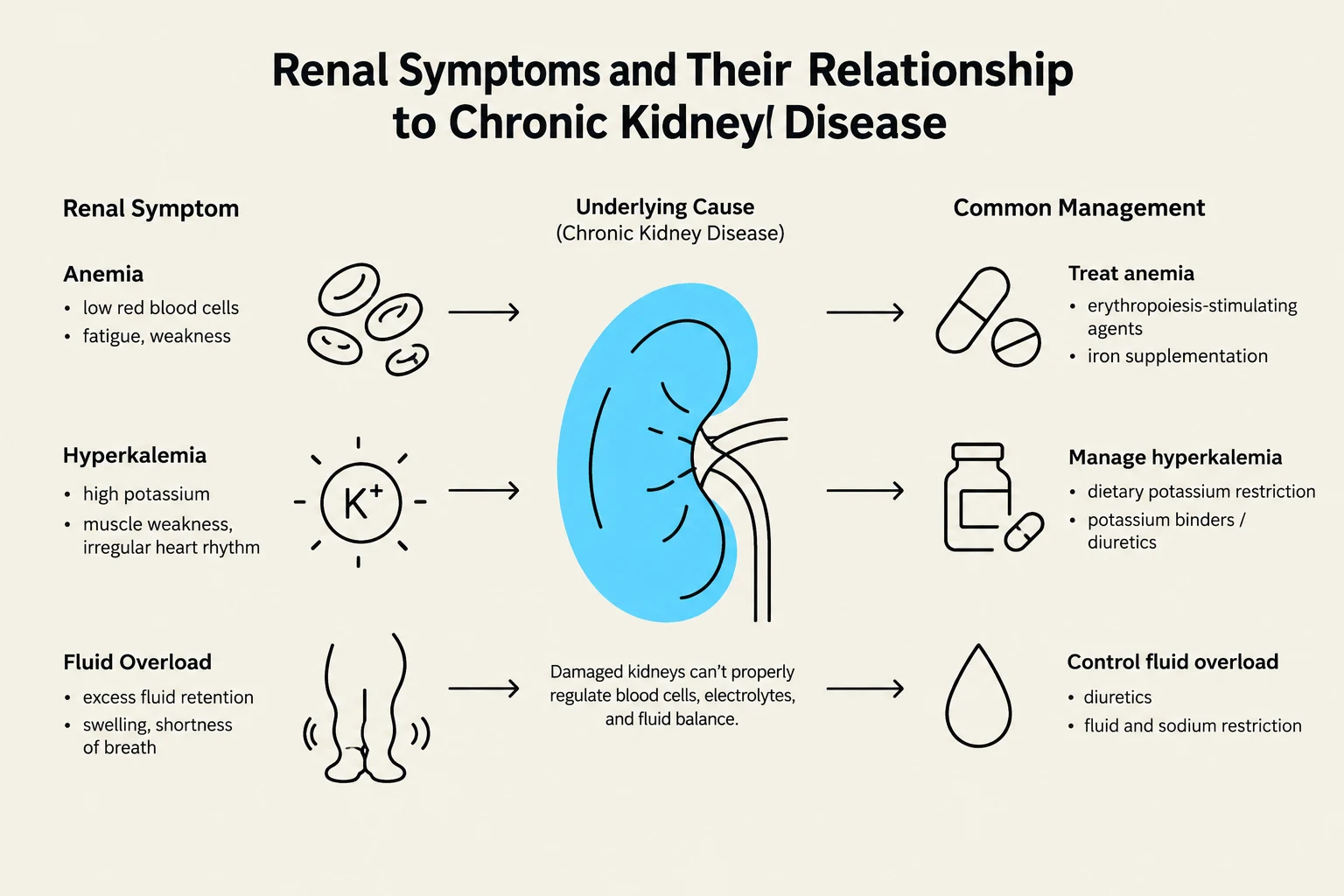
Electrolyte disturbances, particularly involving potassium ($K^+$), calcium (), and phosphate (), are among the most dangerous complications of renal failure.
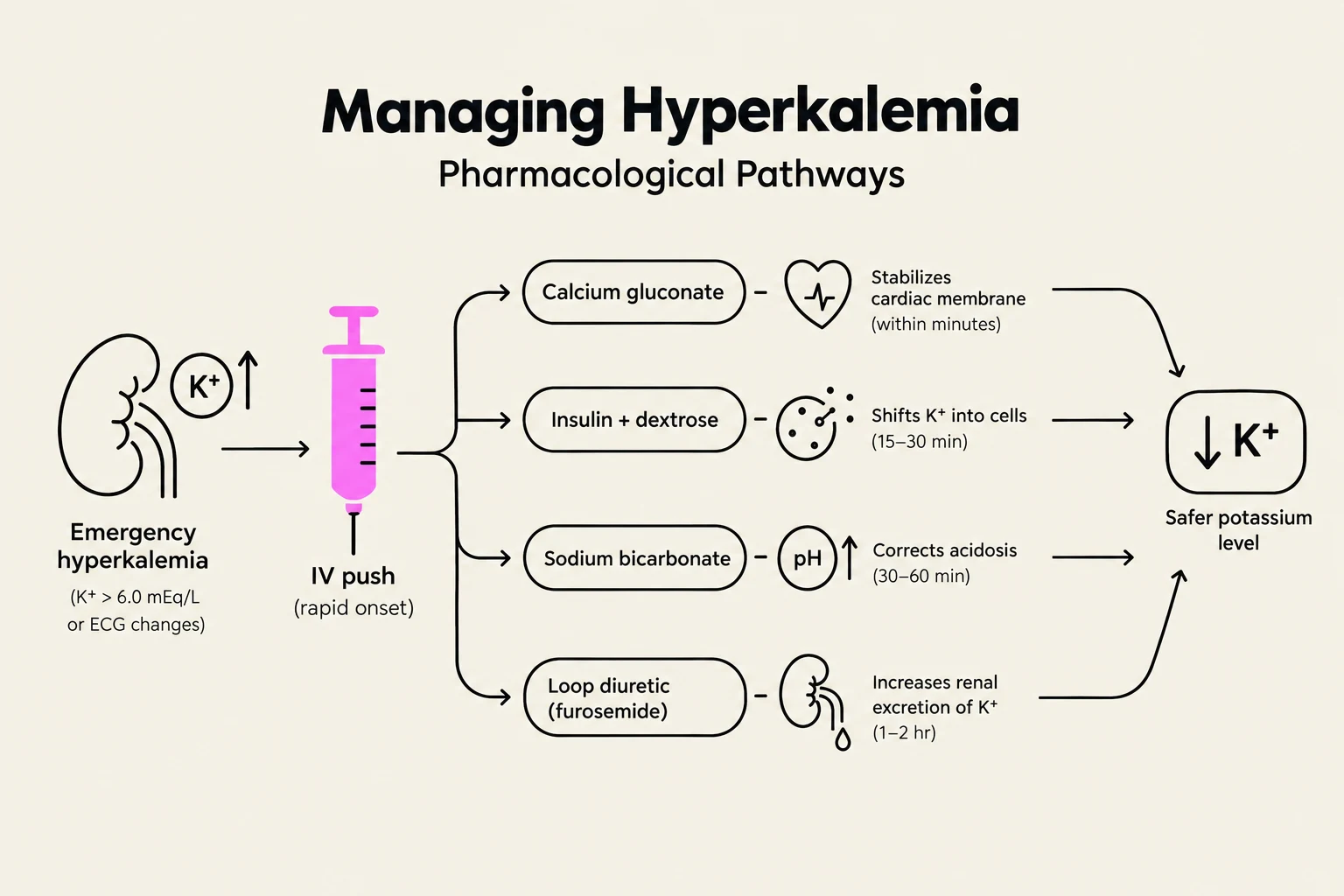
Emergency Hyperkalemia Management
Hyperkalemia (high potassium) is a medical emergency because it can lead to fatal cardiac arrhythmias. In an emergency setting, clinicians use a specific cocktail of medications to rapidly lower potassium levels:
Keep reading for free.
Create an account to finish this reading and make it part of your study routine.
Continue reading freeAlready have an account? Log in
Updated